Humanism and Terror: An Essay on the Communist Problem
by Maurice Merleau-Ponty
On This Page
Description
First published in France in 1947, Humanism and Terror is a vital work of political philosophy by one of the leading French philosophers of the twentieth century. Attempting to understand what he called the "dislocated world" that followed immediately after the Second World War--including his own, divided France--Merleau-Ponty asks a fundamental question: how did Marxism and humanism come apart? Through a fascinating reading of Arthur Koestler's famous novel, Darkness at Noon, an allegory of show more the Stalinist show trials and purges of the 1930s, Merleau-Ponty weighs up the costs of a regime of permanent revolution and false confessions. His profound and controversial point, however, is that the purges were the inevitable outcome of abandoning crucial subjective elements of Marx's theory of history, with the result that "humanism is suspended and government is terror." As we again confront the reality of authoritarianism, political polarisation and curtailing of human freedom, the dislocated world brilliantly depicted by Merleau-Ponty in Humanism and Terror sends a powerful and articulate message that continues to resonate today. This Routledge Classics edition includes a new Foreword by William McBride. show lessTags
Recommendations












Member Reviews
This is a book about the connection between humanism and political violence. I believe the author rightly argues that humanism can champion liberty and freedom of speech but it can also lead to authoritarianism and in the extreme, terrorism. The author argues against sacrificing individual liberties for collective "progress" (Amen, brother!) This long essay was written in response to the show trials that took place under Stalin in 1936-1938; specifically that of Bukharin. Also as response to Koestler's Darkness at Noon. I did not think that I would like or agree with anything by this author, as he is a noted French, liberal philosopher, but we do have a couple of compatible thoughts. Who knew?;) 140 pages
Maurice Merleau-Ponty's "Humanism and Terror" was intended, in 1946, to be an answer from the intellectuals still associated with the 'official' Communists to Arthur Koestler's "Darkness at Noon". Merleau-Ponty summarizes the book, addresses the challenge Koestler poses, and attempts to judge the USSR by the standards of "Marxist humanism" as he sees it. Nevertheless, the book is a very mixed bag.
The interesting thing about this book is that the preface, in which Merleau-Ponty does not address Koestler directly but instead deals with the trouble of Communism during the Stalinist period, the attempts to weigh means and ends, the desire for honesty vs the desire for pragmatism, the failure of people to face the dilemmas of history and the show more lack of seriousness on the part of liberal critics in this, and so on, is the most interesting part. This is all excellently written and clearly set out in unmistakable terms, at least for a Parisian philosopher.
The part of the book which discusses Koestler's thesis, however, is really poor. Merleau-Ponty ascribes to Koestler himself the views that Rubashov and his inquisitors share, namely a sort of Hegelian-mechanistic interpretation of History as the infallible guide of politics, and the risks and destructiveness this implies - but as is clear from an elementary reading of Koestler's book, he himself does not share this view at all, and precisely wrote the book to attack this viewpoint. It is really odd that someone with the philosophical and literary training of Merleau-Ponty does not see this.
In the subsequent discussion of Koestler's problematic itself, namely whether one can support communism but not communist policy, whether one can be a communist outside the Party, whether there can be such a thing as a democratic socialism, whether economic development is a prerequisite of such democratic socialism or not and what sacrifices are valid to achieve it, etc., Merleau-Ponty does not make this error as much. Yet here he makes a different error: especially in the discussion of the Moscow Trials, which take up the middle part of the book, he completely and uncritically adopts the Stalinist line. He believes every word in the 'confessions' of the accused to be actually intended and seriously meant by them (not writing a word about the torture applied before the Trials began), and he also uncritically adopts the Stalinist line that the suppression of all opposition was necessary to defend the USSR against foreign aggression. On the other hand, he clearly does not believe the actual charges themselves, for which there was blatantly no evidence whatever, as he freely admits. For Merleau-Ponty, the question is then reduced to why people like Bukharin and Trotsky would argue for the Party that 'had to' destroy them. An interesting dilemma, but an irrelevant one, since it is by no means necessary to adopt this assumption in the first place. Koestler's book is clearly superior to Merleau-Ponty's in this, since it makes no such assumption.
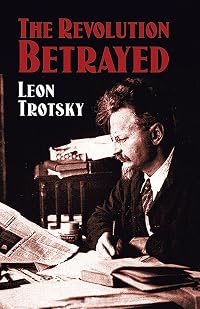
The last part of the book is the author's attempt to reconstitute the meaning of Marxism and its philosophy of history. Here, he does criticize the USSR quite strongly (for someone with sympathy for socialism in 1946), and his discussion of the merits and demerits of Trotsky's commentaries on this problem is quite good, if meanderingly written. There is still a lot of vague chatter about the dialectic and the proletariat in an abstract philosophical way, but it leads to several quite good points nonetheless, and advocates taking up a position that supports the Revolution of 1917 as well as communism in general, but without being uncritical towards the USSR or any specific form of Communist Parties and the like, and not binding oneself to having to defend it against better reason. He also engages the philosophical analysis undertaken by Koestler in "The Yogi and the Commissar", and undertakes some effective and well-considered critiques of Koestler's metaphysical views in it, while admitting Koestler's own critiques as useful and valid, as it should be.
Here Merleau-Ponty concludes with the famous statement: "Marxism is not a philosophy of history; it is _the_ philosophy of history, and to renounce it is to dig the grave of Reason in history. After that there remain only dreams and adventures."
That, at least, is and remains true. show less
The interesting thing about this book is that the preface, in which Merleau-Ponty does not address Koestler directly but instead deals with the trouble of Communism during the Stalinist period, the attempts to weigh means and ends, the desire for honesty vs the desire for pragmatism, the failure of people to face the dilemmas of history and the show more lack of seriousness on the part of liberal critics in this, and so on, is the most interesting part. This is all excellently written and clearly set out in unmistakable terms, at least for a Parisian philosopher.
The part of the book which discusses Koestler's thesis, however, is really poor. Merleau-Ponty ascribes to Koestler himself the views that Rubashov and his inquisitors share, namely a sort of Hegelian-mechanistic interpretation of History as the infallible guide of politics, and the risks and destructiveness this implies - but as is clear from an elementary reading of Koestler's book, he himself does not share this view at all, and precisely wrote the book to attack this viewpoint. It is really odd that someone with the philosophical and literary training of Merleau-Ponty does not see this.
In the subsequent discussion of Koestler's problematic itself, namely whether one can support communism but not communist policy, whether one can be a communist outside the Party, whether there can be such a thing as a democratic socialism, whether economic development is a prerequisite of such democratic socialism or not and what sacrifices are valid to achieve it, etc., Merleau-Ponty does not make this error as much. Yet here he makes a different error: especially in the discussion of the Moscow Trials, which take up the middle part of the book, he completely and uncritically adopts the Stalinist line. He believes every word in the 'confessions' of the accused to be actually intended and seriously meant by them (not writing a word about the torture applied before the Trials began), and he also uncritically adopts the Stalinist line that the suppression of all opposition was necessary to defend the USSR against foreign aggression. On the other hand, he clearly does not believe the actual charges themselves, for which there was blatantly no evidence whatever, as he freely admits. For Merleau-Ponty, the question is then reduced to why people like Bukharin and Trotsky would argue for the Party that 'had to' destroy them. An interesting dilemma, but an irrelevant one, since it is by no means necessary to adopt this assumption in the first place. Koestler's book is clearly superior to Merleau-Ponty's in this, since it makes no such assumption.
The last part of the book is the author's attempt to reconstitute the meaning of Marxism and its philosophy of history. Here, he does criticize the USSR quite strongly (for someone with sympathy for socialism in 1946), and his discussion of the merits and demerits of Trotsky's commentaries on this problem is quite good, if meanderingly written. There is still a lot of vague chatter about the dialectic and the proletariat in an abstract philosophical way, but it leads to several quite good points nonetheless, and advocates taking up a position that supports the Revolution of 1917 as well as communism in general, but without being uncritical towards the USSR or any specific form of Communist Parties and the like, and not binding oneself to having to defend it against better reason. He also engages the philosophical analysis undertaken by Koestler in "The Yogi and the Commissar", and undertakes some effective and well-considered critiques of Koestler's metaphysical views in it, while admitting Koestler's own critiques as useful and valid, as it should be.
Here Merleau-Ponty concludes with the famous statement: "Marxism is not a philosophy of history; it is _the_ philosophy of history, and to renounce it is to dig the grave of Reason in history. After that there remain only dreams and adventures."
That, at least, is and remains true. show less
Merleau-Ponty's essay in response to Arthur Koestler's novel Darkness at Noon, so filed together
Ratings
Members
- Recently Added By
Author Information

91+ Works 4,982 Members
Appointed Professor at the College de France in 1952, Maurice Merleau-Ponty was a highly esteemed professional philosopher because of his technical works in phenomenology and psychology. He was also an activist commentator on the significant cultural and political events of his time, as well as a collaborator with Jean-Paul Sartre and Simone de show more Beauvoir in the founding and editing of Les Temps Modernes in Paris immediately after World War II. Besides being influenced by Edmund Husserl and Martin Heidegger, Merleau-Ponty assimilated the contributions of experimental philosophy and Gestalt psychology to focus on perception and behavior. His work "The Structure of Behavior," although centering on the body, presented an interpretation of the distinctions among the mental, the vital (biological), and the physical that ruled out the reductionist inclinations of behaviorism. With the appearance of his work on the phenomenology of perception in 1945, his position as a philosopher ranking beside Heidegger and Sartre was established. He unveiled a theory of human subjectivity similar to theirs but with greater technical precision. From the standpoint of an existentialist thinker whose conception of subjectivity stressed the primacy of freedom, he examined Marxism and the political factions and movements fostered in the name of Karl Marx. The resulting studies, always insightful and provocative, satisfied neither the right nor the left. In the foreword to the English translation of Merleau-Ponty's inaugural lecture at the College de France, In Praise of Philosophy, John Wild and James Edie praised him for having made "important contributions to the phenomenological investigation of human existence in the life-world and its distinctive structures. He was a revolutionary, and his philosophy, even more than that of his French contemporaries, was a philosophy of the evolving, becoming historical present." Merleau-Ponty views man as an essentially historical being and history as the dialectic of meaning and non-meaning which is working itself out through the complex, unpredictable interaction of men and the world. Nothing historical ever has just one meaning; meaning is ambiguous and is seen from an infinity of viewpoints. He has been called a philosopher of ambiguity, of contradiction, of dialectic. His search is the search for "meaning."' show less
Work Relationships
Is contained in
Common Knowledge
- Original title
- Humanisme et terreur : essai sur le problème communiste
Classifications
Statistics
- Members
- 232
- Popularity
- 139,966
- Reviews
- 3
- Rating
- (3.75)
- Languages
- 6 — English, French, German, Italian, Portuguese, Spanish
- Media
- Paper, Ebook
- ISBNs
- 12
- UPCs
- 1
- ASINs
- 9