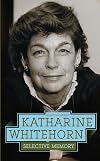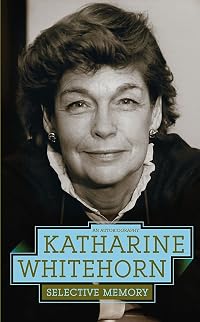
Selective Memory
by Katharine Whitehorn
On This Page
Description
The witty and brilliant autobiography from legendary, beloved and groundbreaking journalist Katharine Whitehorn. 'A book to treasure for its wit, honesty, good sense and warm laughter' DAILY TELEGRAPH Q: A mother's place? A: In the wrong. Much loved for her frankness and humour, Katharine Whitehorn was a legendary journalist who pioneered the first of the personal columns. She told us how it really was. She was funny - and smart. SELECTIVE MEMORY, her autobiography, is about childhood, show more motherhood, marriage and of course her pioneering work on Fleet Street. Praise for Katharine Whitehorn: 'Everyone grabbed the Observer to read her column on a Sunday morning' JILLY COOPER 'Wise, witty, mischievous' JAY RAYNER 'A meteor: clever, funny, compassionate, insightful, beautiful' RACHEL COOKE show lessTags
Recommendations




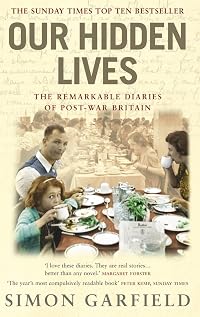

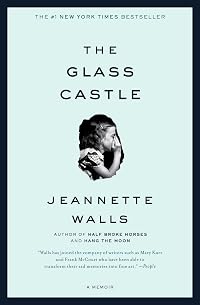
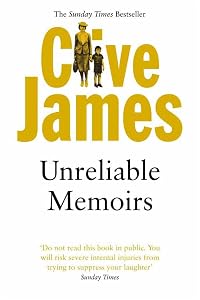


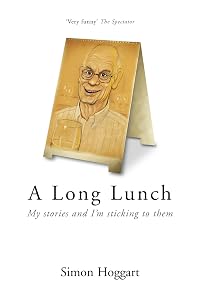


Member Recommendations
Member Reviews
I've come to the conclusion that I'm not a big fan of autobiographies, and I think I've worked out why. If the author has spent his or her life doing something in which I have no interest at all (eg being married to a footballer), then I'm bored silly. If, on the other hand, the author seems to have been living in a whirl of Doing Interesting Things then I sit there in a haze of wistful envy and get demoralised.
Katherine Whitehorn comes across as a woman I would very much like to polish off a bottle or two of wine with one summer's evening, as she has wit, common sense, and a lifetime of Doing Interesting Things to talk about. I also very much hope that if I ever go through a bereavement I have even half her self-awareness and show more practicality. But after some time spent perusing her life I feel rather depressed, because I have achieved very little in comparison.
You can tell it's a columnist's autobiography, as it has a tendency to fall into article-sized chunks which get a bit irritating. The other problem is the one it shares with ever other autobiography I can ever remember having come across, which is that it's a lot more vividly-painted and interesting when it talks about childhood than most of the rest of the time. It's as if everyone who embarks on the task of writing their life dives more enthusiastically into recreating that part of the past, even if the years in question weren't particularly happy. I have a theory about this, which is that it's more socially acceptable to discuss one's childhood in company than it is to discuss the first five years of one's marriage, or the decade where your job was going really well. This is possibly because we all had a childhood, whereas we can't necessarily connect to other life experiences.
She's an interesting woman to spend time with, so if none of the above caveats bother you, go for it. show less
Katherine Whitehorn comes across as a woman I would very much like to polish off a bottle or two of wine with one summer's evening, as she has wit, common sense, and a lifetime of Doing Interesting Things to talk about. I also very much hope that if I ever go through a bereavement I have even half her self-awareness and show more practicality. But after some time spent perusing her life I feel rather depressed, because I have achieved very little in comparison.
You can tell it's a columnist's autobiography, as it has a tendency to fall into article-sized chunks which get a bit irritating. The other problem is the one it shares with ever other autobiography I can ever remember having come across, which is that it's a lot more vividly-painted and interesting when it talks about childhood than most of the rest of the time. It's as if everyone who embarks on the task of writing their life dives more enthusiastically into recreating that part of the past, even if the years in question weren't particularly happy. I have a theory about this, which is that it's more socially acceptable to discuss one's childhood in company than it is to discuss the first five years of one's marriage, or the decade where your job was going really well. This is possibly because we all had a childhood, whereas we can't necessarily connect to other life experiences.
She's an interesting woman to spend time with, so if none of the above caveats bother you, go for it. show less
Her husband, Gavin Lyall, dies at the end of the book, with twelve pages on her life as a widow.
Ratings
Members
- Recently Added By
Author Information

12+ Works 245 Members
Common Knowledge
- Original publication date
- 2007
- First words
- My parents, who already had a boy, very much wanted their second child to be a girl.
- Quotations
- You have to learn to live in another country in which you're an unwilling refugee.
I inherited my grandmother's sewing-machine, made in 1917. My son borrowed it to sew up some curtains. I had had it serviced ten years before; it was working all right and we managed the complicated threading of the needle in... (show all) the top part. I left him to it ... our threading of the shuttle part had been wrong. He looked it up on the Internet, found six colour pictures showing how to thread this part of a 1917 machine, printed them out and finished his sewing.
Jake and I were not leaving him alone at all by then, but on Saturday afternoon Melodie was doing something to relieve his throat, so we were upstairs. That was when he went. I believe this happens quite often; it is only whe... (show all)n the watchers at the bedside are absent for a few minutes that the dying person finally lets go.
The undertakers asked if we wanted to come and view the body. No, absolutely not. I realise that I had increasingly felt that when Gavin did die, I would get back the real Gavin. I wanted to forget this gaunt, silent, skull-l... (show all)ike figure on the bed. And in a way this was true. There are stages of grief, and I don't believe it's the same for everyone; but part of the process of healing, for me and for one or two others I know, is the gradual fading of the memory of the awful last days, compared to the solid happiness of forty-five years. - Last words
- (Click to show. Warning: May contain spoilers.)So it goes or, at any rate, can go.
Classifications
- Genres
- Biography & Memoir, Nonfiction
- DDC/MDS
- 070.44092 — Computer science, information & general works News media, journalism & publishing Documentary media, educational media, news media; journalism; publishing Journalism Special subjects: departments and editors
- LCC
- PN5123 .W388 .A3 — Language and Literature Literature (General) Literature (General) Journalism. The periodical press, etc. By region or country
- BISAC
Statistics
- Members
- 39
- Popularity
- 749,436
- Reviews
- 2
- Rating
- (3.79)
- Languages
- English
- Media
- Paper, Audiobook
- ISBNs
- 4