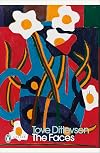
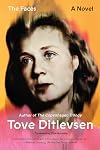
The Faces
by Tove Ditlevsen
On This Page
Description
"It's Copenhagen, 1968. Lise, a children's book writer and married mother of three, is becoming increasingly haunted by disembodied faces and taunting voices. Convinced that her housekeeper and husband are plotting against her, she descends into a terrifying world of sickness, pills and institutionalisation. But is sanity in fact a kind of sickness? And might mental illness itself lead to enlightenment? Brief, intense and haunting, Ditlevsen's novel recreates the experience of madness from show more the inside, with all the vividness of lived experience."--Provided by publishers. show lessTags
Recommendations

























Member Reviews
‘’She could think about the words in peace, without fearing that new ones would appear before the night was over. During this time the night held the days apart only with difficulty and if she happened to breathe a hole into the darkness, like a fist on a frost-covered windowpane, the morning might shine into her eyes hours ahead of time.’’
Copenhagen. 1968. A writer, famous for children’s stories and poems, begins a slow descent into the darkest territories of her mind and soul. Suffocated by the presence of a toxic woman who has practically occupied her house, frustrated by a useless husband whose achievements can only be found on other women’s bedsheets, uncertain over her behaviour towards her children, Lise finds refuge show more in writing. But how can you write when you fear for your life and the faces that haunt you want to drag you away from the life you desire? Or is it all just a twisted game devised by your overburdened mind?
‘’Writing had always been like a game, a pleasant task that allowed her to forget everything else in the world. She thought: If I start to write again, this whole nightmare will be over.’’
Tove Ditlevsen created the epitome of the unreliable narrator within just 100 pages. Who is Lise? What goes on in her life? Is everything as bleak as she believes or has she fallen victim to her fears? Is she in danger? Is her life threatened? Some questions are impossible to answer, but what is absolutely certain is the attack on her personality and her creativity. Her need to express herself through her writing is in danger of being smothered by toxic people and circumstances. We write to unburden our souls, to satisfy our need to create, to understand ourselves, to break free. A true journey into madness comes from being forced to abandon your vocation, from surrendering yourself to the will of others, from forgetting that your first obligation is to protect yourself. Ditlevsen created the account of a troubled woman through sarcasm, elegant irony and a haunting confession that there are limits in sacrificing ourselves obeying the ‘’calls’’ of a family and a society that, when all is said and done, couldn’t care less for you.
‘’Leave me alone’, she sobbed. ‘’I’ve never wanted anything else. I don’t care about the world. I just want to write and read; I just want to be myself.’’
My reviews can also be found on https://theopinionatedreaderblog.wordpress.com/ show less
Copenhagen. 1968. A writer, famous for children’s stories and poems, begins a slow descent into the darkest territories of her mind and soul. Suffocated by the presence of a toxic woman who has practically occupied her house, frustrated by a useless husband whose achievements can only be found on other women’s bedsheets, uncertain over her behaviour towards her children, Lise finds refuge show more in writing. But how can you write when you fear for your life and the faces that haunt you want to drag you away from the life you desire? Or is it all just a twisted game devised by your overburdened mind?
‘’Writing had always been like a game, a pleasant task that allowed her to forget everything else in the world. She thought: If I start to write again, this whole nightmare will be over.’’
Tove Ditlevsen created the epitome of the unreliable narrator within just 100 pages. Who is Lise? What goes on in her life? Is everything as bleak as she believes or has she fallen victim to her fears? Is she in danger? Is her life threatened? Some questions are impossible to answer, but what is absolutely certain is the attack on her personality and her creativity. Her need to express herself through her writing is in danger of being smothered by toxic people and circumstances. We write to unburden our souls, to satisfy our need to create, to understand ourselves, to break free. A true journey into madness comes from being forced to abandon your vocation, from surrendering yourself to the will of others, from forgetting that your first obligation is to protect yourself. Ditlevsen created the account of a troubled woman through sarcasm, elegant irony and a haunting confession that there are limits in sacrificing ourselves obeying the ‘’calls’’ of a family and a society that, when all is said and done, couldn’t care less for you.
‘’Leave me alone’, she sobbed. ‘’I’ve never wanted anything else. I don’t care about the world. I just want to write and read; I just want to be myself.’’
My reviews can also be found on https://theopinionatedreaderblog.wordpress.com/ show less
The Faces, Danish writer Tove Ditlevsen’s (1917-1976) intimate portrait of a woman’s descent into psychosis, was originally published in 1968 and made available in English translation in 1991. The story concerns Lise Mundus, a writer of children’s books who has three children and is married to her second husband, Gert. Gert has been carrying on an affair (a fact that does not seem to be a secret), and his mistress, Grete, has committed suicide. Lise has achieved modest success with her books and has recently received an award that has brought her a modicum of fame. But sudden fame, Lise reflects, “had brutally ripped away the veil that had always separated her from reality,” and she has lately been suffering from a “fear of show more being unmasked,” of being exposed as “someone she is not.” Deprived of her protective shield and propelled by escalating fear, Lise’s fragile grip on reality has slipped and she is descending into a delusional state. Nobody can be trusted. People’s faces have become masks, behind which they hide their true intentions toward her. She begins to doubt the veracity of what she is seeing with her own eyes and hearing with her own ears. More as a means of escape from persistent torment than an attempt to do away with herself, she ingests a bottle of sleeping pills and then phones her doctor to inform him of what she’s done. Ditlevsen’s vivid and painfully rendered narrative proceeds with Lise in hospital, admitted to a “secure unit” and placed in restraints. Her delusions continue. Disembodied voices reach her from the plumbing and the ventilation grates. In conversation with doctors, nurses and other inmates, she hears their voices speaking to her after their lips have stopped moving. Gradually, though, she realizes that these events are part of her illness and comes to understand what she must do if she is ever to find a place for herself in a world “where it might be possible to exist.” The power of this narrative derives from several sources: the blasé tone used to report startling and horrific incidents, the cool precision of the language, the rich use of metaphor (Lise’s mother: “She had stubbornly put on her youth; from behind it her age laughed between the false teeth like the troll in old fairy tales.”) Ditlevsen’s depiction of madness from within the afflicted mind is harrowing and genuinely unsettling. But The Faces is also a compassionate and moving novel that speaks truths worth heeding about mental illness. show less
An immensely powerful book.
This is another chilling story of the descent into madness. Tove Ditlevsen succeeds in giving the reader a very good idea of what it must be like to see faces and hear voices that aren't there. Perhaps those faces and voices are always there — in all of us.
Jul 25, 2025 (Edited)English (UK)
Ratings
Members
- Recently Added By
Lists

Open Book 2021
17 works; 2 members

Books Read in 2020
4,379 works; 124 members

Best Sellers / Popular 1968
237 works; 5 members

Reading LIst
648 works; 1 member
Author Information

74+ Works 2,734 Members
Ditlevsen grew up in a working-class environment in Copenhagen, an experience that has left a clear stamp on much of her writing. Her novels, generally realistic, revolve around the themes of sexuality, children, and the lives of the poor, and her relentlessly honest depictions have won her a steady following in Denmark. (Bowker Author Biography)
Some Editions
Awards and Honors
Distinctions
The Guardian Book of the Day (2021-01-26)
Notable Lists
Series
Belongs to Publisher Series
Common Knowledge
- Canonical title
- The Faces
- Original title
- Ansigterne
- Original publication date
- 1968
- First words
- Om aftenen var det en lille smule bedre.
- Last words
- (Click to show. Warning: May contain spoilers.)- I morgen, sagde hun, vil heg begynde at skrive. Men han var allerede faldet i søvn.
- Publisher's editor*
- Das Mag
- Original language
- Danish
*Some information comes from Common Knowledge in other languages. Click "Edit" for more information.
Classifications
- Genres
- Fiction and Literature, General Fiction
- DDC/MDS
- 839.81372 — Literature & rhetoric German & related literatures Other Germanic literatures Danish and Norwegian literatures Danish Danish fiction 1900–2000 Early 20th century 1900–1945
- LCC
- PT8176.14 .I58 .A5713 — Language and Literature German, Dutch and Scandinavian literatures Danish literature Individual authors or works 1961-2000
- BISAC
Statistics
- Members
- 234
- Popularity
- 138,851
- Reviews
- 4
- Rating
- (3.96)
- Languages
- 9 — Catalan, Danish, Dutch, English, French, German, Norwegian (Bokmål), Norwegian, Spanish
- Media
- Paper, Audiobook, Ebook
- ISBNs
- 24
- ASINs
- 7