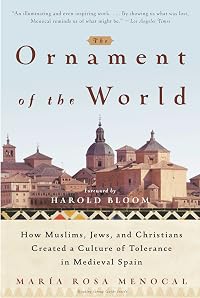
The Ornament of the World: How Muslims, Jews and Christians Created a Culture of Tolerance in Medieval Spain
by María Rosa Menocal
On This Page
Description
Undoing the familiar notion of the Middle Ages as a period of religious persecution and intellectual stagnation, Menocal brings us a portrait of a medieval culture where literature, science, and tolerance flourished for 500 years. The story begins as a young prince in exile--the last heir to an Islamic dynasty--founds a new kingdom on the Iberian peninsula: al-Andalus. Combining the best of what Muslim, Jewish, and Christian cultures had to offer, al-Andalus and its successors influenced the show more rest of Europe in dramatic ways, from the death of liturgical Latin and the spread of secular poetry, to remarkable feats in architecture, science, and technology. The glory of the Andalusian kingdoms endured until the Renaissance, when Christian monarchs forcibly converted, executed, or expelled non-Catholics from Spain. show lessTags
Recommendations

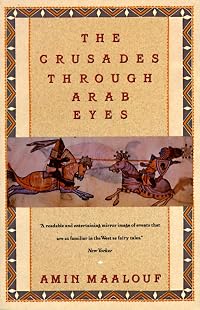
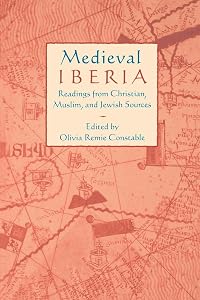
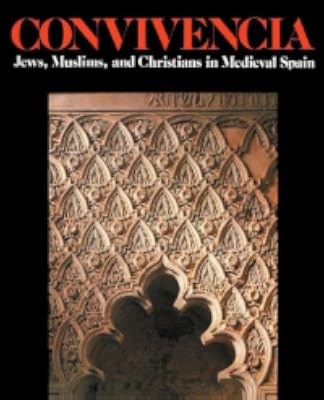


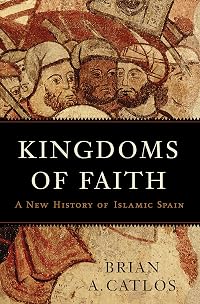
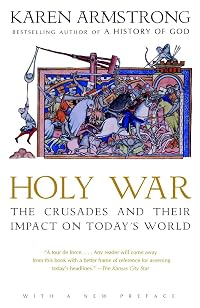
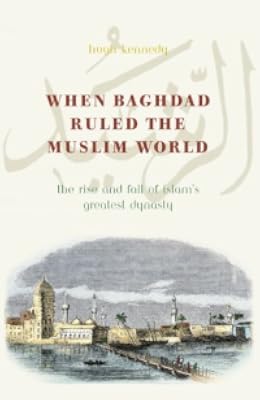
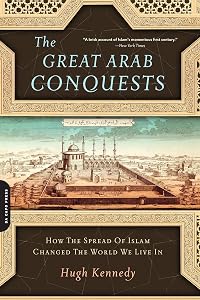

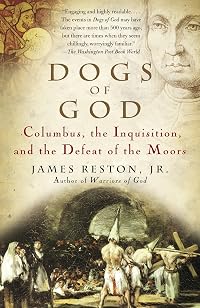
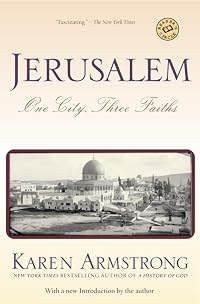
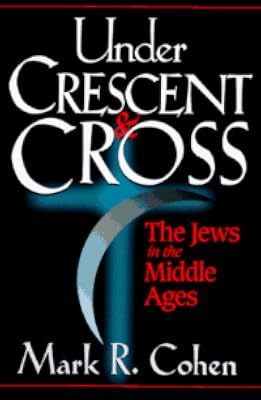
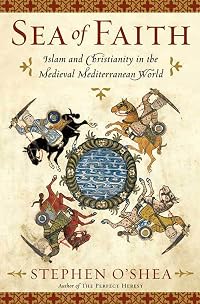
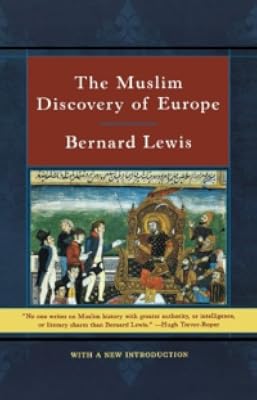

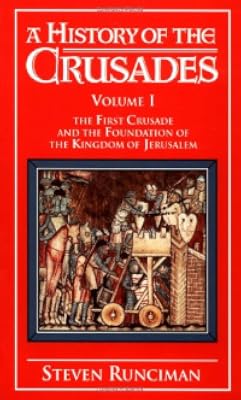
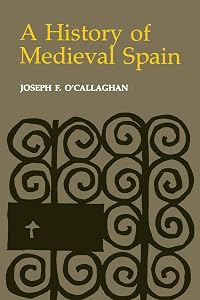
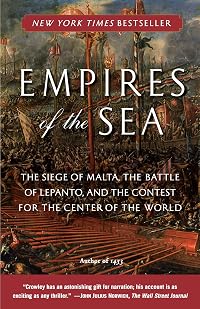
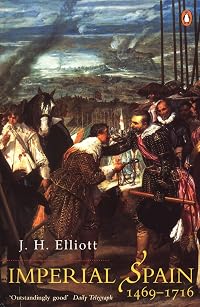
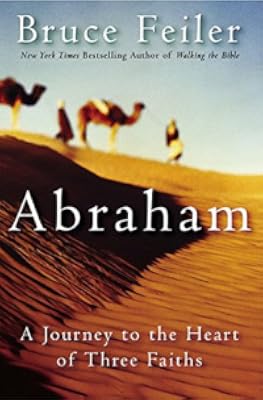
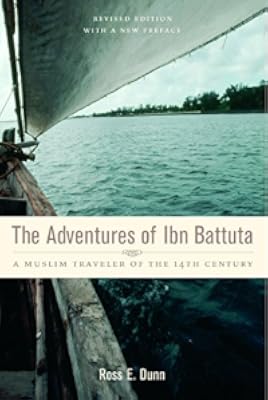
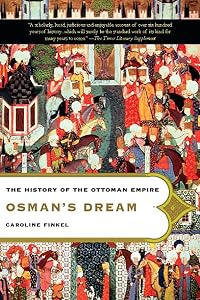
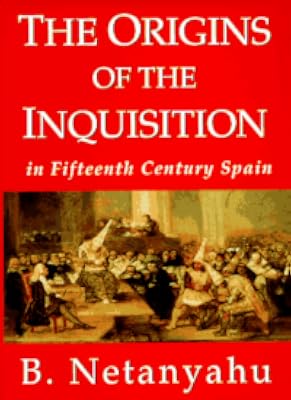

Member Recommendations
The Arts of Intimacy: Christians, Jews, and Muslims in the Making of Castilian Culture by Jerrilynn D. Dodds
MarthaJeanne Ornament gives a good basis for understanding the history. Intimacy adds details and illustrations. They complement each other.
Member Reviews
Definitely recommend this well-organized and well-told account of the history of what might be called “the Moorish years” of Andalusian history.
What I most appreciated about the book is that Menocal doesn’t just make this about wars, borders, plagues, and religious conflict, as so many other histories do. She’s more interested in telling the story of how certain attributes of Moorish culture –their ability to assimilate into different cultures, their robust language, their elegant architecture, their intellectual curiosity, their storytelling traditions, their social egalitarianism, their respect for fellow “Peoples of the Book” – created a brief window of opportunity for people representing a variety of different show more cultures, religions and languages not just to coexist, but to cross-pollinate: genetically, ethnically, linguistically, intellectually.
And now that I’ve seen it, I can’t unsee it: the linguistic traces of Arabic in modern Spanish language, the Arabic foods and ingredients absorbed into European culinary traditions, the Arabic architecture of Christian churches and Jewish synagogues, the critical contributions of Arabic scientists and mathematicians, the influence of as Ibn Rushd/Averrios on Thomas Aquinas, the influence of A Thousand and One Nights on Bocaccio, on Chaucer, on Cervantes ….
Which is not intended to imply that Menocal's choice to focus on culture in any way undermines the value of this book as a history of the years ~750-1450. The author most definitely knows her period and how to present the rapid succession of leaders, countries, empires, and religions as a clear and compelling narrative. Her particular gift: selecting anecdotes that don’t merely repeat information she’s already presented, but that add additional context and depth.
The book works as a history but also as an elegy, a reflection upon a brief moment in time when political, racial, and religious intolerance relented long enough to provide a glimpse of what the world might have looked like without them. Recommended without any caveats or conditions. show less
What I most appreciated about the book is that Menocal doesn’t just make this about wars, borders, plagues, and religious conflict, as so many other histories do. She’s more interested in telling the story of how certain attributes of Moorish culture –their ability to assimilate into different cultures, their robust language, their elegant architecture, their intellectual curiosity, their storytelling traditions, their social egalitarianism, their respect for fellow “Peoples of the Book” – created a brief window of opportunity for people representing a variety of different show more cultures, religions and languages not just to coexist, but to cross-pollinate: genetically, ethnically, linguistically, intellectually.
And now that I’ve seen it, I can’t unsee it: the linguistic traces of Arabic in modern Spanish language, the Arabic foods and ingredients absorbed into European culinary traditions, the Arabic architecture of Christian churches and Jewish synagogues, the critical contributions of Arabic scientists and mathematicians, the influence of as Ibn Rushd/Averrios on Thomas Aquinas, the influence of A Thousand and One Nights on Bocaccio, on Chaucer, on Cervantes ….
Which is not intended to imply that Menocal's choice to focus on culture in any way undermines the value of this book as a history of the years ~750-1450. The author most definitely knows her period and how to present the rapid succession of leaders, countries, empires, and religions as a clear and compelling narrative. Her particular gift: selecting anecdotes that don’t merely repeat information she’s already presented, but that add additional context and depth.
The book works as a history but also as an elegy, a reflection upon a brief moment in time when political, racial, and religious intolerance relented long enough to provide a glimpse of what the world might have looked like without them. Recommended without any caveats or conditions. show less
A well-written and interesting history of Spain from the eighth to the seventeenth century with a focus on the multi-ethnic, multi-faith states in the Iberian peninsula under Muslim (and Christian) rule. After a concise, detailed history of the Caliphate and Visigothic Spain, she gives a sort of chronological episodic history of the next seven centuries, often focusing on particular individuals and their works. While these episodes feature an individual or two, she uses them to give a snapshot of the history and culture at that particular moment, with examples of philosophy, Kaballah, poetry, and music. At times I felt that she was being hagiographic, playing up the talents of specific men and the tolerance of a particular ruler or era, show more downplaying some of the intolerance that was going on, sometimes only making passing references to things like anti-Jewish rioting that resulted in massacres. I still appreciate her arguments that this was an extraordinary period with a confluence of circumstances, personalities, geography, and religious cultures. Highly recommended for those with an interest in the history of Islam, Christianity, the Middle Ages, and Spain (in fact, now I want to go back to Spain and see these Alhambras, cathedrals, and tombs!). show less
This is a delightful romp through almost a thousand years of the Spanish history. It doesn't attempt to be comprehensive, but instead is a series of snapshots, with enough connections sketched in to keep the story coherent. The main theme is the notion of a first-class mind, from F. Scott Fitzgerald, applied here to cultures. There are four streams entangled - the three Abrahamic faiths along with the Greeks, mostly Aristotle.
I've seen references to the richness of Andalusian culture. This was a splendid way to dive in a little deeper. It leaves me with too many threads to follow! Never to be bored!
It was a strange enough coincidence that this book was written just before the attacks of 9/11/2001. That we seem to be getting trapped show more more tightly in battles over ideological purity is really sad. show less
I've seen references to the richness of Andalusian culture. This was a splendid way to dive in a little deeper. It leaves me with too many threads to follow! Never to be bored!
It was a strange enough coincidence that this book was written just before the attacks of 9/11/2001. That we seem to be getting trapped show more more tightly in battles over ideological purity is really sad. show less
While reading this book, I vacillated between rating it a 3, 4, or 5. Upon finishing the book, including the last chapter and prologue, I could not rate it any less than 5. The author addresses very complex issues and history in an understandable way. I thought there was too much redundancy in the third quarter of the book, however I was brought out of that when I read the last of the book. Everything came together.
Religious and cultural tolerance and intolerance exist simultaneously among one race. Ones' beliefs become who one is and is a vital part of self- and community-identity. This is a complexity with which humans have dealt for eternity. To find one place where the essence of tolerance lived in-between eras of intolerance then show more expand upon its origins and demise is to the author's credit. That she is able to present it in an easy to read framework reflects her genius.
I have not yet read Decameron or Don Quixote, but will do so now with a much greater understanding of the books' contexts than if I had read them prior to reading this wonderful book. show less
Religious and cultural tolerance and intolerance exist simultaneously among one race. Ones' beliefs become who one is and is a vital part of self- and community-identity. This is a complexity with which humans have dealt for eternity. To find one place where the essence of tolerance lived in-between eras of intolerance then show more expand upon its origins and demise is to the author's credit. That she is able to present it in an easy to read framework reflects her genius.
I have not yet read Decameron or Don Quixote, but will do so now with a much greater understanding of the books' contexts than if I had read them prior to reading this wonderful book. show less
Menocal's objective is clear from the subtitle of her book: she sets out to demonstrate to a popular audience the culture of convivencia, religious and ethnic co-existence, which predominated in medieval Iberia. There's certainly much to back up her argument, with the presence of Arabic-speaking and writing Christians and Jews; Jewish officials reaching high ranks in Christian governments; the preservation, transmission and transformation of classical knowledge by Muslim translators and scholars; a tremendous artistic, architectural and literary history. It's certainly true that al-Andalus reached a level of cultural sophistication and syncretism which great swathes of northern Europe couldn't even have imagined at the time—the great show more library at Cordoba contained hundreds of thousands of manuscripts at a time when the greatest libraries of northern Europe would have boasted barely a couple of hundred.
Yet because this book consists mostly of a series of case studies or vignettes rather than a sustained narrative, Menocal often ignores evidence which would support a different interpretation of medieval Iberian societies. Convivencia is a pretty controversial topic amongst medieval scholars, but you wouldn't really know that just from reading this book. I do admire Menocal's goal in pushing back against the popular conception of "medieval" as a synonym for "barbaric" and "primitive", and of Islam as a wholly non-European phenomenon, I just thought a more balanced approach would have strengthened her overall argument. (As, to be honest, could the deletion of at least half the adjectives she uses here. This is a book of great erudition and passion, but not one of great prose.) show less
Yet because this book consists mostly of a series of case studies or vignettes rather than a sustained narrative, Menocal often ignores evidence which would support a different interpretation of medieval Iberian societies. Convivencia is a pretty controversial topic amongst medieval scholars, but you wouldn't really know that just from reading this book. I do admire Menocal's goal in pushing back against the popular conception of "medieval" as a synonym for "barbaric" and "primitive", and of Islam as a wholly non-European phenomenon, I just thought a more balanced approach would have strengthened her overall argument. (As, to be honest, could the deletion of at least half the adjectives she uses here. This is a book of great erudition and passion, but not one of great prose.) show less
Interesting book. It does reasonably well in covering how the Muslim, Christian, and Jewish communities in Medieval Spain both influenced, and were influenced by, each other. It's not a narrative history but instead focuses on different subjects. Main complaint is it does jump around a bit. Having said that, it's still very readable.
Jewish poets writing in Arabic. Christians learning from great Islamic scholars. Muslims commissioning Christian artists. Maria Menocal's book explores the world of the "convivencia," the great experiment in living together that was created by the Umayyad amirate in Cordoba, after the model of Damascus and Baghdad. Menocal carefully examines mythic historical figures from all three Abrahamic religions, and demonstrates the complex contributions of each faith to the world of Mozarabic Spain and the incredible cultural, scientific, architectural and political enrichment it brought to the fragmented, struggling continent on its borders. Europe, as Menocal argues, is profoundly the product of a diverse Islamic civilisation that created a show more Golden Age lasting over 2 centuries. show less
Members
- Recently Added By
Lists

Vote: Science, Religion, and History Group Reads
30 works; 17 members

Ideas for "Science, Religion, and History" group reads
29 works; 9 members

r/AskHistorians' Recommended Books
1,068 works; 18 members

Spirituality
195 works; 1 member

501 Must-Read Books
529 works; 72 members

Books recommended in the history category on FiveBooks.com
329 works; 4 members

In Our Time books
4,934 works; 2 members
Talk Discussions
Past Discussions
Group Read - Ornament of the World - Science Religion History in 75 Books Challenge for 2014 (August 2014)
Author Information

14+ Works 1,507 Members
Maria Rosa Menocal is R. Selden Rose Professor of Spanish and Portuguese and head of the Whitney Humanities Center at Yale University. She lives in New Haven, CT.
All Editions
Some Editions
Awards and Honors
Common Knowledge
- Canonical title
- The Ornament of the World: How Muslims, Jews and Christians Created a Culture of Tolerance in Medieval Spain
- Original title
- The Ornament of the World: How Muslims, Jews and Christians Created a Culture of Tolerance in Medieval Spain
- Original publication date
- 2002
- People/Characters
- Peter Abelard (1079-1142)
- Important places
- Andalusia, Spain; Spain
- First words
- Once upon a time in the mid-eigth century, an intrepid young man named Abd al-Rahman abandoned his home in Damascus, the Near Eastern heartland of Islam, and set out across the North African desert in search of a palce of ref... (show all)uge.
- Last words
- (Click to show. Warning: May contain spoilers.)There, in both the ruins and in the surviving beauties of that edifice, in books destroyed and in books saved, lie so many layers of our own cultural memories and possibilities.
- Original language
- English
Classifications
- Genres
- History, Religion & Spirituality, Nonfiction, General Nonfiction
- DDC/MDS
- 946.01 — History & geography History of Europe Spain & Portugal Spain Early history; Roman dominion; Gothic kingdom -711
- LCC
- DP99 .M465 — History of Europe, Asia, Africa and Oceania Spain – Portugal History of Spain History By period 711-1516. Moorish domination and the Reconquest
- BISAC
Statistics
- Members
- 1,207
- Popularity
- 20,528
- Reviews
- 20
- Rating
- (3.82)
- Languages
- 6 — Dutch, English, French, Italian, Portuguese, Spanish
- Media
- Paper, Audiobook, Ebook
- ISBNs
- 13
- ASINs
- 10