On This Page
Description
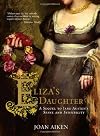
A Young Woman Longing for Adventure and an Artistic Life... Because she's an illegitimate child, Eliza is raised in the rural backwater with very little supervision. An intelligent, creative, and free-spirited heroine, unfettered by the strictures of her time, she makes friends with poets William Wordsworth and Samuel Coleridge, finds her way to London, and eventually travels the world, all the while seeking to solve the mystery of her parentage. With fierce determination and irrepressible show more spirits, Eliza carves out a life full of adventure and artistic endeavor. PRAISE FOR JOAN AIKEN "Others may try, but nobody comes close to Aiken in writing sequels to Jane Austen." PublishersWeekly "Aiken's story is rich with humor, and her language is compelling. Readers captivated with Elinor and Marianne Dashwood in Sense and Sensibility will thoroughly enjoy Aiken's crystal gazing, but so will those unacquainted with Austen." Booklist ..".innovative storyteller Aiken again pays tribute to Jane Austen in a cheerful spinoff of Sense and Sensibility." Kirkus Reviews show lessTags
Recommendations




Member Reviews
Generally speaking, orphans and misfits are more present in Dickens or Brontë than in any Austen novel. Oliver has...well...an entire cast of characters, and Great Expectations has Pip and Estella (who had might as well be an orphan). Jane Eyre's title character is an orphan (Adele is one, too), and Charlotte Brontë's unfinished titular Emma (continued in greatest effect later by Clare Boylan as Emma Brown) is also an orphan. And then of course there's Emily Brontë's Heathcliff in Wuthering Heights.
The plight and peril of orphans is compelling, and if you don't think so, look to Disney. Over 70% of Disney animated features are about (or in some cases feature) orphans, children of single parents or, in some cases, either neglectful show more parents, kidnapping victims, or runaways. Jane Austen, however, doesn't deal so much with orphans or children of ambiguous birth. Single parents? Yes. Children who, for their own sakes, might be better off as orphans? (I'm looking at you, Anne Elliot, Fanny Price, and Anne de Bourgh) Yes.
But there's only a small handful of what one could consider orphans or Dickensian misfits (Fanny Price may be treated like Cinderella, but she's no orphan). I can think only of Harriet Smith (who is not really an orphan, but the illegitimate daughter of a rich merchant), Georgiana Darcy (who, while an orphan, is of a rich family and therefore not subjected to such a life as Pip or Jane Eyre), and Eliza Williams who is the orphaned illegitimate daughter of Colonel Brandon's sister-in-law neé childhood sweetheart. Eliza, in turn, bears Willoughby's illegitimate daughter, the protagonist of Joan Aiken's 1994 novel Eliza's Daughter.
Unlike Willoughby's Return I thought this book was neither very good, nor very faithful to the tone of its predecessor. Instead of a novel of manners, Aiken's writing is decidedly and defiantly feminist. Not that there's anything wrong with that, but Aiken seems to have sacrificed tone, style, character and integrity all to make a social statement about an illegitimate orphan who embraces her origins and allows history to repeat itself because she said it could, denying that fate or circumstance had anything to do with it.
From the beginning, Eliza is an unreliable narrator. She tells the reader straight out that she will skip over certain episodes in her history, and that she will refuse to share certain personal instances because they're too hard to relive or too personal or whatever bullshit excuse is employed. That said by the time you get to the end of the novel, you may feel misled and lied to. I know I did.
But it's not just a distrust of the narrator that spoils this book. On top of that misfortune, Aiken has completely misunderstood the Austenfolk. John Willoughby is perhaps the most accurately portrayed, but Edward, Elinor, Marianne, Margaret, Mrs. Dashwood and Colonel Brandon all suffer both from the ravages of time as well as the destruction of Aiken's pen. Edward - who, while not lively or overtly passionate in the original, was at least kind and patient and gentlemanly. Aiken's Edward is sour and completely dispassionate and neglectful. The Marianne of old was vibrant and full of poetry and music and light. Aiken's Marianne is bitter and spiteful and unkind.
This, on top of the narrator's seeming dislike for honesty, truly spoils the experience of the novel. And while I'm all for women taking their fates into their own hands and standing up for themselves and for what they believe in, I believe that Aiken's novel is meant to be an antagonistic caution against everything established in Sense & Sensibility. I hate to speak ill of the dead (and Ms. Aiken passed away in 2004) but this book was a real disappointment.
Lauren Cartelli
www.theliterarygothamite.com show less
The plight and peril of orphans is compelling, and if you don't think so, look to Disney. Over 70% of Disney animated features are about (or in some cases feature) orphans, children of single parents or, in some cases, either neglectful show more parents, kidnapping victims, or runaways. Jane Austen, however, doesn't deal so much with orphans or children of ambiguous birth. Single parents? Yes. Children who, for their own sakes, might be better off as orphans? (I'm looking at you, Anne Elliot, Fanny Price, and Anne de Bourgh) Yes.
But there's only a small handful of what one could consider orphans or Dickensian misfits (Fanny Price may be treated like Cinderella, but she's no orphan). I can think only of Harriet Smith (who is not really an orphan, but the illegitimate daughter of a rich merchant), Georgiana Darcy (who, while an orphan, is of a rich family and therefore not subjected to such a life as Pip or Jane Eyre), and Eliza Williams who is the orphaned illegitimate daughter of Colonel Brandon's sister-in-law neé childhood sweetheart. Eliza, in turn, bears Willoughby's illegitimate daughter, the protagonist of Joan Aiken's 1994 novel Eliza's Daughter.
Unlike Willoughby's Return I thought this book was neither very good, nor very faithful to the tone of its predecessor. Instead of a novel of manners, Aiken's writing is decidedly and defiantly feminist. Not that there's anything wrong with that, but Aiken seems to have sacrificed tone, style, character and integrity all to make a social statement about an illegitimate orphan who embraces her origins and allows history to repeat itself because she said it could, denying that fate or circumstance had anything to do with it.
From the beginning, Eliza is an unreliable narrator. She tells the reader straight out that she will skip over certain episodes in her history, and that she will refuse to share certain personal instances because they're too hard to relive or too personal or whatever bullshit excuse is employed. That said by the time you get to the end of the novel, you may feel misled and lied to. I know I did.
But it's not just a distrust of the narrator that spoils this book. On top of that misfortune, Aiken has completely misunderstood the Austenfolk. John Willoughby is perhaps the most accurately portrayed, but Edward, Elinor, Marianne, Margaret, Mrs. Dashwood and Colonel Brandon all suffer both from the ravages of time as well as the destruction of Aiken's pen. Edward - who, while not lively or overtly passionate in the original, was at least kind and patient and gentlemanly. Aiken's Edward is sour and completely dispassionate and neglectful. The Marianne of old was vibrant and full of poetry and music and light. Aiken's Marianne is bitter and spiteful and unkind.
This, on top of the narrator's seeming dislike for honesty, truly spoils the experience of the novel. And while I'm all for women taking their fates into their own hands and standing up for themselves and for what they believe in, I believe that Aiken's novel is meant to be an antagonistic caution against everything established in Sense & Sensibility. I hate to speak ill of the dead (and Ms. Aiken passed away in 2004) but this book was a real disappointment.
Lauren Cartelli
www.theliterarygothamite.com show less
Being a great admirer of Joan Aiken's children's fiction, I quite naturally turned to her adult literature when I had run my course through all of Jane Austen's classic novels, and was looking for something more. Sadly, I did not find Eliza's Daughter at all successful as an Austen sequel, and my great disappointment prevented me from appreciating any other merits it might have had.
Based upon the marvelous Sense and Sensibility, this work takes up the story of young Liz Williams, illegitimate daughter of Eliza, Colonel Brandon's ward in the original novel. Raised in the town of Byblow Bottom (readers familiar with Aiken will no doubt recognize her penchant for idiosyncratic - and highly apt - place-names), Liz eventually finds herself show more in the home of Elinor Ferrers (nee Dashwood) before her adventures take her to school in Bath, and then on to London and the continent.
Like many other readers, I was dismayed at the changes wrought in Austen's characters, all the more so as Sense and Sensibility is my favorite Austen novel, and I am quite attached to the Dashwood sisters. It was distressing to witness the transformation of open, loving Marianne into a vindictive, mean-spirited woman. Even worse was the portrait painted of Elinor and Edward's loveless marriage, and their evident envy of the Brandons' wealth and position.
Joan Aiken was a talented author, with a strong and very distinct narrative voice that, in other venues, has delighted me. But it is not a voice, I must conclude, that is suitable to be associated with any project that bears the name Jane Austen. I may love Dido Twite, but she doesn't belong in Austen's world... show less
Based upon the marvelous Sense and Sensibility, this work takes up the story of young Liz Williams, illegitimate daughter of Eliza, Colonel Brandon's ward in the original novel. Raised in the town of Byblow Bottom (readers familiar with Aiken will no doubt recognize her penchant for idiosyncratic - and highly apt - place-names), Liz eventually finds herself show more in the home of Elinor Ferrers (nee Dashwood) before her adventures take her to school in Bath, and then on to London and the continent.
Like many other readers, I was dismayed at the changes wrought in Austen's characters, all the more so as Sense and Sensibility is my favorite Austen novel, and I am quite attached to the Dashwood sisters. It was distressing to witness the transformation of open, loving Marianne into a vindictive, mean-spirited woman. Even worse was the portrait painted of Elinor and Edward's loveless marriage, and their evident envy of the Brandons' wealth and position.
Joan Aiken was a talented author, with a strong and very distinct narrative voice that, in other venues, has delighted me. But it is not a voice, I must conclude, that is suitable to be associated with any project that bears the name Jane Austen. I may love Dido Twite, but she doesn't belong in Austen's world... show less
Perhaps it is due to the fact that I am less familiar with the source material for Joan Aiken's Eliza's Daughter, but I found the novel to be much more enjoyable than many other Austen sequels I have read. The story is largely conscious of the restrictions of the time period, and develops a story that is believable in such a context. I found the narrator compelling, if not always sympathetic, and enjoyed watching her blossom from a discarded child to a capable woman - not an easy feat in Regency England.
I read "Eliza's Daughter" by Joan Aiken while hot on a streak of Jane Austen sequels and otherwise inspired novels. Having been disappointed with most other modern writer's efforts in this genre, I found Joan Aiken's books to be much better than most. She never takes the reader behind bedroom doors, but skillfully alludes to such subjects in a way that I found classy, not at all prudish. This talent is seen the most in this particular novel. How could it not? It's about the love child of Willoughby and poor Eliza, ward of that darling Colonel Brandon I love to love in Sense and Sensibility. We hear her story from her lips and she lets us know almost all of it, only hinting at the awfull bits. Thank you for that, Ms Aiken. One does not show more need to know the gory details of how badly women can be treated by men, especially when caught in the middle of war. Knowing what happened is awfull enough, and all the story needs. We also learn of all the major characters of Jane Austen's Sense and Sensibility, though light hearted readers of fluffy happy sunshiney novels will not like how the Dashwood females end up in this book. This is a very realistic novel, almost brutal at times, but never more than I could take. I suspect some readers will be turned off by how sad things get before they improve. Improve they do! Be patient, gentle reader, and you'll have your happy ending. There are also a few of those wonderful surprises I love Ms Aiken for that keep the pages turning but are never ridiculous. I like how she again, skillfully, gives me that happy ending I'm hoping for without spoiling the story with ridiculous miracles. All her characters pay a price for their happiness. If I had to sum up my feeling on this novel, I would say "bittersweet". And the most important statement of this reviewer: I would read it again. In fact, I'm piling up the Aiken books lately and plan on reading them all again. I have very little room in this house for more books, so now have an iPad to fill up. I'll be clearing out alot of old books but won't consider parting with any Joan Aiken books ever show less
Well I think the author must have hated the characters in Sense and Sensibility to treat them this way. On the other hand, I liked the book more when I didn't think of it as a sequel but just a wholly unconnected book. The author could have written the same story without any connection to Sense and Sensibility. I also thought the main character was rather unlikable. She reminded me of Jane Eyre, except that I liked Jane Eyre.
If you've read Jane Austen's first published novel, Sense and Sensibility, you will remember that Colonel Brandon had a relationship with his ward, who had a child that he raised after her death. This child became pregnant by the one and only Mr. Willoughby, who later became Marianne Dashwood's first love. This scenario provides the background for Joan Aiken's sequel, Eliza's Daughter.
Aiken's story is of Eliza, who was raised in a village known locally as "Byblow Bottom", where illegitimate children of the gentry were sent to spend their childhoods. Eliza is often left to her own devices and spends time roaming the countryside with "Mr. Sam" and "Mr. Bill", otherwise known as Samuel Taylor Coleridge and William Wordsworth. She is often show more viewed with superstition, as one hand is larger than the other and has an extra finger. She is also blessed with a beautiful singing voice.
Eliza's foreword, headstrong nature often makes her unwelcome and unwanted in conventional settings. She moves from situation to situation, and eventually finds herself with Elinor Dashwood and her husband, Edward Ferrars. It is here that she begins in earnest to want to find out about her parents, of whom she knows little. But because of who she is, the Ferrars (especially Edward) want little to do with her. They come across as petty and, at times, mean-spirited.
Eliza finally is approached by a gentleman who hears her singing and asks her to come and stay with him. He had known her mother and recognized her by both appearance and voice. He tells her what she has longed to find out. She stays with him until she is called to Portugal to assist with a gentle young lady, a friend from childhood. It is in Portugal that Eliza finally confronts her father and her beginnings.
I took issue with some parts of this book. In particular, I did not care for Aiken's treatment of the Ferrars. I felt it would have been out of character for them to act the way they did in this book. The ending also took me by surprise (as I am sure was its intent), as nothing prior in the book led up to it.
In spite of my misgivings, though, Eliza's Daughter was quite an adventuresome read. show less
Aiken's story is of Eliza, who was raised in a village known locally as "Byblow Bottom", where illegitimate children of the gentry were sent to spend their childhoods. Eliza is often left to her own devices and spends time roaming the countryside with "Mr. Sam" and "Mr. Bill", otherwise known as Samuel Taylor Coleridge and William Wordsworth. She is often show more viewed with superstition, as one hand is larger than the other and has an extra finger. She is also blessed with a beautiful singing voice.
Eliza's foreword, headstrong nature often makes her unwelcome and unwanted in conventional settings. She moves from situation to situation, and eventually finds herself with Elinor Dashwood and her husband, Edward Ferrars. It is here that she begins in earnest to want to find out about her parents, of whom she knows little. But because of who she is, the Ferrars (especially Edward) want little to do with her. They come across as petty and, at times, mean-spirited.
Eliza finally is approached by a gentleman who hears her singing and asks her to come and stay with him. He had known her mother and recognized her by both appearance and voice. He tells her what she has longed to find out. She stays with him until she is called to Portugal to assist with a gentle young lady, a friend from childhood. It is in Portugal that Eliza finally confronts her father and her beginnings.
I took issue with some parts of this book. In particular, I did not care for Aiken's treatment of the Ferrars. I felt it would have been out of character for them to act the way they did in this book. The ending also took me by surprise (as I am sure was its intent), as nothing prior in the book led up to it.
In spite of my misgivings, though, Eliza's Daughter was quite an adventuresome read. show less
Ratings
Members
- Recently Added By
Published Reviews
The late author Joan Aiken was best known for her alliteratively-named children’s books, such as The Wolves of Willoughby Chase (wonder where she got that name) and Black Hearts at Battersea. We enjoyed these books immensely as a Young Person and a few years later was delighted to find Miss Aiken had produced more grown-up fare, namely Victorian-set Gothic novels.* We also have read a couple show more of her Austen-related books as well, and found them fair to middling. Thus, we approached Eliza’s Daughter with some hope of finding at least a well-written tale, and possibly something quite enjoyable, but more often found ourself wondering why Miss Aiken hated Sense and Sensibility so much. Or if not the book, at least she must have been seriously displeased with the characters, because she pretty much backed up the failboat and herded them all aboard; except of course for the title character, who not only was beautiful but could sing at a professional level, scramble herself against all odds into an extensive education that included the ability to speak several languages, rescue kidnapped children from the gypsies, dowse for water (we are so not making that up), and dispatch a villain bent on robbery and murder with a knife concealed in her boot. Even Mr. Darcy would have to admit Eliza the Youngest was a very accomplished woman, we think. show less
added by AustenBlog
Lists

Austenland
165 works; 12 members
Author Information

216+ Works 19,819 Members
Joan Delano Aiken was born in Rye, Sussex, England, on September 4, 1924, the daughter of the Pulitzer Prize winner, writer Conrad Aiken. She was raised in a rural area and home schooled by her mother until the age 12. She then attended Wychwood School, a boarding school in Oxford. Her work first appeared in 1941 when the British Broadcasting show more Corporation, where she worked as a librarian, broadcast some of her short stories on their Children's Hour program. Aiken also worked at St. Thomas's Hospital, and in 1943 she moved to the reference department of the London office of the United Nations, where she collected information about resistance movements. She worked for the UN until 1949, all the while continuing to write stories. In 1953 a collection of short fiction called All You've Ever Wanted and Other Stories was published. While writing The Wolves of Willoughby Chase, begun in 1952, her husband became ill and died of lung cancer in 1955. After working for five years as a copy editor at Argosy Magazine, and at the J. Walter Thompson Advertising Firm, she returned and finished the book in 1963. The Wolves of Willoughby Chase won the Lewis Carroll Shelf Award and was made into a successful film in 1988. In 1969 The Whispering Mountain won the Guardian Children's Book Award, and in 1972, Night Fall won America's Edgar Allen Poe Award for juvenile mystery. Aiken is best known for her adult "fantasy" stories. She has received awards for children's fiction and for mystery fiction, and has also written ''sequels'' to Jane Austen books. She collaborated with her daughter to write many episodes of her Arabel and Mortimer the raven series for the BBC. In all, Aiken wrote 92 novels - including 27 for adults - as well as plays, poems and short stories, although she was best known as a writer of children's stories. Joan Aiken died in January of 2004 at the age of 79. (Bowker Author Biography) show less
Series

Work Relationships
Is a (non-series) sequel to
Was inspired by
Common Knowledge
- Canonical title
- Eliza's Daughter
- Original title
- Eliza's Daughter
- Original publication date
- 1994
- People/Characters
- William Wordsworth; Samuel Taylor Coleridge; Elinor Dashwood; Marianne Dashwood; Margaret Dashwood; Colonel Brandon (show all 10); Sir John Middleton; John Willoughby; Eliza Willoughby; Edward Ferrars
- Important places
- Bath, Somerset, England, UK; London, England, UK; Portugal
- First words
- I have a fancy to take pen in hand and tell my story...
- Last words
- (Click to show. Warning: May contain spoilers.)Perhaps this is one of them.
Classifications
Statistics
- Members
- 243
- Popularity
- 133,894
- Reviews
- 6
- Rating
- (2.94)
- Languages
- English, German
- Media
- Paper, Ebook
- ISBNs
- 13
- UPCs
- 1
- ASINs
- 2