On This Page
Description
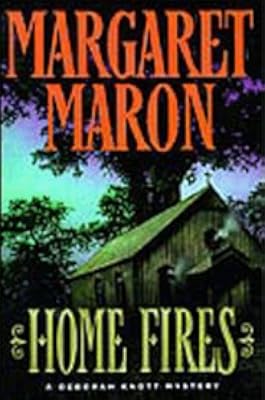
Home Fires tackles one of the contemporary South's most burning issues. When racial tension erupts in the sleepy community of Colleton County, North Carolina, Deborah is caught off guard. She is happily tending her own home fires: her simmering romance with Kidd Chapin, the house she's building on her family's land, and her campaign for reelection as district judge. But then the first black church is burned, and all of Deborah's alarms go off. Narrator C.J. Critt has received rave reviews show more for her performances of the Deborah Knott mysteries. Her perfect comic timing lets you fully enjoy the judge's down-home humor. Her authentic accents carry you deep into Deborah Knott's rural South to explore its rich history and current concerns. show lessTags
Recommendations









Member Reviews
Published in 1998, this mystery rife with racial tensions accurately portrays racial politics and relations both for that time and currently. Until the older folks die off, there is not going to be much progress that is more than skin deep. I say that as a non-white, non-black woman raised in the Deep South, having faced both races over these issues. (Being Asian in the south was a weird experience for sure.)
The mystery plot brings up some painful scenes of prejudice and touches on colorism, but the theme is handled with Maron's typical deftness, both honest and understanding of human foibles and failings.
The mystery plot brings up some painful scenes of prejudice and touches on colorism, but the theme is handled with Maron's typical deftness, both honest and understanding of human foibles and failings.
I've been reading the Deborah Knott Mysteries that I have had on my tbr pile so this has moved me from Book 3 to Book 6. Readers of my previous reviews may remember my delight with the feature of italicized sentences which I enjoy as it provides a "heading" and/or very effective "lead-in" at the beginning of each chapter and have been related to the overall theme of each novel. In "Home Fires" although the sentences are related to the novel's theme, I did not find them as effective as in Books 2 and 3. As no credit was given on the copyright page I'm not sure if the author saw these sayings on church signage or if they are also of her own creation.
This is the first time that I have viewed "Deborah Knott's Family Tree" on the opposite show more page of Chapter 1 and it is very helpful. After reading several books in the series right in a row I'm more familiar with Deborah's large family but it was still convenient to refer back to the chart and I wish it would have been available in the first book I read in the series which was Book 2, "Southern Discomfort."
A very poignant paragraph in the novel states
"God knows life would be a lot simpler if we could all wake up one morning color-blind, but we're nowhere close to it on either side. Not by a long shot. We continue to lead separate, parallel personal lives, seldom connecting without self-consciousness, at genuine ease only at points of old familiarity such as Maidie and me here in my mother's kitchen.
It was at that point that I had to pause in my reading to look at the copyright page to learn when the novel was published and was saddened by the copyright date of 1998. 22 years since the author wrote those words. How little progress we have made as the author later writes,
"...that people might quit letting their eyes stop at a person's skin but keep on looking deeper until each saw the other's humanity."
Or as the saying goes, “If not us, who? If not now, when?”
Margaret Maron writes excellent murder mysteries and they occur in the midst of everyday life and highlight relevant themes that all beg the reader and even challenge the reader to be better tomorrow than we were today not merely with our words but more importantly with our actions. show less
This is the first time that I have viewed "Deborah Knott's Family Tree" on the opposite show more page of Chapter 1 and it is very helpful. After reading several books in the series right in a row I'm more familiar with Deborah's large family but it was still convenient to refer back to the chart and I wish it would have been available in the first book I read in the series which was Book 2, "Southern Discomfort."
A very poignant paragraph in the novel states
"God knows life would be a lot simpler if we could all wake up one morning color-blind, but we're nowhere close to it on either side. Not by a long shot. We continue to lead separate, parallel personal lives, seldom connecting without self-consciousness, at genuine ease only at points of old familiarity such as Maidie and me here in my mother's kitchen.
It was at that point that I had to pause in my reading to look at the copyright page to learn when the novel was published and was saddened by the copyright date of 1998. 22 years since the author wrote those words. How little progress we have made as the author later writes,
"...that people might quit letting their eyes stop at a person's skin but keep on looking deeper until each saw the other's humanity."
Or as the saying goes, “If not us, who? If not now, when?”
Margaret Maron writes excellent murder mysteries and they occur in the midst of everyday life and highlight relevant themes that all beg the reader and even challenge the reader to be better tomorrow than we were today not merely with our words but more importantly with our actions. show less
6th in the Judge Deborah Knott series set in North Carolina.
The story opens with Deborah and her father, Kezzie Knott, racing to the scene of a burning church. Deborah risks her life to save a treasured Bible, hymn books and other objects from the church, as volunteer firemen battle the blaze—ineffectively, as the old and tinder-dry building burns to the ground. The church is home to a black congregation; the fire is clearly arson, and the obvious conclusion is that it is a hate crime. But it is only the first of a series of arsons of black churches; during one, a sacristan dies, raising the tension in the community.
It’s an exciting beginning to one of the best installments in the series. We learn that Maron does a good job of show more showing that racism that exists today on both sides, and the chasm that no law can really bridge; it will depend, perhaps, on the next generation to over come the deep-seated distrust of both blacks and whites.
Maron almost always does a good, straightforward plot with few twists or turns. Unusually, this one has a few fillips that up the interest nicely. She continues to have a fine protagonist in Deborah Knott, who does not wear out with increasing exposure in each book. Back are familiar, strong recurring characters: her father Kezzie; Dwight Bryant of the Sheriff’s Department; various members of her family; friends. This book centers on one of her brothers, Andrew, and his family, who have not had prominent roles heretofore. In fact, it is a great strength of the series that Maron has introduced such a large family for Deborah; they’re convenient for spreading plot elements around in a believable way.
Her usual strong writing about the South, its idioms and regional ways. Excellent discussion within the medium of the mystery genre of race and how it plays out today.
Highly recommended. show less
The story opens with Deborah and her father, Kezzie Knott, racing to the scene of a burning church. Deborah risks her life to save a treasured Bible, hymn books and other objects from the church, as volunteer firemen battle the blaze—ineffectively, as the old and tinder-dry building burns to the ground. The church is home to a black congregation; the fire is clearly arson, and the obvious conclusion is that it is a hate crime. But it is only the first of a series of arsons of black churches; during one, a sacristan dies, raising the tension in the community.
It’s an exciting beginning to one of the best installments in the series. We learn that Maron does a good job of show more showing that racism that exists today on both sides, and the chasm that no law can really bridge; it will depend, perhaps, on the next generation to over come the deep-seated distrust of both blacks and whites.
Maron almost always does a good, straightforward plot with few twists or turns. Unusually, this one has a few fillips that up the interest nicely. She continues to have a fine protagonist in Deborah Knott, who does not wear out with increasing exposure in each book. Back are familiar, strong recurring characters: her father Kezzie; Dwight Bryant of the Sheriff’s Department; various members of her family; friends. This book centers on one of her brothers, Andrew, and his family, who have not had prominent roles heretofore. In fact, it is a great strength of the series that Maron has introduced such a large family for Deborah; they’re convenient for spreading plot elements around in a believable way.
Her usual strong writing about the South, its idioms and regional ways. Excellent discussion within the medium of the mystery genre of race and how it plays out today.
Highly recommended. show less
Sixth in the Judge Deborah Knott mystery series set in Colleton County, North Carolina. Racial tensions run high when a black church is torched and Deborah has a personal interest when her nephew A.J. is initially implicated with a couple of ne’er do well friends of his. Past grief and grudges come forward and the media and civil rights leaders descend on Raleigh and the general area when two more churches go up in flames—and a body is found in one of them. Something smells rotten to Deborah and she begins to wonder if the burnings—and the death—are racially motivated at all, or if someone has a better reason for creating mayhem. On a personal level, Deborah is seeing the new home she’s having built on a few secluded acres show more given to her by her father nearing completion and her relationship with Kidd, her park ranger boyfriend seems to be deepening as well—although that thread by no means dominates the book or the series. (There’s a little bit o’lovin’ but not oodles of sappy romance. Nice! LOL) I ‘recognized’ the baddie (one of those gut feelings) very early on, but didn’t know how or why it was done til close to the end. I love this series! Typically I’m not a fan of so-called ‘Southern’ fiction but this series is a definite exception to that rule. It doesn’t even bother me to have Deborah call her father Daddy, which most of the time grates on my nerves unless the speaker is under the age of twelve. LOL Deborah has such a practical nature, a pragmatic spirit and isn’t afraid to admit her own foibles and willingly accepts the faults of her friends and family too—and yet, she doesn’t suffer fools gladly. Looking forward very much to the next one in the series. show less
This was not one of the easier Deborah Knott books to get through. Take religion, add in a little bit of tension between races, plop it in a southern locale and the book was full of both good and bad tension.
It started with the teenage desecration of a family camp, and then a black church is burned, and then a couple more after that. I wasn't quite sure who in the end was going to have done it because there were definitely a lot of suspects, including one of Deb's nephews. I'm always happy when I can't guess who did it before the halfway point in the book, so that made me happy about this book.
As usual the history that the author gave, both about the Knott farm as well as the churches were as interesting as usual. And I really loved the show more interludes about Deborah's house that they were building. Not to mention Deborah describing her relationship with her brothers.
There wasn't much Kidd, which was okay, and there was just the right amount of Dwight. Although I always love to see more of him. The book is about Deborah, and I'm always appreciative when an author lets her female characters fight their own battles (and not constantly get rescued by the man either). show less
It started with the teenage desecration of a family camp, and then a black church is burned, and then a couple more after that. I wasn't quite sure who in the end was going to have done it because there were definitely a lot of suspects, including one of Deb's nephews. I'm always happy when I can't guess who did it before the halfway point in the book, so that made me happy about this book.
As usual the history that the author gave, both about the Knott farm as well as the churches were as interesting as usual. And I really loved the show more interludes about Deborah's house that they were building. Not to mention Deborah describing her relationship with her brothers.
There wasn't much Kidd, which was okay, and there was just the right amount of Dwight. Although I always love to see more of him. The book is about Deborah, and I'm always appreciative when an author lets her female characters fight their own battles (and not constantly get rescued by the man either). show less
At a stop along her campaign trail, Judge Deborah Knott attends a community picnic at the Mr. Olive Church. When the historic building is destroyed by a fire shortly after the outing -- and the charred skeleton of a young man is found among the ashes -- Knott begins her own investigation into the tragedy. Earlier national news reports of a fire at a local African-American church had already gained the attention of Wallace Adderly, a Black Panther from the '70s. Knott and Adderly team up to discover if the blazes are merely coincidence, or the work of a racist arsonist. As the number of suspects rises, Deborah finds herself re-examining her own beliefs and values as she and Adderly race to prevent another devastating loss in the community.
Synopsis: Generally in this small southern town there's not much racial unrest. However, three black churches are first covered in nasty graffiti, then torched. Two young locals are arrested, but Deborah doesn't think that they are the guilty parties. When arson turns to murder, the police increase their search for the guilty parties. Deborah finds some clues that lead her to an unexpected conclusion.
Review: Although I had suspicions, the 'bad guy' was the logical culprit. The characters in this book are well developed and interesting.
Review: Although I had suspicions, the 'bad guy' was the logical culprit. The characters in this book are well developed and interesting.
Members
- Recently Added By
Lists

Books Read in 2026
2,036 works; 68 members
Author Information

56+ Works 12,156 Members
Margaret Maron grew up in rural North Carolina. She attended college for two years before a summer job at the Pentagon led to marriage, a tour of duty in Italy, than several years in Brooklyn, New York before moving back to North Carolina. She is the author of the Sigrid Harald Mystery series, the Deborah Knott Mystery series, Bloody Kin, and Last show more Lessons of Summer. Bootlegger's Daughter won the Edgar, Agatha, Anthony and Macavity Awards for Best Mystery in 1992. "Up Jumps the Devil" won the 1996 "Best Novel" Agatha award. "High Country Fall" was nominated for an Agatha Award in 2004 and also picked up a Macavity nomination the following year. "Three-Day Town" won the 2011 Agatha Award for "Best Novel". "Long Upon the Land" won the Agatha Award for Best Contemporary Novel of 2015.Margaret is a founding member and past president of sisters in Crime and of the American Crime Writer's League; She is a director on the national board for Mystery Writers of America. (Bowker Author Biography) show less
Awards and Honors
Awards
Series

Common Knowledge
- Canonical title
- Home Fires
- Original publication date
- 1998
- People/Characters
- Deborah Knott; Kezzie Knott; Kidd Chapin; Dwight Bryant; A. K. Knott; Andrew Knott (show all 27); Ruth Knott; Rev. Ralph Freeman; Cylvia DeGraffenried; Rev. Anthony Ligon; Rev. Byantha Williams; Maidie Holt; Bo Poole (Sheriff); Reid Stephenson; Wallace Adderley; Charles Starling; Raymond Bagwell; Grace King Avery; Luther Parker; Isaac Mitchiner; Donny Turner; Tracy Johnson; Doug Woodall; Lashanda Freeman; Buck Ferguson; Mayleen Richards; Rudy Peacock
- Important places
- Colleton County, North Carolina, USA
- Dedication
- For Andrea Cumbee Maron,
Daughter by law, daughter by love - First words
- Flames are already jetting through one side of the roof.
- Last words
- (Click to show. Warning: May contain spoilers.)"Not till you're an old, old woman," he promised - as he'd been promising from the first day I realized parents could actually die - and his calloused hand squeezed mine with as much comfort as we're allowed in this uncertain world.
Classifications
Statistics
- Members
- 427
- Popularity
- 72,386
- Reviews
- 11
- Rating
- (3.72)
- Languages
- English
- Media
- Paper, Audiobook, Ebook
- ISBNs
- 14
- ASINs
- 4