On This Page
Description
Returning to the Victoria Cross pub hours after witnessing the murder of a woman, Detective Arthur Bryant is stunned to discover that the pub itself has vanished and the street around it has mysteriously aged, and calls in the Peculiar Crimes Unit to track down a killer who is stalking London's oldest watering holes.Tags
Recommendations














Member Recommendations

LongDogMom Also British, humourous, historical and intelligent.
Member Reviews
This is easily my least favourite of the Bryant and May mysteries. While I love the cast of characters that populate the Peculiar Crimes Unit, I found it difficult to focus on the case at hand. There was so much going on that didn't make sense to even the detectives, so I was even more at sea. I did like the idea of a story focused on the traditional English pub, and I liked seeing May's granddaughter, April, play a quietly useful role in the investigation, but overall this is one I had to push myself through.
It also occurs to me that this is perhaps a series I *should* actually be reading in order. Maybe someday I'll do a chronological reread and see how that compares.
It also occurs to me that this is perhaps a series I *should* actually be reading in order. Maybe someday I'll do a chronological reread and see how that compares.
The Victoria Vanishes is a very good police procedural, except the Peculiar Crimes Unit profiled in Fowler's series isn't very good at procedure. As investigators, their off-the-wall techniques raise a lot of eyebrows (especially at the Home Office, which is trying to shut them down!) but manages to get to the heart of some unsolvable crimes.
Fowler's characters are very real, and he very deftly manages to avoid stereotypes - the quirky genius is quirky but makes mistakes with the rest of us, the sidekick isn't Watson-ish at all, but manages to actually contribute meaningfully to the solving of the case, the rest of the unit are people with real lives and cares. The plot was a good, although not deep mystery, and I loved that this book show more is set in London pubs with all the atmosphere and history they contain. And Fowler does have a way with descriptive language.
Highly recommended, but you probably want to read the series in sequence. show less
Fowler's characters are very real, and he very deftly manages to avoid stereotypes - the quirky genius is quirky but makes mistakes with the rest of us, the sidekick isn't Watson-ish at all, but manages to actually contribute meaningfully to the solving of the case, the rest of the unit are people with real lives and cares. The plot was a good, although not deep mystery, and I loved that this book show more is set in London pubs with all the atmosphere and history they contain. And Fowler does have a way with descriptive language.
Highly recommended, but you probably want to read the series in sequence. show less
 This review was written for LibraryThing Early Reviewers.
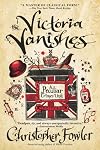
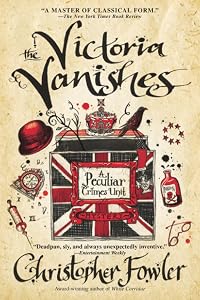
Where has this series been all my life? The writing is witty, the characters eccentric without being preposterous, the mystery engaging, the historical context fascinating - heck, even the cover makes me smile! Definitely geared towards readers who prefer their mysteries eccentric (without ever veering into "cute"), intelligent (without having to worry about complex timetables or alibis), historical (without the "gee whiz!" over-enthusiasm of Da Vinci Code), sly (without ever veering into nasty sarcasm), and satisfying. Like John Dickson Carr, author seems to enjoy creating a "that can't possibly happen!" plot (in this case, one of the detectives witnesses the latest victim moments before her death at a pub torn down 80yrs ago) and then show more daring the reader to figure out how it could be done. Having said that, not entirely sure Fowler provides all the clues you would need to solve the crime yourself - probably considered "cheating" by some purists - and I'm not sure all the loose ends are satisfactorily sewn up (the whole ending seemed a little rushed, actually), but I was having so much fun getting to know the characters, chasing after red herrings, and learning about the archane history of British pubs that I didn't care. Am looking forward to reading others in the series and hoping they are as entertaining as this outing. show less
The agents of London's Peculiar Crimes Unit are investigating the sudden death of a middle-aged woman in a local pub when a second middle-aged woman dies in another pub, then a third. There are too many similarities for them to be unrelated, but lead investigators Bryant and May can't see how the women are connected and how someone is killing them in crowded pubs yet getting away unseen.
I've had this one, and a few others, on my shelf for awhile, so I grabbed the one that was earliest in the series. This seems to be a series that should be read in order and I wished I'd had the first. I think this is the sixth, and it's pretty far along in terms of character relationships. Bryant is past retirement age in this story and there are show more numerous mentions of previous cases, but I found it gripping anyway, and really well-written. Bryant and May, and their unit, are likable and the premise is unique, so now, great, another series I need to continue. show less
I've had this one, and a few others, on my shelf for awhile, so I grabbed the one that was earliest in the series. This seems to be a series that should be read in order and I wished I'd had the first. I think this is the sixth, and it's pretty far along in terms of character relationships. Bryant is past retirement age in this story and there are show more numerous mentions of previous cases, but I found it gripping anyway, and really well-written. Bryant and May, and their unit, are likable and the premise is unique, so now, great, another series I need to continue. show less
Christopher Fowler has created a wonderful series in his Peculiar Crimes Unit, in which a couple of eccentric old men and their younger but equally eccentric support staff handle the crimes in London that are too, er, unusual for the regular police force. The Victoria Vanishes is the sixth novel in the series; this finds Arthur Bryant questioning his own memory and perhaps his faculties as a whole, as one night he sees something happen at an old pub that couldn't possibly exist. There have been a string of strange deaths of middle aged women in pubs, very public places where the murderer somehow feels capable of taking lives without anyone noticing - and he's getting away with it too, until Bryant and his partner John May become show more interested in the puzzle. Also, as usual the Home Office is trying to shut the PCU down once and for all, and it seems possible that this time, it might even succeed....Although these novels deal with heinous crimes, the series is also very, very funny; and Fowler's intimate knowledge of the history and life of London adds a further delightful dimension to the books. I think one could read The Victoria Vanishes without having read the previous five novels - Fowler makes mention of some earlier cases, but the reader doesn't need to know those stories to appreciate this one - but it's a richer experience when you have had time to get to know the characters from the previous books. Recommended! show less
'But seeing as you're here too, tell me, how long would it take a man to build a Victorian pub from scratch and then dismantle it again? Could he do it in a single night?'
Bryant explained his predicament.
Beaufort's initial look of surprise transmuted into concentration as he applied himself to the puzzle. 'It would be easier to go the other way around,' he said. 'Hide the pub behind a shop, because the Victorians built things to last. They used stronger mortar, thicker tiles, denser metals. But you could get a shop front up in an hour just by whacking a few sheets of coloured Perspex over the brickwork and holding them in place with a handful of screws. Cover the windows with posters, strip the interior furniture, hide the bar behind show more racks of magazines, hire some old guy to sit at a counter and fob you off with some story about how he'd been there for years. Pubs usually have the capacity to be brightly lit, because the lights are traditionally turned up after time has been called, so they wouldn't have to replace the lighting. I can see how that might just work.'
'I don't know, Bryant admitted. 'It sounds loopy even to me.'
'I didn't say it was a sane idea, just that it's possible.
There's one way to find out, said Beaufort. 'I've got a crowbar in my car.'
When several middle-aged women are murdered in London pubs without anyone noticing what is happening, the Pecular Crimes Unit are called in and Arthur Bryant's knowledge of arcane public house history soon leads them to a likely suspect. But were the victims really chosen at random or is there something else behind it?
The Home Office are still out to close the PCU down and rid themselves of the troublesome detectives, and things are looking bleak by the end of the book, but The Victoria Vanishes is book 6 in a series containing 15 novels and some short stories, so something must happen to save them in the next book. show less
Bryant explained his predicament.
Beaufort's initial look of surprise transmuted into concentration as he applied himself to the puzzle. 'It would be easier to go the other way around,' he said. 'Hide the pub behind a shop, because the Victorians built things to last. They used stronger mortar, thicker tiles, denser metals. But you could get a shop front up in an hour just by whacking a few sheets of coloured Perspex over the brickwork and holding them in place with a handful of screws. Cover the windows with posters, strip the interior furniture, hide the bar behind show more racks of magazines, hire some old guy to sit at a counter and fob you off with some story about how he'd been there for years. Pubs usually have the capacity to be brightly lit, because the lights are traditionally turned up after time has been called, so they wouldn't have to replace the lighting. I can see how that might just work.'
'I don't know, Bryant admitted. 'It sounds loopy even to me.'
'I didn't say it was a sane idea, just that it's possible.
There's one way to find out, said Beaufort. 'I've got a crowbar in my car.'
When several middle-aged women are murdered in London pubs without anyone noticing what is happening, the Pecular Crimes Unit are called in and Arthur Bryant's knowledge of arcane public house history soon leads them to a likely suspect. But were the victims really chosen at random or is there something else behind it?
The Home Office are still out to close the PCU down and rid themselves of the troublesome detectives, and things are looking bleak by the end of the book, but The Victoria Vanishes is book 6 in a series containing 15 novels and some short stories, so something must happen to save them in the next book. show less
The Victoria Vanishes is the sixth installment in the Peculiar Crimes Unit series featuring Bryant and May, two detectives who have unusual methods of solving unusual crimes. One evening, in front of the Victoria Cross pub, Bryant sees a woman murdered. Later, when he goes to investigate, he finds that the pub doesn’t exist. One murder turns into several as a killer is tracked down.
There’s not only murder in this intelligent mystery, but lore about the old pubs of London and a government conspiracy. The strength of the novel lies in the psychological evaluations of the murderer, the characterizations of Bryant, May, and their colleagues, and the pub lore. As one of the characters says, "The pubs of London are taken almost completely show more for granted by those who drink in them. Every single one has a unique and extraordinary history...these places hold the key to our past, and therefore present. They're an unappreciated indication of who we are, and a sign of all we've lost and remember fondly." And every now and then, Fowler attempts to infuse the book with a little humor. This novel is well-written and charming, and I look forward to reading more novels in the series. show less
There’s not only murder in this intelligent mystery, but lore about the old pubs of London and a government conspiracy. The strength of the novel lies in the psychological evaluations of the murderer, the characterizations of Bryant, May, and their colleagues, and the pub lore. As one of the characters says, "The pubs of London are taken almost completely show more for granted by those who drink in them. Every single one has a unique and extraordinary history...these places hold the key to our past, and therefore present. They're an unappreciated indication of who we are, and a sign of all we've lost and remember fondly." And every now and then, Fowler attempts to infuse the book with a little humor. This novel is well-written and charming, and I look forward to reading more novels in the series. show less
Members
- Recently Added By
Published Reviews
ThingScore 75
There’s always a serious point to Fowler’s drolly mannered mysteries, and here it’s the future of London’s historic drinking establishments — many of them visited in the course of this devious puzzle.
added by y2pk
Lists

london novels (adult)
21 works; 3 members

the old and the restless
62 works; 14 members
Author Information

136+ Works 12,716 Members
Christopher Fowler was born in Greenwich, London, England in 1953. He is the author of the Bryant and May Mystery series, Rune, and Old Devil Moon, which won the Edge Hill Audience Prize in 2008. He also won the British Fantasy Society Award for best novella for Breathe in 2005. He also won The Dagger in the Library Award 2015 for his body of show more work. (Bowker Author Biography) show less
Some Editions
Awards and Honors
Series

Common Knowledge
- Canonical title
- The Victoria Vanishes
- Original publication date
- 2008-06-30
- People/Characters
- John May; Arthur Bryant; Raymond Land; Sergant Renfield; Sergeant Janice Longbright; Tony Pellew (show all 7); Dr. Harold Masters
- Important places
- London, England, UK; Victoria Cross pub, Bloomsbury
- Epigraph
- "It is most absurdly said, in popular language, of any man,
that he is disguised in liquor; for, on the contrary,
most men are disguised by sobriety."
--Thomas de Quincey,
Confessions of an English Opium-Ea... (show all)ter - Dedication
- For Steven, my brother and friend.
- First words
- She had four and a half minutes left to live.
- Quotations
- "It is most absurdly said, in popular language, of any man, that he is disguised in liquor; for, on the contrary, most men are disguised by sobriety." Thomas de Quincey, Confessions of an English Opium-Eater
- Last words
- (Click to show. Warning: May contain spoilers.)They are smiling for the camera and for each other, as if they have finally come to understand all the secrets of the city.
Classifications
Statistics
- Members
- 748
- Popularity
- 37,810
- Reviews
- 42
- Rating
- (3.82)
- Languages
- English
- Media
- Paper, Audiobook, Ebook
- ISBNs
- 16
- ASINs
- 9