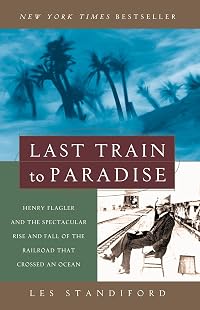
Last Train to Paradise: Henry Flagler and the Spectacular Rise and Fall of the Railroad that Crossed an Ocean
by Les Standiford
On This Page
Description
The fast-paced and gripping true account of the extraordinary construction and spectacular demise of the Key West Railroad—one of the greatest engineering feats ever undertaken, destroyed in one fell swoop by the strongest storm ever to hit U.S. shores.In 1904, the brilliant and driven entrepreneur Henry Flagler, partner to John D. Rockefeller, dreamed of a railway connecting the island of Key West to the Florida mainland, crossing a staggering 153 miles of open ocean—an engineering show more challenge beyond even that of the Panama Canal. Many considered the project impossible, but build it they did. The railroad stood as a magnificent achievement for more than twenty-two years, heralded as “the Eighth Wonder of the World,” until its total destruction in 1935's deadly storm of the century.
In Last Train to Paradise, Standiford celebrates this crowning achievement of Gilded Age ambition, bringing to life a sweeping tale of the powerful forces of human ingenuity colliding with the even greater forces of nature’s wrath. show less
Tags
Recommendations

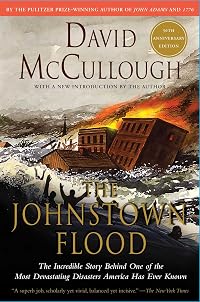
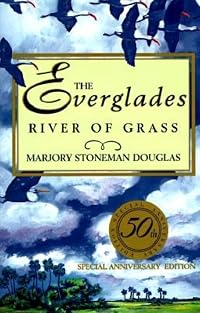
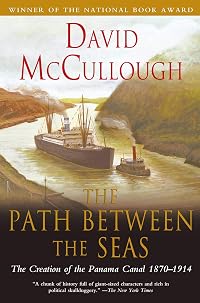
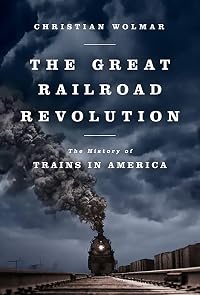











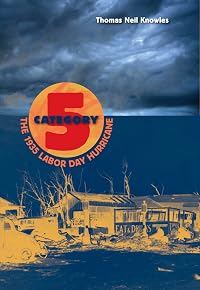
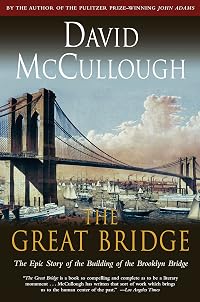
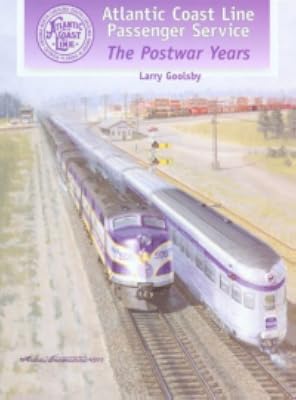
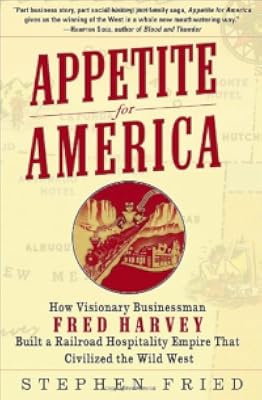


Member Recommendations

John_Vaughan The ICW ran alongside and undeneath the Big Bridge
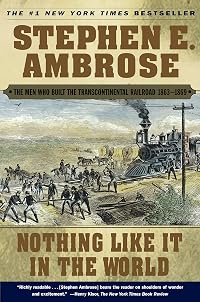
Nothing Like It In the World: The Men Who Built the Transcontinental Railroad 1863-1869 by Stephen E. Ambrose
John_Vaughan East to West and North to South!
Member Reviews
As Carl Hiaasem talks about in his comic thrillers, Florida has long been home to disreputable developers, business shysters and other unsavory characters who have raped the lush landscape of the state for fun and profit, and no one's name is more connected to Florida's notorious business practices than Henry Flager who not only built a hotel empire in Florida and almost single-handedly built Miami and Palm Beach, but also built an improbably railroads line from Miami to Key West.
Flagler who was John D. Rockefeller's partner in Standard Oil of Ohio (and also the author of that company's most notorious business practices) fell under the spell of Florida in the early years of the twentieth century and proceeded to make building a railroad show more line to Key West his life's obsession.
Long called "Flagler's Folly" he refused to let heat, disease or multiple hurricanes deter him from his dream of extending rail service from Miami to the southernmost edge of the United States. The railway came into existence after many years of effort, but Flagler's dreams of making Key West the country's major deep water port did not.And when in 1935 a devastating hurricane destroyed the railroad once and for all, all that was left of Flagler's dream were a few Ozymandias-like remnants of his efforts.
Today Florida's fragile environment is still under assault from rapacious developers who disregard the land in favor of quick profits. MAybe they should read this book and then think twice before starting the bulldozers on yet another dubious development. show less
Flagler who was John D. Rockefeller's partner in Standard Oil of Ohio (and also the author of that company's most notorious business practices) fell under the spell of Florida in the early years of the twentieth century and proceeded to make building a railroad show more line to Key West his life's obsession.
Long called "Flagler's Folly" he refused to let heat, disease or multiple hurricanes deter him from his dream of extending rail service from Miami to the southernmost edge of the United States. The railway came into existence after many years of effort, but Flagler's dreams of making Key West the country's major deep water port did not.And when in 1935 a devastating hurricane destroyed the railroad once and for all, all that was left of Flagler's dream were a few Ozymandias-like remnants of his efforts.
Today Florida's fragile environment is still under assault from rapacious developers who disregard the land in favor of quick profits. MAybe they should read this book and then think twice before starting the bulldozers on yet another dubious development. show less
Henry M. Flagler had partnered with John D. Rockefeller to create Standard Oil, built a railroad along the east coast of Florida that linked Jacksonville to Miami, and built a string of hotels that helped to make the state a tourist mecca. A railroad across the ocean, linking Miami to Key West, was his last great dream. Conceived in 1898 and begun in 1905, the 135-mile-long "Key West Extension" took seven years, 30 million dollars, and the labor of 40,000 workers to build. Popular with tourists, but an abject failure as the freight conduit for Central and South American goods that Flagler envisioned, it operated for a little over two decades before the Labor Day Hurricane of 1935 washed much of it away.
Les Standiford's brisk narrative show more of the project packs a half-dozen distinct threads into 260 pages: a portrait of Flagler that emphasizes his restless drive and towering ambition, the geopolitical realities that shaped his dream, the lives of the railroad workers, the geography of the Keys and its impact on the work, the engineering challenges posed by the line, and—bookending the narrative—the devastating 1935 storm: the most intense ever to strike the United States. He weaves them together deftly, always switching to a new subject before the reader's interest in the current one begins to flag.
The result is a highly readable book that will appeal to history fans in search of an exciting story, even if they have no particular interest in railroads, epic civil engineering projects, or Gilded-Age tycoons. Those looking for a deep dive along the lines of David McCullough's The Great Bridge or The Path Between the Seas will be disappointed, but even for them, Standiford makes an agreeable starting point. show less
Les Standiford's brisk narrative show more of the project packs a half-dozen distinct threads into 260 pages: a portrait of Flagler that emphasizes his restless drive and towering ambition, the geopolitical realities that shaped his dream, the lives of the railroad workers, the geography of the Keys and its impact on the work, the engineering challenges posed by the line, and—bookending the narrative—the devastating 1935 storm: the most intense ever to strike the United States. He weaves them together deftly, always switching to a new subject before the reader's interest in the current one begins to flag.
The result is a highly readable book that will appeal to history fans in search of an exciting story, even if they have no particular interest in railroads, epic civil engineering projects, or Gilded-Age tycoons. Those looking for a deep dive along the lines of David McCullough's The Great Bridge or The Path Between the Seas will be disappointed, but even for them, Standiford makes an agreeable starting point. show less
Last Train to Paradise is acclaimed novelist Les Standiford’s fast-paced and gripping true account of the extraordinary construction and spectacular demise of the Key West Railroad—one of the greatest engineering feats ever undertaken, destroyed in one fell swoop by the strongest storm ever to hit U.S. shores.
In 1904, the brilliant and driven entrepreneur Henry Flagler, partner to John D. Rockefeller and the true mastermind behind Standard Oil, concocted the dream of a railway connecting the island of Key West to the Florida mainland, crossing a staggering 153 miles of open ocean—an engineering challenge beyond even that of the Panama Canal.
“The financiers considered the project and said, Unthinkable. The engineers pondered show more the problems and from all came one verdict, Impossible. . . .” But build it they did, and the railroad stood as a magnificent achievement for twenty-two years. Once dismissed as “Flagler’s Folly,” it was heralded as “the Eighth Wonder of the World”—until a will even greater than Flagler’s rose up in opposition. In 1935, a hurricane of exceptional force, which would be dubbed “the Storm of the Century,” swept through the tiny islands, killing some 700 residents and workmen and washing away all but one sixty-foot section of track, on which a 320,000-pound railroad engine stood and “gripped its rails as if the gravity of Jupiter were pressing upon it.” Standiford brings the full force and fury of this storm to terrifying life.
In spinning his saga of the railroad’s construction, Standiford immerses us in the treacherous world of the thousands of workers who beat their way through infested swamps, lived in fragile tent cities on barges anchored in the midst of daunting stretches of ocean, and suffered from a remarkable succession of three ominous hurricanes that killed many and washed away vast stretches of track. Steadfast through every setback, Flagler inspired a loyalty in his workers so strong that even after a hurricane dislodged one of the railroad’s massive pilings, casting doubt over the viability of the entire project, his engineers refused to be beaten. The question was no longer “Could it be done?” but “Can we make it to Key West on time?” to allow Flagler to ride the rails of his dream. show less
In 1904, the brilliant and driven entrepreneur Henry Flagler, partner to John D. Rockefeller and the true mastermind behind Standard Oil, concocted the dream of a railway connecting the island of Key West to the Florida mainland, crossing a staggering 153 miles of open ocean—an engineering challenge beyond even that of the Panama Canal.
“The financiers considered the project and said, Unthinkable. The engineers pondered show more the problems and from all came one verdict, Impossible. . . .” But build it they did, and the railroad stood as a magnificent achievement for twenty-two years. Once dismissed as “Flagler’s Folly,” it was heralded as “the Eighth Wonder of the World”—until a will even greater than Flagler’s rose up in opposition. In 1935, a hurricane of exceptional force, which would be dubbed “the Storm of the Century,” swept through the tiny islands, killing some 700 residents and workmen and washing away all but one sixty-foot section of track, on which a 320,000-pound railroad engine stood and “gripped its rails as if the gravity of Jupiter were pressing upon it.” Standiford brings the full force and fury of this storm to terrifying life.
In spinning his saga of the railroad’s construction, Standiford immerses us in the treacherous world of the thousands of workers who beat their way through infested swamps, lived in fragile tent cities on barges anchored in the midst of daunting stretches of ocean, and suffered from a remarkable succession of three ominous hurricanes that killed many and washed away vast stretches of track. Steadfast through every setback, Flagler inspired a loyalty in his workers so strong that even after a hurricane dislodged one of the railroad’s massive pilings, casting doubt over the viability of the entire project, his engineers refused to be beaten. The question was no longer “Could it be done?” but “Can we make it to Key West on time?” to allow Flagler to ride the rails of his dream. show less
This is the best single-volume account of two epic events. The first was the building of the Overseas Railway that connected the Florida Keys to the mainland. Finished in 1912, it was the final effort from Standard Oil and Florida East Coast Railroad magnate Henry Flagler. The second was the Labor Day Hurricane of 1935 that destroyed the railroad and killed more than 400 people in the Keys, many of them destitute World War I veterans who were working on a highway parallel to the railroad. The consequences and visible after-effects of both events are still visible today in the Keys. It's quite a tale and one Standiford tells very well and with admirable economy.
Last Train to Paradise is the story of Henry Flagler, an American industrialist best known as a founder of Standard Oil. He also played a part in popularizing Florida as a tourist attraction since he had a pivotal role in extending railroad lines to Florida cities. By building luxury hotels in Jacksonville, Palm Beach, and Miami, he made vacationing in Florida attractive to his wealthy contemporaries such as Rockefeller. Although Standiford discusses Flagler’s wives and children, the main story is about his drive to build a Florida railroad. At first, the rail connected northern stations to Jacksonville and eventually to Palm Beach and Miami. But his vision was to connect the railroad lines “over the sea” so that the Florida Keys show more would be accessible by rail. He accomplished his goal by partnering with engineers and bridge builders, who shared his enthusiasm for risk-taking and accomplishment.
The press called the Key West project “Flagler’s Folly.” Standiford includes many gruesome descriptions of the working conditions and the lives lost during the bridge’s building to and through the keys. The labor pool for the actual work included unemployed northerners and people from the islands. Many workers were unaccustomed to the humidity, heat, storms, and insects common in Florida. The workcamps that he set up for his workers were less than adequate, and Flagler dealt with workers who wanted to escape rather than work for low wages and risk getting sick and dying. Flagler contended with unfair labor practice claims, including a governmental investigation for slave-labor. His hiring practices would not pass muster today. Flagler would have been unable to forge ahead with his plan under the EPA with the dredging of lands and redesigning nature’s paths to accommodate bridges and roadbeds. In 1912, the overseas railroad to Key West was finished after about seven years of labor, including at least three hurricanes. Much of the railway was damaged or demolished in the hurricane of 1935. Parts of the old path can be viewed from today’s modern roadway leading through the keys.
The value of Flagler’s dreams and accomplishments is for the reader to decide. show less
The press called the Key West project “Flagler’s Folly.” Standiford includes many gruesome descriptions of the working conditions and the lives lost during the bridge’s building to and through the keys. The labor pool for the actual work included unemployed northerners and people from the islands. Many workers were unaccustomed to the humidity, heat, storms, and insects common in Florida. The workcamps that he set up for his workers were less than adequate, and Flagler dealt with workers who wanted to escape rather than work for low wages and risk getting sick and dying. Flagler contended with unfair labor practice claims, including a governmental investigation for slave-labor. His hiring practices would not pass muster today. Flagler would have been unable to forge ahead with his plan under the EPA with the dredging of lands and redesigning nature’s paths to accommodate bridges and roadbeds. In 1912, the overseas railroad to Key West was finished after about seven years of labor, including at least three hurricanes. Much of the railway was damaged or demolished in the hurricane of 1935. Parts of the old path can be viewed from today’s modern roadway leading through the keys.
The value of Flagler’s dreams and accomplishments is for the reader to decide. show less
Last Train to Paradise was a mesmerizing read. I have been a Florida resident for more than 30 years but mostly on the west coast and was not aware of the ill-fated railroad between Miami and Key West. Les Standiford has given us a detailed history of the difficulties of building the train, what with so many islands, so many hurricanes and so many mosquitos. The book is not a biography of Henry Flagler but Standiford gives us enough facts that we end up with understanding Flagler's entrepreneurial drive to complete his pet project. I definitely would recommend Last Train to Paradise to anyone who wants to know about a slice of local history that is not known to most of us.
Frankly, I have no idea how I ran across this very interesting book. Henry Flagler, one of the last great industrialists and oil barons, built a railroad across the Florida Keys, a feat that had been considered impossible, in order to capitalize on the proximity of Cuba to the nascent Panama Canal. He had already virtually built the state of Florida by buying and developing land all along the east coast, then linking his hotel properties via rail. His Key West Railroad, an extension of the Florida East Coast Railroad, would connect Miami to Key West, about 153 miles, much of it over open water. A massive hurricane in 1935 undid it all. The Weather Bureau did not begin naming hurricanes until 1953, so in 1935 as Hemingway viewed the show more sketchy forecasts and storm warnings with alarm, he had no way of referring to the specific storm that was about to destroy Key West.
Unbeknownst to him, just to the north, the barometer had fallen to the lowest ever recorded. The islands of the Florida Keys are not very high above the water, making them especially vulnerable to storms and waves. Despite this knowledge, Henry Flagler had built the dream extension of his railroad in a magnificent feat of engineering. Nature was about to suggest that he shouldn't have bothered. Considering that Flagler in 1898 was sixtyeight years old and could have easily retired to a luxurious existence, it is even more remarkable that he would have risked his fortune on such a risky venture. The Spanish-American War, which cost Spain Cuba, provided the added incentive he needed. (It is interesting to speculate what might have happened had William Jennings Bryan been elected president instead of McKinley, who was a great friend to business. Bryan, I suspect, would not have been drawn into the skullduggery behind the sinking of the Maine.)
Having been thwarted in his desire to build a deep-water port in Miami, Flagler deemed Key West a logical alternative. The engineering difficulties were staggering. Special dredges on boats were designed to carve out a way for themselves as they used the material pulled from the swamps and marshes to create the roadbed. Mosquitoes swarmed all during the day, and portending the disaster that was to befall the railroad in 1935, a hurricane killed many workers in 1906 as the special dormitory barges were smashed. Several long bridges had to span many miles of ocean, and the seven-mile viaduct, considered a beautiful structure, became the symbol of the Florida East Coast Railroad. The Keys, originally an unbroken stretch of land that connected present-day Florida to Mexico are simply the vestigial remains of that land bridge subject to eons of erosion and storms — unless, of course, you are a young earth advocate in which case it was five minutes. That is a problem for builders because storms continue to push walls of water twenty to thirty feet high in front of them. These storm surges would course through the natural passageways that had been cut between the remaining land forms. Any blockage of these waterways would cause tremendous problems.
The railroad builders, who had filled in shorter distances between land areas, were creating unnatural dikes. They were swept away in the first hurricane to batter the railroad in 1909. Flagler and his engineers revised their plans and built more bridges that permitted water to flow underneath rather than impede its flow. They also discovered that the natural limestone marl made a much better substrate than imported rock and gravel, which was easily washed away. The line was completed slightly ahead of schedule despite several setbacks and shortly before Flagler's death. It had cost him most of his fortune to build, but never made money. Instead of encouraging growth on the Keys, there is evidence it might have done the opposite. Many residents chose to leave the islands and migrated to Miami on the railroad. Traffic from Cuba never amounted to much, and by 1930 the Census Bureau reported that Key West had actually lost more than seven thousand residents.
The worst hurricane in United States history, on Labor Day 1935, washed everything away. Winds in excess of 200 mph were measured. Given that the winds in only 3 percent of tornadoes exceed 206 mph you can get an idea of the devastation caused on a series of islands that were barely above sea level. ("A minimal 75-mile-per-hour storm has the capability of propelling a shard of two-by-four lumber through a four-inch concrete block wall." Bear in mind that when wind speed doubles, its force quadruples. Hurricane Andrew in 1992 produced only 155 mph winds.) Weather forecasting was still in its infancy, but the railroad, given its earlier experience with hurricanes, had implemented several measures to help provide some warning. Nevertheless, loss of life was extensive and an emergency relief train sent to take people off the keys was blown away. The well-built bridges survived, indeed they were partly used to build the highway that now links the Keys to the mainland, but the railroad was bankrupt by then, and the rights-of-way were sold to the state for not even one-twentieth of the $30 million Flagler had spent on building the Keys Extension. His chain of world-class resorts still remains as a monument to the man who virtually created Florida. show less
Unbeknownst to him, just to the north, the barometer had fallen to the lowest ever recorded. The islands of the Florida Keys are not very high above the water, making them especially vulnerable to storms and waves. Despite this knowledge, Henry Flagler had built the dream extension of his railroad in a magnificent feat of engineering. Nature was about to suggest that he shouldn't have bothered. Considering that Flagler in 1898 was sixtyeight years old and could have easily retired to a luxurious existence, it is even more remarkable that he would have risked his fortune on such a risky venture. The Spanish-American War, which cost Spain Cuba, provided the added incentive he needed. (It is interesting to speculate what might have happened had William Jennings Bryan been elected president instead of McKinley, who was a great friend to business. Bryan, I suspect, would not have been drawn into the skullduggery behind the sinking of the Maine.)
Having been thwarted in his desire to build a deep-water port in Miami, Flagler deemed Key West a logical alternative. The engineering difficulties were staggering. Special dredges on boats were designed to carve out a way for themselves as they used the material pulled from the swamps and marshes to create the roadbed. Mosquitoes swarmed all during the day, and portending the disaster that was to befall the railroad in 1935, a hurricane killed many workers in 1906 as the special dormitory barges were smashed. Several long bridges had to span many miles of ocean, and the seven-mile viaduct, considered a beautiful structure, became the symbol of the Florida East Coast Railroad. The Keys, originally an unbroken stretch of land that connected present-day Florida to Mexico are simply the vestigial remains of that land bridge subject to eons of erosion and storms — unless, of course, you are a young earth advocate in which case it was five minutes. That is a problem for builders because storms continue to push walls of water twenty to thirty feet high in front of them. These storm surges would course through the natural passageways that had been cut between the remaining land forms. Any blockage of these waterways would cause tremendous problems.
The railroad builders, who had filled in shorter distances between land areas, were creating unnatural dikes. They were swept away in the first hurricane to batter the railroad in 1909. Flagler and his engineers revised their plans and built more bridges that permitted water to flow underneath rather than impede its flow. They also discovered that the natural limestone marl made a much better substrate than imported rock and gravel, which was easily washed away. The line was completed slightly ahead of schedule despite several setbacks and shortly before Flagler's death. It had cost him most of his fortune to build, but never made money. Instead of encouraging growth on the Keys, there is evidence it might have done the opposite. Many residents chose to leave the islands and migrated to Miami on the railroad. Traffic from Cuba never amounted to much, and by 1930 the Census Bureau reported that Key West had actually lost more than seven thousand residents.
The worst hurricane in United States history, on Labor Day 1935, washed everything away. Winds in excess of 200 mph were measured. Given that the winds in only 3 percent of tornadoes exceed 206 mph you can get an idea of the devastation caused on a series of islands that were barely above sea level. ("A minimal 75-mile-per-hour storm has the capability of propelling a shard of two-by-four lumber through a four-inch concrete block wall." Bear in mind that when wind speed doubles, its force quadruples. Hurricane Andrew in 1992 produced only 155 mph winds.) Weather forecasting was still in its infancy, but the railroad, given its earlier experience with hurricanes, had implemented several measures to help provide some warning. Nevertheless, loss of life was extensive and an emergency relief train sent to take people off the keys was blown away. The well-built bridges survived, indeed they were partly used to build the highway that now links the Keys to the mainland, but the railroad was bankrupt by then, and the rights-of-way were sold to the state for not even one-twentieth of the $30 million Flagler had spent on building the Keys Extension. His chain of world-class resorts still remains as a monument to the man who virtually created Florida. show less
Members
- Recently Added By
Lists

Books discovered on LibraryThing
256 works; 36 members
Author Information

33+ Works 3,807 Members
Les Standiford is the director of the creative writing program at Florida International University. He has lived in Miami since 1981. Les Standiford is a historian and author. He has been awarded the Frank O'Connor Award for Short Fiction, a Florida Individual Artist Fellowship in Fiction, and a National Endowment for the Arts Fellowship in show more Fiction, and belongs to the Associated Writing Programs, Mystery Writers of America, and the Writers Guild. Standiford's main non-fiction writings include: Bringing Adam Home: The Abduction that Changed America; The Man Who Invented Christmas: How Charles Dickens's A Christmas Carol Rescued His Career and Revived Our Holiday Spirits; Washington Burning: How a Frenchman's Vision for Our Nation's Capital Survived Congress, the Founding Fathers, and the Invading British Army; Meet You in Hell: Andrew Carnegie, Henry Clay Frick, and the Bitter Partnership That Transformed America; and Last Train to Paradise: Henry Flagler and the Spectacular Rise and Fall of the Railroad that Crossed an Ocean. The last title was on the New York Times bestseller list in 2014. His fiction novels include: Done Deal; Raw Deal; Black Mountain; Bone Key; and Havana Run. (Bowker Author Biography) show less
Awards and Honors
Common Knowledge
- People/Characters
- Henry M. Flagler (as Henry Morrison Flagler); Edward N. Akin; Horatio Alger
- Important places
- Florida Keys, Florida, USA; Key West, Florida, USA; Florida, USA; Miami, Florida, USA; Homestead, Florida, USA; Havana, Cuba
- Important events
- Disaster: Hurricane
- Epigraph
- "And on the pedestal these words appear:
'My name is Ozymandias, King of Kings,
Look on my works, ye mighty, and despair!'
Nothing beside remains. Round the decay
Of that colossal wreck, boundless and bare <... (show all)br> The lone and level sands stretch far away."
- Percy Bysshe Shelley
"Ah, but a man's reach should exceed his grasp,
or what's a heaven for?"
- Robert Browning - Dedication
- This book is dedicated to the memory of the hundreds of "vets" who lost their lives during the Labor Day hurricane of 1935, as well as to the hundreds of Keys residents - men, women, and children - who also suffered and died ... (show all)that day.
- First words
- At about four o'clock in the afternoon on Labor Day Saturday in 1935, Ernest Hemingway, by then one of Key West's most notable residents, thought it time to knock off work on weaving together what an editor had called "those ... (show all)Harry Morgan stories," an undertaking that would eventually be published as a novel called "To Have and Have Not."
- Last words
- (Click to show. Warning: May contain spoilers.)But there is no stopping, not halfway across a busy highway bridge. And by the time the traveler reaches Key West, order is restored.
Classifications
- Genres
- History, Nonfiction, General Nonfiction, Biography & Memoir
- DDC/MDS
- 385.09759 — Society, government, & culture Commerce, communications & transportation regulations Railroad transportation Subdivisions History, geographic treatment, biography North America Southeastern U.S. Florida
- LCC
- TF24 .F6 .S73 — Technology Railroad engineering and operation Railroad engineering and operation
- BISAC
Statistics
- Members
- 617
- Popularity
- 47,483
- Reviews
- 24
- Rating
- (3.83)
- Languages
- English
- Media
- Paper, Audiobook, Ebook
- ISBNs
- 9
- ASINs
- 3