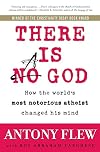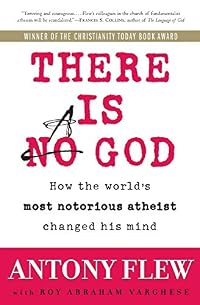
There Is a God: How the World's Most Notorious Atheist Changed His Mind
by Antony Flew, Roy Abraham Varghese
On This Page
Description
In one of the biggest religion news stories of the new millennium, the Associated Press announced that Professor Antony Flew, the world's leading atheist, now believes in God. Flew is a pioneer for modern atheism. His famous paper, Theology and Falsification, was first presented at a meeting of the Oxford Socratic Club chaired by C. S. Lewis and went on to become the most widely reprinted philosophical publication of the last five decades. Flew earned his fame by arguing that one should show more presuppose atheism until evidence of a God surfaces. He now believes that such evidence exists, and There Is a God chronicles his journey from staunch atheism to believer. For the first time, this book will present a detailed and fascinating account of Flew's riveting decision to revoke his previous beliefs and argue for the existence of God. Ever since Flew's announcement, there has been great debate among atheists and believers alike about what exactly this "conversion" means. There Is a God will finally put this debate to rest. This is a story of a brilliant mind and reasoned thinker, and where his lifelong intellectual pursuit eventually led him: belief in God as designer. show lessTags
Recommendations





Member Reviews
A much meatier, weightier tome than the book's small size would suggest, Flew and Varghese tell the history of Flew's change in philosophical thought. Flew describes, with great detail, his atheistic views, and describes them adequately. He then explains why he is now a deist. It is a good work, dense enough to be engaging, but not hard enough to be off-putting for the lay reader (it isn't a philosophy text, but it isn't "chicken soup for the atheist" either). It makes you pause and think at several points, but lays a decent philosophical foundation for belief in, at least, a Creator. I could have used a selected bibliography at the end, but, all in all, a great book. Recommended, though some might find Flew's final refusal to believe show more in a Revealed God, a theist stance, a bit grating. show less
I admire Flew's open minded quest for truth. He explains his progression of understanding, and points to Gerald Schroeder, one of my favorite authors, and a physicist turned Bible scholar, as sparking his first step away from atheism.
Rather than exhibiting a loss of mental capabilities as charged by other vocal atheists, Flew presents a very rational thought process. He shows courage in being so open about admitting he must have been wrong before.
I particularly liked Appendix B, by N.T. Wright
Rather than exhibiting a loss of mental capabilities as charged by other vocal atheists, Flew presents a very rational thought process. He shows courage in being so open about admitting he must have been wrong before.
I particularly liked Appendix B, by N.T. Wright
An intriguing and very readable exposition of God in the context of nature and natural science. Although Mr. Flew came to see God as logically indispensable in any rational accounting for creation and human consciousness, he excludes any reference to the possibility of personal experience with God. His argument thus remains steadfastly confined to the relatively abstract. The possibility of God as a spiritual phenomenon in the world is never entertained.
A fascinating account of the transformation of a lifelong atheist to accepting, on logical grounds, that there has to be a creator or god of all that is or that might be in the Cosmos. When neither side of the argument can prove their case objectively, that is scientifically, and when it is logically impossible to prove that something does not exist, any attempt by either side to convince the other is surely a waste of air-time.
If any book could change my mind ... it won't be this one. The prose is so dense in places I found myself skim reading, which meant I lost the thread of the author's arguments, and by the end didn't really care about it at all. Here's a classic passage. Try to read it without your eyes glazing over.
"The nerve of the distinction between the movings involved in an action and the motions that constitute necessitated behavior is that the latter behavior is physically necessitated, wheras the sense, the direction, and the character of actions as such are that, as a matter of logic, they necessarily cannot be physically necessitated (and as a matter of brute fact, they are not)."
Huh?
In fact, the best reason to get hold of this book is for the show more appendix at the back in which New Testament scholar N.T. Wright answers the following questions: 1) What grounds are there for claiming, from the texts, that Jesus is God Incarnate? and 2) What evidence is there for the resurrection of Christ?
N.T. Wright's answers to these questions provide a neat and tidy summary of his general theological position, for which I happen to have a great deal of respect. So instead of wading through his books you could start right here. It is Wright who challenges me the most and I'd recommend this appendix for believers and non-believers alike. show less
"The nerve of the distinction between the movings involved in an action and the motions that constitute necessitated behavior is that the latter behavior is physically necessitated, wheras the sense, the direction, and the character of actions as such are that, as a matter of logic, they necessarily cannot be physically necessitated (and as a matter of brute fact, they are not)."
Huh?
In fact, the best reason to get hold of this book is for the show more appendix at the back in which New Testament scholar N.T. Wright answers the following questions: 1) What grounds are there for claiming, from the texts, that Jesus is God Incarnate? and 2) What evidence is there for the resurrection of Christ?
N.T. Wright's answers to these questions provide a neat and tidy summary of his general theological position, for which I happen to have a great deal of respect. So instead of wading through his books you could start right here. It is Wright who challenges me the most and I'd recommend this appendix for believers and non-believers alike. show less
A famous atheist, known for his philosophy changes his mind about there being a God. He changed his mind based on philosophy and science and the lack of facts of atheists trying to prove there isn't a God.
Lots of Science, lots of philosophy and a little bit of religion thrown in. I enjoyed it.
Lots of Science, lots of philosophy and a little bit of religion thrown in. I enjoyed it.
The interesting point of the book is that he was convinced by the evidence of "intelligent design".
Members
- Recently Added By
Published Reviews
ThingScore 31
In general, I find the book interesting and helpful and believe it will have a good impact on atheists who are open-minded and on theists who will learn from Flew's journey. I would recommend it to a wide audience. One weakness is the relative briefness of the arguments, but this must be understood in view of the purpose of the book.
added by Christa_Josh
His intellectual autobiography is written in the language of an Englishman of his generation and class; yet when he starts to lay out his case for God, he uses Americanisms like “beverages,” “vacation” and “candy.” It is possible that Flew decided to make some passages easier on the ears of American readers or that an editor has made trivial emendations for him. But it is striking show more how much of Flew’s method of argument, too, has changed from that in his earlier works, and how similar it now is to the abysmal intellectual standards displayed in Varghese’s appendix. In fact, Flew told The New York Times Magazine last month that the book “is really Roy’s doing.”
Instead of trying to construct a coherent chain of reasoning in Flew’s own words, the authors present a case that often consists of an assemblage of reassuring sound bites excerpted from the writings of scientists, popularizers of science and philosophers. They show little sign of engaging with the ideas they sketchily report. And they don’t seem much bothered whether readers understand what they are trying to say: one crucial passage refers to a “C-inductive argument” for God, but doesn’t explain what a C-inductive argument is. The pattern of the reasoning is always the same: a phenomenon — be it life, consciousness or the order of nature — is said to be mysterious, and then it is boldly asserted that the only possible explanation for it is “an infinitely intelligent Mind.” It is never said how or why the existence of such a mind constitutes an explanation.
...
It is unclear whether Flew has lost the desire to reason effectively or whether he no longer cares what is published in his name. Either way, it seems that this lost sheep remains rather lost. show less
Instead of trying to construct a coherent chain of reasoning in Flew’s own words, the authors present a case that often consists of an assemblage of reassuring sound bites excerpted from the writings of scientists, popularizers of science and philosophers. They show little sign of engaging with the ideas they sketchily report. And they don’t seem much bothered whether readers understand what they are trying to say: one crucial passage refers to a “C-inductive argument” for God, but doesn’t explain what a C-inductive argument is. The pattern of the reasoning is always the same: a phenomenon — be it life, consciousness or the order of nature — is said to be mysterious, and then it is boldly asserted that the only possible explanation for it is “an infinitely intelligent Mind.” It is never said how or why the existence of such a mind constitutes an explanation.
...
It is unclear whether Flew has lost the desire to reason effectively or whether he no longer cares what is published in his name. Either way, it seems that this lost sheep remains rather lost. show less
added by jimroberts
TWO YEARS LATER, Flew’s doubts have disappeared, and the philosopher has a reinvigorated faith in his theistic friends. In his new book, he freely cites Schroeder, Haldane and Varghese. And the author who two years ago was forgetting his Hume is, in the forthcoming volume, deeply read in many philosophers — John Leslie, John Foster, Thomas Tracy, Brian Leftow — rarely if ever mentioned show more in his letters, articles or books. It’s as if he’s a new man.
In August, I visited Flew in Reading. His house, sparsely furnished, sits on a small plot on a busy street, hard against its neighbors. It could belong to a retired government clerk or to a career military man who at last has resettled in the mother country. Inside, it seems very English, with the worn, muted colors of a BBC production from the 1970s. The house may lack an Internet connection, but it does have one very friendly cat, who sat beside me on the sofa. I visited on two consecutive days, and each day Annis, Flew’s wife of 55 years, served me a glass of water and left me in the sitting room to ask her husband a series of tough, indeed rather cruel, questions.
In “There Is a God,” Flew quotes extensively from a conversation he had with Leftow, a professor at Oxford. So I asked Flew, “Do you know Brian Leftow?”
“No,” he said. “I don’t think I do.”
“Do you know the work of the philosopher John Leslie?” Leslie is discussed extensively in the book.
Flew paused, seeming unsure. “I think he’s quite good.” But he said he did not remember the specifics of Leslie’s work.
“Have you ever run across the philosopher Paul Davies?” In his book, Flew calls Paul Davies “arguably the most influential contemporary expositor of modern science.”
“I’m afraid this is a spectacle of my not remembering!”
He said this with a laugh. When we began the interview, he warned me, with merry self-deprecation, that he suffers from “nominal aphasia,” or the inability to reproduce names. But he forgot more than names. He didn’t remember talking with Paul Kurtz about his introduction to “God and Philosophy” just two years ago. There were words in his book, like “abiogenesis,” that now he could not define. When I asked about Gary Habermas, who told me that he and Flew had been friends for 22 years and exchanged “dozens” of letters, Flew said, “He and I met at a debate, I think.” I pointed out to him that in his earlier philosophical work he argued that the mere concept of God was incoherent, so if he was now a theist, he must reject huge chunks of his old philosophy. “Yes, maybe there’s a major inconsistency there,” he said, seeming grateful for my insight. And he seemed generally uninterested in the content of his book — he spent far more time talking about the dangers of unchecked Muslim immigration and his embrace of the anti-E.U. United Kingdom Independence Party.
As he himself conceded, he had not written his book.
“This is really Roy’s doing,” he said, before I had even figured out a polite way to ask. “He showed it to me, and I said O.K. I’m too old for this kind of work!”
When I asked Varghese, he freely admitted that the book was his idea and that he had done all the original writing for it. But he made the book sound like more of a joint effort — slightly more, anyway. “There was stuff he had written before, and some of that was adapted to this,” Varghese said. “There is stuff he’d written to me in correspondence, and I organized a lot of it. And I had interviews with him. So those three elements went into it. Oh, and I exposed him to certain authors and got his views on them. We pulled it together. And then to make it more reader-friendly, HarperCollins had a more popular author go through it.”
So even the ghostwriter had a ghostwriter: Bob Hostetler, an evangelical pastor and author from Ohio, rewrote many passages, especially in the section that narrates Flew’s childhood. With three authors, how much Flew was left in the book? “He went through everything, was happy with everything,” Varghese said.
Cynthia DiTiberio, the editor who acquired “There Is a God” for HarperOne, told me that Hostetler’s work was limited; she called him “an extensive copy editor.” “He did the kind of thing I would have done if I had the time,” DiTiberio said, “but editors don’t get any editing done in the office; we have to do that in our own time.”
I then asked DiTiberio if it was ethical to publish a book under Flew’s name that cites sources Flew doesn’t know well enough to discuss. “I see your struggle and confusion,” she said, but she maintained that the book is an accurate presentation of Flew’s views. “I don’t think Tony would have allowed us to put in anything he was not comfortable with or familiar with,” she said. “I mean, it is hard to tell at this point how much is him getting older. In my communications with him, there are times you have to say things a couple times. I’m not sure what that is. I wish I could tell you more. . . We were hindered by the fact that he is older, but it would do the world a disservice not to have the book out there, regardless of how it was made.”
MANY AUTHORS DON'T WRITE their own books. Some don’t even read them: sports fans will remember when the basketball player Charles Barkley complained that he was misquoted in his own autobiography. It could be that two years ago, when Varghese started writing Flew’s book, Flew was a fuller partner in the process than he remembers (the section on Flew’s childhood could hardly have been written without his cooperation). And perhaps he was recently reading those philosophers whose names he now does not recognize. Two years ago, he might have had a fruitful conversation with Brian Leftow, a man he does not remember. Two years ago, he and Gary Habermas might indeed have been good friends. show less
In August, I visited Flew in Reading. His house, sparsely furnished, sits on a small plot on a busy street, hard against its neighbors. It could belong to a retired government clerk or to a career military man who at last has resettled in the mother country. Inside, it seems very English, with the worn, muted colors of a BBC production from the 1970s. The house may lack an Internet connection, but it does have one very friendly cat, who sat beside me on the sofa. I visited on two consecutive days, and each day Annis, Flew’s wife of 55 years, served me a glass of water and left me in the sitting room to ask her husband a series of tough, indeed rather cruel, questions.
In “There Is a God,” Flew quotes extensively from a conversation he had with Leftow, a professor at Oxford. So I asked Flew, “Do you know Brian Leftow?”
“No,” he said. “I don’t think I do.”
“Do you know the work of the philosopher John Leslie?” Leslie is discussed extensively in the book.
Flew paused, seeming unsure. “I think he’s quite good.” But he said he did not remember the specifics of Leslie’s work.
“Have you ever run across the philosopher Paul Davies?” In his book, Flew calls Paul Davies “arguably the most influential contemporary expositor of modern science.”
“I’m afraid this is a spectacle of my not remembering!”
He said this with a laugh. When we began the interview, he warned me, with merry self-deprecation, that he suffers from “nominal aphasia,” or the inability to reproduce names. But he forgot more than names. He didn’t remember talking with Paul Kurtz about his introduction to “God and Philosophy” just two years ago. There were words in his book, like “abiogenesis,” that now he could not define. When I asked about Gary Habermas, who told me that he and Flew had been friends for 22 years and exchanged “dozens” of letters, Flew said, “He and I met at a debate, I think.” I pointed out to him that in his earlier philosophical work he argued that the mere concept of God was incoherent, so if he was now a theist, he must reject huge chunks of his old philosophy. “Yes, maybe there’s a major inconsistency there,” he said, seeming grateful for my insight. And he seemed generally uninterested in the content of his book — he spent far more time talking about the dangers of unchecked Muslim immigration and his embrace of the anti-E.U. United Kingdom Independence Party.
As he himself conceded, he had not written his book.
“This is really Roy’s doing,” he said, before I had even figured out a polite way to ask. “He showed it to me, and I said O.K. I’m too old for this kind of work!”
When I asked Varghese, he freely admitted that the book was his idea and that he had done all the original writing for it. But he made the book sound like more of a joint effort — slightly more, anyway. “There was stuff he had written before, and some of that was adapted to this,” Varghese said. “There is stuff he’d written to me in correspondence, and I organized a lot of it. And I had interviews with him. So those three elements went into it. Oh, and I exposed him to certain authors and got his views on them. We pulled it together. And then to make it more reader-friendly, HarperCollins had a more popular author go through it.”
So even the ghostwriter had a ghostwriter: Bob Hostetler, an evangelical pastor and author from Ohio, rewrote many passages, especially in the section that narrates Flew’s childhood. With three authors, how much Flew was left in the book? “He went through everything, was happy with everything,” Varghese said.
Cynthia DiTiberio, the editor who acquired “There Is a God” for HarperOne, told me that Hostetler’s work was limited; she called him “an extensive copy editor.” “He did the kind of thing I would have done if I had the time,” DiTiberio said, “but editors don’t get any editing done in the office; we have to do that in our own time.”
I then asked DiTiberio if it was ethical to publish a book under Flew’s name that cites sources Flew doesn’t know well enough to discuss. “I see your struggle and confusion,” she said, but she maintained that the book is an accurate presentation of Flew’s views. “I don’t think Tony would have allowed us to put in anything he was not comfortable with or familiar with,” she said. “I mean, it is hard to tell at this point how much is him getting older. In my communications with him, there are times you have to say things a couple times. I’m not sure what that is. I wish I could tell you more. . . We were hindered by the fact that he is older, but it would do the world a disservice not to have the book out there, regardless of how it was made.”
MANY AUTHORS DON'T WRITE their own books. Some don’t even read them: sports fans will remember when the basketball player Charles Barkley complained that he was misquoted in his own autobiography. It could be that two years ago, when Varghese started writing Flew’s book, Flew was a fuller partner in the process than he remembers (the section on Flew’s childhood could hardly have been written without his cooperation). And perhaps he was recently reading those philosophers whose names he now does not recognize. Two years ago, he might have had a fruitful conversation with Brian Leftow, a man he does not remember. Two years ago, he and Gary Habermas might indeed have been good friends. show less
added by jimroberts
Author Information

54+ Works 3,150 Members
Antony Flew is emeritus professor of philosophy at the University of Reading, England.
12 Works 1,011 Members
Roy Abraham Varghese has authored and edited several books ranging across philosophy, science, and theology, most notably Cosmos, Bios, Theos, which Time magazine called the year's most intriguing book about God. He also co-authored, with Antony Flew, There Is a God: How the World's Most Notorious Atheist Changed His Mind.
Awards and Honors
Common Knowledge
- Canonical title*
- Dio esiste. Come l'ateo più famoso del mondo ha cambiato idea
- Original title
- There Is a God: How the World's Most Notorious Atheist Changed His Mind
- Original publication date
- 2007-10-23
- People/Characters
- Antony Flew
- Blurbers
- Collins, Francis S.; Smith, Huston; Hick, John; Polkinghorne, John; Hutchinson, Ian H.
*Some information comes from Common Knowledge in other languages. Click "Edit" for more information.
Classifications
- Genres
- Religion & Spirituality, Philosophy, Nonfiction, Biography & Memoir, General Nonfiction
- DDC/MDS
- 212.092 — Religion Philosophy & theory of religion Existence of God, ways of knowing God, attributes of God
- LCC
- BL73 .F54 .A3 — Philosophy, Psychology and Religion Religions. Mythology. Rationalism Religions. Mythology. Rationalism Biography
- BISAC
Statistics
- Members
- 762
- Popularity
- 36,657
- Reviews
- 10
- Rating
- (3.60)
- Languages
- 7 — Dutch, English, French, Italian, Portuguese, Spanish, Turkish
- Media
- Paper, Audiobook, Ebook
- ISBNs
- 17
- ASINs
- 5