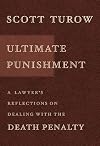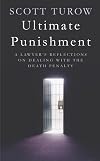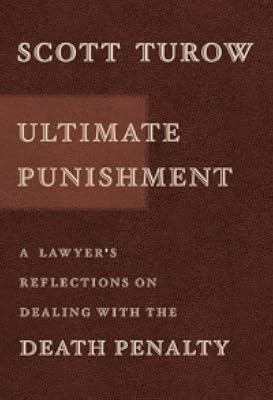
Ultimate Punishment: A Lawyer's Reflections on Dealing with the Death Penalty
by Scott Turow
On This Page
Description
America's leading writer about the law takes a close, incisive look at one of society's most vexing legal issues Scott Turow is known to millions as the author of peerless novels about the troubling regions of experience where law and reality intersect. In "real life," as a respected criminal lawyer, he has been involved with the death penalty for more than a decade, including successfully representing two different men convicted in death-penalty prosecutions. In this vivid account of how show more his views on the death penalty have evolved, Turow describes his own experiences with capital punishment from his days as an impassioned young prosecutor to his recent service on the Illinois commission which investigated the administration of the death penalty and influenced Governor George Ryan's unprecedented commutation of the sentences of 164 death row inmates on his last day in office. Along the way, he provides a brief history of America's ambivalent relationship with the ultimate punishment, analyzes the potent reasons for and against it, including the role of the victims' survivors, and tells the powerful stories behind the statistics, as he moves from the Governor's Mansion to Illinois' state-of-the art 'super-max' prison and the execution chamber. Ultimate Punishment, this gripping, clear-sighted, necessary examination of the principles, the personalities, and the politics of a fundamental dilemma of our democracy has all the drama and intellectual substance of Turow's celebrated fiction. show lessTags
Recommendations



Member Reviews
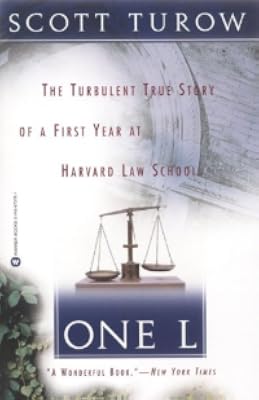
Ultimate Punishment, A Lawyer’s Reflections on Dealing with the Death Penalty, by Scott Turow. (pp 164) Published 2003. As the title suggests, this book is about the author’s ruminations about the death penalty, specifically about the state laws, law enforcement actions, and judicial practices in the state of Illinois. The framework is his participation on a Governor-appointed commission investigating the death penalty arising from a belief that there were flaws in all levels of the Illinois system that imposed death penalties on a small fraction of convicted criminals. Not being a reader of the author’s bestselling novels about the law, my only exposure to Turow the lawyer was his book One L., a book about the first year of law show more school which I read months before entering law school. To bring the factual and procedural issues addressed in the book to life, Turow weaved into them several death penalty cases on which he worked, including some to exonerate prisoners whose convictions were overturned, either because of their innocence and/or gross breeches of proper procedures that were found to result in inequitable application of the law. Because of the specifics of Illinois laws, the findings and recommendations of the Commission (the preamble of which is included in the text) are specific to that state, but the broader principles of equality under the law; sometimes capricious application of laws; police and prosecutorial misconduct; poor judicial oversight,; morality; the issues of retribution, redemption, and deterrence; fundamental problems with eye witness testimony; unreliable or uncorroborated testimony; emotion-driven decision-making; and other consequential factors are applicable everywhere. This is a compact, well-thought out consideration of these issues, presented in ways that offer the viewpoints of both pro- and anti- death penalty advocates. Turow states that the seminal question is “whether a system of justice can be constructed that reaches only the rare, right cases, without also occasionally condemning the innocent or the undeserving.” Great book for those interested in the subject matter. show less
Novelist Scott Turow writes about his struggle to come to grips with the death penalty. This non-fiction work describes the evolution of his thought process and his sometimes ambivalent reasoning while he served on the Illinois Commission that investigated the effectiveness of the punishment and proposed important reforms to make its imposition more equitable.
Turow discusses the lack of effective deterrence, the lack of like punishment for like crimes due to problems with felony murder, and a number of inmates who end up exonerated or with lesser sentences because the evidence does not warrant the death penalty upon reflection. But Turow also highlights some of the heinous crimes that make arguments against the death penalty hardest to show more make because of the need for harsher punishments to protect society from ultimate evil.
This is an honest look at the conflicting feelings most of us share about the death penalty and its imposition. It is well worth reading and reflecting upon. show less
Turow discusses the lack of effective deterrence, the lack of like punishment for like crimes due to problems with felony murder, and a number of inmates who end up exonerated or with lesser sentences because the evidence does not warrant the death penalty upon reflection. But Turow also highlights some of the heinous crimes that make arguments against the death penalty hardest to show more make because of the need for harsher punishments to protect society from ultimate evil.
This is an honest look at the conflicting feelings most of us share about the death penalty and its imposition. It is well worth reading and reflecting upon. show less
A look at what happens when the state of Illinois commuted 167 death sentences to see if the sentencing was done correctly, checking to see if there were innocent people on death row, and should the death sentence be done away with all together. This is Scott Turow's opinion of his time on the committee to look into all aspects of the death penalty.
Bien aimer se livre et son déroulement... Facile a suivre j'ai aimé voir les deux côtés de la médailler. J'ai hésité lorsque je l'ai acheté mais je suis très heureuse de l'avoir lu.
Aug 8, 2010French
Ratings
Members
- Recently Added By
Author Information

59+ Works 23,856 Members
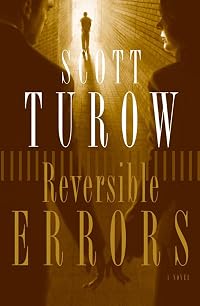
Scott Turow is a writer and lawyer. He was born in Chicago, Illinois, on April 12, 1949. He received a B.A. from Amherst College in 1970 and an M.A. from Stanford University in 1974. He graduated from Harvard Law School in 1978. He was an Assistant United States Attorney in Chicago and served as a prosecutor in several corruption cases. Turow show more continues to work as an attorney. He has written numerous novels including Presumed Innocent, The Burden of Proof, Pleading Guilty, The Laws of Our Fathers, Personal Injuries, Ordinary Heroes, Limitations, Innocent, and Identical. His non-fiction works include One L about his experience as a law student and Ultimate Punishment about the death penalty. He has won numerous awards including the Heartland Prize in 2003 for Reversible Errors, the Robert F. Kennedy Book Award in 2004 for Ultimate Punishment, and Time Magazine's Best Work of Fiction, 1999 for Personal Injuries. He will give a keynote speech at the National writer's Congress 2015. (Bowker Author Biography) show less
Awards and Honors
Awards
Common Knowledge
- Blurbers
- Tribe, Laurence
Classifications
Statistics
- Members
- 292
- Popularity
- 110,452
- Reviews
- 4
- Rating
- (3.64)
- Languages
- English, French, Italian
- Media
- Paper, Audiobook, Ebook
- ISBNs
- 18
- ASINs
- 5