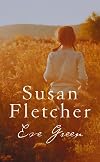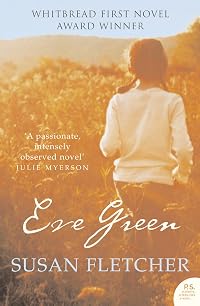
Eve Green
by Susan Fletcher
On This Page
Description
With the death of a mother and the abduction of a young girl, Susan Fletcher has written a vividly beautiful novel about the innocence and terror of childhood. Following the loss of her mother, eight-year-old Evie is sent to a new life in rural Wales - a dripping place, where flowers appear mysteriously on doorsteps and people look at her twice. With a sense of being lied to she sets out to discover her family's dark secret - unaware that there is yet more darkness to come with the sinister show more disappearance of local girl Rosemary Hughes. Now many years later Eve Green is waiting for the birth of her own child, and when she revisits her past something clicks in her mind and her own reckless role in the hunt for Rosie's abductor is revealed... A truly beautiful and hypnotic first novel, this is both an engaging puzzle and an enchanting work of literature. show lessTags
Recommendations










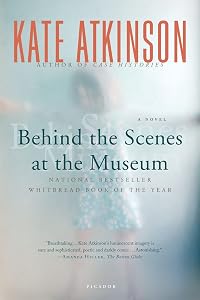
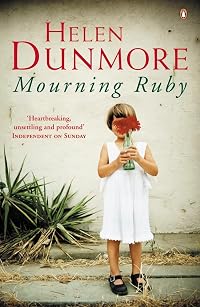
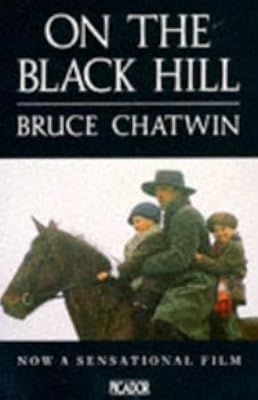
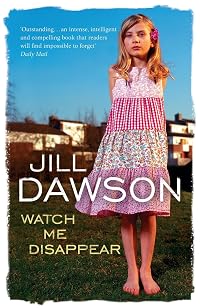





Member Reviews
Evangeline is barely eight when her single mother dies, forcing a move from Birmingham to her grandparents’ farm in southwest Wales. She quickly forms an alliance with Daniel, her grandfather’s farmhand, sixteen years her senior, who will eventually become her romantic partner. The locals scorn the 16-year age difference between these two, but the greater creep factor resides in 24-year-old Daniel’s having hung out with the 8-year-old Eve and watched her grow over the years—very Woody-Allenish, and not in a good way. (Daniel’s relationship to Eve is revealed early on in the book, which generally reads as a kind of jumbled retrospective: on the brink of her thirtieth birthday and heavily pregnant, Eve recalls the key events to show more this point in her life.)
As she grows up on the farm, Eve pieces together the story of her dark-haired mother’s life and love. Eve learns about her Irish scoundrel father who passed on to her the flaming red hair that Mr. Phipps, the surly shopkeeper, sneers at. She also recounts the story of golden-haired Rosie Hughes, with her perfect skin and smile, a well-to-do girl just a little older than Eve, who disappeared one spring or summer. (An aside: Fletcher generally handles details of time poorly throughout this novel. The reader is often uncertain if Eve is eight, eleven, fifteen, or some other age. The protagonist’s observations provide no reliable clues upon which to make inferences either. Eve shows signs of sexual possessiveness shortly after her arrival in Wales, for example, when she is supposed to be only eight.) Eve’s story proper will conclude with a false accusation, an encounter with the likely perpetrator/abductor, and a raging fire.
Eve Green is a first novel, and it shows: it's narrated in the first person; it's a coming-of-age tale; it contains a cast of pretty flat, stereotypical characters (Red hair is shorthand for impetuousness and hot-temper, and crotchety old people can be counted on to address a naughty girl as “young lady” before banishing her to her bedroom for a fortnight); there's a dull-and-done-before storyline; the novel includes banal musings, apparently meant to be profound, about the nature of love and the importance of names; and, there are lots of overwritten descriptive sections—i.e., frequent passages of four or five sentences when a single pared-down one would do. Worst of all: the author shows minimal insight into and little ability to convincingly portray the mind and perceptions of a bereaved eight-year-old child.
This novel was in serious need of an overseer who could ruthlessly curb its author’s default tendency towards the twee. A good editor would,for example, have promptly put Eve’ s commentary on “influenza”--among others--on the chopping block: “it [influenza] should have been a girl’s name—a sultry, hot-eyed girl from some where tropical, with flowers in her hair and swaying hips.” Likewise her overblown musings on her mother’s written signature: “Bronwen. Dark and pure. The o is as flawless as a star, as open as a window. I look at it and [ . . . ] I want to crawl into that letter, right into the warm wanting heart of my mother before it stopped beating . . . " (Oh dear. I wanted to crawl somewhere else. It made me wince.)
I am very surprised that this rural soap opera, with all the clichéd features that give “women’s fiction”a bad name, should have been honoured with a Whitbread first-book award. What exactly were the judges thinking? The author occasionally shows promise by presenting a compelling scene: for example, the one in which the cows contract trench foot after heavy rains and are moved to an abandoned field. However, these are few and far between. The writing is mostly glib and wrongly toned: in short, amateur. It doesn’t serve the story or help you believe it; it distracts and detracts.
Some may enjoy this book as easy, escapist fiction. However, if you need reasonably good writing to be transported, you will only find yourself stuck in a really bad book. I will never open another novel by Ms. Fletcher.
Rating: 1.5 rounded up to 2 . . . because, yes, I am sorry to say that I have actually read even worse. show less
As she grows up on the farm, Eve pieces together the story of her dark-haired mother’s life and love. Eve learns about her Irish scoundrel father who passed on to her the flaming red hair that Mr. Phipps, the surly shopkeeper, sneers at. She also recounts the story of golden-haired Rosie Hughes, with her perfect skin and smile, a well-to-do girl just a little older than Eve, who disappeared one spring or summer. (An aside: Fletcher generally handles details of time poorly throughout this novel. The reader is often uncertain if Eve is eight, eleven, fifteen, or some other age. The protagonist’s observations provide no reliable clues upon which to make inferences either. Eve shows signs of sexual possessiveness shortly after her arrival in Wales, for example, when she is supposed to be only eight.) Eve’s story proper will conclude with a false accusation, an encounter with the likely perpetrator/abductor, and a raging fire.
Eve Green is a first novel, and it shows: it's narrated in the first person; it's a coming-of-age tale; it contains a cast of pretty flat, stereotypical characters (Red hair is shorthand for impetuousness and hot-temper, and crotchety old people can be counted on to address a naughty girl as “young lady” before banishing her to her bedroom for a fortnight); there's a dull-and-done-before storyline; the novel includes banal musings, apparently meant to be profound, about the nature of love and the importance of names; and, there are lots of overwritten descriptive sections—i.e., frequent passages of four or five sentences when a single pared-down one would do. Worst of all: the author shows minimal insight into and little ability to convincingly portray the mind and perceptions of a bereaved eight-year-old child.
This novel was in serious need of an overseer who could ruthlessly curb its author’s default tendency towards the twee. A good editor would,for example, have promptly put Eve’ s commentary on “influenza”--among others--on the chopping block: “it [influenza] should have been a girl’s name—a sultry, hot-eyed girl from some where tropical, with flowers in her hair and swaying hips.” Likewise her overblown musings on her mother’s written signature: “Bronwen. Dark and pure. The o is as flawless as a star, as open as a window. I look at it and [ . . . ] I want to crawl into that letter, right into the warm wanting heart of my mother before it stopped beating . . . " (Oh dear. I wanted to crawl somewhere else. It made me wince.)
I am very surprised that this rural soap opera, with all the clichéd features that give “women’s fiction”a bad name, should have been honoured with a Whitbread first-book award. What exactly were the judges thinking? The author occasionally shows promise by presenting a compelling scene: for example, the one in which the cows contract trench foot after heavy rains and are moved to an abandoned field. However, these are few and far between. The writing is mostly glib and wrongly toned: in short, amateur. It doesn’t serve the story or help you believe it; it distracts and detracts.
Some may enjoy this book as easy, escapist fiction. However, if you need reasonably good writing to be transported, you will only find yourself stuck in a really bad book. I will never open another novel by Ms. Fletcher.
Rating: 1.5 rounded up to 2 . . . because, yes, I am sorry to say that I have actually read even worse. show less
Last year I read two books by Susan Fletcher and promptly ordered two more for this year. Her debut book was Eve Green, so I was a little apprehensive that it might not live up to my prior experience, but I need not have worried. It is not my favorite of the three, but it is a very solid novel and of such a different nature than the other two that it stands on its own merits beautifully.
Eve is six years old when her mother dies and she is taken to Wales to live with her Grandmother and Grandfather. She knows nothing of her father and nothing of her mother’s past, and part of this story is her unearthing of that relationship and how she came to be. There is quite a bit of mystery concerning her father and a friend from her mother’s show more past, Billy Macklin, and there is the mystery of what has happened to Rosie, a twelve year old who is missing.
The book swings between several time periods, primarily the present of of twenty-nine year old Eve and the past of eight-year old Eve, the year of Rosie’s disappearance and the part Eve has played in those events. Fletcher builds the tension and characters wonderfully and the voice of Eve, the child, is genuine and believable. She is insightful about the human heart and states truths so simply that it takes a moment before you realize how astute her observations are.
My grandfather told me, having been widowed, that nothing is joyful again. Happiness returns, he said--laughing comes back to you, and the world is still good, and you smile again at things. But joy, real joy, leaves. Everything lacks from then on, he said. Mrs. Hughes learnt that well enough.
Is that why we give flowers? To express admiration? Sometimes.But there are other reasons. A symbol of love, or of commiseration. A way of saying thank you. A mark of respect. Proof we like someone, and want them to smile. And we put flowers on graves to say, “Look, we still think of you. You’ve left a space behind.”
I’m looking forward to my next Susan Fletcher. I have my lovely friend, Candi, to thank for introducing me to an author who is quickly becoming a go-to for me. show less
Eve is six years old when her mother dies and she is taken to Wales to live with her Grandmother and Grandfather. She knows nothing of her father and nothing of her mother’s past, and part of this story is her unearthing of that relationship and how she came to be. There is quite a bit of mystery concerning her father and a friend from her mother’s show more past, Billy Macklin, and there is the mystery of what has happened to Rosie, a twelve year old who is missing.
The book swings between several time periods, primarily the present of of twenty-nine year old Eve and the past of eight-year old Eve, the year of Rosie’s disappearance and the part Eve has played in those events. Fletcher builds the tension and characters wonderfully and the voice of Eve, the child, is genuine and believable. She is insightful about the human heart and states truths so simply that it takes a moment before you realize how astute her observations are.
My grandfather told me, having been widowed, that nothing is joyful again. Happiness returns, he said--laughing comes back to you, and the world is still good, and you smile again at things. But joy, real joy, leaves. Everything lacks from then on, he said. Mrs. Hughes learnt that well enough.
Is that why we give flowers? To express admiration? Sometimes.But there are other reasons. A symbol of love, or of commiseration. A way of saying thank you. A mark of respect. Proof we like someone, and want them to smile. And we put flowers on graves to say, “Look, we still think of you. You’ve left a space behind.”
I’m looking forward to my next Susan Fletcher. I have my lovely friend, Candi, to thank for introducing me to an author who is quickly becoming a go-to for me. show less
This is a superbly crafted novel: a thing of beauty in which every word is polished. It is the sort of writing designed to inform and draw the reader in, rather than the sort that's just there to be showy. It's a gentle read, one that develops slowly, but there are still moments of excellent drama. My favourite part was the fight in the dinner hall, and most specifically the line "I managed to scoop up some cheese pie and push it into her hair" - I think it was the sheer superfluousness of it that was the most satisfying! Other authors might be happy with a couple of blows to the face and some smashed crockery on the floor, but this author goes the extra mile! I was mentally cheering along with every other survivor of bullying on the show more planet. There were points along the way where I found the narrator's and other people's decisions odd, but it was good to find that on turning the last page I could understand how everything that come about and why people had acted as they did. show less
A fine debut novel, full of dense and delicate prose, including wonderful descriptions of rural Wales. While I found the ruminations on impending motherhood intensely irritating, the main story was gripping and incredibly well structured, with parts revealed just as memory really is: piecemeal and gradual, and not necessarily always reliable.
recommended read!: Reviewed by Steve Himmer for Small Spiral Notebook
Susan Fletcher's Whitbread-winning debut Eve Green is a story assembled from secrets, those life has kept from the narrator and those she in turn keeps from the reader. The eponymous Eve is seven when she suddenly loses her mother and is whisked away to her grandparents in rural Wales, to live in the house where her mother grew up. With her observant eye and honest, endearing voice, Eve recalls Cassandra from Dodie Smith's I Capture the Castle, but with a rich twist. Cassandra sought to order the world by writing, whereas Eve relies on reading what has already been written--in particular, on scraps of paper in a shoebox of her mother's. Those textual fragments show more provide the only record of the father who vanished before Eve was born, and about whom neither her grandparents nor anyone else in their village will speak.
The novel is narrated by a twenty-nine year old Eve as she awaits the birth of her first child. Recalling the earlier years of her life, she weaves an account of recovering the lives of her parents together with the disappearance of a girl her age from the village and the ensuing panic and suspicions. She also reveals a deep attachment to the Welsh valley and crumbling farmhouse that became her home in childhood and in which she still lives after her grandparents have passed away. This sense of place and belonging is one of the novel's great strengths, counterbalancing Eve's sense of rootlessness, as when she reports that the best view of the valley
comes from the old shepherd's hut on the ridge. My castle. My mossy, windy outpost. I'd charge up there on clear days hoping to spy a distant, hazy Cardigan Bay. I'd lie in wait behind the stones for hikers or birdwatchers or deer, or a glimpse of Billy Macklin before he became my friend. And I had breezy picnics in that tussock grass, secret teenage cigarettes, long daydreams, and I hid there in rainstorms or when I just didn't want to be found.
Vivid passages like these come so often in the novel, and so gracefully, that it is easy to overlook how skillfully Fletcher winds the threads of her story together. Characters and locations are introduced with such subtly that when they take on greater importance later, it feels both surprising and natural at once. Those threads are also tied to the landscape, and the lives of the characters are echoed by the quiet details and slow changes of the place in which they live.
Even as the reader revels in these connections, Eve herself remains unaware, seeing both both the natural and social worlds she lives in almost entirely as a collection of details much like her shoebox of scraps. Of the days following her mother's death and her own relocation she notes,
tap water tastes cleaner in Wales; wet earth has a real, incredible smell to it; clouds are bigger; birds come closer. Flowers seem much brighter out here. I don't know why, but they do.
Eve sees her own body, too, as a jumble of individual parts, owing perhaps to the red hair and freckles she has inherited from her father, and how those distinctive features remind the whole village--Eve's grandparents, too--of the criminal he turns out to have been. This sense of assembling herself as she assembles (and we) assembles her story creates an understated suspense and provides the novel with both intrigue and momentum.
For the most part, Eve Green succeeds at striking a melancholy but hopeful balance between what a young Eve slowly discovers, and what the older, narrating Eve already knows. There is an organic, engaging tension in piecing together the details of her history at the very moment she does the same. Other sources of tension, however, feel a bit forced--in particular, the story of the disappeared girl and the sometimes cloying awareness with which the narrator withholds all she knows of that event. While that disappearance provides a local, more tangible loss through which to reflect on Eve's absent parents, it never becomes quite as convincing as the other strands of the novel. It seems to bear little impact on Eve aside from offering a convenient object of transference, and while this may be a result of the distance between the disappearance itself and the narration, such a violent, tragic event seems to demand more significance than it has been allowed, leaving the suspense it engenders somewhat hollow. The reader is never able to forget that the abducted, tangential character exists only to allow the narrator to discuss herself, and that awareness is cruelly unsettling.
Still, to the credit of the novel and its author, that issue only emerges as problematic because the other elements cohere so naturally, and it should by no means overshadow the larger achievement of a fine debut. show less
Susan Fletcher's Whitbread-winning debut Eve Green is a story assembled from secrets, those life has kept from the narrator and those she in turn keeps from the reader. The eponymous Eve is seven when she suddenly loses her mother and is whisked away to her grandparents in rural Wales, to live in the house where her mother grew up. With her observant eye and honest, endearing voice, Eve recalls Cassandra from Dodie Smith's I Capture the Castle, but with a rich twist. Cassandra sought to order the world by writing, whereas Eve relies on reading what has already been written--in particular, on scraps of paper in a shoebox of her mother's. Those textual fragments show more provide the only record of the father who vanished before Eve was born, and about whom neither her grandparents nor anyone else in their village will speak.
The novel is narrated by a twenty-nine year old Eve as she awaits the birth of her first child. Recalling the earlier years of her life, she weaves an account of recovering the lives of her parents together with the disappearance of a girl her age from the village and the ensuing panic and suspicions. She also reveals a deep attachment to the Welsh valley and crumbling farmhouse that became her home in childhood and in which she still lives after her grandparents have passed away. This sense of place and belonging is one of the novel's great strengths, counterbalancing Eve's sense of rootlessness, as when she reports that the best view of the valley
comes from the old shepherd's hut on the ridge. My castle. My mossy, windy outpost. I'd charge up there on clear days hoping to spy a distant, hazy Cardigan Bay. I'd lie in wait behind the stones for hikers or birdwatchers or deer, or a glimpse of Billy Macklin before he became my friend. And I had breezy picnics in that tussock grass, secret teenage cigarettes, long daydreams, and I hid there in rainstorms or when I just didn't want to be found.
Vivid passages like these come so often in the novel, and so gracefully, that it is easy to overlook how skillfully Fletcher winds the threads of her story together. Characters and locations are introduced with such subtly that when they take on greater importance later, it feels both surprising and natural at once. Those threads are also tied to the landscape, and the lives of the characters are echoed by the quiet details and slow changes of the place in which they live.
Even as the reader revels in these connections, Eve herself remains unaware, seeing both both the natural and social worlds she lives in almost entirely as a collection of details much like her shoebox of scraps. Of the days following her mother's death and her own relocation she notes,
tap water tastes cleaner in Wales; wet earth has a real, incredible smell to it; clouds are bigger; birds come closer. Flowers seem much brighter out here. I don't know why, but they do.
Eve sees her own body, too, as a jumble of individual parts, owing perhaps to the red hair and freckles she has inherited from her father, and how those distinctive features remind the whole village--Eve's grandparents, too--of the criminal he turns out to have been. This sense of assembling herself as she assembles (and we) assembles her story creates an understated suspense and provides the novel with both intrigue and momentum.
For the most part, Eve Green succeeds at striking a melancholy but hopeful balance between what a young Eve slowly discovers, and what the older, narrating Eve already knows. There is an organic, engaging tension in piecing together the details of her history at the very moment she does the same. Other sources of tension, however, feel a bit forced--in particular, the story of the disappeared girl and the sometimes cloying awareness with which the narrator withholds all she knows of that event. While that disappearance provides a local, more tangible loss through which to reflect on Eve's absent parents, it never becomes quite as convincing as the other strands of the novel. It seems to bear little impact on Eve aside from offering a convenient object of transference, and while this may be a result of the distance between the disappearance itself and the narration, such a violent, tragic event seems to demand more significance than it has been allowed, leaving the suspense it engenders somewhat hollow. The reader is never able to forget that the abducted, tangential character exists only to allow the narrator to discuss herself, and that awareness is cruelly unsettling.
Still, to the credit of the novel and its author, that issue only emerges as problematic because the other elements cohere so naturally, and it should by no means overshadow the larger achievement of a fine debut. show less
On the plus side, the writing is good, poetic and evocative in places without being dull. Some of the characters stand out too, and I could almost imagine them.
However... I simply couldn't relate to the main, viewpoint character. I wasn't bothered by the sometimes confusing time switches between Eve aged 29 and 8, but I didn't feel that I ever got to know her. And I found the story ultimately rather dissatisfying; many hints early in the book suggest drama, perhaps twists - and yet the ending chapters were entirely predictable based on the early hints. And there are too many unresolved threads, leaving everything hanging.
Don't necessarily take my word for it; this book has won prizes, and is highly reviewed elsewhere. But it didn't show more really do anything for me.
Longer review here: https://suesbookreviews.blogspot.com/2022/07/eve-green-by-susan-fletcher.html show less
However... I simply couldn't relate to the main, viewpoint character. I wasn't bothered by the sometimes confusing time switches between Eve aged 29 and 8, but I didn't feel that I ever got to know her. And I found the story ultimately rather dissatisfying; many hints early in the book suggest drama, perhaps twists - and yet the ending chapters were entirely predictable based on the early hints. And there are too many unresolved threads, leaving everything hanging.
Don't necessarily take my word for it; this book has won prizes, and is highly reviewed elsewhere. But it didn't show more really do anything for me.
Longer review here: https://suesbookreviews.blogspot.com/2022/07/eve-green-by-susan-fletcher.html show less
Evangeline's story begins In Birmingham where her mother commits suicide and, at seven years old, she is sent to live with her maternal grandparents in Wales. She has never met her father and her friends consist of one outcast boy from school, a 23 year old farm hand, and a reclusive. seemingly mentally ill man who frequents the woods near her grandparent's farm. Everyone else represents jealousy and danger. When a blond, blue eyed classmate goes missing Eve's world is turned upside down. It doesn't help that she didn't really like Rosie, nor that her reclusive friend is a suspect.
Members
- Recently Added By
Lists

Books Read in 2021
5,361 works; 114 members
Author Information

8 Works 1,939 Members
Susan Fletcher is a British novelist who was born in 1979 in Birmingham. She attended the University of York where she earned her BA in English. She later went to the University of East Anglia where she earned her MA in Creative Writing. In 2004 she published her first novel, Eve Green, which is a story about an eight year old girl who is sent to show more Wales to start a new life. It won the 2004 Whitbread First Novel Award, the Authors' Club Award and the Betty Trask Prize. Her novel Witch Light won the Saint Maur en Poche award 2013 in France. In 2018 she released her seventh novel, Hour of Glass. (Bowker Author Biography) show less
Awards and Honors
Series
Belongs to Publisher Series
BvT (0399)
Common Knowledge
- Canonical title
- Eve Green
- Original title
- Eve Green
- Original publication date
- 2004
- People/Characters
- Eve Green; Kieran Green; Billy Macklin
- Important places
- Wales, UK
- Dedication
- For Mum, Dad and Michael, with love
- First words
- On white paper my mother has written,
"Last night I walked where he had. My legs took me there. Through the bracken, and I sat on the gate again. What makes freckles? I shall ask him. The bats were out, and I watched them ... (show all)for nearly tho hours.
I don't know his surname, I don't even know his age. But this is the start of something. I stand on the edge. I write it and know it."
She was right, of course. - Last words
- (Click to show. Warning: May contain spoilers.)I know this: we will have a son with an innocent name. And his hair? Neither brown nor red, but a colour all of his own.
- Blurbers
- McCrum, Robert; Anderson, Hephzibah
Classifications
Statistics
- Members
- 661
- Popularity
- 43,652
- Reviews
- 20
- Rating
- (3.46)
- Languages
- 8 — Dutch, English, Finnish, French, German, Greek, Italian, Portuguese
- Media
- Paper, Audiobook, Ebook
- ISBNs
- 32
- ASINs
- 3