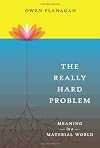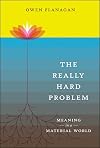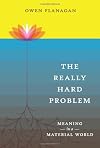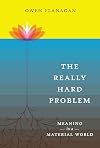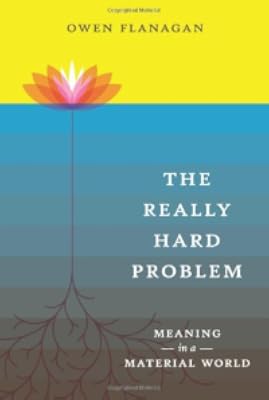
The Really Hard Problem: Meaning in a Material World
by Owen Flanagan
On This Page
Description
A noted philosopher proposes a naturalistic (rather than supernaturalistic) way to solve the "really hard problem": how to live a life that really matters-even as a finite material being living in a material world.Tags
Recommendations

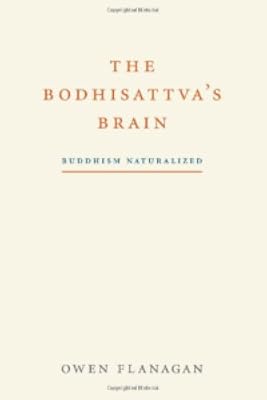

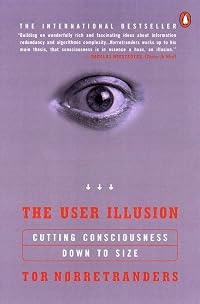
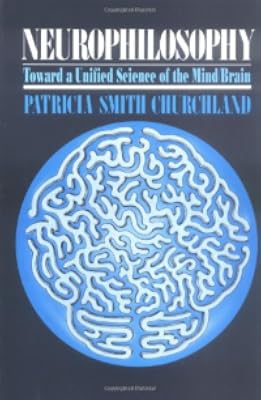



Member Reviews
An academic philosopher discusses finding meaning in a material world. The assumption at the beginning is that humans are a transient collection of neurochemicals, and that all consciousness is correlated with changes in brain states. There is no eternal soul; how does one live with meaning without reference to rewards and punishments in the hereafter, and without a god to guide the way and create meaning out of randomness. The author favors insights drawn from Buddhist meditation practice, and from neuroscience. He talks about the "Aristolean principle": that human beings enjoy the exercise of their capacities. He points out that justice ought to promote "human flourishing" the exercise of these capacities. He talks about locating show more meaning in a space, with reference to religion, art, science and politics, what he calls a "Goodman set" of spaces of meaning, localized to the early 21st century. If ones thoughts are in "reflective equilibrium" with your local community, that is a good start, but it is better if it is in "wide reflective equilibrium" with the world's understanding of human flourishing. His conclusion is that meaning, in the sense of connection to a transcendent ideal, can be found in the embodiment of the human good.
This is a typical book written by the liberal arts academic. There is a vast amount of jargon, and far too many annoying "superscripts" to give the prose a sheen of science, and not enough hard thought about the science itself. Uncritical acceptance of fMRI studies each with a few tenths of percent changes in regional brain function in complex tasks is not a good basis for meaning. Assumptions of significance for meditation and other introspective thoughts as valid are suspect. His politics are not treated extensively, but he is clearly sentimental, eco-conscious, worried about rights, and of liberal politics, meaning that empathy is more important than efficiency and justice. I did not enjoy the prose, which is between breezy familiarity and jargon. I do not recommend this book. show less
This is a typical book written by the liberal arts academic. There is a vast amount of jargon, and far too many annoying "superscripts" to give the prose a sheen of science, and not enough hard thought about the science itself. Uncritical acceptance of fMRI studies each with a few tenths of percent changes in regional brain function in complex tasks is not a good basis for meaning. Assumptions of significance for meditation and other introspective thoughts as valid are suspect. His politics are not treated extensively, but he is clearly sentimental, eco-conscious, worried about rights, and of liberal politics, meaning that empathy is more important than efficiency and justice. I did not enjoy the prose, which is between breezy familiarity and jargon. I do not recommend this book. show less
It's now available as an ebook on the MIT press portal http://mitpress-ebooks.mit.edu/product/really-hard-problem
Ratings
Members
- Recently Added By
Author Information

19+ Works 1,364 Members
Owen Flanagan is James B. Duke Professor of Philosophy, and Co-Director of the Center for Comparative Philosophy, Duke University.
Awards and Honors
Awards
Common Knowledge
- Canonical title
- The Really Hard Problem: Meaning in a Material World
- Original publication date
- 2007
- Dedication
- To Güven Güzeldere and David Wong, dear friends and spiritually advanced natural philosophers
- Blurbers
- Cutler, Howard; Kauffman, Stuart; Horgan, John; Thompson, Evan; Gopnik, Alison; Goleman, Daniel
Classifications
- Genres
- Philosophy, Nonfiction, Religion & Spirituality, General Nonfiction, Science & Nature
- DDC/MDS
- 121.68 — Philosophy & psychology Epistemology (how do you know what you know?) Epistemology (Theory of knowledge) Belief Meaning, interpretation, hermeneutics
- LCC
- B105 .M4 .F53 — Philosophy, Psychology and Religion Philosophy (General)
- BISAC
Statistics
- Members
- 204
- Popularity
- 160,191
- Reviews
- 2
- Rating
- (3.25)
- Languages
- English
- Media
- Paper, Ebook
- ISBNs
- 7
- ASINs
- 4