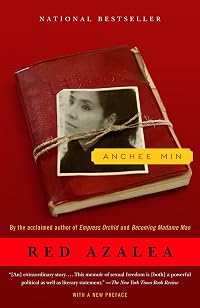
Red Azalea
by Anchee Min
On This Page
Description
A revelatory and disturbing portrait of China, this is Anchee Min's celebrated memoir of growing up in the last years of Mao's China. As a child, Min was asked to publicly humiliate a teacher; at seventeen, she was sent to work at a labor collective. Forbidden to speak, dress, read, write, or love as she pleased, she found a lifeline in a secret love affair with another woman. Miraculously selected for the film version of one of Madame Mao's political operas, Min's life changed overnight. show more Then Chairman Mao suddenly died, taking with him an entire world. This national bestseller and New York Times Notable Book is exceptional for its candor, its poignancy, its courage, and for its prose which Newsweek calls "as delicate and evocative as a traditional Chinese brush painting."From the Trade Paperback edition.. show less
Tags
Recommendations
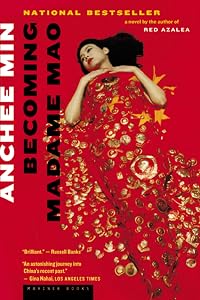
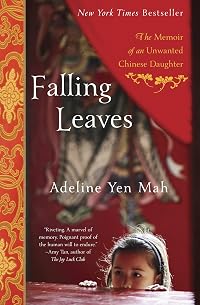
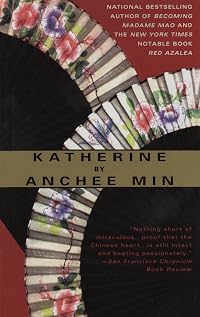
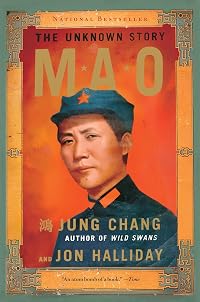

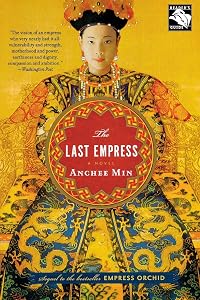




Member Recommendations

Member Reviews
I have read a few memoirs and novels of the Cultural Revolution but this one was very unique. She started as very much believing in the cause and then you see her faith chipped away as the cruelty of those involved takes away so much she finds dear. The writing is very powerful, even though it is quite simple at times. I think I was most struck by how absolutely horribly people can behave when in a situation either where they have a great deal of power or must not step outside the defined norms. It made me think alot about how quickly a society can fall apart.
4.5/5
There are books that make me especially grateful that I don't write reviews for anyone but myself, in that I am perfectly free to write what I want, how I want, with more attention paid to what I thought and the terms of civil discourse than the 'proper' way of reviewing. This is one of them.
What we have here is a memoir written by a woman who grew to adulthood on the tail end of Mao's reign, the book itself ending a few pages after the death of the Chairman who spearheaded the Cultural Revolution. Anchee, a name that she translates as 'Jade of Peace', grew up in a family fully conformed to the ideals of the Communism. Her youth is filled with absorbing the ideals of the Communist Party in forms both written and sung, the texts of show more Chairman Mao and the operas of Madame Mao, Comrade Jiang Ching. The older she grows, the more conflicted she becomes with the life that has been planned for her, a struggle that begins when she is made to denounce her beloved teacher as a 'capitalist spy' and continues with her burgeoning sexuality that favors women over men.
This is not a book that I feel comfortable delineating in the usual sense, going through the construction of themes and commenting on what the author achieves with their writing. For one, this is a piece of Chinese literature that fully expresses its culture in every word of prose, something that have no real experience with. Two, this is a memoir that is much more concerned with detailing the facts and feelings of a life than teasing out an overarching meaning to it all. So I will discuss what struck me and stayed in my thoughts, and leave it at that.
Communism is not nearly as dangerous a word in the US as it was more than sixty years ago, but it is still heavily contextualized in fearful and hateful terms. The memoir fully demonstrates the negative aspects of living in a country that embraces Communistic ideologies, and I won't argue that it wasn't a horribly oppressive time to be alive. However, if you asked me to differentiate between the palls of overwhelming fear of conspiracy and betrayal that existed in both the Cultural Revolution and the McCarthy era, I would say that this was not a matter of Communism and Democracy. These two periods of time in two separate countries were both concerned with a government fearing the spread of contrary ideologies in the masses, and due to cultural differences took different measures to control what they thought was a problem. One side believed that it was necessary to have people experience all classes of existence, whether or not their intelligence was more suited to other, more intellectual forms of labor. The other didn't see the need for breaking down class barriers, and instead focused more heavily on the witch-hunt aspect of rooting out 'spies' and 'infiltrations of the enemy'. One side suffered greatly over their convictions in terms of starvation and constant leadership upheavals. The other forgot.
Essentially, if you asked me if this book made me think that Communism is evil, I would say no, I don't. If you think that I'm evil for saying that, so be it. My concerns lie outside the realm of political machinations.
One of these concerns is the plight of women the world over, a theme that for all its cultural differences was strongly expressed in the later pages of this book. The aforementioned Madame Mao was a powerful figure in the Cultural Revolution who helped keep a tight rein over the masses through the use of entertainment in the form of operas. Despite her immense contributions to the Party using power given to her by Mao during his time of need, the death of the Chairman led to her downfall; she was quickly swept away on the tide of countrymen calling her whore, calling her bitch, calling her a power-hungry murdereress.
I knew Mao's name before this book. I did not know Jiang Ching's, not even as 'Madame Mao'. This is not the first time that a woman in a position of predominantly masculine power, whether political or militant, has been swept under the rug of history in a midst of obfuscation and scoffs. It will certainly not be the last.
Finally, I must give special mention to Min's prose, short and sweetly stacatto and ripe with metaphors that my mind, subsumed as it is in European and American literature, rarely encounters. It especially shines while she is in the full throes of her sexuality, the mindfulness of the nonconforming aspects of its passion drowned in the delight of its realization, both during the beginning of one love:
And the end:
I read for many reasons, mainly for self-improvement but also for the desire to hear the words of someone a world away in a life that I will never experience, to understand and relate to the innate humanity of those who by chance of birth differ from me in terms of race, culture, sexuality, and a whole host of myriad aspects both physical and ideological. This book achieved exactly that, and I only wish that there were more like it. show less
There are books that make me especially grateful that I don't write reviews for anyone but myself, in that I am perfectly free to write what I want, how I want, with more attention paid to what I thought and the terms of civil discourse than the 'proper' way of reviewing. This is one of them.
What we have here is a memoir written by a woman who grew to adulthood on the tail end of Mao's reign, the book itself ending a few pages after the death of the Chairman who spearheaded the Cultural Revolution. Anchee, a name that she translates as 'Jade of Peace', grew up in a family fully conformed to the ideals of the Communism. Her youth is filled with absorbing the ideals of the Communist Party in forms both written and sung, the texts of show more Chairman Mao and the operas of Madame Mao, Comrade Jiang Ching. The older she grows, the more conflicted she becomes with the life that has been planned for her, a struggle that begins when she is made to denounce her beloved teacher as a 'capitalist spy' and continues with her burgeoning sexuality that favors women over men.
This is not a book that I feel comfortable delineating in the usual sense, going through the construction of themes and commenting on what the author achieves with their writing. For one, this is a piece of Chinese literature that fully expresses its culture in every word of prose, something that have no real experience with. Two, this is a memoir that is much more concerned with detailing the facts and feelings of a life than teasing out an overarching meaning to it all. So I will discuss what struck me and stayed in my thoughts, and leave it at that.
Communism is not nearly as dangerous a word in the US as it was more than sixty years ago, but it is still heavily contextualized in fearful and hateful terms. The memoir fully demonstrates the negative aspects of living in a country that embraces Communistic ideologies, and I won't argue that it wasn't a horribly oppressive time to be alive. However, if you asked me to differentiate between the palls of overwhelming fear of conspiracy and betrayal that existed in both the Cultural Revolution and the McCarthy era, I would say that this was not a matter of Communism and Democracy. These two periods of time in two separate countries were both concerned with a government fearing the spread of contrary ideologies in the masses, and due to cultural differences took different measures to control what they thought was a problem. One side believed that it was necessary to have people experience all classes of existence, whether or not their intelligence was more suited to other, more intellectual forms of labor. The other didn't see the need for breaking down class barriers, and instead focused more heavily on the witch-hunt aspect of rooting out 'spies' and 'infiltrations of the enemy'. One side suffered greatly over their convictions in terms of starvation and constant leadership upheavals. The other forgot.
Essentially, if you asked me if this book made me think that Communism is evil, I would say no, I don't. If you think that I'm evil for saying that, so be it. My concerns lie outside the realm of political machinations.
One of these concerns is the plight of women the world over, a theme that for all its cultural differences was strongly expressed in the later pages of this book. The aforementioned Madame Mao was a powerful figure in the Cultural Revolution who helped keep a tight rein over the masses through the use of entertainment in the form of operas. Despite her immense contributions to the Party using power given to her by Mao during his time of need, the death of the Chairman led to her downfall; she was quickly swept away on the tide of countrymen calling her whore, calling her bitch, calling her a power-hungry murdereress.
I knew Mao's name before this book. I did not know Jiang Ching's, not even as 'Madame Mao'. This is not the first time that a woman in a position of predominantly masculine power, whether political or militant, has been swept under the rug of history in a midst of obfuscation and scoffs. It will certainly not be the last.
Finally, I must give special mention to Min's prose, short and sweetly stacatto and ripe with metaphors that my mind, subsumed as it is in European and American literature, rarely encounters. It especially shines while she is in the full throes of her sexuality, the mindfulness of the nonconforming aspects of its passion drowned in the delight of its realization, both during the beginning of one love:
The moment I touched her breasts, I felt a sweet shock. My heart beat disorderly. A wild horse broke off its reins. She whispered something I could not hear. She was melting snow. I did not know what role I was playing anymore> her imagined man or myself. I was drawn to her. The horse kept running wild. i went where the sun rose. Her lips were the color of a tomato. There was a gale mixed with thunder inside of me. I was spellbound by desire. I wanted to be touched. Her hands skimmed my breasts. My mind maddened. My senses cheered frantically in a raging fire. I begged her to hold me tight. I heard a little voice rising in the back of my head demanding me to stop. As I hesitated, she caught my lips and kissed me fervently. The little voice disappeared. I lost myself in caresses.
And the end:
We did not want to realize that we had been holding on to something, a dead past that could no longer prosper. We were rice shoots that had been pulled out of the mud. We lay, roots exposed. But we did not want to submit. We would never submit. We were heroines. We just tried to bridge the gap. We were trying our best. The rice shoots were trying to grow without mud. Trying to survive the impossible. We had been resisting the brutality of the beating weather. The hopelessness had sunk into the cores of our flesh. I would not let her see me cry. But she saw my tears in the kisses.
I read for many reasons, mainly for self-improvement but also for the desire to hear the words of someone a world away in a life that I will never experience, to understand and relate to the innate humanity of those who by chance of birth differ from me in terms of race, culture, sexuality, and a whole host of myriad aspects both physical and ideological. This book achieved exactly that, and I only wish that there were more like it. show less
Anchee Min grew up in Shanghai under Mao, and was the perfect daughter of the revolution. She was an incredibly precocious child, master of rhetoric and head of the Little Red Guards at a very young age. She had complete faith in her leaders and committed herself entirely to them and their agendas. One of her first real moments of doubt in the system came when, at the age of 13 in the year 1970, she was made to publicly denounce her teacher, whom she loved, as an American spy. For this she never forgave herself, and faced harsh reprimands from her family, for her mother was a teacher and feared a similar fate.
Anchee Min’s story really picks up when she is sent to Red Fire Farm at the age of 17. There she meets Yan, her commanding show more officer, a woman for whom she develops a deep admiration and, eventually, love and desire. Min moves steadily up in rank and comes to share a position–and a bed–with Yan. Their affair makes life in the fields (leeches, fungicide, hunger and injury) bearable, even enjoyable. Through each other, they were restored to a life of wonder they didn’t know they were missing. But of course, their actions place them in direct opposition to the Party for whom they’d done so much, and that Party has prying eyes that never rest. Their lives are at risk, and the suspense is truly, nail-bitingly nerve-wracking.
In the third section of the book, after narrowly dodging a serious threat to her safety, Min makes her way off the farm through no real intention of her own. She is picked by talent scouts to star in an opera for Madame Jiang Ching, Mao’s wife, who wishes her characters to be played by real communists. She packs up and is taken to an actor’s studio to train. During the next few years, Min and Yan’s relationship is steadily dissolved, but the memory of it will continue forever to play a central role in the development of Min’s identity and ever-growing disillusionment with the Party. The book ends abruptly with her departure for the United States in 1984.
I must say that I was less engaged by the last third of the book than the first two, which had me totally hooked. The setting of the communist work farm itself was just much more interesting to me than that of the actor’s studio. Throughout, though, the book was a thrilling and revelatory look at one woman’s sexual coming-of-age under a brutally repressive regime, and it will not easily be forgotten. show less
Anchee Min’s story really picks up when she is sent to Red Fire Farm at the age of 17. There she meets Yan, her commanding show more officer, a woman for whom she develops a deep admiration and, eventually, love and desire. Min moves steadily up in rank and comes to share a position–and a bed–with Yan. Their affair makes life in the fields (leeches, fungicide, hunger and injury) bearable, even enjoyable. Through each other, they were restored to a life of wonder they didn’t know they were missing. But of course, their actions place them in direct opposition to the Party for whom they’d done so much, and that Party has prying eyes that never rest. Their lives are at risk, and the suspense is truly, nail-bitingly nerve-wracking.
In the third section of the book, after narrowly dodging a serious threat to her safety, Min makes her way off the farm through no real intention of her own. She is picked by talent scouts to star in an opera for Madame Jiang Ching, Mao’s wife, who wishes her characters to be played by real communists. She packs up and is taken to an actor’s studio to train. During the next few years, Min and Yan’s relationship is steadily dissolved, but the memory of it will continue forever to play a central role in the development of Min’s identity and ever-growing disillusionment with the Party. The book ends abruptly with her departure for the United States in 1984.
I must say that I was less engaged by the last third of the book than the first two, which had me totally hooked. The setting of the communist work farm itself was just much more interesting to me than that of the actor’s studio. Throughout, though, the book was a thrilling and revelatory look at one woman’s sexual coming-of-age under a brutally repressive regime, and it will not easily be forgotten. show less
I read three of Anchee Min's other novels before this - the Empress duology and Becoming Madame Mao. Compared to these, this book is not as good, especially since Min uses a lot of short sentences, so some parts almost feel like 'See Spot Run'. This offers a nice firsthand account of the Cultural Revolution, but does not offer a whole picture - not that Min can be blamed, since she had been confined to Red Fire Farm so much. I do wish she could have provided more detail on her home life - what was it like for her and her family to live in just two rooms after being forced out of their bigger apartment?
I wish that Ms. Min could have focused a little more on her family, childhood, and outside events, because compared to 'Empress Orchid', show more this book comes out as rather dry and lacking when it comes to description. If you're new to Anchee Min, I recommend that you read Empress Orchid before this book. It's a enjoyable read, but not the best memoir. show less
I wish that Ms. Min could have focused a little more on her family, childhood, and outside events, because compared to 'Empress Orchid', show more this book comes out as rather dry and lacking when it comes to description. If you're new to Anchee Min, I recommend that you read Empress Orchid before this book. It's a enjoyable read, but not the best memoir. show less
In the West we have a vague idea of the violent mayhem of the Cultural Revolution in China (1964-1976). Millions likely died, directly or indirectly because of the policies of Mao and the politburo. Any dream, ambition or desire that could be characterized as reactionary was mercilessly crushed by party cadres. Even sex was generally regarded as "anti-revolutionary."
Anchee Min somehow survived this upheaval and its aftershocks, first in an agrarian labor camp and later as a film star in Jiang Chang's (Mao's second wife) opera school. While life at the school was certainly less physically punishing, both places were filled with rivals and spies ready to turn the slightest indiscretion into a harsh, penalizing offense. An atmosphere of show more rampant paranoia and utter, stifling banality permeated the labor camp and the school, and undoubtedly China entirely.
Anchee Min managed to cultivate a scrap of sensuality and sexual appetite while suffering; first with a woman at the labor camp, and later with an effeminate male director at the opera. What is also astounding is that Anchee escaped China in 1982, immigrating to the U.S. I'd love to read about what happened in the two-year span when she made the decision to leave China and landed here.
This is where the book ends abruptly, but somehow it feels right. Her prose moves along in short, matter of fact, desperate sentences that evoke the wrenching unpredictability of circumstances. Your life is not yours to decide what to with; this is a world rife with people who will do this for you, One minute you could be swinging a pick 14 hours a day in a rice swamp. The next you could be the star of the opera. Tomorrow you could be sent back to the labor camp or scrubbing toilets at the theater (if you're lucky). Imprisonment or possibly even execution awaits you if you're caught having sex.
Anchee Min is a hero not just because she survived and escaped this terrible period, but because she risked everything by not subsuming her natural sexuality and sensuality. This book is a paean to that idea, that no political or social system can crush this craving that possibly keeps us alive. show less
Anchee Min somehow survived this upheaval and its aftershocks, first in an agrarian labor camp and later as a film star in Jiang Chang's (Mao's second wife) opera school. While life at the school was certainly less physically punishing, both places were filled with rivals and spies ready to turn the slightest indiscretion into a harsh, penalizing offense. An atmosphere of show more rampant paranoia and utter, stifling banality permeated the labor camp and the school, and undoubtedly China entirely.
Anchee Min managed to cultivate a scrap of sensuality and sexual appetite while suffering; first with a woman at the labor camp, and later with an effeminate male director at the opera. What is also astounding is that Anchee escaped China in 1982, immigrating to the U.S. I'd love to read about what happened in the two-year span when she made the decision to leave China and landed here.
This is where the book ends abruptly, but somehow it feels right. Her prose moves along in short, matter of fact, desperate sentences that evoke the wrenching unpredictability of circumstances. Your life is not yours to decide what to with; this is a world rife with people who will do this for you, One minute you could be swinging a pick 14 hours a day in a rice swamp. The next you could be the star of the opera. Tomorrow you could be sent back to the labor camp or scrubbing toilets at the theater (if you're lucky). Imprisonment or possibly even execution awaits you if you're caught having sex.
Anchee Min is a hero not just because she survived and escaped this terrible period, but because she risked everything by not subsuming her natural sexuality and sensuality. This book is a paean to that idea, that no political or social system can crush this craving that possibly keeps us alive. show less
In 1966, Chairman Mao and his wife Jiang Ching launched the Cultural Revolution, a mass purge of the Communist Party and a veiled attempt to revive Mao's dying personality cult. The doctrines of Mao became a religion, armies of school children joined Mao's Red Guards, and thousands of "intellectuals" were tortured, imprisoned, publicly humiliated or exiled.
This was the backdrop for Anchee Min's childhood. Poor and initially rejected by her classmates, she used her intellect to gain respect by becoming the leader of her school's Red Guards. Her position left her vulnerable to manipulation by senior Communist officials and at the age of 12, she was forced to publicly denounce a beloved teacher at a show trial. This was the first of many show more occasions when desire for recognition required her to renounce her humanity. These sections struck me the hardest -- Min was exactly the kind of hungry overachiever I was and it's chilling to see how easily teachers and Party members make young children complicit in their evil. I have no doubt that a younger version of myself would have done exactly as Min did.
This is a powerful example of show-don't-tell writing; Min never needs to step back and explain the inhumanity of Communism or the heartbreak and insanity that went with it. It's right there on the pages every time Min is criticized as a "burgeois individualist" for taking a solitary cigarette break. This is a passionately written, surprisingly erotic memoir that reads like a novel. I recommend it for everyone. show less
This was the backdrop for Anchee Min's childhood. Poor and initially rejected by her classmates, she used her intellect to gain respect by becoming the leader of her school's Red Guards. Her position left her vulnerable to manipulation by senior Communist officials and at the age of 12, she was forced to publicly denounce a beloved teacher at a show trial. This was the first of many show more occasions when desire for recognition required her to renounce her humanity. These sections struck me the hardest -- Min was exactly the kind of hungry overachiever I was and it's chilling to see how easily teachers and Party members make young children complicit in their evil. I have no doubt that a younger version of myself would have done exactly as Min did.
This is a powerful example of show-don't-tell writing; Min never needs to step back and explain the inhumanity of Communism or the heartbreak and insanity that went with it. It's right there on the pages every time Min is criticized as a "burgeois individualist" for taking a solitary cigarette break. This is a passionately written, surprisingly erotic memoir that reads like a novel. I recommend it for everyone. show less
A Different Perspective of the Cultural Revolution
Anchee Min's "Red Azalea" offers a different perspective on the Cultural Revolution than other memoirs. What it adds to the literature is a discussion, though subtle and obscured with ambiguity, is a discussion of sexuality and a look at someone who achieves two positions of power, one leading to a comparatively privileged life. The book is well-written and moves very quickly.
The first part of the book begins like many other memoirs of the Cultural Revolution. She is a city youth who is heavily involved in the Communist Youth League and Red Guard at her school. She is a model student who faces typical problems faced in other memoirs: studying, making it in party politics, carrying the show more burden of two working parents, taking care of her siblings, and so forth. Like nearly all memoirs of the era, she becomes a "sent down youth" when she travels to the country in order to live as a peasant on a farm organized as a military unit.
This is the second part of the book. Min faces hardships familiar to all "sent down youth." She needs to steal food to get full, she is bullied, and she needs to deal with the deprivations of nature, such as mosquitoes and leeches. Other memoirs of the era are much more harsh. In comparison, Min's life is not as bad, though it is certainly difficult and unfair. Because she does such a good job, she is eventually promoted to being a company head, which affords her more "luxuries," such as a better barrack, and control over a group of other "sent down youth." During this time, Min develops a relationship with the leader of her unit, a young revolutionary named Yan who begins questioning her choices. They meet secretly, developing a lesbian romance, the physical depth of which is not discussed, but the emotional depth is profound.
When Min wins the chance to compete for a role in Red Azalea, an opera-turned-movie about Madame Mao, she leaves the farm and the third part of the book starts. Min begins living in her family's city again with four other young women competing for the title role. Here she is well-taken care of. She has plenty to eat, her family nearby, and good living conditions. After being politically outmaneuvered, she is assigned a job as a set assistant during the filming of Red Azalea. However, she develops a romance with the producer of the film, a man she knows only as the Supervisor. They meet first while smoking cigarettes, but later, in a bizarre scene, go to a public park where couples meet. She later learns that the Supervisor is intersex. The climax of the book occurs in the third section when Madame Mao falls from power.
The discussion of sexuality in the book is missing from other memoirs of the Cultural Revolution. Where other authors certainly discuss their unrequited loves, Min is much more frank, although she does use clouded language when describing her own relationships with Yan and the Supervisor. She does, however, describe the public masturbaters at the park and at a bathhouse where a woman enters as a man and performs sex acts on men. I was not expecting these matters to be brought up in such a memoir. show less
Anchee Min's "Red Azalea" offers a different perspective on the Cultural Revolution than other memoirs. What it adds to the literature is a discussion, though subtle and obscured with ambiguity, is a discussion of sexuality and a look at someone who achieves two positions of power, one leading to a comparatively privileged life. The book is well-written and moves very quickly.
The first part of the book begins like many other memoirs of the Cultural Revolution. She is a city youth who is heavily involved in the Communist Youth League and Red Guard at her school. She is a model student who faces typical problems faced in other memoirs: studying, making it in party politics, carrying the show more burden of two working parents, taking care of her siblings, and so forth. Like nearly all memoirs of the era, she becomes a "sent down youth" when she travels to the country in order to live as a peasant on a farm organized as a military unit.
This is the second part of the book. Min faces hardships familiar to all "sent down youth." She needs to steal food to get full, she is bullied, and she needs to deal with the deprivations of nature, such as mosquitoes and leeches. Other memoirs of the era are much more harsh. In comparison, Min's life is not as bad, though it is certainly difficult and unfair. Because she does such a good job, she is eventually promoted to being a company head, which affords her more "luxuries," such as a better barrack, and control over a group of other "sent down youth." During this time, Min develops a relationship with the leader of her unit, a young revolutionary named Yan who begins questioning her choices. They meet secretly, developing a lesbian romance, the physical depth of which is not discussed, but the emotional depth is profound.
When Min wins the chance to compete for a role in Red Azalea, an opera-turned-movie about Madame Mao, she leaves the farm and the third part of the book starts. Min begins living in her family's city again with four other young women competing for the title role. Here she is well-taken care of. She has plenty to eat, her family nearby, and good living conditions. After being politically outmaneuvered, she is assigned a job as a set assistant during the filming of Red Azalea. However, she develops a romance with the producer of the film, a man she knows only as the Supervisor. They meet first while smoking cigarettes, but later, in a bizarre scene, go to a public park where couples meet. She later learns that the Supervisor is intersex. The climax of the book occurs in the third section when Madame Mao falls from power.
The discussion of sexuality in the book is missing from other memoirs of the Cultural Revolution. Where other authors certainly discuss their unrequited loves, Min is much more frank, although she does use clouded language when describing her own relationships with Yan and the Supervisor. She does, however, describe the public masturbaters at the park and at a bathhouse where a woman enters as a man and performs sex acts on men. I was not expecting these matters to be brought up in such a memoir. show less
Members
- Recently Added By
Lists

Best Fiction Set in China
43 works; 27 members

Books I've Read More Than Once
602 works; 49 members
Author Information

17+ Works 7,711 Members
Anchee Min was born in Shanghai in 1957. At seventeen she was sent to a labor collective, where after a number of years a talent scout recruited her for Madame Mao's Shanghai Film Studio. Her highly acclaimed memoir, "Red Azalea," was named a New York Times Notable Book and was an international bestseller, with rights sold in twenty countries. Min show more lives in California with her husband and daughter. She will be featured at the Ubud Writers and Readers Festival 2015 program. (Publisher Provided) show less
Work Relationships
Is contained in
Common Knowledge
- Canonical title
- Red Azalea
- Original title
- Red Azalea
- Original publication date
- 1994
- First words*
- I was raised on the teachings of Mao and on the operas of Madam Mao, Comrade Jiang Ching. I became a leader of the Little Red Guards in elementary school. This was during the Great Proletarian Cultural Revolutionn when red wa... (show all)s my colour.
- Quotations
- `We started to know the women's nicknames, such as Chow-Di - Draw a Brother; Lai-Di - Gain a Boy; Shuang-Di - Double Boy; Yin-Di - Win a Boy; and Bao-Di - Guarantee a Boy. The names disturbed me. Though I could not link mysel... (show all)f to those names, the idea began to sink into my mind that to be born a girl was a sad thing.` pg.10
`My new classmates laughed at me because I always wore the same jacket with holes everywhere. I wore it all seasons. It was my cousin's old clothes. Blooming usually wore the clothes after I grew out of them. With patches at the collars and elbows, Coral took over. More patches. The clothes melted, though she was careful. She knew Space Conqueror was waiting for his turn. Space Conqueror always wore rags. It made me feel very guilty.` pg. 11
My father said to us, I can't afford to buy you new clothes to make you look respectable, but if you do well in school you will be respected. p.11
The Red Guards showed us how to destroy, how to worship. They jumped off buildings to show their loyalty to Mao. It was said that physical death was nothing. It was light as a feather. Only when one died for the people would one's death be heavier than a mountain. p. 11
My parents were unhappy about their jobs, but they behaved correctly for us. If theywere ever criticized, it would affect our future. p.12
My mother was not good at being someone she was not. p.12
I drafted a self-criticism speech for my mother. I was 12 years old. I wrote Mao's famous quotations. I said Chairman Mao teaches us that we must allow people to correct their mistakes. That's the only way gret Communism is learned. A mistake made by an innocent is not a crime. But when an innocent is not allowed to correct her mistake, it is a crime. p.13
We often ran out of food by the end of the months. p.14.
One day mother came home with a lot of drug bottles. She came from the hospital. SHe had tuberculosis and was told to wear a surgical mask at home. Mother said that in a way she was pleased to have the disease because she fin... (show all)aly got to spend time with her family. p.15
You are the bravest. You should be the butcher. (about who in the family should cut a pet hen for food). p.17
The hen was worth at least 5 yuan in the market. A person's 5-day salary(...). p.18
That summer the neighbour... (show all)hood Party committee launched a Patriotic Public Health Campaign and all the dogs, ducks, and chickens had to be killed in 3 days. p.22
I felt I had not much in common with the children. I felt like an adult. I was at the school day and night promoting Communism, making revolution by painting slogans on walls and boards. I led my schoolmates in collecting pen... (show all)nies. We wanted to donate the pennies to the starving children in America. We were proud of what we did. We were sure that we were making red dots on the world's map. We were fighting for the final peace of the planet. Not for a day did I not feel heroic. pp.25-26
The school's vice-principal had a talk with me (...). He told me that he wanted to remind me that I was a student leader, a model to the graduates. (...) He told me that I belonged to one category. The category of becoming a ... (show all)peasant. (...) He said it was an unalterable decision. The policy from Beijin was a holy instruction. It was universally accepted. It was incumbent upon me to obey. He said he had sent 4 of his own children to work in the countryside. He was very proud of them. He said that twenty million CHinese worked on these farms. (...) He said a true COmmunist would love to take challenges. She would take it with dignity. I was 17. I was inspired. I was eager to devote myself. I was looking forward to hardship. p.39
My next-door neighbor wrote from his village and said that he had purposely hammered hi finger at work in order to claim injury for a chance to be sent back home. p.39
My cousin who went to Inner Mongolia wrote and said that his close friend died while putting out a mountain fire. He was honored as a hero> he saved the village's grain storage at the expense of his life. My cousin said the hero made him understand the true meaning of life so he decided to spend the rest of his life on horseback in Mongolia to model himself after the hero. pp. 39-40
I realised at that moment that is was much too easy to sing `I'll go where Chairman Mao's Finger Points`.(...) I never realized what I was singing until that day. p.41
Run, run, run, said she, because if you stop, you rust. (Yan Sheng, Party secretary and commander of the company). p. 49
A leech was on her leg. When she tried to pull the leech out, it went deeper. (...) Orchid came a... (show all)nd patted the skin above the leech's head. The leech backed itself out. p.50
Little Green was 18. (...) She was pale, so pale that exposure to the sun all day did not change the color of her skin. (...) Her parents were assigned to work in remote oil fields, because they were intellectuals. They came home once every year, on New Year's Eve. (...) Her voice was the platoon's pride. It helped us to get through the tough labor, through the days we had to get up at 5 and work in the fields until 9 at night. p. 51
I watched Little Green. Her beauty. I wanted to tie my braids with colourful strings every day. But I did not have the guts to show contempt for the rules. I had always been good. p. 51
When we worked , we were sunk into the sea of the plants. We barely straightened our backs. We had no time to straighten our backs. Little Green did, once in a while. She upset us. We threw unfriendly words out. We said, sham... (show all)e on the lazybones! We did not stop until Little Green bents down to work again. We did this to everyone but Yan. Yas was a horse rider. We were her horses. She did not have to whip us to get us mobing. We felt the chill of a whip on the back when she walked by and examined our work. p. 53
She was worshiped. She was more real than Mao. (about Yan) p.54
A good female comrade was supposed to devote all her energy, her youth, to the revolution; she was not permitted even to think about a man until her late twenties, when marriage would be considered. p.58
I was no longer the perfect stainless mind. I began to have thoughts of those disgraced girls, the girls of my middle-school years. As a head of the class, I was assigned to sit by them for semesters to help them get on the right track. I was supposed to correct them and influence them. Though it was never explained to me what was wrong with them, it was known that they were called ”La-Sai” - a slang word which indicated that the girls had done shameful things with men and were condemned by those who were moral. These girls had no self-respect. They were called ”porcelain with scars”. No one wanted them. They looked forward to no future. They had no future. They were garbage. Placing them next to me showed the generosity of the COmmunist Party. The Party abandoned no sinners. The Party saved them. I represented the Party. p. 65
The heroines in the revolutionary operas had neither husbands nor lovers. p. 66
[Orchid]told me that she hadn't understood what her period was when it first came. She felt too ashamed to ask anyone for advice. She stuffed unsterilized clothes into her pants. The blood was blocked but she got an infection. I asked her why she hadn't told her mother or a friend about it. She said her mother was in a labor camp and her friend knew even lass than she. Her friend was not sure whether CHairman Mao was a man or a woman. I asked Orchid why she had not asked the platoon leader for a day off. She said she did. She was rejected. p.71
The soldiers were exhausted like plants whipped by a storm. Two huge bright lights were carried to the fields and steamed bread was brought out. The soldiers crawled toward the breadbaskets. Lu stopped us. She yelled, no dinn... (show all)er until the work is completed. Our stomachs had begun to chew themselves. But we dared not talk back to Lu, the deputy of the Part secretary. We feared her. Then there was the commander's voice. A voice of thunder: What kind of fool are you? Doesn't your common sense tell you that man is the engine when food is the fuel?. Yan waved her arm as if to shovel us to the bread. Go now, she shouted. We ran like pigs to the through. p.72
Yan was officially in charge and Lu was her deputy, Lu wanted much more. She wanted Yan's position. She was obsessed. She called meetings without agendas. We had to obey her. We had to sit through her meetings in our drowsine... (show all)ss. She liked to see people obey her. To feel powerful was a drug she needed. Only on meetings could she feel that she was as in control of other peoplețs lives as she was with her own. She made warnings and threats at the meetings. She enjoyed our fear. She aimed at all our possible mistakes. She waited, she had been waiting, for a precise moment, to catch a mistake and beat it into submission. She had been trying to catch Yan. Her incorrectness. I could tell that she would have pushed Yan off a cliff if she had a chance. P.76
Her enthusiams did not feel warm. p.77
She had a fixed mind. A mind full of dead throughts. p.78.
Her mind was a propaganda machine. It had no engine of its own. p. 78
Lu continued speaking. It was like a theatrical performance. As a daughter of a revolution martyr, I'll never forget how my forefathers shed their blood and laid down their lives dor the vitory of the revolution, said Lu. I'll never fail to live up to their expectations. I hope that all of you, my commrades-in-arms, will supervise my behavior. I welcome any criticism you have for me in the future. The Party is my mother and you're all my family. pp.78-79
Her adopted parents were Party secretaries in the military. p.79
She told me one day that a mirror was a symbol of self-love - a burgeois extra. p.80
She [Yan] called Lu a mother of farts. p.83
Lu spoke no truth. She did not know how. p. 91
Did she have feelings? (...) She must have. She was young and healthy. But who dared to be dear to her? (...) Men in the company were afraid of her. They yielded to her, accepted her dominance. Men surrendered before they faced her. The shadow of her appearance chased men away. (...) I saw loneliness in Lu's eyes. (...) The eyes of thirst. p.91
I found Lu's behavior frightening. Her rigidness exposed her single-minded ambition for power. I became more careful, more polite towards her. I selected words carefully whenI spoke to her.p.92
But to me [Lu] was like a stage light: she was bright in the dark. But when the sun rose, she lost her brightness. She faded in the sunshine, and Yan was the sun. pp.98-99
I felt like a slave. Yan was my reason, my faith to go on. p.84
The spare time made me feel empty in the heart. p.85
I want you to be aware of your growing sophistication. You're losing your purity. [Lu to autho... (show all)r] p.93
[Yan] believed in justice, no matter how unjust her justice was to me. p.93
[Lu's] mother said that she wouldn't ever have produced nine children with my fatherif she had not wanted to respond to the Party's call, 'More population means more power.'
[Yan's brothers] talked obscenely at midnight while the whole family of eleven slept in the same room. Her elder brother brother talked about tricking a neighbour girl to come into the room, seducing her on the bed while his four brothers watched through a door slit. I asked how her parents reacted to this. Yan said they refused to believe it. They accused Yan of misreporting. The brothers beat her up and her parents watched and thought they did the right thing. That was the main reason she left her family for the Red Fire Farm. p.100
She said she was a frog who had lived at the bottom of a well - her knowledge of the universe was only as big as the opening of the well. Her naivete and ignorance made her a murderer. She was fooled by Party propaganda, by Red Flag magazine and the People's daily. She was trained to be a murderer. Who was not? She didn't understand the worl around her, the world where the murderers go on living while the innocent die like weeds. p.104
The salary I received was not enough to cover my food expenses, so in late evening I became a thief. I dug into the mud for beets, radishes and sweet potatoes. p. 111
[Yan] said her life was a waste, it was a jail here. p.123
All of these farms (...) didn't even grow enough food to feed themselves. The farms had been getting food supplements from the government every year. pp. 122-123
[Yan] was assigned to a remote company. (...) It's an order, she said to me. I don't belong to myself. p.127
Don't forget that a dog would jump over a wall if forced into a corner. p. 133
People who had showed a lack of performing skills were kept on. Later I was told that one of Jiang Ching's principles was that she would rather have "socialist grass" than "capitalist sprouts". The judges thought of me as hav... (show all)ing less talent but politically reliable. p.146
In another acting exercise I was asked to drink a cup of water. The instructor stopped me and said No, no, no. You are not drinking the water right. He said I had two problems. He said that a person from the proletarian class would never hold a cup in such a superficial manner - using three fingers on the handle. He instructed me to grab the cup with mmy hand. He pointed out that a proletarian person would never drink water sip by sip like a Miss Bourgeoise with tons of spare time. He showed me how to drink down the water fast in one gulp and wipe my mouth with my sleeve. p. 146
I did not tell my mother that being a big sister wore me out. p.161
If I were to be granted a permanent residence in the city, Coral would lose her chance to become a worker. She would be sent to a farm because our family needed to have one peasant to pass the policy. p.161
Father was proud of me being chosen, but not optimistic about my soaring stardom. He said to me, One is crushed harder when one climbs high. . p. 161
When someone in this country was called by his title instead of his name, he was beyond general importance. For example, Mao was called the Chairman, and Chou, the Premier. The omission of the last name displayed the power of the person.p.168
The village was poor. It produced nothing but babies. p.168
People all over China had to see the films, or be labled reactionaries. p.174
When Soviet Wong asked me what I had learned for the day, I answered honestly. And I ruined myself. When I realized that I had ruined myself, it was too late. p.177
Soviet Wong never regarded us as a teacher did her students, but as an old concubine did newcommers. (...) She never truly liked Cheering Spear. In fact, she hated her. But Cheering Spear's flattery made her feel less hurt.p. 178
I asked for a 3-day leave. I said my mother was sick and needed me to take care of her. Soviet Wong said no at first.p.183
She took out a package of flour, poured the flour into a pot, added water and lit a kerosene stove. She cooked the flour with sugar.She was offering me the best food she had. p. 184
[Yan] was 25, a squad head at 25 would have no future. . p.185
The more fortunate I felt, the more the guilt grew in me. p. 187
[Orchid] Why did you come?Before I could explainshe yelled to my face, I don't like seeing you. I really don't. She said she wanted to be honest with me. She said nobody wanted to see me. A movie star. An old-time acquaintance who took a ladder to the clouds. Nobody wanted to be reminded of how bad life was for them. p.188
When I got to my parents' home, they told me that Soviet Wong and Sound of Rain had just left. They came to check up on me. (...) They said you had been a burgeois individualist, they said you always acted alone, you had no sense of groupism, you're selfish so you should be eliminated. p.190
What can I do? How can I help? Accept your lot and stay in your place, said Father. Your mother and I can't afford to have more losses. (...) I said, You just saw how my teachers dislike me. How can I stop them? My parents went silent. They were hurt.
I should have gone downstairs to personally see them off, my father murmured. Soviet Wong and Sound of Rain must be upset about my impoliteness. You are an idiot if you think that would have made any difference., said Mother. They did not deserve to be treated as my guests. Not in my house. one should at least pay attention to its master when hitting a dog. I will never put on a smiling face when someone comes to spit on my daughter's face. Hold back your bad temper now, yelled Father. Don't you have to put up with enough bad temper by behaving this way at work? I don't regret it a bit, yelled back my mother. Live honorably or die - that's my principle and I want my children to behave according to it.
But see what you have caused them? When they behave according to your principle, this idealistic nonsense, see what happens to them? They get crushed by society! Mother said I canțt believe it, you, the man I am married to, the father of my four children, disgrace my principles.
My father beat his chest, kicked his fett, swore that he did not mean that. pp.191-192
I expected Soviet Wong to question me. But she did not. (...) She gave out parts of the script, but did not tell me when and what to play. I was left out. No one was in charge of me. I was not told what was wrong with me. All of a sudden, I had nothing to do. (...) I did not seem to exist anymore. p. 193
The Wu Lee Hardware Workshop was assigned a new ambitious leader who, on his first day on the job, declared he would expand his shop into our yard to make a shed for bicycles. He had his workers cut out all the greens and erect the frames of a shed. We protested, fighting for the yard, shouting the whole day. But he had more men than we did. Those were desperate men, the new employees. We lost. The cement was poured over the grass. My parents said to the leader> You can't do this to us. We have been putting up with your machine noise and chemical smell for years; you can't have an inch and then take a foot. You can't take away our only yard, our green. My parents almost begged. The leader was unmoved. He said, I am doing this to open positions for the unemployed, people who desperately need rice in their bowls. You think I want them? The hopeless, the society-walkers? Where is your conscience? Don't you have any feelings for the proletarians? p. 195
[Soviet Wong and SoR]
I asked my mother to explain love. Mother said that I had embarrassed her. She said that there was no lesson to learn regarding this matter, because all one had to do was to follow the guide of nature. p. 196
(...) eve... (show all)ry unit was given a document to read criticizing Chou - `Confucius`. The government wanted the workers to read between the lines and begin gossiping about Chou the Premier, his illness, his conflict with Comrade Jiang Ching. We were led to wonder about his loyalty to Mao. When it was my turn to read the lines, I read without interest. I did not care about the Chous. It bored me. People were asked to comment. People gave comments. The comments of nonsense. Wr=e must keep China red forever - this was every speaker's opening line. p. 197
[Coral] could not stand up until she was 2 years old. The nanny Mother hired secretly stole all Coral's food coupons and sent them to her village to feed her own children. p.199
[Yan] was not confident walking among the city girls. The people who stared at her weather-beaten face annoyed her. p.204
Unhappy people are dangerous [said by Yan]. p.205
We bought tickets for a shower bath (...). People are all the same. They come to shower three times a year They pay so much, they have to wait for so long, so of course they want to get their money's worth - they have to spend as much time as possible in the bath. It's not unusual that we have people fainting in the tub. p.205
A few hundred men are arrested each year for peeking through the women's shower window. p. 207
It is better to bend with the wind when it blows. p. 224
I did not raise my head when I mopped the floor. I felt I had no face. p.231
The mopping seemed endless. I suddenly remembered an old saying. It said `It is difficult for a snake to go back to hell once it has tasted heaven.` I was that snake now. Each day i felt worse than the one before. Every morning, the moment I woke up, my body and my soul went to separate places. The soulless body went to mop the floors and the bodiless soul went to the realm of vague hopes. A few times the body and soul joined momentarily when I felt the mop become a machine gun. As I mopped with it, it fired. p. 232
I thought of my parents. I had stopped talking to them. You don't deserve those dunce caps, my mother said to me over and over. I told her that I was sick of her sense of justice, her fantasy, I told my mother not to interfere with me. I said, Why don't you ever learn? What's wrong with you? Is it because your own life hasn't been miserable enough? My mother said, said in her own logic, I don't regret a bit about my way of living, because I have been truthful to myself. I could not stand her logic. I said, I don't want to inherit your life. It is a terrible, terrible and terrible life. I yelled at her. My mother went to take pills. I said, don't you see? Can't you see it's not wotking? Your phylosophy does not work for me. My mother refused to give up. She said she didn't believe that evilness should rule. I said, it's ruling. She said, It's impossible. I said, I mop floors, don't you see? She said, What did you do wrong? I said, I wish I knew the answer. My mother started her repetition: Then that shouldn't have happened to you. I said, It's happening to me. SHe said she would like to have a talk with my instructor. I laughed.
The instructors came before my mother gathere her guts to go and confront them. Once again it was Soviet Wong and Sound of Rian who came. They came to put a dunce cap on me. They wanted me to acknowledge a crime I did not commit. They wanted me to say Yes, I deserve to be kicked out because I am bad. My mother asked, What did my daughter do wrong? You have chielded a wrongdoer, they replied. My mother refused to step of the staircase. She said, Tell me what's wrong with my daughter. They said Everything, Everything's wrong with your daughter. She said, Give me an example. They said, We don't need to. My mother said, COmrade Soviet Wong, I would never want my daughter to call you teacher.
My mother followe them out of the lane, She yelled before falling on the cement. SHe yelled, YOu can't make a criminal out of m innocent daughter. Mu father dragged Mother back upstairs. He said, You are making things worse. Don't you know they represent the Party? My mother yelled, But I am not guilty. My father pushed her to sit on a chair. My father told my mother the simplest things in the world. The simplest things to make my mother understand the world she was in. My dather told her that he himself was just fired by the Shanghai Museum of Natural Science because he disagreed with his Party secretary boss over a technical plan. He was accused of using science to attack the Communist Party. pp.233-234
The Party terlls people what to do, not the other way around, my father said. My mother refused to understand her world. She refused to understand the things that did not make sense to her. She shut her senses up because she preferred to live in her own world. She lived with the god of justice. Shre broke 3 dishes that night while dishwashing. I woke up in the early morning and found Mother sitting in the kitchen, stating at the sinkhole, alone. pp. 234-235
He told me that he was collecting ideas to ceate good art for the people. He asked me to give opinions on the model operas. I said, How could anyoone have any opinions? The Party's opinion is the people's opinion. How dare I have my own opinion? I was eliminated by Soviet Wong because I had opinions. p.236
I agreed with him and said that I would be interested in the private lives of the characters. I said that it was strange to me that the opera protagonists had no private lives. [...] I don't believe that the protagonists had no lovers in their lives whatsoever. I don't believe any human's mind could be so free of deep emotions.
A cloud of scorn passed over the Supervisor's face. We should not use fantasy to deceive our young people he said. [...] Romantic love does not exist among protelatians, he said firmly. It is a bourgeois fantasy. People will not forgive anyone who sells lies. p. 238
I ate my rice cake in the darn in the smoking room. I felt like an animal who ate its own instestine. I could not eat any more. I could not endure watching Cheering Spear smile. I could not bear her happy singing. I could not escape from my jealousy of her success. Cheering Spear was working hard. Her performance was getting better and better. She was getting into the skin of her role. I was ordered to serve her. I had to remind her of her lines. I had to draw marks under her feet for the cameraman's purpose, to pass her a cup of water when she asked for a drink, to change her costume after shots, to button up her collar wjen she forgot. pp.239-240
[the Supervisor] said, Don't break your nerves, because it would not be worth it; no one really cares about what happens to you. Being egotistical is not a good idea. You can eat yourself up that way. p.241
I mopped the floor at people's feet. Foot by foot. My hopes withered. I constantly thought of escaping. I asked Sound of Rain if he could assign me a job elsewhere. He said, I can't issue you permission because I know you have an impure purpose. I know leaving the studio is your true intention. You lied to me, you lied to the Party and that's that. I stood there. Sound of Rain continued, How come you have failed to see that you have serious work to do here? How can you possibly be so selfish as to put the revolutionary business second in your mind? He took out his schedule book and told me that I was booked with work for the next five years. He said he did not make the rules, as he closed his book. pp. 241-242
[The Supervisor's] mother had to prostitute herself to feed him. The rich kids beat him and had their dogs bite him. He's hated dogs ever since. His mother died of syphilis when he turned 12. His mother could not be buried in her own village with her ancestors. A man from the village said that her bad spirit would chase the village's good fortune away. The man who said that had once taken pleasure from her body. She was buried right outside the village gater. Wild dogs raked her up and ate her to the bones. p. 246
I said, I am well and I am nobody else's business. p. 247
You are a poor liar, [the Supervisor] said. You can't hide your feelings - that shows that you know nothing about the art of living. You are stressed. As stress... (show all)ed as a rabbit in a sack. Your eyes are telling me you dislike everything you have been assigned to do. You are miserable. You hate Sound of Rain and Soviet Wong. You hate them because they imprisoned your ambition. You are jealous of Cheering Spear. You can't trace your ambition and you are tortured by it. You want to be somebody, you want to be history. You deserve to be capped as a bourgeois individualist. You can't be better described. Tell me if tyou disagree with my description. p.247
[Comrade Jiang Ching's] opponents say that when a female gets on a boat, the boat sinks right away. [...] I said, in light of 5000 thousand years of tradition, I am not surprised.
All the wisdom is man's wisdom. That's Chinese history. The fall of the kingdom is always the fault of the concubine. [the Supervisor] p. 248
Why did [the Sup.] keep asking me to speak of my true thoughts? I remembered that many people disappeared after they had exposed their minds. p. 248
AN oldlady, hairless, her body totally soaked in sweat, got on her knees. Her face was coated with brown mud from the bowing ritual. SHe took out a red-and-green colored stuffed doll and a ballpoint pen, and wrote some characters on the back of the doll. She put the doll in the rank bowed to the Buddha statue endlessly. The sound of her head hitting the floor remained in my ear for a long time. I slowly approached her doll to take a look at what she had written. It said: Dear God of Birth. I have taken a doll from you and you granted me a marvelous grandchild. Now I have made another prrtty doll to give back to you. I can never thank you enough. Your sincere folower: mother of your child Big Bolt. p.251
My fingers were trembling as I went to light the incense. For the first time, I sincerely bowed to the Buddha statue. I did not know what to wish. I rose to look at the statue. Tell me what to wish, I prayed. In the smoke I was shocked to hear my heart say, Please, Buddha, make me strong, make me strong. At that moment I realized my weakness. p. 251
I blamed myself, my silliness. But my silliness was powerful. I was ruled by it, commanded by it. p. 254
Cheering Spear was drunk. She began to sing a children's. She sang `Pulling the radish, pulling the radish` and s... (show all)he laughed down to the floor. Getting up, she vomited. Soviet Wong went to take Cheering Spear to her room. The celebration continued. p. 254
I looked at my mother and suddenly found that I was so much like her. I had inherited her stubbornness. I inherited her passion. That I must live for myself was in my veins. Even if it were only a dream, so be it.p.258
I paid fiive cents at the gate and entered the park. p.258
Alone in the emptiness, my body lay hopelessly on a field of desire, like a bird with clipped wings. p.266
I missed Yan though she never answered my letters. We never spoke about our affair. We never dared to admit to ourselves and to each other that it was love that we had shared. Instead, we shared the embarrassment and the guilt. p.266
(...) my eagerness to excel made me want nothing but the impossible. Yan was the impossible. p.267
I became my mother. Like my motherI lived in the dream of a world I believed in. p. 267
In the afternoon I was called into the office of the studio heads. Sitting before a huge wooden desk, I was told by Sound of Rain that I was chosen by the upstairs in Beijing for an important assignment, a screen test as Red ... (show all)Azalea.
Soviet Wong sat next to Sound of Rain, her eyes filled with envy. Do you know anyone in Beijing? she asked. Her voice pronounced heavy suspicion. As I shook my head, she said, You must tell the truth. The Party needs are my priority, I replied. But I could stay as a set clerk if the Party needs me to. Hypocrite! Soviet Wong Shouted at me.
Strangely, it pleased me to see Soviet Wong acting like this. Why do I have to be a hypocrite? I said lightly. No! We can't let her go, Soviet Wong said firmly to Sound of Rain. We must be responsible for the upstairs. My instinct tells me, said Soviet Wong, that she is seriously corrupted, like a stone in a manure pit - smelly and hard! There must be a man, a lover of some sort, behind the curtain! It is necessary to strengthen the water rises! p.269
Sound of Rain wore Soviet Wong down. The girl is bacteriaproof - we had doctors check her, remember? I don't think she has a crafty lover behind the curtain. She is virgin soil, (...) Our Chairman always praises the spirit of rebels. The upstairs always said they liked youngsters who carried the rebel flavour. Who knows?
(...) Don't you have a principle? Sound of Rain sat down in his chair and said slowly, `Always say yes to our Party` is my principle. p.269
I knew I must. I was 20. I had courage. p.270
I did not like my desire because it made me powerless in front of him. He bent to examine a roll-shaped flower. By speaking without a voice, he attracted all my attention. I hated his tricks but was so willing to be seduced. ... (show all)p.272
Remember, you would make me happier if you ask no questions. p.273
I sometimes sleep here when the night gets too deep and the dark chills me, he said. And I become the saddest person in the world after my favorite movie. I cuddle myself in the sofa and let my tears run like an infant. houldn't one let himself go when he feels weak? p.273 [Supervisor]
He was telling me the story of Red Azalea as if it were his own life. She was a Red Army leader, a red goddess admired and loved by all. The story was about a long spiritual march. It was about an inedible faith in Communism, about the worship of Mao, about an incredible will in conquering enemies, about extraordinary military skills in conducting monumental battles. p.274
This is what I want to see in your eyes, he said. A million bulls rushing down a hill with their tails on fire. p.274
Pearls dripped slowly down his cheeks like a broken nevklace. p.275 [of the Supervisor]
Mao asked his people to forget the self totally. He told me that sacrificing one;s life for the people's ideals expands one's life. He said that he wanted. me to kill a devil in me. The devil that makes you yield to your emotional need, he said. He asked me to forget about my little self. He said he was asking for a full commitment. His religious tone scared me. I could not understand what he was talking about. Even though he loved me, and loved me partly for the independence of my mind, he wanted me to sacrifice my old self to his - and my - ambition for the film. p. 278 [the Supervisor]
He [the Supervisor] asked me to keep him from becoming harmful to me, because no matter how much he loved me he would not let me stand in the was of his dreams. He would replace me if he had to. He asked me to obey him, because to obey him was to obey my own ambition. Because he and I were inseparable now. p. 278
The crew reshot the scenes. Thes who had served Cheering Spear now were made to serve me. Cheering Spear and Soviet Wong were excluded. No one mentioned them. p.281
The shooting went smoothly until one day when we were instructed to revise certain lines in the script. Red Azalea must not be too poignant. Her screen time must yield; meaning the male hero must appear dominant. p.281
The makeup man came to repair the scar on my forehead. The costume designer sprinkled more chicken blood on my chest. p.284
The lighting men began to speak of Cheering Spear, they spoke of how easily she handled what I could not. p.284
I said that the new line [`Chairman Mao`] was awkward. I said I did not know how to put those words in my mouth. He said it was not a matter of awkwardness, The awkwardness served a political purpose. The line had to be in there or there would be no Red Azalea. I said I knew no acting technique to get this right. I was incapable of filling the three syllables with emotion. He said that this was the point - I must have emotion. The syllables themselves carried no significance at all. The significance was beyond the words, beyond Red Azalea itself. I said that I didn't see it, but I did see that the new line would ruin the movie. I said that people were going to laugh at it. He said, Who do you think people are? They are walking corpses, let me tell you. What do the people know? The only thingthey know is fear. That is why they need authority. They need to be told what to do. They need a wise emperor. It's been this way for 5.000 years. They believe what rules make them believe. That is why there were intellectual formulas. The operas were a way to shape their minds, to keep the minds where they should be. You see? I am showing you what I know. I am giving you my power. You see? Now someone else knows exactly what I know. Someone else is using my power to get what she wants. p. 285
[The Supervisor said] he always thought that he knew women no less than I did, because he carried a female part in him as well. It was this persona that drove him to do what he did, to work for Comrade Jiang Ching, who made w... (show all)omen heroines; to work for himself. He saiid by having me play Red Azalea, he could play a woman whom he had been admiring himself. p. 286
The Supervisor said that the doorman was a sign. A sign of urgency, a sign of danger. p.287
The Supervisor asked me whether I cared to hear a story, the true story of Red Azalea. I said, I am waiting.
She was the daughter of a woman who was abandoned by her husband, the Supervisor began. She was taught that to be born a girl was a shame. She tried to believe this the same way her mother did. But she could not. She was 16. She was a Communist. She joined a local opera troupe and went to Shanghai. She played Nora. She was Nora. She heard about Mao and his Red Army. His ideals were exactly hers. She went to meet her hero in a remote mountain area, in Yanan cave. She carried nothing with her but her youth. She was 23 and she was an actress. There she met Mao, the heavenly dragon, the red sun, the hope of Chin, the hope of women. She met her soul mate. He became her life and she never loved again after that. She could not forget him. She could not forget the passion in the midst of gunfire. She could not forget their bodies climaxing next to a bomb explosion. She could not forget the smashed pieces of the roof showering down on their naked bodies at midnight. They saw through the roof. There was the black-velvet sky. The sky of the Middle Kingdom. She could not forget his laugh. He was a born poet, a born lover and ruler. (...) He told her that she was his war empress. He told her that she was his life, his goddess of victory. He said that they must unite spiritually and physically. She must grant him the wish to marry her for the sake of battling for a new China, a China where a girl's birth was cause for celebration. They joined together in the cave of Yanan. The whole Red Army celebrated the union with rice wine, peanuts and sweet potatoes. It was the time of the Red Army in the 1930s. His troops were few. (...) The new couple fought together side by side. (...) She went through battles with him. Battles which almost cost her her life. When she walked out of one long battle in the West, her stomach was filled with leaves. Her tights were the size of arms, her chest was a wasboard. Her horse was the size of a big dog. They killed her horse to fill the stomachs of the starving Red Army leaders. Soldiers died of wounds and hunger. They died on the road. Women and babies She survived. Her blood count was so low that she could barely stand. It was the faith of her ideals that carried her along the death-packed road. She could not describe her happiness on the day - October 1, 1949 - when her man stood on the top of the Heavenly Peace Gate declaring to the world that China had come to the era of independence. The Supervisor's tone chan ged. His voice became hoarse. His eyes looked like two red spiders. He continued: She did not know him the way she thought she did, however. When she was presented with a contract, it was already too late for her to realize her naivite. She was forced to sign a contract with the Party in which she was given no right to be a part of China's political decision-making. Her battles meant nothing to the party. She was shocked. She did not want to believe it. She turned to Mao, to the man of her strengty. Mao said that it wasa the Party's decision and he must set an example for his comrades. He said that the individual must obey the decision of the group. It was the principle on which the Party was based. And she, as he emphasized it, should be no exception. She never understood his excuse. She only knew that he owned his kingdom. She began to realize that he was in the mood for a change. His love for her had faded with the smoke of the roaring cannon. She was thrown away. (...)Her one-time comrades had become her enemies. In fact, they had never likedher. They had never liked the actress from Shanghai. They could never trust the woman. She was too wild for them. She was never tame, never quiet; she bothered Mao after she had seduced him, they said. She had seduced China. The country was at war with her. She was attacked but she did not surrender. She did not know how. pp. 287-291.
At an annual Party meeting his 5 year great-leap plan received no support because his communes had starved thousands to death. His old cadres were going to throw him out. (...) It was in this condition that he turned to her. ... (show all)(...) She created 8 grotesque model operas. The operas of heroines. (...) She told him that they would secure his red kingdom. She made the population of bilions watch the same operas for 10 years. She made the children recite the lines and sing the arias. She tamed them, she had to, and they became her pets. Because she represented Mao. She was pleased to hear a popular slogan in Szechuan that said: Better to sing a model opera than to have a body full of bullet holes. A generation of youngsters attached themselves to her. She was almost voted in as the Chairman of the Communist Party in China. p. 292
Men began to talk about hanging the bitch. The bitch who was running the country. The bitch who made the citizens' lives so miserable. How could we let the plague run China? Aren't we truly insane? Let's push the bitch into a... (show all) jar of boiling water. Let's drown her. Slice her alive. And sacrifice her on the altar of our great ancestors. p.297
I did not say anything to Soviet Wong, since I knew my words would only be wasted if I did. The train of history had changed its direction. I realized that I, regardless of the fact that I had never really chosen, belonged to the losing side. I began packing for Red Fire Farm, where I would be imprisoned. p. 298
In 6 years of severe loneliness and abandonment, my health broke down. I coughed blood and fainted on the set. I had tuberculosis. I was not allowed to take a leave. (...) In 6 years I had become a stone, deaf to passion. p. 305 - Last words*
- (Click to show. Warning: May contain spoilers.)Though I spoke not a word of English , my despair made me fearless. I had to leave my parents, my sisters, my brother, and to fight for permission to leave would take all my energy. I knew that escaping China would be the only solution.
I fought for my way and I arrived in America on September 1, 1984. - Blurbers
- Tan Amy, Mackay Shena
*Some information comes from Common Knowledge in other languages. Click "Edit" for more information.
Classifications
Statistics
- Members
- 1,540
- Popularity
- 14,978
- Reviews
- 28
- Rating
- (3.80)
- Languages
- 16 — Danish, Dutch, English, Estonian, Finnish, French, German, Italian, Latvian, Lithuanian, Norwegian (Bokmål), Polish, Portuguese, Romanian, Spanish, Swedish
- Media
- Paper, Audiobook, Ebook
- ISBNs
- 54
- ASINs
- 16