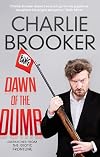
Dawn of the Dumb: Dispatches from the Idiotic Frontline
by Charlie Brooker
On This Page
Description
Polite, pensive, mature, reserved ... Charlie Brooker is none of these things and less. Picking up where his hilarious Screen Burn left off, Dawn of the Dumb collects the best of Charlie Brooker's recent TV writing, together with uproarious spleen-venting diatribes on a range of non-televisual subjects - tackling everything from David Cameron to human hair. Rude, unhinged, outrageous, and above all funny, Dawn of the Dumb is essential reading for anyone with a brain and a spinal cord. And show more hands for turning the pages. show lessTags
Recommendations









Member Reviews
"Anyway, dark matter doesn't just exist in space. There are millions of people who essentially consist of dark matter; unknowable swaths of the population I have never encountered and will never understand.
"People who watch Emmerdale, for example."
This is the second collection of Brooker's columns for The Guardian, originally published between 2004 and 2007. Half are from his TV column, half from his column on more general subjects. Most of them are excellent.
I could do with a bit less about shows like Big Brother and The X Factor. I'm never going to watch them. But then, you could probably use this to pick up enough about them to manage to hold water-cooler conversations, without having to actually sit through the shows show more themselves.
Otherwise, I can have no complaints. Brooker is effortlessly funny, even when he's angry. And he's often angry. There's a lot of stupidity out there. If that bothers you, this book will help. show less
"People who watch Emmerdale, for example."
This is the second collection of Brooker's columns for The Guardian, originally published between 2004 and 2007. Half are from his TV column, half from his column on more general subjects. Most of them are excellent.
I could do with a bit less about shows like Big Brother and The X Factor. I'm never going to watch them. But then, you could probably use this to pick up enough about them to manage to hold water-cooler conversations, without having to actually sit through the shows show more themselves.
Otherwise, I can have no complaints. Brooker is effortlessly funny, even when he's angry. And he's often angry. There's a lot of stupidity out there. If that bothers you, this book will help. show less
When I left home to start University there were many things I missed. But the combined heartache of all these things was outweighed by the joy I felt at the realisation that no longer would my residence's newspaper of choice be The Sun.
The word newspaper in modern English often gets shortened to just ’paper. This appellation is particularly apt for The Sun since it is undeniably full of paper and just as undeniably devoid of news. Being free of the odious tabloid was liberating. No more would every science article I read start with the phrase “Boffins at the University of…”. No more would the day's biggest news event be commented on by Jo, 19, from Wolverhampton, who was happy to expose both her views on world events and her show more bosom.
Since I'm a limp-wristed bleeding-hearted hairy-toed liberal the first newspaper I bought for myself was The Guardian. And immediately I started buying it I was in love. Not with the paper itself, whose more liberal stances on every single news story were refreshing at first but soon gave me the impression that if it leaned any more to the left it would fall over. No, the object of my affection was the splenetic Charlie Brooker. His column was often the highlight of each Monday, a day filled with dragging myself through lectures wondering where the weekend had popped off to and when it would be back.
Long after I had a falling out with The Guardian (they compared Boris Johnson to Hitler; I expect Godwin's law to hold in Youtube comments, not in my broadsheet newspaper) and switched allegiances to a different newspaper I would still buy a copy of Monday's Guardian just to read through his often hilarious pieces. The theme was generally self-loathing, although not being a selfish sort of man Charlie Brooker would happily dish out his loathing to anyone or anything else that had irked him that week.
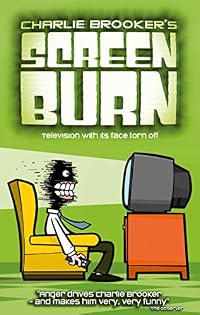
This collection is a combination of Brooker's Monday articles from the G2 supplement that are him just moaning for a page or two and his Screenburn articles that review the week's television. Reading these angry rants once a week usually left me eager for the following week's article, but like some TV shows I worried that reading them all in a row in this collection would rob them of their charm. Thus, despite it being eminently pick-up-able, I practised putting the book down a lot. The individual articles are all rather short, a couple of pages at most. This makes them perfect for filling in those annoying little two minute breaks we have a dozen times a day. A few reviews have called it perfect toilet-time reading, and it is, but I mostly read it while waiting for my creaky old laptop to start up, while waiting for my flatmate to get ready to go out, while waiting in a coffee shop for my friend to arrive, while letting my dinner simmer for five minutes, and many other pauses in my day that wouldn't normally be long enough for any serious reading.
Serious reading is not what this book is about. Charlie Brooker is not a seething cauldron of discontent all the way through, and can be touchingly poignant, as best seen in his tribute to Oliver Postgate. The articles in this collection, though, are witty, acerbic rage through and through, with the arguable exception of the penultimate one—his report from Glastonbury. That's acerbic rage for only half the article.
If you like Charlie Brooker and haven't memorised everything he's ever written then this collection is a great one to dip into. It passed the six-laugh test with flying laugh-flavoured colours and, from a social history perspective, gives a nice overview of the changes in television during the three year period it covers. Charlie Brooker isn't everyone's cup of tea, but if you like your tea with a splash of milk and a teaspoon of relentless pessimistic fury, then you might want to give him a sip. show less
The word newspaper in modern English often gets shortened to just ’paper. This appellation is particularly apt for The Sun since it is undeniably full of paper and just as undeniably devoid of news. Being free of the odious tabloid was liberating. No more would every science article I read start with the phrase “Boffins at the University of…”. No more would the day's biggest news event be commented on by Jo, 19, from Wolverhampton, who was happy to expose both her views on world events and her show more bosom.
Since I'm a limp-wristed bleeding-hearted hairy-toed liberal the first newspaper I bought for myself was The Guardian. And immediately I started buying it I was in love. Not with the paper itself, whose more liberal stances on every single news story were refreshing at first but soon gave me the impression that if it leaned any more to the left it would fall over. No, the object of my affection was the splenetic Charlie Brooker. His column was often the highlight of each Monday, a day filled with dragging myself through lectures wondering where the weekend had popped off to and when it would be back.
Long after I had a falling out with The Guardian (they compared Boris Johnson to Hitler; I expect Godwin's law to hold in Youtube comments, not in my broadsheet newspaper) and switched allegiances to a different newspaper I would still buy a copy of Monday's Guardian just to read through his often hilarious pieces. The theme was generally self-loathing, although not being a selfish sort of man Charlie Brooker would happily dish out his loathing to anyone or anything else that had irked him that week.
This collection is a combination of Brooker's Monday articles from the G2 supplement that are him just moaning for a page or two and his Screenburn articles that review the week's television. Reading these angry rants once a week usually left me eager for the following week's article, but like some TV shows I worried that reading them all in a row in this collection would rob them of their charm. Thus, despite it being eminently pick-up-able, I practised putting the book down a lot. The individual articles are all rather short, a couple of pages at most. This makes them perfect for filling in those annoying little two minute breaks we have a dozen times a day. A few reviews have called it perfect toilet-time reading, and it is, but I mostly read it while waiting for my creaky old laptop to start up, while waiting for my flatmate to get ready to go out, while waiting in a coffee shop for my friend to arrive, while letting my dinner simmer for five minutes, and many other pauses in my day that wouldn't normally be long enough for any serious reading.
Serious reading is not what this book is about. Charlie Brooker is not a seething cauldron of discontent all the way through, and can be touchingly poignant, as best seen in his tribute to Oliver Postgate. The articles in this collection, though, are witty, acerbic rage through and through, with the arguable exception of the penultimate one—his report from Glastonbury. That's acerbic rage for only half the article.
If you like Charlie Brooker and haven't memorised everything he's ever written then this collection is a great one to dip into. It passed the six-laugh test with flying laugh-flavoured colours and, from a social history perspective, gives a nice overview of the changes in television during the three year period it covers. Charlie Brooker isn't everyone's cup of tea, but if you like your tea with a splash of milk and a teaspoon of relentless pessimistic fury, then you might want to give him a sip. show less
When I left home to start University there were many things I missed. But the combined heartache of all these things was outweighed by the joy I felt at the realisation that no longer would my residence's newspaper of choice be The Sun.
The word newspaper in modern English often gets shortened to just ’paper. This appellation is particularly apt for The Sun since it is undeniably full of paper and just as undeniably devoid of news. Being free of the odious tabloid was liberating. No more would every science article I read start with the phrase “Boffins at the University of…”. No more would the day's biggest news event be commented on by Jo, 19, from Wolverhampton, who was happy to expose both her views on world events and her show more bosom.
Since I'm a limp-wristed bleeding-hearted hairy-toed liberal the first newspaper I bought for myself was The Guardian. And immediately I started buying it I was in love. Not with the paper itself, whose more liberal stances on every single news story were refreshing at first but soon gave me the impression that if it leaned any more to the left it would fall over. No, the object of my affection was the splenetic Charlie Brooker. His column was often the highlight of each Monday, a day filled with dragging myself through lectures wondering where the weekend had popped off to and when it would be back.
Long after I had a falling out with The Guardian (they compared Boris Johnson to Hitler; I expect Godwin's law to hold in Youtube comments, not in my broadsheet newspaper) and switched allegiances to a different newspaper I would still buy a copy of Monday's Guardian just to read through his often hilarious pieces. The theme was generally self-loathing, although not being a selfish sort of man Charlie Brooker would happily dish out his loathing to anyone or anything else that had irked him that week.
This collection is a combination of Brooker's Monday articles from the G2 supplement that are him just moaning for a page or two and his Screenburn articles that review the week's television. Reading these angry rants once a week usually left me eager for the following week's article, but like some TV shows I worried that reading them all in a row in this collection would rob them of their charm. Thus, despite it being eminently pick-up-able, I practised putting the book down a lot. The individual articles are all rather short, a couple of pages at most. This makes them perfect for filling in those annoying little two minute breaks we have a dozen times a day. A few reviews have called it perfect toilet-time reading, and it is, but I mostly read it while waiting for my creaky old laptop to start up, while waiting for my flatmate to get ready to go out, while waiting in a coffee shop for my friend to arrive, while letting my dinner simmer for five minutes, and many other pauses in my day that wouldn't normally be long enough for any serious reading.
Serious reading is not what this book is about. Charlie Brooker is not a seething cauldron of discontent all the way through, and can be touchingly poignant, as best seen in his tribute to Oliver Postgate. The articles in this collection, though, are witty, acerbic rage through and through, with the arguable exception of the penultimate one—his report from Glastonbury. That's acerbic rage for only half the article.
If you like Charlie Brooker and haven't memorised everything he's ever written then this collection is a great one to dip into. It passed the six-laugh test with flying laugh-flavoured colours and, from a social history perspective, gives a nice overview of the changes in television during the three year period it covers. Charlie Brooker isn't everyone's cup of tea, but if you like your tea with a splash of milk and a teaspoon of relentless pessimistic fury, then you might want to give him a sip. show less
The word newspaper in modern English often gets shortened to just ’paper. This appellation is particularly apt for The Sun since it is undeniably full of paper and just as undeniably devoid of news. Being free of the odious tabloid was liberating. No more would every science article I read start with the phrase “Boffins at the University of…”. No more would the day's biggest news event be commented on by Jo, 19, from Wolverhampton, who was happy to expose both her views on world events and her show more bosom.
Since I'm a limp-wristed bleeding-hearted hairy-toed liberal the first newspaper I bought for myself was The Guardian. And immediately I started buying it I was in love. Not with the paper itself, whose more liberal stances on every single news story were refreshing at first but soon gave me the impression that if it leaned any more to the left it would fall over. No, the object of my affection was the splenetic Charlie Brooker. His column was often the highlight of each Monday, a day filled with dragging myself through lectures wondering where the weekend had popped off to and when it would be back.
Long after I had a falling out with The Guardian (they compared Boris Johnson to Hitler; I expect Godwin's law to hold in Youtube comments, not in my broadsheet newspaper) and switched allegiances to a different newspaper I would still buy a copy of Monday's Guardian just to read through his often hilarious pieces. The theme was generally self-loathing, although not being a selfish sort of man Charlie Brooker would happily dish out his loathing to anyone or anything else that had irked him that week.
This collection is a combination of Brooker's Monday articles from the G2 supplement that are him just moaning for a page or two and his Screenburn articles that review the week's television. Reading these angry rants once a week usually left me eager for the following week's article, but like some TV shows I worried that reading them all in a row in this collection would rob them of their charm. Thus, despite it being eminently pick-up-able, I practised putting the book down a lot. The individual articles are all rather short, a couple of pages at most. This makes them perfect for filling in those annoying little two minute breaks we have a dozen times a day. A few reviews have called it perfect toilet-time reading, and it is, but I mostly read it while waiting for my creaky old laptop to start up, while waiting for my flatmate to get ready to go out, while waiting in a coffee shop for my friend to arrive, while letting my dinner simmer for five minutes, and many other pauses in my day that wouldn't normally be long enough for any serious reading.
Serious reading is not what this book is about. Charlie Brooker is not a seething cauldron of discontent all the way through, and can be touchingly poignant, as best seen in his tribute to Oliver Postgate. The articles in this collection, though, are witty, acerbic rage through and through, with the arguable exception of the penultimate one—his report from Glastonbury. That's acerbic rage for only half the article.
If you like Charlie Brooker and haven't memorised everything he's ever written then this collection is a great one to dip into. It passed the six-laugh test with flying laugh-flavoured colours and, from a social history perspective, gives a nice overview of the changes in television during the three year period it covers. Charlie Brooker isn't everyone's cup of tea, but if you like your tea with a splash of milk and a teaspoon of relentless pessimistic fury, then you might want to give him a sip. show less
Oh, Charlie, Charlie, Charlie. If there was a reality show featuring you doing nothing but hurl insults at a wall all day long, I would watch it. I would watch it first of all because, judging from this book, chances are I'm gonna agree with those insults. The stupid wall deserves it. But also because again, judging from this book, you have 3859478563490 words stored in an area of your brain designed specifically for the purpose of Innovative Dissing. Us mortals don't have this area, or if we do, it's embarrassingly underdeveloped. I mean why can you take a subject as boring as human hair and make it funny? ("What's hair's beef, anyway? What's it trying to prove? It sprouts with enthusiastic urgency, sometimes in the most unexpected show more places, and then merely hangs around getting in the way. Think your job's pointless? At least you don't dangle off a scalp for a living.") How is this fair for the rest of us, who sometimes take some of the funniest, most hilarious shit ever - like Aronofski's The Fountain, for example - and all we can think to say about it is "that movie was, like, SO bad."? Life is obnoxiously unfair.
P.S., a caveat or two: this book is not a Book in the real, novelish, plot-and-characters sort of way. It's a collection of newspaper articles and, as such, needs to be savoured in small doses for full effect. Also, if you're one of those people that get offended at jokes about God, celebrities, politicians, and life in general, don't read it. If you think Big Brother's too common and "lowbrow" a topic, don't read it. If you do not find "I hate children" T-shirts in the least humorous, don't read it (Some people have tagged this book as "misanthropic" - which is baffling, because a) surely, if there is one group of people you can call annoying without offending anyone that group is Children: "dot-eyed shouting machines hell-bent on sabotaging whatever scraps of tranquility remain in this pitiful world" and b) have you read his piece about Americans?). Last test: what is your reaction to the mention of Dr. Screw and sonic dildos? If you are - possibility no.1 - insulted and a little bit disgusted: not for you. If you are - possibility no. 2 - intrigued and a little bit amused: then GO GET YOUR HANDS ON THE DAMNED BOOK STRAIGHT AWAY! show less
P.S., a caveat or two: this book is not a Book in the real, novelish, plot-and-characters sort of way. It's a collection of newspaper articles and, as such, needs to be savoured in small doses for full effect. Also, if you're one of those people that get offended at jokes about God, celebrities, politicians, and life in general, don't read it. If you think Big Brother's too common and "lowbrow" a topic, don't read it. If you do not find "I hate children" T-shirts in the least humorous, don't read it (Some people have tagged this book as "misanthropic" - which is baffling, because a) surely, if there is one group of people you can call annoying without offending anyone that group is Children: "dot-eyed shouting machines hell-bent on sabotaging whatever scraps of tranquility remain in this pitiful world" and b) have you read his piece about Americans?). Last test: what is your reaction to the mention of Dr. Screw and sonic dildos? If you are - possibility no.1 - insulted and a little bit disgusted: not for you. If you are - possibility no. 2 - intrigued and a little bit amused: then GO GET YOUR HANDS ON THE DAMNED BOOK STRAIGHT AWAY! show less
Absolutely hilarious! Brooker's 'Dawn of the Dumb' is a squealing delight of sarcasm, satire and slating of everyone and everything from 2005 to 2007 - it makes for a highly entertaining read. There were plenty of times reading this book that I found myself laughing aloud with perverse pleasure at his absolute scathing of anyone from TV psychics, to David Cameron. Brooker is a funny, funny guy.
Only 9/10 because whilst Charlie Brooker is side-splittingly funny at destroying celebrities, and making you see serious TV programmes in a much more entertaining light, some of his articles seem to be targeted at nobody, and serve very little of a purpose - it seems he just wants to have a bit of a moan. Chances are he wrote these whilst drunk, show more or under pressure to meet a deadline, or simply that's just my want to defend the fact that Brooker is excellent, despite the fact he does show weaker signs of his work here. He should, in my opinion, stick to what he does best, and I think the book would have been perhaps better absent such articles because they do seem to instill disappointment in the reader, not being anywhere near as funny and a bit of a mood-kill, to the point where I was subconsciously scanning the pages for Italics indicating a TV programme which he's about to completely annihilate, as opposed to where he just complaining about "people".
Brooker is nevertheless, brilliant. I wasn't even halfway through this book and I was recommending it to anybody who would listen! show less
Only 9/10 because whilst Charlie Brooker is side-splittingly funny at destroying celebrities, and making you see serious TV programmes in a much more entertaining light, some of his articles seem to be targeted at nobody, and serve very little of a purpose - it seems he just wants to have a bit of a moan. Chances are he wrote these whilst drunk, show more or under pressure to meet a deadline, or simply that's just my want to defend the fact that Brooker is excellent, despite the fact he does show weaker signs of his work here. He should, in my opinion, stick to what he does best, and I think the book would have been perhaps better absent such articles because they do seem to instill disappointment in the reader, not being anywhere near as funny and a bit of a mood-kill, to the point where I was subconsciously scanning the pages for Italics indicating a TV programme which he's about to completely annihilate, as opposed to where he just complaining about "people".
Brooker is nevertheless, brilliant. I wasn't even halfway through this book and I was recommending it to anybody who would listen! show less
It's hard to know how to comment on this book. On the one hand, I thought it was screamingly funny when I started reading it. Charlie Brooker is the master of the insult and he's prepared to describe segments of society as stupid, boring, useless and generally give voice to all the frustrations we feel with the rubbish we face every day and say the things that we would love (but simply wouldn't dare) to have said ourselves. He does it very well. Extremely well, in fact. I can't think of anyone who does it better.
The problem is that that's pretty well all he does and by the time I got halfway through this collection of articles I was desperately willing him to say something new rather than simply come up with another outrageous metaphor show more for how stupid Big Brother contestants are. So I really enjoyed the first half of the book but the second half was a real struggle. With hindsight, it would have been a good book to dip into. As it is, I ended up feeling that it was very samey — you don't notice this in a weekly newspaper column as you have seven days to reset yourself but presented all at once there feels like there's a distinct lack of variety. show less
The problem is that that's pretty well all he does and by the time I got halfway through this collection of articles I was desperately willing him to say something new rather than simply come up with another outrageous metaphor show more for how stupid Big Brother contestants are. So I really enjoyed the first half of the book but the second half was a real struggle. With hindsight, it would have been a good book to dip into. As it is, I ended up feeling that it was very samey — you don't notice this in a weekly newspaper column as you have seven days to reset yourself but presented all at once there feels like there's a distinct lack of variety. show less
Second collection of columns by Charlie Brooker. Sometimes hilarious, but overall I think I enjoyed Screen Burn more, maybe because I had read less of the content of that in the papers before getting the book. I still maintain that no-one has a better way with insults, particularly when describing Big Brother contestants.
Members
- Recently Added By
Lists

Top Five Books of 2017
757 works; 231 members
Author Information

56+ Works 1,871 Members
Common Knowledge
- Canonical title
- Dawn of the Dumb: Dispatches from the Idiotic Frontline
- Important places*
- Yellowstone Park, USA; Croydon, Surrey, England, Grossbritannien; Windsor Castle, Windsor, Berkshire, England, Grossbritannien; Fidschi; St. Moritz, Graubünden, Schweiz; Edinburgh, Scotland, Grossbritannien (show all 17); Natural History Museum, London, England, Grossbritannien; Slough, England, Grossbritannien; Chalk Farm, London, England, Grossbritannien; Notting Hill, London, England, Grossbritannien; ele; Dubai, United Arab Emirates; Brasilie; Isle of Wight, England, Grossbritannien; London, England, Grossbritannien; Glastonbury, Somerset, England, Grossbritannien; Baltimore, Maryland, USA
- First words
- Nicky Campbell: what's that all about then?
- Last words
- (Click to show. Warning: May contain spoilers.)Here endeth the tortured metaphor. Good Night.
*Some information comes from Common Knowledge in other languages. Click "Edit" for more information.
Classifications
- Genres
- Nonfiction, General Nonfiction
- DDC/MDS
- 791.4502907 — Arts & recreation Recreation, sports, and performing arts Movies, TV, Video Motion pictures, radio, television, podcasting Television
- LCC
- PN1992.3 .G7 .B76 — Language and Literature Literature (General) Literature (General) Drama Broadcasting Television broadcasts
- BISAC
Statistics
- Members
- 520
- Popularity
- 57,331
- Reviews
- 11
- Rating
- (3.82)
- Languages
- English
- Media
- Paper, Ebook
- ISBNs
- 3
- ASINs
- 1