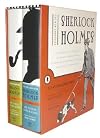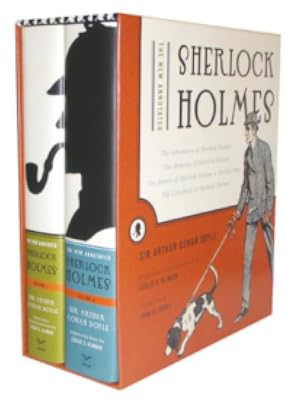
The New Annotated Sherlock Holmes: The Complete Short Stories
by Sir Arthur Conan Doyle, Leslie S. Klinger (Editor)
New Annotated Sherlock Holmes {Conan Doyle/ Klinger} (Collections and Selections — omnibus 1, 2)
On This Page
Description
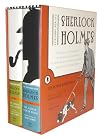
This monumental edition promises to be the most important new contribution to Sherlock Holmes literature since William Baring-Gould's 1967 classic work. In this boxed set, Leslie Klinger, a leading world authority, reassembles Arthur Conan Doyle's 56 classic short stories in the order in which they appeared in late nineteenth- and early twentieth-century book editions. Inside, readers will find a cornucopia of insights: beginners will benefit from Klinger's insightful biographies of Holmes, show more Watson, and Conan Doyle; history lovers will revel in the wealth of Victorian literary and cultural details; Sherlockian fanatics will puzzle over tantalizing new theories; art lovers will thrill to the 700-plus illustrations, which make this the most lavishly illustrated edition of the Holmes tales ever produced. The New Annotated Sherlock Holmes illuminates the timeless genius of Arthur Conan Doyle for an entirely new generation of readers. 700+ illustrations. show lessTags
Recommendations





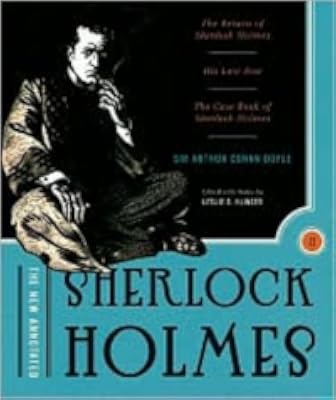




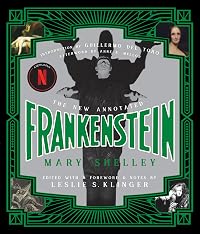
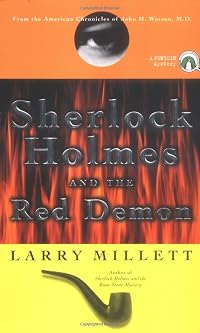
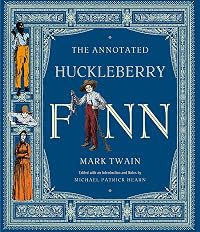


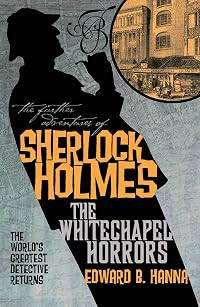










Member Recommendations

uncultured This series, written by Holmes afficianado August Derleth, is bar none the absolute closest thing to resurrecting Arthur Conan Doyle and setting him to work. At first it seems like a cheap parody--Holmes' brother Mycroft has become Bancroft, Dr. Watson is now Dr. Parker, etc...but once that frightened governess pops through the door you'll see just how well Mr. Derleth has done in weaving. Pons even has his own fan club. The stories take place in the 1920's, but aside from using automobiles are essentially the same foggy gaslit things that made Watson & Co. so endearing. Derleth wrote six books of stories and has been succeeded by the very capable Basil Copper. My personal favorite is The Casebook of Solar Pons, with a haunted library, a deadly archers' club, forged books, and more...

Bookwomble Holmesian pastiches written by August Derleth after Doyle said he would write no more stories about the Master Detective.
Member Reviews
For those of us used to the major Holmes novellas like 'The Hound of the Baskervilles', it's easy to neglect the real treasure trove of Holmes mysteries made up of the fifty-six short stories published in the Strand Magazine. Leslie Klinger reproduces them here, faithfully printed in facsimile form, complete with the original illustrations ... and much, much more.
Klinger includes a host of annotations - articles and enigmatic theories contributed by Holmes' scholars over the last century in which they attempt to explain what the great detective was really doing. Holmes has a dedicated band of followers who believe him real, believe him still alive, believe he was actually a woman. There are probably fans who think he is an alien.
If the show more stories weren't fascinating enough in their own right, Klinger's exploration of the world of Holmes makes entertaining reading ... and provides an ironic commentary on the human condition and the preparedness of people to live life through their heroes ... even fictional heroes.
I can, of course, reveal the obvious - although in all the film versions Holmes and Watson speak with impeccable English accents, it has to be recognised that they were both, in fact, Scotsmen. The assumption of Englishness is merely a finely wrought symphony in irony, courtesy of the author ... a Scot, of course!
Conan Doyle was an artist, a man who helped shape the short story and the cliff-hanger into an art form. He combined a genius for narrative story-telling with the ability to weave characters, characters so convincing they have become real and the subject of speculation in a way few other fictional creatures ever have.
A startling publication - the two volumes run to nearly 2000 pages and come in at slightly below bantamweight. Heavy reading, but a delight all the same. show less
Klinger includes a host of annotations - articles and enigmatic theories contributed by Holmes' scholars over the last century in which they attempt to explain what the great detective was really doing. Holmes has a dedicated band of followers who believe him real, believe him still alive, believe he was actually a woman. There are probably fans who think he is an alien.
If the show more stories weren't fascinating enough in their own right, Klinger's exploration of the world of Holmes makes entertaining reading ... and provides an ironic commentary on the human condition and the preparedness of people to live life through their heroes ... even fictional heroes.
I can, of course, reveal the obvious - although in all the film versions Holmes and Watson speak with impeccable English accents, it has to be recognised that they were both, in fact, Scotsmen. The assumption of Englishness is merely a finely wrought symphony in irony, courtesy of the author ... a Scot, of course!
Conan Doyle was an artist, a man who helped shape the short story and the cliff-hanger into an art form. He combined a genius for narrative story-telling with the ability to weave characters, characters so convincing they have become real and the subject of speculation in a way few other fictional creatures ever have.
A startling publication - the two volumes run to nearly 2000 pages and come in at slightly below bantamweight. Heavy reading, but a delight all the same. show less
The "New Annotated Sherlock Holmes" first volume contains all of the short stories originally published in "The Adventures of Sherlock Holmes" and "The Memoirs of Sherlock Holmes." These stories comprise the initial run of Holmes' tales, ending with the climactic "The Final Problem," in which Holmes confronts Professor Moriarty. Holmes' tales work best in short story format, and this collection is an absolute delight.
I'm not a particular fan of detection fiction, nor of mystery novels. Reading these Holmes' stories illustrated to me why that is - Doyle sets the script for detective fiction which everyone else follows, but nobody has topped. It is similar, in some respects, to the influence of Tolkien on the fantasy genre. While Tolkien show more breathed commercial life into it, his influence was so great that it stifled the creativity of future fantasy authors. The same could be said of Doyle's Sherlock Holmes. The influence is very clearly seen on recent television. Modern mystery shows (ranging from the excellent to the abhorrent) like Psych, House, the Mentalist and CSI all draw on the Holmes' formula to varying degrees. This is all to say, that whether you have an interest in the genre before picking up this volume or not, I think there is a good chance you will be as enthralled as I was.
Most of the stories follow a fairly standard formula. Holmes' partner and friend, Dr. Watson, recalls a case in which Holmes displayed his particular acuity at reasoning to solve some crime. A desperate and befuddled victim describe some bizarre scenario, and Watson and Holmes look into it. To everyone's astonishment, Holmes' solves the case, recounting in the end how he managed to pick up clues missed by his compatriots and reason to the actual events. There are deviations in many of the stories, but the general framework quickly becomes rather comfortable for the reader. Watson is an affable and enjoyable narrator. Holmes can be cold at times, and Watson's humor is a nice counterpoint. He's also an able contributor to the stories themselves, even if he is not quite up to Holmes' superhuman abilities.
It's Holmes, rather obviously, who is the most interesting character. In some of the stories, he seems to act simply as a reasoning machine. When Watson finds him, he is hard at work on some scientific pursuit, and once the case is on, he relentlessly pursues it to its conclusion. Yet, many of the other stories show a more complicated and interesting character. While justice is on his mind, he also pursues these cases because he is so fundamentally bored. It's not simply boredom with the events of the day, but that he finds life itself a dreary chore when not intellectually stimulated. On one hand, this seems somewhat odd. It has always seemed to me that the deeper one's appreciation for the complexities of the world, the more fascinating (and less boring) the world becomes. Is it that Holmes' is simply not interested in scientific pursuits, or that he is so intelligent that he has passed even this point? I think not. The first is clearly false, given his interest in chemistry, and we are often introduced to the limits of Holmes' abilities. So what is the cause of Holmes' ennui? It hardly seems to be a crisis in faith, or an existential crisis about the absurdity of the world as it is. I rather enjoyed wrestling with this characteristic, particularly since it seems so foreign to Watson, the narrator. Watson is consistently impressed, engaged and interested in the events he reports upon. It makes him unable to really bring himself to bear on Holmes' own personality, which creates ample opportunities for the reader to dive in.
As one would expect with any volume of short stories, the quality can be a bit uneven. Some of the stories are simply fantastic, particularly "The Red Headed League," "The Boscombe Valley Mystery," "The Copper Beeches," "The Naval Treaty" and "The Final Problem" while others don't quite come off. For example, "The Stock Broker's Clerk" is quite similar to another, earlier story, and the "Five Orange Pips" has a setup that does payoff in terms of details about the secret organization or a plausible explanation of their behavior. Also of interest is the rather progressive ending to "The Yellow Face," which deals with interracial marriage. Nevertheless, the level of quality is generally quite high across the entire volume. Doyle is an able stylist, the mysteries are generally interesting, and the tales are frequently exciting reads.
This edition is also worth saying a few words about. It is designed for "Sherlockian" scholars. These fans of the novels operate under the fiction that the novels are literally true, and that Holmes was a real person whose exploits were recorded by the quite real Watson. The annotations in the volume are in this vein, and typically provide substantive background information which can be used by these fans to examine the plausibility of some of the stories and of Holmes' inferences. As someone who is not interested in this approach to the texts, I found the notes to be a bit hit or miss. Some gave considerable background information about the era in which the stories take place, which generally contribute to the text. Others, however, concern the truth of obscure details of the story (such as train schedules) which were of no interest to me. It is quite obvious that Holmes' inferences are often abduction run amok (there are other plausible explanations of the data), but I simply leave that aside as part of a suspension of disbelief. For those reading the stories like me, rather than like the Sherlockian Scholars the volume is aimed at, these notes can be safely skipped over. The volume also contains a large number of excellent illustrations collected from various sources. A few superflous (to this audience) footnotes aside, this is a wonderful edition of these excellent stories. show less
I'm not a particular fan of detection fiction, nor of mystery novels. Reading these Holmes' stories illustrated to me why that is - Doyle sets the script for detective fiction which everyone else follows, but nobody has topped. It is similar, in some respects, to the influence of Tolkien on the fantasy genre. While Tolkien show more breathed commercial life into it, his influence was so great that it stifled the creativity of future fantasy authors. The same could be said of Doyle's Sherlock Holmes. The influence is very clearly seen on recent television. Modern mystery shows (ranging from the excellent to the abhorrent) like Psych, House, the Mentalist and CSI all draw on the Holmes' formula to varying degrees. This is all to say, that whether you have an interest in the genre before picking up this volume or not, I think there is a good chance you will be as enthralled as I was.
Most of the stories follow a fairly standard formula. Holmes' partner and friend, Dr. Watson, recalls a case in which Holmes displayed his particular acuity at reasoning to solve some crime. A desperate and befuddled victim describe some bizarre scenario, and Watson and Holmes look into it. To everyone's astonishment, Holmes' solves the case, recounting in the end how he managed to pick up clues missed by his compatriots and reason to the actual events. There are deviations in many of the stories, but the general framework quickly becomes rather comfortable for the reader. Watson is an affable and enjoyable narrator. Holmes can be cold at times, and Watson's humor is a nice counterpoint. He's also an able contributor to the stories themselves, even if he is not quite up to Holmes' superhuman abilities.
It's Holmes, rather obviously, who is the most interesting character. In some of the stories, he seems to act simply as a reasoning machine. When Watson finds him, he is hard at work on some scientific pursuit, and once the case is on, he relentlessly pursues it to its conclusion. Yet, many of the other stories show a more complicated and interesting character. While justice is on his mind, he also pursues these cases because he is so fundamentally bored. It's not simply boredom with the events of the day, but that he finds life itself a dreary chore when not intellectually stimulated. On one hand, this seems somewhat odd. It has always seemed to me that the deeper one's appreciation for the complexities of the world, the more fascinating (and less boring) the world becomes. Is it that Holmes' is simply not interested in scientific pursuits, or that he is so intelligent that he has passed even this point? I think not. The first is clearly false, given his interest in chemistry, and we are often introduced to the limits of Holmes' abilities. So what is the cause of Holmes' ennui? It hardly seems to be a crisis in faith, or an existential crisis about the absurdity of the world as it is. I rather enjoyed wrestling with this characteristic, particularly since it seems so foreign to Watson, the narrator. Watson is consistently impressed, engaged and interested in the events he reports upon. It makes him unable to really bring himself to bear on Holmes' own personality, which creates ample opportunities for the reader to dive in.
As one would expect with any volume of short stories, the quality can be a bit uneven. Some of the stories are simply fantastic, particularly "The Red Headed League," "The Boscombe Valley Mystery," "The Copper Beeches," "The Naval Treaty" and "The Final Problem" while others don't quite come off. For example, "The Stock Broker's Clerk" is quite similar to another, earlier story, and the "Five Orange Pips" has a setup that does payoff in terms of details about the secret organization or a plausible explanation of their behavior. Also of interest is the rather progressive ending to "The Yellow Face," which deals with interracial marriage. Nevertheless, the level of quality is generally quite high across the entire volume. Doyle is an able stylist, the mysteries are generally interesting, and the tales are frequently exciting reads.
This edition is also worth saying a few words about. It is designed for "Sherlockian" scholars. These fans of the novels operate under the fiction that the novels are literally true, and that Holmes was a real person whose exploits were recorded by the quite real Watson. The annotations in the volume are in this vein, and typically provide substantive background information which can be used by these fans to examine the plausibility of some of the stories and of Holmes' inferences. As someone who is not interested in this approach to the texts, I found the notes to be a bit hit or miss. Some gave considerable background information about the era in which the stories take place, which generally contribute to the text. Others, however, concern the truth of obscure details of the story (such as train schedules) which were of no interest to me. It is quite obvious that Holmes' inferences are often abduction run amok (there are other plausible explanations of the data), but I simply leave that aside as part of a suspension of disbelief. For those reading the stories like me, rather than like the Sherlockian Scholars the volume is aimed at, these notes can be safely skipped over. The volume also contains a large number of excellent illustrations collected from various sources. A few superflous (to this audience) footnotes aside, this is a wonderful edition of these excellent stories. show less
If you've never read the Sherlock Holmes canon this is NOT the place to start. You're better off going with a more portable, straightforward edition without all the notes. But if you're a hardcore fan this is an awesome book. You'll be amazed at the attention to detail and the contortions the editors go to make some sort of continuity ouf of Conan Doyle's stories.
I guess I’m reviewing the footnotes here. The original Holmes stories get 5 stars from me. This edition is a mixed bag. If you’ve never read the Sherlock Holmes stories I would strongly recommend that you NOT start here. Go get one of the cheap collections from Barnes and Noble instead.
First, the good; There are a lot of footnotes, and many of them are very interesting and useful. The original stories contain a lot of slang and contemporary references to turn-of -the-century England that I didn’t understand when I first read them.
The bad; A good portion of the notes made me crazy after a while. They are obviously written for a certain type of fan, and I’m not it. The notes are all written in the style of treating everything as show more if it were real and Watson were the author. I’ve read books were this was amusing, in this case it was confusing and annoying. There was also no attempt to differentiate in the notes between scholarly notes, pastiches, or other works. I wasn’t sure how to take much of the information I was reading.
1. What I loved about the stories was the world they created, fully formed. A good portion of the notes are spent trying to match what sometimes seemed like every minor character, shop, and chair mentioned to the real world. I found this pretty ridiculous. Doyle mentions real places and people often. When he he names a fictional church I can see mentioning that it doesn’t really exist, but paragraphs of people debating which church is the “real” one (even though none of them actually fit the description) are pretty pointless. There is a LOT of this. And constant referencing events in the stories and how they don’t line up to our history or the publishing dates of the Doyle stories. “Watson mentions many other stories, but this was only the second one published!” I started to wonder if the writers understood the concept of fiction.
This seems in stark opposition to;
2. Making up all kinds of crazy back stories. Seemingly every person and event had notes with someone’s conjecture as to what could have “really” happened. “Holmes stopped to buy a newspaper, perhaps the paperboy was really Oscar WIlde in disguise, teaming with Dr. Moriarty to hide the identity of Jack the Ripper, who was really Mycroft.” Nothing was more annoying than this. It seemed like a third of the notes were of this type. I’m not exaggerating much in the ridiculousness of the theories, only my description was much shorter and less convoluted. Everyone with a similar last name had a back story about how they were secretly related, yet when there were police officers named Jones in two different stories that seemed to have different mannerisms, it seemed to baffle writers how this could be, or how there could be two people named Jones on the London police force. Nearly every story had a “Holmes/Mycroft/Watson was actually the killer” theory. I nearly threw the book a few times.
Maybe I wasn’t getting it, but there were several points where I thought the writers must have been morons. I suspect it was the way the notes were presented seemingly without context. There would be debates about something that seemed perfectly clear to me. And many instances of passages reading something like “Holmes walked across the street to get an Egg McMuffin” would be followed by various theories about why he walked across the street, ending with “perhaps he wanted an Egg McMuffin”.
The problem is there are as much notes as original text. I was constantly looking to the notes and then finding a large portion of them to be pointless and annoying. But an equally large number are very interesting, and you never know which one you’re getting. Much of it just worked to suck all the fun and charm out of the stories for me. I’m hesitant to read the other volumes now. show less
First, the good; There are a lot of footnotes, and many of them are very interesting and useful. The original stories contain a lot of slang and contemporary references to turn-of -the-century England that I didn’t understand when I first read them.
The bad; A good portion of the notes made me crazy after a while. They are obviously written for a certain type of fan, and I’m not it. The notes are all written in the style of treating everything as show more if it were real and Watson were the author. I’ve read books were this was amusing, in this case it was confusing and annoying. There was also no attempt to differentiate in the notes between scholarly notes, pastiches, or other works. I wasn’t sure how to take much of the information I was reading.
1. What I loved about the stories was the world they created, fully formed. A good portion of the notes are spent trying to match what sometimes seemed like every minor character, shop, and chair mentioned to the real world. I found this pretty ridiculous. Doyle mentions real places and people often. When he he names a fictional church I can see mentioning that it doesn’t really exist, but paragraphs of people debating which church is the “real” one (even though none of them actually fit the description) are pretty pointless. There is a LOT of this. And constant referencing events in the stories and how they don’t line up to our history or the publishing dates of the Doyle stories. “Watson mentions many other stories, but this was only the second one published!” I started to wonder if the writers understood the concept of fiction.
This seems in stark opposition to;
2. Making up all kinds of crazy back stories. Seemingly every person and event had notes with someone’s conjecture as to what could have “really” happened. “Holmes stopped to buy a newspaper, perhaps the paperboy was really Oscar WIlde in disguise, teaming with Dr. Moriarty to hide the identity of Jack the Ripper, who was really Mycroft.” Nothing was more annoying than this. It seemed like a third of the notes were of this type. I’m not exaggerating much in the ridiculousness of the theories, only my description was much shorter and less convoluted. Everyone with a similar last name had a back story about how they were secretly related, yet when there were police officers named Jones in two different stories that seemed to have different mannerisms, it seemed to baffle writers how this could be, or how there could be two people named Jones on the London police force. Nearly every story had a “Holmes/Mycroft/Watson was actually the killer” theory. I nearly threw the book a few times.
Maybe I wasn’t getting it, but there were several points where I thought the writers must have been morons. I suspect it was the way the notes were presented seemingly without context. There would be debates about something that seemed perfectly clear to me. And many instances of passages reading something like “Holmes walked across the street to get an Egg McMuffin” would be followed by various theories about why he walked across the street, ending with “perhaps he wanted an Egg McMuffin”.
The problem is there are as much notes as original text. I was constantly looking to the notes and then finding a large portion of them to be pointless and annoying. But an equally large number are very interesting, and you never know which one you’re getting. Much of it just worked to suck all the fun and charm out of the stories for me. I’m hesitant to read the other volumes now. show less
This book is a wonderful introduction to Holmes, and, even for one who has read all the stories, it still manages to provide plenty of value, with lots of photos, drawings & articles explaining and expounding on that romantic, gaslit world inhabited by Holmes and Watson. Really. Go ahead, toss it at anyone who loves mysteries. (Just warn them, as these books could cause some serious damage) They'll start flipping the pages, glancing, glancing, then pause at a photo (a crowded Victorian street, an early submarine prototype).... Then of course, one must READ the accompanying footnote(s). And of course, one can't just leave the Bruce Partington Plans in the hands of a mysterious thief, or allow the Red-Headed League to flourish in Queen show more Victoria's London...Used copies are fairly reasonable, pricewise, but otherwise save up--these Holmesian bookends are a bit pricey, and there's a third volume out there that features the novellas like The Hound of the Baskervilles.
Awooooooooo...
Fair warning though--some footnotes contain blatant spoilers. Even the little blurb introducing each story can sometimes provide significant plot details. Unfortunately there's no asterisks or spoiler alert system in place, so if you're coming fresh to these stories, you may want to consider either choosing another edition, or else only reading those notes which explain what a gasogene is, what a tantalus does, etc, and not the ones which, for example, speculate that ______, the evil behind the Hound of the Baskervilles, was perhaps aided by ________. (This spoiler is waiting in the first few chapters of the Hound of the Baskervilles) show less
Awooooooooo...
Fair warning though--some footnotes contain blatant spoilers. Even the little blurb introducing each story can sometimes provide significant plot details. Unfortunately there's no asterisks or spoiler alert system in place, so if you're coming fresh to these stories, you may want to consider either choosing another edition, or else only reading those notes which explain what a gasogene is, what a tantalus does, etc, and not the ones which, for example, speculate that ______, the evil behind the Hound of the Baskervilles, was perhaps aided by ________. (This spoiler is waiting in the first few chapters of the Hound of the Baskervilles) show less
I had a complete Sherlock Holmes volume as a kid, and I've read all of the stories a number of times. This version is still worth buying for the excellent annotations.
In this boxed set, Leslie Klinger, a leading world authority, reassembles Arthur Conan Doyle's 56 classic short stories in the order in which they appeared in late nineteenth- and early twentieth-century book editions. Inside, readers will find a cornucopia of insights: beginners will benefit from Klinger's insightful biographies of Holmes, Watson, and Conan Doyle; history lovers will revel in the wealth of Victorian literary and cultural details; Sherlockian fans will puzzle over tantalizing new theories; art lovers will thrill to the 800-plus illustrations, which make this the most lavishly illustrated edition of the Holmes tales ever produced. The New Annotated Sherlock Holmes illuminates the timeless genius of Arthur Conan Doyle for show more an entirely new generation of readers. 802 illustrations, 8 pages of color, 650 pages each volume.
[review from Prepolec: bakerstreetdozen.com] show less
[review from Prepolec: bakerstreetdozen.com] show less
Members
- Recently Added By
Lists

Edgar Award
418 works; 15 members

John Carey's Sunday Best
82 works; 3 members
Author Information

4,012+ Works 169,973 Members
The most famous fictional detective in the world is Arthur Conan Doyle's Sherlock Holmes. However, Doyle was, at best, ambivalent about his immensely successful literary creation and, at worst, resentful that his more "serious" fiction was relatively ignored. Born in Edinburgh, Doyle studied medicine from 1876 to 1881 and received his M.D. in show more 1885. He worked as a military physician in South Africa during the Boer War and was knighted in 1902 for his exceptional service. Doyle was drawn to writing at an early age. Although he attempted to enter private practice in Southsea, Portsmouth, in 1882, he soon turned to writing in his spare time; it eventually became his profession. As a Liberal Unionist, Doyle ran, unsuccessfully, for Parliament in 1903. During his later years, Doyle became an avowed spiritualist. Doyle sold his first story, "The Mystery of the Sasassa Valley," to Chambers' Journal in 1879. When Doyle published the novel, A Study in Scarlet in 1887, Sherlock Holmes was introduced to an avid public. Doyle is reputed to have used one of his medical professors, Dr. Joseph Bell, as a model for Holmes's character. Eventually, Doyle wrote three additional Holmes novels and five collections of Holmes short stories. A brilliant, though somewhat eccentric, detective, Holmes employs scientific methods of observation and deduction to solve the mysteries that he investigates. Although an "amateur" private detective, he is frequently called upon by Scotland Yard for assistance. Holmes's assistant, the faithful Dr. Watson, provides a striking contrast to Holmes's brilliant intellect and, in Doyle's day at least, serves as a character with whom the reader can readily identify. Having tired of Holmes's popularity, Doyle even tried to kill the great detective in "The Final Problem" but was forced by an outraged public to resurrect him in 1903. Although Holmes remained Doyle's most popular literary creation, Doyle wrote prolifically in other genres, including historical adventure, science fiction, and supernatural fiction. Despite Doyle's sometimes careless writing, he was a superb storyteller. His great skill as a popular author lay in his technique of involving readers in his highly entertaining adventures. (Bowker Author Biography) show less

Arthur Conan Doyle has a Legacy Library. Legacy libraries are the personal libraries of famous readers, entered by LibraryThing members from the Legacy Libraries group.

All Editions
Awards and Honors
Awards
Notable Lists
Series

Belongs to Publisher Series
Work Relationships
Is contained in
Contains
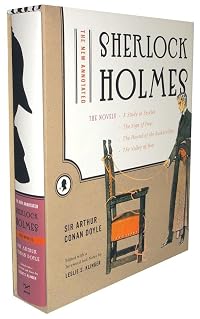
The New Annotated Sherlock Holmes: The Short Stories, Volume 1 of 2 (The Adventures of Sherlock Holmes + The Memoirs of Sherlock Holmes) by Arthur Conan Doyle
BBC Sherlock Holmes Short Stories: The Boscombe Valley Mystery: Part 1 by Arthur Conan Doyle (indirect)
BBC Sherlock Holmes Short Stories: The Boscombe Valley Mystery: Part 2 by Arthur Conan Doyle (indirect)
BBC Sherlock Holmes Short Stories: The Adventure of the Engineer's Thumb: Part 1 by Arthur Conan Doyle (indirect)
BBC Sherlock Holmes Short Stories: The Adventure of the Engineer's Thumb: Part 2 by Arthur Conan Doyle (indirect)
BBC Sherlock Holmes Short Stories: The Adventure of the Noble Bachelor: Part 1 by Arthur Conan Doyle (indirect)
BBC Sherlock Holmes Short Stories: The Adventure of the Noble Bachelor: Part 2 by Arthur Conan Doyle (indirect)
BBC Sherlock Holmes Short Stories: The Adventure of the Beryl Coronet: Part 1 by Arthur Conan Doyle (indirect)
BBC Sherlock Holmes Short Stories: The Adventure of the Beryl Coronet: Part 2 by Arthur Conan Doyle (indirect)
BBC Sherlock Holmes Short Stories: The Adventure of the Copper Beeches: Part 1 by Arthur Conan Doyle (indirect)
BBC Sherlock Holmes Short Stories: The Adventure of the Copper Beeches: Part 2 by Arthur Conan Doyle (indirect)
BBC Sherlock Holmes Short Stories: The Man with the Twisted Lip: Part 1 by Arthur Conan Doyle (indirect)
BBC Sherlock Holmes Short Stories: The Man with the Twisted Lip: Part 2 by Arthur Conan Doyle (indirect)
BBC Sherlock Holmes Short Stories: The Adventure of Silver Blaze: Part 1 by Arthur Conan Doyle (indirect)
BBC Sherlock Holmes Short Stories: The Adventure of Silver Blaze: Part 2 by Arthur Conan Doyle (indirect)
BBC Sherlock Holmes Short Stories: The Adventure of the Gloria Scott: Part 1 by Arthur Conan Doyle (indirect)
BBC Sherlock Holmes Short Stories: The Adventure of the Gloria Scott: Part 2 by Arthur Conan Doyle (indirect)
BBC Sherlock Holmes Short Stories: The Adventure of the Gloria Scott: Part 3 by Arthur Conan Doyle (indirect)
BBC Sherlock Holmes Short Stories: The Adventure of the Reigate Squire: Part 1 by Arthur Conan Doyle (indirect)
BBC Sherlock Holmes Short Stories: The Adventure of the Reigate Squire: Part 2 by Arthur Conan Doyle (indirect)
BBC Sherlock Holmes Short Stories: The Adventure of the Cardboard Box: Part 1 by Arthur Conan Doyle (indirect)
BBC Sherlock Holmes Short Stories: The Adventure of the Cardboard Box: Part 2 by Arthur Conan Doyle (indirect)
BBC Sherlock Holmes Short Stories: The Adventure of the Crooked Man: Part 1 by Arthur Conan Doyle (indirect)
BBC Sherlock Holmes Short Stories: The Adventure of the Crooked Man: Part 2 by Arthur Conan Doyle (indirect)
BBC Sherlock Holmes Short Stories: The Adventure of the Resident Patient: Part 1 by Arthur Conan Doyle (indirect)
BBC Sherlock Holmes Short Stories: The Adventure of the Resident Patient: Part 2 by Arthur Conan Doyle (indirect)
BBC Sherlock Holmes Short Stories: The Adventure of the Abbey Grange: Part 1 by Arthur Conan Doyle (indirect)
BBC Sherlock Holmes Short Stories: The Adventure of the Abbey Grange: Part 2 by Arthur Conan Doyle (indirect)
BBC Sherlock Holmes Short Stories: The Adventure of the Solitary Cyclist: Part 1 by Arthur Conan Doyle (indirect)
BBC Sherlock Holmes Short Stories: The Adventure of the Solitary Cyclist: Part 2 by Arthur Conan Doyle (indirect)
BBC Sherlock Holmes Short Stories: The Adventure of the Empty House: Part 1 by Arthur Conan Doyle (indirect)
BBC Sherlock Holmes Short Stories: The Adventure of the Norwood Builder: Part 1 by Arthur Conan Doyle (indirect)
BBC Sherlock Holmes Short Stories: The Adventure of the Norwood Builder: Part 2 by Arthur Conan Doyle (indirect)
BBC Sherlock Holmes Short Stories: The Adventure of the Dancing Men Part 1 by Arthur Conan Doyle (indirect)
BBC Sherlock Holmes Short Stories: The Adventure of the Dancing Men Part 2 by Arthur Conan Doyle (indirect)
BBC Sherlock Holmes Short Stories: The Adventure of Black Peter: Part 1 by Arthur Conan Doyle (indirect)
BBC Sherlock Holmes Short Stories: The Adventure of Black Peter: Part 2 by Arthur Conan Doyle (indirect)
BBC Sherlock Holmes Short Stories: The Adventure of Charles Augustus Milverton: Part 1 by Arthur Conan Doyle (indirect)
BBC Sherlock Holmes Short Stories: The Adventure of Charles Augustus Milverton: Part 2 by Arthur Conan Doyle (indirect)
BBC Sherlock Holmes Short Stories: The Adventure of the Six Napoleons Part 1 by Arthur Conan Doyle (indirect)
BBC Sherlock Holmes Short Stories: The Adventure of the Six Napoleons: Part 2 by Arthur Conan Doyle (indirect)
BBC Sherlock Holmes Short Stories: The Adventure of the Three Students: Part 1 by Arthur Conan Doyle (indirect)
BBC Sherlock Holmes Short Stories: The Adventure of the Three Students: Part 2 by Arthur Conan Doyle (indirect)
BBC Sherlock Holmes Short Stories: The Adventure of the Bruce-Partington Plans Part 1 by Arthur Conan Doyle (indirect)
BBC Sherlock Holmes Short Stories: The Adventure of the Bruce-Partington Plans Part 2 by Arthur Conan Doyle (indirect)
BBC Sherlock Holmes Short Stories: The Adventure of the Bruce-Partington Plans Part 3 by Arthur Conan Doyle (indirect)
BBC Sherlock Holmes Short Stories: The Adventure of the Devil's Foot: Part 1 by Arthur Conan Doyle (indirect)
BBC Sherlock Holmes Short Stories: The Adventure of the Devil's Foot: Part 2 by Arthur Conan Doyle (indirect)
BBC Sherlock Holmes Short Stories: The Disappearance of Lady Frances Carfax: Part 1 by Arthur Conan Doyle (indirect)
BBC Sherlock Holmes Short Stories: The Disappearance of Lady Frances Carfax: Part 2 by Arthur Conan Doyle (indirect)
BBC Sherlock Holmes Short Stories: The Problem of Thor Bridge: Part 1 by Arthur Conan Doyle (indirect)
BBC Sherlock Holmes Short Stories: The Problem of Thor Bridge: Part 2 by Arthur Conan Doyle (indirect)
BBC Sherlock Holmes Short Stories: The Adventure of the Creeping Man: Part 1 by Arthur Conan Doyle (indirect)
BBC Sherlock Holmes Short Stories: The Adventure of the Creeping Man: Part 2 by Arthur Conan Doyle (indirect)
BBC Sherlock Holmes Short Stories: The Adventure of the Illustrious Client: Part 1 by Arthur Conan Doyle (indirect)
Common Knowledge
- Canonical title
- The New Annotated Sherlock Holmes: The Complete Short Stories
- Original publication date
- 2004
- People/Characters
- Sherlock Holmes; John H. Watson; Irene Adler; Mycroft Holmes; Inspector G. Lestrade; Sebastian Moran (show all 8); Professor James Moriarty; Inspector Tobias Gregson
- Important places
- England, UK; London, England, UK; 221B Baker Street, London, England, UK
- Original language
- English
- Disambiguation notice
- Individual volumes should not be combined with the complete set or different volumes of the same set. This edition has extensive notes by Leslie S. Klinger and should not be combined with non-annotated editions nor with editi... (show all)ons annotated by others.
Classifications
Statistics
- Members
- 887
- Popularity
- 30,482
- Reviews
- 8
- Rating
- (4.60)
- Languages
- Chinese, English
- Media
- Paper, Ebook
- ISBNs
- 3
- ASINs
- 8