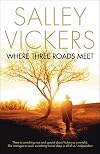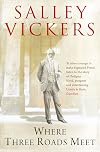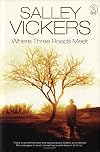
Where Three Roads Meet: The Myth of Oedipus
by Salley Vickers
On This Page
Description
In the latest retelling of the world's greatest stories in the Myth series from Canongate, the highly regarded novelist Salley Vickers brings to life the Western world's most widely known myth, Oedipus, through a shrewdly told exploration of the seminal story in conversation between Freud and Tiresias. It is 1938 and Sigmund Freud, suffering from the debilitating effects of cancer, has been permitted by the Nazis to leave Vienna. He seeks refuge in England, taking up residence in the house show more in Hampstead in which he will die fifteen months later. But his last months are made vivid by the arrival of a stranger who comes and goes according to Freud's state of health. Who is the mysterious visitor and why has he come to tell the famed proponent of the Oedipus complex his strangely familiar story? Set partly in prewar London and partly in ancient Greece, Where Three Roads Meet is as brilliantly compelling as it is thoughtful. Former psychoanalyst and acclaimed novelist Salley Vickers revisits a crime committed long ago that still has disturbing reverberations for us all today. show lessTags
Recommendations


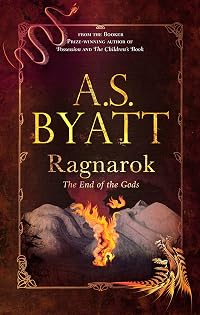
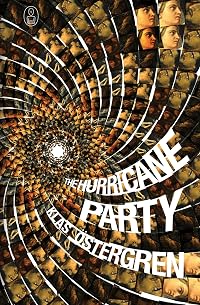


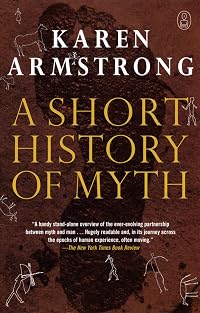
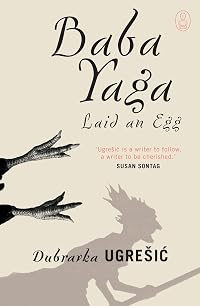



















Member Recommendations
Member Reviews
For the past seven years, I have taught Oedipus the King (aka Oedipus Rex), so I knew I had to read Where Three Roads Meet. This book is part of the same series, Canongate Myth, as The Penelopiad, by my favorite author Margaret Atwood, which is how I discovered it.
I love the premise - a very ill Sidmund Freud hallucinates visits by Tiresias, who tells him more about the story of Oedipus as only someone who witnessed it firsthand can. Together, the two analyze Oedipus' motives and actions, bringing new insight to the story for both men (and the readers, of course).
As I read, I found myself wishing I could share some of Tiresias' insights with my students as we read Oedipus or after reading it. However, our curriculum just replaced show more Oedipus with excerpts from The Odyssey, so this year was probably the last time I'll teach Oedipus. Nevertheless, as someone who has read the play about thirty times, I was fascinated by the new look at the Oedipus story contained in the novel.
Vickers' writing style was easy to read, intellectually engaging, and beautiful. I would not hesitate to read something by her again. This was a wonderful introduction and a really nice read. show less
I love the premise - a very ill Sidmund Freud hallucinates visits by Tiresias, who tells him more about the story of Oedipus as only someone who witnessed it firsthand can. Together, the two analyze Oedipus' motives and actions, bringing new insight to the story for both men (and the readers, of course).
As I read, I found myself wishing I could share some of Tiresias' insights with my students as we read Oedipus or after reading it. However, our curriculum just replaced show more Oedipus with excerpts from The Odyssey, so this year was probably the last time I'll teach Oedipus. Nevertheless, as someone who has read the play about thirty times, I was fascinated by the new look at the Oedipus story contained in the novel.
Vickers' writing style was easy to read, intellectually engaging, and beautiful. I would not hesitate to read something by her again. This was a wonderful introduction and a really nice read. show less
Sally Vickers joins the Canongate Myth series taking the tale of Oedipus. She matches him up with Psychologist Sigmund Freud who came up with his famous theory of mother loving and father hating Oedipus complex and his theory of Psychoanalysis. Sally comes up with the genius idea of having the Oracle who fortold that Oedipus would kill his father and that he would sleep with his mother appearing to Freud in his later life and telling his side of events.
Freud is ill. He has a painful cancer growing in his mouth which led to much of his jaw being removed and many painful operations. He was given his oral prothesis he nicknamed "the monster" to aid his speaking and it is during this illness that the Oracle first begins to appear. We learn show more of his life growing up in Delphi being dedicated to Apollo but also working with Athena who causes his blindness and Dionysis. There are some great moments of dialogue between him and Freud who cannot help trying to analyse him at intervals.
This was such a fun and interesting novel. I didn't know much about Freud's life and was interested to read about his crippling illness and his time fleeing the Nazi's against his will (his sisters were killed in concentration camps). It so ironic that Freud who needed his powers of speech so much lost them in later life. A great addition to an excellent and thought provoking series. show less
Freud is ill. He has a painful cancer growing in his mouth which led to much of his jaw being removed and many painful operations. He was given his oral prothesis he nicknamed "the monster" to aid his speaking and it is during this illness that the Oracle first begins to appear. We learn show more of his life growing up in Delphi being dedicated to Apollo but also working with Athena who causes his blindness and Dionysis. There are some great moments of dialogue between him and Freud who cannot help trying to analyse him at intervals.
This was such a fun and interesting novel. I didn't know much about Freud's life and was interested to read about his crippling illness and his time fleeing the Nazi's against his will (his sisters were killed in concentration camps). It so ironic that Freud who needed his powers of speech so much lost them in later life. A great addition to an excellent and thought provoking series. show less
Part of the Canongate Myths series this is a reworking of the Oedipus myth. Vickers uses a series of conversations between a severely ill Sigmund Freud, the originator of the Oedipus Complex, and Tiresias, the blind seer of the Theban plays, to explore and open up the myth to other interpretations. Having studied these plays, I found this retelling interesting, but not necessarily innovative or moving. But I loved the domestic detail of Freud's life, his daughter, Anna, bringing him tea at 5pm every day, his longing for his Chow, Lün and his need to see the almond blossom in his garden before he died. I also suspect that this may be a book that will benefit from a couple of rereads.
Under the influence of analgesic morphine, Sigmund Freud is visited by a mysterious figure arguing for a more mystical interpretation of the story of Oedipus, closer to Sophocles's telling.
Rather disappointing, run of the mill re-telling of the story. Not actually bad, but doesn't really bring anything new.
Rather disappointing, run of the mill re-telling of the story. Not actually bad, but doesn't really bring anything new.
I have quite mixed feelings about this novel. Firstly it is quite clever, using the life of Freud to explore the myth of Oedipus, a dying Freud having conversations in his head with the Oracle.
However, the problem comes with the fact that when a group of writers are invited to participate in an exercise such as this (re-casting a myth), you often lose what it is in that writers work you like (for me often it is tone or voice). And I felt that happened here a bit.
However, the problem comes with the fact that when a group of writers are invited to participate in an exercise such as this (re-casting a myth), you often lose what it is in that writers work you like (for me often it is tone or voice). And I felt that happened here a bit.
This was disappointing. I enjoyed the retelling of the Greek myth, which I did not remember well beforehand, and I found the Freud story interesting. However, it did not work for me combining the two stories. I usually really enjoy Salley Vickers, but this felt like a failed experiment. I really wanted to like it too, as I have enjoyed the other boks in the Myth series.
Perhaps Three Roads was doomed from the start, as an adaptation of a myth I’ve never particularly cared for—that of Oedipus. But of all my complaints about the book, the storyline is the least of them.
...
One issue is that Tiresias’ life and experiences are much more interesting than the traditional story of Oedipus. But a much bigger issue is that the dialogue format makes the whole book seem too didactic. Certainly the dialogue was chosen to mimic ancient Greek dialogues like those of Plato, and this one is constructed, I believe, to teach in a similar way. Tiresias, here, is teaching Freud…what? I am not completely sure. Reference is made many times to the fact that the psychoanalyst has made his career on the Oedipus story, show more and Tiresias is now here to tell him how things really went down. But it’s still not clear to me how successful this is.
...
In sum, this is probably worth a read if you are interested in the Oedipus myth or have a better liking for the dialogue format than I do (it is a style that irks me somewhat even traditionally). I’ve never read anything else by Salley Vickers, so perhaps it is also simply her prose style I didn’t take to; if you love her, you may well love this too. But I found it generally too didactic and too repetitive for too little reward.
(more at http://www.bibliographing.com/2008/07/28/where-three-roads-meet-by-salley-vicker... ) show less
...
One issue is that Tiresias’ life and experiences are much more interesting than the traditional story of Oedipus. But a much bigger issue is that the dialogue format makes the whole book seem too didactic. Certainly the dialogue was chosen to mimic ancient Greek dialogues like those of Plato, and this one is constructed, I believe, to teach in a similar way. Tiresias, here, is teaching Freud…what? I am not completely sure. Reference is made many times to the fact that the psychoanalyst has made his career on the Oedipus story, show more and Tiresias is now here to tell him how things really went down. But it’s still not clear to me how successful this is.
...
In sum, this is probably worth a read if you are interested in the Oedipus myth or have a better liking for the dialogue format than I do (it is a style that irks me somewhat even traditionally). I’ve never read anything else by Salley Vickers, so perhaps it is also simply her prose style I didn’t take to; if you love her, you may well love this too. But I found it generally too didactic and too repetitive for too little reward.
(more at http://www.bibliographing.com/2008/07/28/where-three-roads-meet-by-salley-vicker... ) show less
Members
- Recently Added By
Published Reviews
ThingScore 100
The latest in Canongate's admirable series of myths recast for a contemporary readership, this retelling of the Oedipus myth - which brings together both the characters familiar from Sophocles' drama and the story's best-known interpreter, Sigmund Freud - shows the author at her most beguiling.
added by jburlinson
Lists

madness prompts and reason writes, says Gide
26 works; 3 members

Books Read in 2016
4,666 works; 197 members

Oedipus & the Theban Cycle
22 works; 1 member
Author Information

21+ Works 4,279 Members
Awards and Honors
Awards
Series
Belongs to Publisher Series
The Myths (10)
Work Relationships
Is a retelling of
Common Knowledge
- Canonical title
- Where Three Roads Meet: The Myth of Oedipus
- Original publication date
- 2007-11
- First words
- Early in 1923, in his 67th year, Sigmund Freud, originator of the theory and practice of psychoanlysis, and the radical and provocative Oedipus complex, discovered a growth in his mouth.
- Quotations
- This afternoon I was recalling a day in Delphi, in the pinewood, and a host of goldfinches descending all about me. You know the little finches with the scarlet polls and gold-barred wings?
I looked up your goldfinch. Interesting iconography. Apparently it's a symbol of Jesus Christ.... The red head allegedly derives from the blood on the crown of thorns, which the bird was supposed daringly to have fed from. It... (show all)'s a striking-looking bird.
Classifications
Statistics
- Members
- 258
- Popularity
- 125,201
- Reviews
- 11
- Rating
- (3.52)
- Languages
- English, Portuguese
- Media
- Paper, Ebook
- ISBNs
- 11
- ASINs
- 4