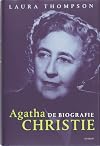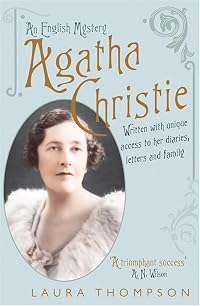
Agatha Christie
by Laura Thompson
On This Page
Description
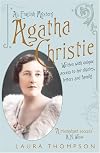
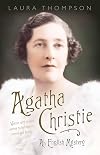
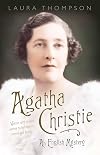
"It has been one hundred years since Agatha Christie wrote her first novel and created the formidable Hercule Poirot. A brilliant and award winning biographer, Laura Thompson now turns her sharp eye to Agatha Christie. Arguably the greatest crime writer in the world, Christie's books still sell over four million copies each year-- more than thirty years after her death-- and it shows no signs of slowing. But who was the woman behind these mystifying, yet eternally pleasing, puzzlers? show more Thompson reveals the Edwardian world in which Christie grew up, explores her relationships, including those with her two husbands and daughter, and investigates the many mysteries still surrounding Christie's life, most notably, her eleven-day disappearance in 1926. Agatha Christie is as mysterious as the stories she penned, and writing about her is a detection job in itself. With unprecedented access to all of Christie's letters, papers, and notebooks, as well as fresh and insightful interviews with her grandson, daughter, son-in-law and their living relations, Thompson is able to unravel not only the detailed workings of Christie's detective fiction, but the truth behind this mysterious woman"--dust jacket. show lessTags
Recommendations














Member Reviews
This biography of the crime writer, the best-selling novelist in the history of the world, is very well written and offers a pretty comprehensive account of her life, mindset and her works. Her life seems to divide into three phases (though the book doesn't quite present it in these terms): her early life and writing career up to 1926, the year of her famous 11 day "disappearance" at a crucial time in her life when her first marriage to Archie Christie was at breaking point; her flourishing into the "golden" age of her writing in the 1930s and 40s and a happier second marriage to Middle East archaeologist Max Mallowan; and from 1950 when she moved from being "merely" a highly successful and prolific writer to becoming a phenomenon of show more worldwide fame, though Laura Thompson considers her books were generally poorer in the last 25 years of her life. Her books exert a powerful effect on readers in countries and cultures across the world, despite the fact that nearly all of them are set against the kind of upper middle class background into which she was born in Torquay in 1890, probably because the lucidity of the situations and the careful construction of many of her plots can appeal universally. I found the post-war sections of the book rather dull in places, dominated by arguments over her tax liabilities and her moving between her various houses, plus the unsatisfactory nature of many of the plays and films based on her books, compared to the massive success of most of the latter. I thought Laura Thompson sometimes laboured some points too heavily and parts of the book were overwritten, though overall this was an absorbing account of a literary phenomenon whose influence and popularity continue to this day. show less
There are two types of biographies, I believe. In one, the author holds themselves at some distance from their subject, never pretending to know their thoughts and feelings and allowing any writings of the subjects to be the sole insight into who they were. In the second, the author gets into their subject's head completely, expressing the subject's thoughts as though the author has some supernatural ability to discern them. This biography falls firmly in the latter category, and at first I was not a fan of it. But as I continued to read it, I felt that it did indeed give a more thorough picture of who Agatha Christie was, even if perhaps sometimes it took liberties that I am not sure should have been taken.
I think I'm going to give this a 3.5?
I don't like feeling this conflicted about a book and being so torn about how to rate it. There's a lot to appreciate here--the research that went into it was clearly exhaustive, and you can find everything you ever wanted to know about Agatha Christie in this book. Thompson traces the whole course of her life in great detail and I really felt that I got to know her. In addition, I found Thompson's prose style very easy to read and also enjoyable.
But goodness, she wants to editorialize. Too much. She adds these very weird personal insights to things, making sweeping judgments about ideas or attitudes. Why am I supposed to care about her own personal feelings on things? I'm here for Agatha Christie, show more not Laura Thompson.
In addition, she makes specious ties between Christie's personal life and her fiction. Perhaps because Thompson is a writer of nonfiction and not fiction, she seems unable to understand that everything a fiction writer writes is not necessarily reflective of her own life. In practically every paragraph, Thompson compares some fact of Christie's life to some quote or scene from one of her books. A little of this might be fine, even effective, but Thompson takes it too far. Sometimes writers of fiction make things up. Sometimes they write things that have nothing to do with their own lives. Many of her comparisons seem a stretch, not to mention that the book as a whole could have been at least a hundred pages shorter if she didn't do this all the time. As a writer of fiction, the idea that someone might think that I'm constantly writing about my own life in my fiction when I'm not is horrifying to me. I can only imagine how Christie would feel about it if she knew.
She also attributes thoughts or feelings to Christie and other people that I'm not sure she could possibly know. Maybe she did indeed read them in letters or diaries, but they don't come across as paraphrased quotes but as pure invention or at least learned guesses. Sometimes she quotes without an endnote, and I can't tell if the quote is from a Christie letter/diary/other paper or from her fiction.
As is usual with my complaints about nonfiction books, most if not all of the book's problems could have been fixed by a good editor. Why do editors give in so much to their writers' self-indulgences? A good editor is a rare thing, apparently, but they make a great contribution.
So: excellent information, enjoyable prose, lots of extraneous editorializing. Your level of enjoyment will depend on how much you can put up with the latter. show less
I don't like feeling this conflicted about a book and being so torn about how to rate it. There's a lot to appreciate here--the research that went into it was clearly exhaustive, and you can find everything you ever wanted to know about Agatha Christie in this book. Thompson traces the whole course of her life in great detail and I really felt that I got to know her. In addition, I found Thompson's prose style very easy to read and also enjoyable.
But goodness, she wants to editorialize. Too much. She adds these very weird personal insights to things, making sweeping judgments about ideas or attitudes. Why am I supposed to care about her own personal feelings on things? I'm here for Agatha Christie, show more not Laura Thompson.
In addition, she makes specious ties between Christie's personal life and her fiction. Perhaps because Thompson is a writer of nonfiction and not fiction, she seems unable to understand that everything a fiction writer writes is not necessarily reflective of her own life. In practically every paragraph, Thompson compares some fact of Christie's life to some quote or scene from one of her books. A little of this might be fine, even effective, but Thompson takes it too far. Sometimes writers of fiction make things up. Sometimes they write things that have nothing to do with their own lives. Many of her comparisons seem a stretch, not to mention that the book as a whole could have been at least a hundred pages shorter if she didn't do this all the time. As a writer of fiction, the idea that someone might think that I'm constantly writing about my own life in my fiction when I'm not is horrifying to me. I can only imagine how Christie would feel about it if she knew.
She also attributes thoughts or feelings to Christie and other people that I'm not sure she could possibly know. Maybe she did indeed read them in letters or diaries, but they don't come across as paraphrased quotes but as pure invention or at least learned guesses. Sometimes she quotes without an endnote, and I can't tell if the quote is from a Christie letter/diary/other paper or from her fiction.
As is usual with my complaints about nonfiction books, most if not all of the book's problems could have been fixed by a good editor. Why do editors give in so much to their writers' self-indulgences? A good editor is a rare thing, apparently, but they make a great contribution.
So: excellent information, enjoyable prose, lots of extraneous editorializing. Your level of enjoyment will depend on how much you can put up with the latter. show less
I was gifted this book a couple of Christmases ago and when going through my shelves discovered it.
It isn’t a quick read as there are quite a few footnotes and references to Christie’s books.
Laura Thompson had access to Christie’s personal papers — notebooks, letters, photographs and the like. She also interviewed Christie’s daughter, son-in-law and grandson and was able to get a more personal look into Christie’s life.
Starting with Christie’s upbringing in a middle-to-upper class family in Torquay during Edwardian times, a period of time she always remembered and cherished. A place she enjoyed returning to in her mind. Thompson continues on to Christie’s two marriages, parenthood, her writing career; times that were show more challenging and not what she initially expected. Of the three events, it was her second marriage to a younger man that was the most pleasurable.
Christie was not one to give interviews or commentary, but was a more shy and private person. Accessibility to Christie’s papers allowed Thompson a look into Christie’s books and find relationships between story lines and actual events in Christie’s life.
It is an interesting read and sheds a new light on Dame Agatha Christie. show less
It isn’t a quick read as there are quite a few footnotes and references to Christie’s books.
Laura Thompson had access to Christie’s personal papers — notebooks, letters, photographs and the like. She also interviewed Christie’s daughter, son-in-law and grandson and was able to get a more personal look into Christie’s life.
Starting with Christie’s upbringing in a middle-to-upper class family in Torquay during Edwardian times, a period of time she always remembered and cherished. A place she enjoyed returning to in her mind. Thompson continues on to Christie’s two marriages, parenthood, her writing career; times that were show more challenging and not what she initially expected. Of the three events, it was her second marriage to a younger man that was the most pleasurable.
Christie was not one to give interviews or commentary, but was a more shy and private person. Accessibility to Christie’s papers allowed Thompson a look into Christie’s books and find relationships between story lines and actual events in Christie’s life.
It is an interesting read and sheds a new light on Dame Agatha Christie. show less
Reading this was quite an undertaking! No one can accuse author Laura Thompson of not doing her research. While I learned much about Agatha Christie’s life that I did not know, I think the chapter about her disappearance was the most interesting. How ironic that even today, there is still somewhat of a mystery about the details of that disappearance.
The book covers Agatha’s life from childhood to death. Her contribution to plays, poems and other literature was prolific and Thompson made much use of it throughout the book. In fact, Thompson added so many excerpts from Christie’s writing that I sometimes felt like abandoning the biography to read Christie’s books.
I felt it was a bit presumptuous that Thompson so often assumed show more that Agatha viewed life as some of her characters or that Agatha was basing certain characters on her own life. Many times, I wished that Thompson had just presented the facts and not taken a detour into Christie’s writing that made assumptions about how she felt.
At times, the chronology was confusing and much of the information redundant. I felt the book could have been streamlined a bit to make for a smoother, more interesting read. I also would have liked to have seen more details about her life during World War II and in her later years.
Overall, the research was excellent and reading this has definitely motivated me to want to read more of Agatha Christie’s work.
Many thanks to NetGally and Pegasus Books for providing me with an advance copy. show less
The book covers Agatha’s life from childhood to death. Her contribution to plays, poems and other literature was prolific and Thompson made much use of it throughout the book. In fact, Thompson added so many excerpts from Christie’s writing that I sometimes felt like abandoning the biography to read Christie’s books.
I felt it was a bit presumptuous that Thompson so often assumed show more that Agatha viewed life as some of her characters or that Agatha was basing certain characters on her own life. Many times, I wished that Thompson had just presented the facts and not taken a detour into Christie’s writing that made assumptions about how she felt.
At times, the chronology was confusing and much of the information redundant. I felt the book could have been streamlined a bit to make for a smoother, more interesting read. I also would have liked to have seen more details about her life during World War II and in her later years.
Overall, the research was excellent and reading this has definitely motivated me to want to read more of Agatha Christie’s work.
Many thanks to NetGally and Pegasus Books for providing me with an advance copy. show less
I am a fan of Agatha Christie's books and this book is an interesting and informative insight into Dame Agatha's life. There is a chapter about the famous 'disappearance' which feels psychologically sound, but, because Agatha Christie refused to discuss this incident, no matter how much Laura Thompson tries to illustrate her theory by using possible hints from the books, this is interesting speculation. What I really enjoyed about this book is the fascinating analysis of both the detective novels and the novels written under the pseudonym, Mary Westmacott, which forms part of Laura Thompson's argument that Christie's writing is, on the whole, of literary merit and value. I am now planning and scheduling a major re-read of of all the show more detective novels as this book has whetted my appetite. show less
Agatha Christie is one of my favourite authors, and Laura Thompson's biography captures the imaginative, timelessly endearing qualities of Christie's life and work, even attempting to define the ineffable durability of her books (despite the fact that they are constantly decried as being dated, xenophobic, racist and unrealistic, Christie is still the bestselling author after the Bible and Shakespeare). However, the great emphasis on her relationships with her husbands and her daughter - not just the facts but speculation as to feelings, chapters which hung on quotes from old love letters made it a very... feminine biography. Even taking into account that the focus of the book was admittedly her 11 day disappearance in 1926, Laura show more Thompson brought her own view of what mattered in the author's life very much to bear; which, while valid and making for great insight into those areas, doesn't really cover the whole purview of the biographer. Personally, I would have liked a little more on Christie's childhood, schooling, what she herself read for enjoyment and thought of other authors... it's not usual to find a book about an author that doesn't at least briefly examine her bookshelves. There's something gossipy about a biography that digs intently at the questions of how many affairs either husband might have had, and for how long, since when, and did Agatha know, particularly when the biographer herself makes it clear that Christie would have hated having her private life deconstructed thus.
Yet the biography is very accessibly written, and Thompson certainly pays due and satisfying attention to Christie's books and characters... the quotes from books that highlight or refer to Agatha's own life are interesting and her literary criticism is sound; she is also sure to present every angle where only rumour and speculation remain to shape an event.
On the whole, I enjoyed this biography but some parts left me feeling slightly mucky, as though I'd gossiped about a dear friend who would have been upset to think her motives, weaknesses and affections were on public display.
Her own autobiography might have glossed over much unpleasantness in her life, but if anyone has the right to a mystery or two, it's surely Agatha Christie. show less
Yet the biography is very accessibly written, and Thompson certainly pays due and satisfying attention to Christie's books and characters... the quotes from books that highlight or refer to Agatha's own life are interesting and her literary criticism is sound; she is also sure to present every angle where only rumour and speculation remain to shape an event.
On the whole, I enjoyed this biography but some parts left me feeling slightly mucky, as though I'd gossiped about a dear friend who would have been upset to think her motives, weaknesses and affections were on public display.
Her own autobiography might have glossed over much unpleasantness in her life, but if anyone has the right to a mystery or two, it's surely Agatha Christie. show less
Members
- Recently Added By
Published Reviews
ThingScore 50
When it comes to Christie's disappearance, Thompson does a fabulous job of getting inside her head, imagining her racing thoughts as she abandoned her car by a North Downs chalk pit and headed on a train to Yorkshire [...] But then Thompson turns her attention to the second mystery of Christie's life - her success - and she simply goes to pieces.
added by Nevov
Lists

TBR
77 works; 1 member

Biographies: Women
112 works; 1 member
Author Information

10+ Works 1,266 Members
Laura Thompson, winner of the Somerset Maugham award for her first book, The Dogs, is also the author of the acclaimed biography of Nancy Mitford, Life in a Cold Climate, and The Six: The Lives of the Mitford Sisters, which was a New York Times bestseller. She lives in London.
Awards and Honors
Awards
Common Knowledge
- Original publication date
- 2007
- People/Characters
- Agatha Christie
- Epigraph
- 'The one thing people never forget is the unsolved. Nothing lasts like a mystery.'
from The Ebony Tower, by John Fowles - Dedication
- To Vinny, my friend, O.F.D.
1992-2006 - First words
- It is a steep climb up Barton Road in Torquay, and at the top there is nothing to be seen.
- Last words
- (Click to show. Warning: May contain spoilers.)But Miss Marple had, for a moment, reminded him of that particular girl, young, happy, going to enjoy herself.
Classifications
Statistics
- Members
- 378
- Popularity
- 83,105
- Reviews
- 14
- Rating
- (3.60)
- Languages
- 7 — Chinese, Dutch, English, German, Hungarian, Lithuanian, Swedish
- Media
- Paper, Audiobook, Ebook
- ISBNs
- 17
- ASINs
- 8