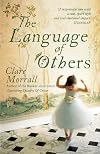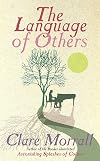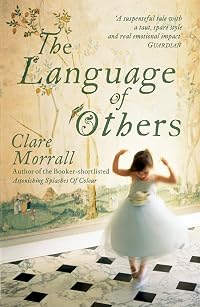
The Language of Others
by Clare Morrall
On This Page
Description
The world is a puzzling, sometimes frightening place for Jessica Fontaine. As a child she only finds contentment in playing the piano and wandering alone in the empty spaces of Audlands Hall, the dilapidated country house where she grows up. Twenty-five years later, divorced, with her son still living at home, Jessica remains preoccupied by the desire to create space around her. Then her volatile ex-husband reappears, the first of several surprises that both transform Jessica's present and show more give her a startling new perspective on the past... show lessTags
Recommendations









Member Recommendations

Member Reviews
An agreeable, often very funny novel about music and the difficulty of making sense of the rest of humanity when you are somewhere on the autism spectrum. I felt it was slightly spoilt by the way all the female characters (except the main viewpoint character, her mother and her mother-in-law) were competent, resourceful, tactful domestic angels and almost all the male characters were infantile monsters who seemed to exist only to sleep, have tantrums and be fed. Obviously not an unrealistic view of the world, but a somewhat monochrome one...
Another excellent book by Morrall. As usual, I find great empathy with her characters who are on the fringes of normal society - the misfits who just don't seem to be able to deal with the circumstances that life has thrust upon them and have developed coping mechanisms that are seen as deviant by mainstream society. In the case of this book the label "Asperger's" is applied by one of the characters to another....and a third subsequently labels themself in the same way. I don't know anything about Morrall's intent, but to me the label is largely irrelevant. There are lots of people whose behaviour puts them on the outer, and whether they're deviant enough to qualify for a formal psychiatric diagnosis is a question with doubtful value to show more me. Should we treat someone with 'deviant' behaviour differently because some medical specialist has placed them in a particular diagnostic box (which another specialist might disagree with anyway)? Hmmm...I must chase up an interview with Ms Morrall and see if she has offered some thoughts on this issue.
The only thing I didn't like about this book was the same as I find in all her work - that she seems to feel the need to finish the book on an optimistic not. But maybe Ms Morrall is an optimistic sort of person and that's just how she sees the world? show less
The only thing I didn't like about this book was the same as I find in all her work - that she seems to feel the need to finish the book on an optimistic not. But maybe Ms Morrall is an optimistic sort of person and that's just how she sees the world? show less
I’ve yet to read a bad book by Clare Morrall; in particular I like the way she zeroes in on life’s oddball characters. In this novel, we meet Jessica, a woman so much like me it was creepy at times. Socially inept, she blunders into a marriage with a man who has bizarre personality traits of his own, and together they have a son who is also a social misfit. Tumultuous events follow and the author uses these to show what life is like when you struggle to relate to other people.
The structure of the novel was interesting: three separate strands of the narrative cover the distant past, the more recent past and the present, and all are interspersed. There is also a mixture of first and third person narration, which can be disorientating show more but allows us to see some of the events from the perspective of the supporting characters. Stylistically it was reminiscent of William Boyd’s ‘Brazzaville Beach’.
I liked the way most chapters build up to a dramatic event in Jessica’s life, each one exquisitely horrific (the concert, the picnic, the driving lesson...). One exception is the opening chapter which felt self-consciously literary and in which very little happens. I fear anyone picking this novel up in a bookshop and skimming the opening sections might write it off as slow or dull, when in fact the opposite is true. show less
The structure of the novel was interesting: three separate strands of the narrative cover the distant past, the more recent past and the present, and all are interspersed. There is also a mixture of first and third person narration, which can be disorientating show more but allows us to see some of the events from the perspective of the supporting characters. Stylistically it was reminiscent of William Boyd’s ‘Brazzaville Beach’.
I liked the way most chapters build up to a dramatic event in Jessica’s life, each one exquisitely horrific (the concert, the picnic, the driving lesson...). One exception is the opening chapter which felt self-consciously literary and in which very little happens. I fear anyone picking this novel up in a bookshop and skimming the opening sections might write it off as slow or dull, when in fact the opposite is true. show less
Clare Morrall is one of the great and gripping literary authors of our time and I have absolutely no idea why more people don't read her. This book is rich in poetry and character development, and the unique main character is a real treasure. Family life has never seemed so foreign and yet so strangely necessary.
That said, the mystery of why Jessica is how she is turns out to be no great mystery at all as I'd understood it by the end of the first chapter - but the interest lies in the character herself and how she comes to terms with her life. Oh, and the dying country house she grows up in and never really leaves is utterly magnificent in every way.
I loved it.
That said, the mystery of why Jessica is how she is turns out to be no great mystery at all as I'd understood it by the end of the first chapter - but the interest lies in the character herself and how she comes to terms with her life. Oh, and the dying country house she grows up in and never really leaves is utterly magnificent in every way.
I loved it.
After two books Clare Morrall was on my "must buy in hardback" list and she's not moving off it as this, her third book, is superb.
This book really flows. The narrative jumps around Jessica's life: in her forties the story is told in the first person including looking back to her early adulthood and her childhood is narrated in the third person. "Jump" is the wrong word though because the whole thing joins up so seamlessly. This is writing so good that you could almost read the book without noticing how well it's written - the words just take you exactly where you want them to. It's not invisible writing though, it's just like sitting in a spa pool with gloriously warm water flowing over you, you don't need to do anything, you just show more enjoy letting the words wash over you.
The story isn't bad either. I found the cast of characters to be very believable - even when they were making the most ludicrous decisions or acting stupidly I found myself believing that these people really would do that.
Best book I've read this year at the very least. show less
A young girl who prefers to be alone, who lacks the social skills to have friends, who marries young and rapidly becomes a mother. This is the intense story of Jessica Fontaine who longs for the air in her house to be hers alone, who manages a difficult marriage and worries about how she is raising her son. This is a story of a lifetime of self-discover and self-acceptance. This description may make the book sound as if nothing happens but it does and, as in any Clare Morrall, subtlety is layered on subtlety.
Jessica grows up at Audlands, a country house which is decaying around the family. Her father was a successful chocolate manufacturer and the house a symbol of his success. As he grows older and the company fails, so does the house. show more Jessica and her sister Harriet grow up side-by-side, loving the house, the dirt and cobwebs, but not really knowing or understanding each other. Only when Jessica discovers the piano does she find freedom.
This is a novel about Asperger’s and the autism spectrum and one woman’s acceptance of her own emotional issues and how they impact and intertwine with the emotional issues of her unpredictable husband Andrew and quiet solitary child Joel. As she grows older, through music and with a supportive friend, Jessica learns the tools to make life easier. ‘Pretence gives you room to get around obstacles without touching them, the space to observe that there are other sides to people, not just the abrasive, challenging attitude that you can’t cope with. You have to view people from new angles, see where the light falls, discover which edges have been worn down and softened with time. Otherwise you get so caught up in the negatives you can’t see anything else.’
There is a lot of wisdom in this book, insights in how to behave – and not behave - within relationships, and how to be forgiving of others.
Read more of my book reviews at http://www.sandradanby.com/book-reviews-a-z/ show less
Jessica grows up at Audlands, a country house which is decaying around the family. Her father was a successful chocolate manufacturer and the house a symbol of his success. As he grows older and the company fails, so does the house. show more Jessica and her sister Harriet grow up side-by-side, loving the house, the dirt and cobwebs, but not really knowing or understanding each other. Only when Jessica discovers the piano does she find freedom.
This is a novel about Asperger’s and the autism spectrum and one woman’s acceptance of her own emotional issues and how they impact and intertwine with the emotional issues of her unpredictable husband Andrew and quiet solitary child Joel. As she grows older, through music and with a supportive friend, Jessica learns the tools to make life easier. ‘Pretence gives you room to get around obstacles without touching them, the space to observe that there are other sides to people, not just the abrasive, challenging attitude that you can’t cope with. You have to view people from new angles, see where the light falls, discover which edges have been worn down and softened with time. Otherwise you get so caught up in the negatives you can’t see anything else.’
There is a lot of wisdom in this book, insights in how to behave – and not behave - within relationships, and how to be forgiving of others.
Read more of my book reviews at http://www.sandradanby.com/book-reviews-a-z/ show less
This is that rare thing a serious novel that is largely, if not completely, free of bad language and also manages to avoid pretentious proto-Proustian philosophising. It is principally about three outsiders, a woman, her one time husband and their son. The couple initially find meaning in their lives through music, though in the case of the man it also proves his undoing. Their son has problems too, and it is fairly late in the day (and indeed in the book) that the underlying reason for this is discovered. Meanwhile, ever present in the back if not the foreground, is the rambling country house in which the leading female figure grew up. This house is arguably the fourth principal character in the novel. I'm not sure what the author show more intended, but for me it suggested the importance of homes to the English. However, out of touch we may feel with the rest of the world, at home we can be ourselves. show less
Members
- Recently Added By
Lists

Mental health fiction
55 works; 18 members

BingoDOG - Books About Autism: Fiction
27 works; 14 members
Author Information

10+ Works 1,315 Members
First published by a small independent press in England, Clare Morrall defied all odds by shooting up the literary ladder and becoming a finalist for the Booker Prize, the most prestigious literary award in England Clare Morrall's lives in Birmingham, England, where she's raised two grown children and is a music teacher
Awards and Honors
Awards
Common Knowledge
- Original publication date
- 2008
- People/Characters
- Jessica Courtenay (nee Fontaine); Andrew Courtenay; Joel Courtenay; Harriet Fontaine; Connie Fontaine; Roland Fontaine (show all 8); Mary Finnegan; Eamon Finnegan
- Important places
- Birmingham, England, UK
- First words
- Jessica stood alone in the silent space, contemplating to Long Gallery in front of her -- a beguiling, empty corridor of oak floorboards.
- Last words
- (Click to show. Warning: May contain spoilers.)I fall in love all over again.
Classifications
Statistics
- Members
- 108
- Popularity
- 300,187
- Reviews
- 14
- Rating
- (3.85)
- Languages
- Dutch, English, French
- Media
- Paper, Audiobook
- ISBNs
- 15