On This Page
Description
Overview: The police don't show up on Easy Rawlins's doorstep until the third girl dies. It's Los Angeles, 1956, and it takes more than one murdered black girl before the cops get interested. Now they need Easy. As he says: " I was worth a precinct full of detectives when the cops needed the word in the ghetto." But Easy turns them down. He's married now, a father - and his detective days are over. Then a white college coed dies the same brutal death, and the cops put the heat on Easy: If he show more doesn't help, his best friend is headed for jail. So Easy's back, walking the midnight streets of Watts and the darker, twisted avenues of a cunning killer's mind. show lessTags
Recommendations






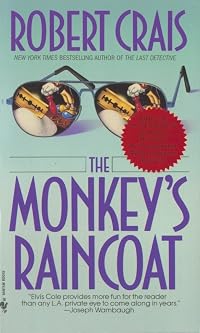
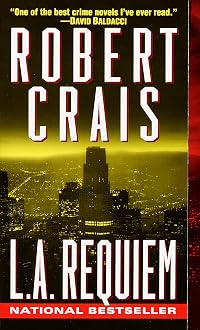
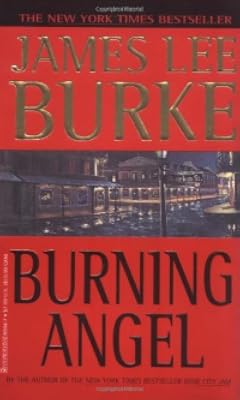
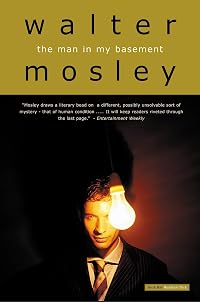



Member Recommendations
Member Reviews
Though Devil in a Blue Dress and A Red Death are great reads which stand apart from other books in the genre, White Butterfly might be the finest of the early stories featuring Easy Rawlins, for my money. Like Ross Macdonald, Walter Mosley weaves a tapestry of pain and heartache and human frailty into White Butterfly. Along the way we get to revisit the friendship of Mouse and Easy, and again Mosley puts a spotlight on the degrees of right and wrong.
Black girls are getting murdered at an alarming rate in 1956 Los Angeles, yet only when a white girl joins their ranks do the police ask for Easy's help. Helping the L.A.P.D. is the last thing Easy wants or needs at that particular moment. He has a woman named Regina and a child in his life show more now. Mosley again shows the complexity of the world Easy inhabits as a black man in post-war Los Angeles. That complexity extends to Easy himself. He cannot open up fully to Regina, keeping from her the fact that he owns property. Nor does he disclose to her the source of his income.
Mosley has written Easy as a good but deeply flawed man. Or in other words, all good men. Easy wrestles with his own life and motives as much as he does with the cops and bad guys. We as readers completely understand why Easy is more comfortable with the amoral Mouse than with the rest of society because of the deftly painted landscape of such by Mosley. The reader does not have to be black to appreciate the complex moral landscape Mosley paints of Easy's world. Mosley makes us feel Easy's personal loss at the end of this book, and it stays with us longer than the mystery.
If Raymond Chandler wrote like a slumming angel, then Mosley writes like an angel of the slums. He doesn't try to make us completely understand Easy's world, he simply allows the reader to ride along with Easy as he attempts to make sense of it all himself. Through Easy's struggle we learn about pain and sorrow and regret, which is to say we learn about life. A great read that, like all great books in the genre, is more than the sum of its parts. show less
Black girls are getting murdered at an alarming rate in 1956 Los Angeles, yet only when a white girl joins their ranks do the police ask for Easy's help. Helping the L.A.P.D. is the last thing Easy wants or needs at that particular moment. He has a woman named Regina and a child in his life show more now. Mosley again shows the complexity of the world Easy inhabits as a black man in post-war Los Angeles. That complexity extends to Easy himself. He cannot open up fully to Regina, keeping from her the fact that he owns property. Nor does he disclose to her the source of his income.
Mosley has written Easy as a good but deeply flawed man. Or in other words, all good men. Easy wrestles with his own life and motives as much as he does with the cops and bad guys. We as readers completely understand why Easy is more comfortable with the amoral Mouse than with the rest of society because of the deftly painted landscape of such by Mosley. The reader does not have to be black to appreciate the complex moral landscape Mosley paints of Easy's world. Mosley makes us feel Easy's personal loss at the end of this book, and it stays with us longer than the mystery.
If Raymond Chandler wrote like a slumming angel, then Mosley writes like an angel of the slums. He doesn't try to make us completely understand Easy's world, he simply allows the reader to ride along with Easy as he attempts to make sense of it all himself. Through Easy's struggle we learn about pain and sorrow and regret, which is to say we learn about life. A great read that, like all great books in the genre, is more than the sum of its parts. show less
The third book of Walter Mosley's "Easy Rawlins" series, this one set in 1956, features Easy as a married man and father, ostensibly employed as a handyman by a real estate rental agent known as Mofass. The LAPD virtually shanghais him to lead them to the killer of four girls. (Marks on the bodies suggest the same person killed all four.) The police aren't happy to be asking for some black guy's assistance. But three white men in suits, accompanied by a white and a black in uniform, show up unannounced and demand his cooperation. The black officer, Quinten Naylor, begins an explanation, but he's cut off by his superior, Anthony Violette.
Police information is sketchy at best, so Easy starts by compiling what he can from newspaper accounts. Where Willa Scott and Juliette LeRoi's were on the nights they were killed? Not known. Bonita Edwards reportedly was in a bar, had quite a few drinks, and was seen with quite a few men. But a witness said she left alone.
Not all is well at home either. He's telling Regina, his wife of two years, that he loves her, but his actions belie that sentiment. He's curt, withdrawn; he's holding her at arm's length, refusing to share the facts of his life (such as the fact that he owns the real estate and Mofass works for him), telling her precious little about what he's doing at all hours of the day or night. His anger is too near the surface. She's getting leery of him. She's pulling away. Easy's plan (fantasy) is to mollify her 'til the case is cracked and he can give her his full attention.
It's a lot of the tried and true motifs, visiting bars and chatting with friends and acquaintances who stagger along the murky, twisting path between good and bad, usually finding their safety lies in expediency. Yes, Mouse shows up; no, he doesn't kill anyone. Ya gotta read it. Goes fast. show less
show more
"We're here to find out who's killing these girls," Violette said. He spoke with his upper lip tight
against his teeth. "We don't want this crazy man running out streets."
"That's some shit," I said. "Excuse me, but I'ma have to go me a beer if I gotta listen to this."
"...What the hell are you trying to do, Rawlins?" Violette yelled.
"Man, I'm in my own house, right? I ain't ask you over. Here you come crowdin' up my living room an' talkin' t' me like you got a blackjack in your pocket"—I was getting hot—"an' then you cryin' 'bout some dead girl an' I know there's been three before this one but you didn't give one good goddam! Because they was black girls an' this one is white!" If I had been on television every colored man and woman in America would have stood from their chairs and cheered.
Police information is sketchy at best, so Easy starts by compiling what he can from newspaper accounts. Where Willa Scott and Juliette LeRoi's were on the nights they were killed? Not known. Bonita Edwards reportedly was in a bar, had quite a few drinks, and was seen with quite a few men. But a witness said she left alone.
Robin Garnett [ the white girl ] didn't make any sense at all. She lived with her parents on Hauser, way over in the western part of L. A. Her father was a prosecuting attorney for the city and her mother stayed home. Robin was a coed at UCLA. She was twenty-one and still a sophomore. She'd just recently returned from a trip to Europe, the paper said, and was expecting to major in education.
...It certainly didn't say why she was the fourth of a series of murders that started out with three black women. …[W]hy would somebody kill three good-time girls and then go after a bobby-soxer?
Not all is well at home either. He's telling Regina, his wife of two years, that he loves her, but his actions belie that sentiment. He's curt, withdrawn; he's holding her at arm's length, refusing to share the facts of his life (such as the fact that he owns the real estate and Mofass works for him), telling her precious little about what he's doing at all hours of the day or night. His anger is too near the surface. She's getting leery of him. She's pulling away. Easy's plan (fantasy) is to mollify her 'til the case is cracked and he can give her his full attention.
It's a lot of the tried and true motifs, visiting bars and chatting with friends and acquaintances who stagger along the murky, twisting path between good and bad, usually finding their safety lies in expediency. Yes, Mouse shows up; no, he doesn't kill anyone. Ya gotta read it. Goes fast. show less
My friends, this is why I review. Because some day, in a mere ten years, I'm going to innocently pick up this book and think, "hey, I should give this a try." About twenty pages in, I realized I had already read White Butterfly. I peeked at the resolution, and sure enough, I was right. Although, quite honestly, I'm glad of the chance to read it again, to linger on Mosley's language and characters. This was prickly period perfection.
White Butterfly is set in a middle chapter in Easy's life; his little house is now filled with a wife, Regina, and new baby, Edna. Little Jesus is now living with them, still silent, but with growing independence.
It all starts when one of L.A.'s few black detectives drops by Easy's house looking for help in show more a case where black female bar girls are being murdered: "Quinten was a brown man but there was a lot of red under the skin. It was almost as if he were rage-colored."
The case has him between a rock and a hard spot: "Quinten had the weight of the whole community on his shoulders. The black people didn't like him because he talked like a white man and he had a white man's job. The other policemen kept at a distance too. Some maniac was killing Negro women and Quinten was all alone."
Easy is allowed to defer on assisting until a white woman is killed, and heavy political pressure comes to bear. A dual plot centers on both his home emotional life and the search for the serial killer. There's a side consequence of the murders when it comes to Easy's property. The serial killer has women scared, and some are moving in together. Easy's considering giving some women that want to room together a break on the rent: "Mofass shook his head sadly and slow. He couldn't take a deep breath but he felt sorry for me. How could I be so stupid and not bleed the whole world for a dollar and some change?"
Characterization shines, as does the emotional tone of the book. Mosley has the perfect balance between detail and action. Description is better balanced in the overall scope of the book than in the The Red Death. L.A. is showcased in period colors, as Easy visits a strip club, a rooming house and a bordello. One of the most tension-laden visits involves visiting a white family--Mosley subtly conveys an sense of charged atmosphere and potential for disaster without sliding into diatribe. The secondary plot was also well done, with the emotional dynamic between Easy and Regina conveying the bewilderment, love and alienation as a relationship changes.
As Easy investigates, we meet some interesting characters:
"One door I passed revealed a man fully dressed in an antique zoot suit and a white ten-gallon hat. As I passed by we regarded each other as two wary lizards might stare as they slithered across some barren stone."
At a rooming house, we're introduced to a horn player, Lips McGee:
"He'd stand straight and tall and play that horn as if every bit of his soul could be concentrated through a silver pipe. Sweat shone across his wide forehead and his eyes became shiny slits. When Lips hit the high notes he made that horn sound like a woman who was where she wanted to be when she was in love with you."
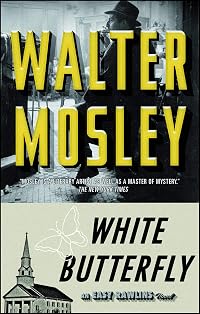
As an aside, I usually don't pay much attention to the book art, but the art on the hardcover edition is wonderful, a colorful cross between Juan Gris that is wall-print worthy.
After [b:A Red Death|84548|A Red Death (Easy Rawlins #2)|Walter Mosley|https://i.gr-assets.com/images/S/compressed.photo.goodreads.com/books/1171055721l/84548._SY75_.jpg|986123], I had my doubts about reading Mosley again. No concerns here.
Cross posted at my book blog, http://clsiewert.wordpress.com/
This work is licensed under a Creative Commons Attribution-NonCommercial-ShareAlike 3.0 Unported License. show less
White Butterfly is set in a middle chapter in Easy's life; his little house is now filled with a wife, Regina, and new baby, Edna. Little Jesus is now living with them, still silent, but with growing independence.
It all starts when one of L.A.'s few black detectives drops by Easy's house looking for help in show more a case where black female bar girls are being murdered: "Quinten was a brown man but there was a lot of red under the skin. It was almost as if he were rage-colored."
The case has him between a rock and a hard spot: "Quinten had the weight of the whole community on his shoulders. The black people didn't like him because he talked like a white man and he had a white man's job. The other policemen kept at a distance too. Some maniac was killing Negro women and Quinten was all alone."
Easy is allowed to defer on assisting until a white woman is killed, and heavy political pressure comes to bear. A dual plot centers on both his home emotional life and the search for the serial killer. There's a side consequence of the murders when it comes to Easy's property. The serial killer has women scared, and some are moving in together. Easy's considering giving some women that want to room together a break on the rent: "Mofass shook his head sadly and slow. He couldn't take a deep breath but he felt sorry for me. How could I be so stupid and not bleed the whole world for a dollar and some change?"
Characterization shines, as does the emotional tone of the book. Mosley has the perfect balance between detail and action. Description is better balanced in the overall scope of the book than in the The Red Death. L.A. is showcased in period colors, as Easy visits a strip club, a rooming house and a bordello. One of the most tension-laden visits involves visiting a white family--Mosley subtly conveys an sense of charged atmosphere and potential for disaster without sliding into diatribe. The secondary plot was also well done, with the emotional dynamic between Easy and Regina conveying the bewilderment, love and alienation as a relationship changes.
As Easy investigates, we meet some interesting characters:
"One door I passed revealed a man fully dressed in an antique zoot suit and a white ten-gallon hat. As I passed by we regarded each other as two wary lizards might stare as they slithered across some barren stone."
At a rooming house, we're introduced to a horn player, Lips McGee:
"He'd stand straight and tall and play that horn as if every bit of his soul could be concentrated through a silver pipe. Sweat shone across his wide forehead and his eyes became shiny slits. When Lips hit the high notes he made that horn sound like a woman who was where she wanted to be when she was in love with you."
As an aside, I usually don't pay much attention to the book art, but the art on the hardcover edition is wonderful, a colorful cross between Juan Gris that is wall-print worthy.
After [b:A Red Death|84548|A Red Death (Easy Rawlins #2)|Walter Mosley|https://i.gr-assets.com/images/S/compressed.photo.goodreads.com/books/1171055721l/84548._SY75_.jpg|986123], I had my doubts about reading Mosley again. No concerns here.
Cross posted at my book blog, http://clsiewert.wordpress.com/
This work is licensed under a Creative Commons Attribution-NonCommercial-ShareAlike 3.0 Unported License. show less
It's 1956; Ezekiel Rawlins ("Easy" to his friends) has a comfortable home, a lovely wife and baby, a loving adopted son who reads but does not speak, and at least one loyal (if lethal) friend. Money is never a problem. Still, he's a black man in a white world, and the cards are often stacked against him. He does his best to hang on to his dignity, his independence and his family while treading barefooted along the tack-strewn path laid out for him by a dubious police acquaintance who purports to need his help in solving a series of murders. Great stuff.
A decade or so ago, while on vacation, I found that my spouse had loaded a Walter Mosley book into our box of books and enjoyed it quite a lot. I have since read many other Mosley books on vacation. I have a feeling that the ones I subsequently read that involved Easy Rawlins were books further along in the line of the series. That is, I might have begun around book 6 or 7, and read on from there. So, last summer, I thought to begin at the beginning, so to speak and put this book (the third in the series) and two others on hold. Well, at the time, it seems, the library didn't actually have a licence to lend those books. So, the books I put on hold back on 1 August 2017, didn't actually become available until the following May. White show more Butterfly is the first of the three books I'd waited some nine months to read. It is the third in the Easy Rawlins' series, but the earliest one available at the time.
It seems to me, in reading this, that Easy had had a few rough edges smoothed off by the time he showed up in later novels. I don't know if this was by intent, or if it just happened. I didn't so much like the Easy in this book as I came to like him in subsequent books.
Easy is living with his wife, Regina, their baby, Edna, and the young boy, Jesus or "Juice", whom Easy had picked up along the way in one of his earlier adventures. Perhaps it's just that Easy is wrapped up in his troubles that he treats Regina so badly. He doesn't so much resort to physical violence (well, there is a scene of spousal rape), more he treats her as an afterthought. I didn't much like that. He also drank way too much and womanized on the side way too much, neither of which I remembered as being features of his later life. I'd always remembered Easy as a decent guy who could get rough when necessary. Given that I'm a repressed, elderly Calvinist, I wasn't happy with Easy's not-so-nice behavior in this book.
I do realize that Easy had some serious life and death problems. It seems there was a serial killer raping, mutilating and then murdering women in LA. But the cops didn't much care until one of the victims turned out to be a white girl who was a coed at UCLA and whose father was rich and influential. The cops come to Easy for some help, because Easy has some contacts in the black community that white cops in 1956 would never have.
So Easy agrees, reluctantly, to investigate a bit. Perhaps if he can find clues to the murderer of the black women, he'll be able to help finger the guy who appears also to have been the murderer of the white woman. One thing Easy discovers is that the young, white woman worked in some rather seamy joints as a stripper, under the stage name, White Butterfly. Next thing you know, the cops are trying to finger Easy for the murders. So, he has to find a way out and so forth. It was a pretty interesting book, with lots of observations about racism, but as I said, Easy was rather more of an asshole in this book than in any of the others I've read. So, I'll put it at the bottom of my list of Easy Rawlins' novels. Which still doesn't mean that it is not a GoodRead. show less
It seems to me, in reading this, that Easy had had a few rough edges smoothed off by the time he showed up in later novels. I don't know if this was by intent, or if it just happened. I didn't so much like the Easy in this book as I came to like him in subsequent books.
Easy is living with his wife, Regina, their baby, Edna, and the young boy, Jesus or "Juice", whom Easy had picked up along the way in one of his earlier adventures. Perhaps it's just that Easy is wrapped up in his troubles that he treats Regina so badly. He doesn't so much resort to physical violence (well, there is a scene of spousal rape), more he treats her as an afterthought. I didn't much like that. He also drank way too much and womanized on the side way too much, neither of which I remembered as being features of his later life. I'd always remembered Easy as a decent guy who could get rough when necessary. Given that I'm a repressed, elderly Calvinist, I wasn't happy with Easy's not-so-nice behavior in this book.
I do realize that Easy had some serious life and death problems. It seems there was a serial killer raping, mutilating and then murdering women in LA. But the cops didn't much care until one of the victims turned out to be a white girl who was a coed at UCLA and whose father was rich and influential. The cops come to Easy for some help, because Easy has some contacts in the black community that white cops in 1956 would never have.
So Easy agrees, reluctantly, to investigate a bit. Perhaps if he can find clues to the murderer of the black women, he'll be able to help finger the guy who appears also to have been the murderer of the white woman. One thing Easy discovers is that the young, white woman worked in some rather seamy joints as a stripper, under the stage name, White Butterfly. Next thing you know, the cops are trying to finger Easy for the murders. So, he has to find a way out and so forth. It was a pretty interesting book, with lots of observations about racism, but as I said, Easy was rather more of an asshole in this book than in any of the others I've read. So, I'll put it at the bottom of my list of Easy Rawlins' novels. Which still doesn't mean that it is not a GoodRead. show less
Ezekiel (Easy) Rawlins is now married to Regina Riles and has two children: a baby girl, Etna, and an adopted son, Jesus Peña. It's 1956 and Easy has kept the details of his real estate business and his "confidential" work secret from his wife. The secrecy is beginning to fester in the marriage.
White Butterfly opens when Detective Quinten Naylor asks Easy to help him at the scene of a murdered girl – the third one. When a fourth girl, this one white, Robin Garnett, is found similarly murdered, the entire LAPD is stirred even involving a representative from the governor. This unfairness angers Rawlins and he wants no part of the investigation when asked by Quinten Naylor, the only black detective on the force. Easy is forced into the show more investigation when Naylor threatens to take in Easy's friend Raymond (Mouse) Alexander.
Rawlins hunts down the serial murderer, J.T. Saunders and witnesses him being coldly killed by an undercover cop. Easy determines that Saunders could not have killed Garnett, who he has discovered is also named Cyndi Starr, and is known on stage as the White Butterfly. He finds out that she has given birth to a black baby, Feather. He also deduces that it was her father who killed Robin.
The murders are solved but along the way Easy has lost his wife and his daughter, Edna, to his former friend, Dupree Bouchard, and he has acquired another daughter when he takes in baby Feather. show less
White Butterfly opens when Detective Quinten Naylor asks Easy to help him at the scene of a murdered girl – the third one. When a fourth girl, this one white, Robin Garnett, is found similarly murdered, the entire LAPD is stirred even involving a representative from the governor. This unfairness angers Rawlins and he wants no part of the investigation when asked by Quinten Naylor, the only black detective on the force. Easy is forced into the show more investigation when Naylor threatens to take in Easy's friend Raymond (Mouse) Alexander.
Rawlins hunts down the serial murderer, J.T. Saunders and witnesses him being coldly killed by an undercover cop. Easy determines that Saunders could not have killed Garnett, who he has discovered is also named Cyndi Starr, and is known on stage as the White Butterfly. He finds out that she has given birth to a black baby, Feather. He also deduces that it was her father who killed Robin.
The murders are solved but along the way Easy has lost his wife and his daughter, Edna, to his former friend, Dupree Bouchard, and he has acquired another daughter when he takes in baby Feather. show less
Maybe one shouldn't read too many of these in a row. I found myself getting a little tired at this point with Easy's angst, his reluctance to work for the white man and the cops (in this case helping to solve the murders of young girls, but of course the cops only turn to him when a white girl is murdered, not having bothered too much when it was three/four black girls), and his secretive life. Things are a little more complicated in Easy's life because he is married with a child, and young mute boy that he adopted, but he doesn't even tell his wife about his real life and the money that he has from his real estate holdings. In the end she leaves him, taking the daughter. Easy seems to lead the cops to a black man who probably was the show more murderer of the black girls, and he is gunned down in staged incident of police vigilantism. But this guy could not have killed the white girl, the daughter of county prosecutor, and there is a twist at the end when Easy realizes just who that murderer must have been.
(June/00) show less
(June/00) show less
Members
- Recently Added By
Author Information

106+ Works 26,706 Members
Walter Mosley was born in Los Angeles, California on January 12, 1952. He graduated from Johnson State College in Vermont. His first book, Devil in a Blue Dress, was published in 1990, won a John Creasy Award for best first novel, and was made into a motion picture starring Denzel Washington in 1995. He is the author of the Easy Rawlins Mystery show more series, the Leonid McGill Mystery series, and the Fearless Jones series. His other works include Always Outnumbered, Always Outgunned, 47, Last Days of Ptolemy Grey, and Twelve Steps toward Political Revelation. He has received numerous awards, including an O. Henry Award, the Carl Brandon Society Parallax Award, and PEN America's Lifetime Achievement Award. (Bowker Author Biography) Walter Mosley is the author of the acclaimed Easy Rawlins series of mysteries, the novels "Blue Light" and "RL's Dream", and two collections of stories featuring Socrates Fortlow, "Always Outnumbered", "Always Outgunned", for which he received the Anisfield-Wolf Award, and "Walkin' the Dog". He is a member of the board of directors of the National Book Awards and the founder of the PEN American Center's Open Book Committee. At various times in his life he has been a potter, a computer programmer, & a poet. He was born in Los Angeles & now lives in New York. (Publisher Provided) show less
Awards and Honors
Awards
Series

Belongs to Publisher Series
Mirabilia (128)
Work Relationships
Common Knowledge
- Canonical title
- White Butterfly
- Original title
- White Butterfly
- Original publication date
- 1992
- People/Characters
- Ezekiel "Easy" Rawlins; Raymond "Mouse" Alexander; Regina Rawlins; Jesus "Juice" Rawlins
- Dedication
- For the stories he keeps on telling, I dedicate this book to Leroy Mosley.
- First words
- "Easy Rawlins!" someone called.
- Last words
- (Click to show. Warning: May contain spoilers.)I would have been happy if not one more person in the world ever had to face that fate.
- Original language*
- Anglais (Etats-Unis) (Etats-Unis)
*Some information comes from Common Knowledge in other languages. Click "Edit" for more information.
Classifications
Statistics
- Members
- 944
- Popularity
- 28,265
- Reviews
- 16
- Rating
- (3.80)
- Languages
- 11 — Dutch, English, Estonian, Finnish, French, German, Italian, Norwegian (Bokmål), Norwegian, Spanish, Swedish
- Media
- Paper, Audiobook, Ebook
- ISBNs
- 35
- ASINs
- 8