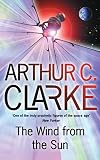
The wind from the sun
by Arthur C. Clarke
Arthur C. Clarke Anthologies (Collections and Selections — )
On This Page
Description
A volume containing all 18 short stories written by Arthur C. Clarke in the 1960s. They depict a future in which technologies are beginning to dictate man's lifestyle - even to demand life for themselves.Tags
Recommendations













Member Reviews
A collection of 18 short stories written in the 1960s and early 1970s - these stories, in my mind at least, really stand the test of time. For the most part, I found them fresh and compelling. For stories that are almost 60 years old, that's an impressive feat.
There are really too many stories to give a review for each one, but I think I really liked Maelstrom II, The Wind From the Sun, The Light of Darkness, Neutron Tide, and Transit of Earth. All pretty stellar in my book.
There are really too many stories to give a review for each one, but I think I really liked Maelstrom II, The Wind From the Sun, The Light of Darkness, Neutron Tide, and Transit of Earth. All pretty stellar in my book.
Not among Clarke's best work, still, a very fine collection of short stories.
It's always such a treat to read intelligent sf written by an actual scientist,
especially one as good and imaginative as Clarke. Mainly because there are many things that would easily be overlooked by someone who is not so familiar with actual physical laws, also because someone who does scientific research would be more inclined to observe and question negative consequences of scientific revolutions and discoveries on society which often does not follow hand in hand with its mentality, and to explore new possibilities imposed by them.
Most of the stories are rather blah and unimaginative, but few of them stand out.
The wind from the Sun, Transit of Earth, show more Crusade and A meeting with Medusa are among my favorite from this collection. show less
It's always such a treat to read intelligent sf written by an actual scientist,
especially one as good and imaginative as Clarke. Mainly because there are many things that would easily be overlooked by someone who is not so familiar with actual physical laws, also because someone who does scientific research would be more inclined to observe and question negative consequences of scientific revolutions and discoveries on society which often does not follow hand in hand with its mentality, and to explore new possibilities imposed by them.
Most of the stories are rather blah and unimaginative, but few of them stand out.
The wind from the Sun, Transit of Earth, show more Crusade and A meeting with Medusa are among my favorite from this collection. show less
Not among Clarke's best work, still, a very fine collection of short stories.
It's always such a treat to read intelligent sf written by an actual scientist,
especially one as good and imaginative as Clarke. Mainly because there are many things that would easily be overlooked by someone who is not so familiar with actual physical laws, also because someone who does scientific research would be more inclined to observe and question negative consequences of scientific revolutions and discoveries on society which often does not follow hand in hand with its mentality, and to explore new possibilities imposed by them.
Most of the stories are rather blah and unimaginative, but few of them stand out.
The wind from the Sun, Transit of Earth, show more Crusade and A meeting with Medusa are among my favorite from this collection. show less
It's always such a treat to read intelligent sf written by an actual scientist,
especially one as good and imaginative as Clarke. Mainly because there are many things that would easily be overlooked by someone who is not so familiar with actual physical laws, also because someone who does scientific research would be more inclined to observe and question negative consequences of scientific revolutions and discoveries on society which often does not follow hand in hand with its mentality, and to explore new possibilities imposed by them.
Most of the stories are rather blah and unimaginative, but few of them stand out.
The wind from the Sun, Transit of Earth, show more Crusade and A meeting with Medusa are among my favorite from this collection. show less
Very enjoyable collection of Clarke's writing from the 60s and early 70s.
Clarke is a master of the science fiction short story; this volume compiles his stories from the 1960's. Particularly memorable is "The Wind From the Sun", "The Secret", and "A Meeting With Medusa".
Indeholder "The Food of the Gods", "Maelstrom II", "The Shining Ones", "The Wind from the Sun", "The Secret", "The Last Command", "Dial F for Frankenstein", "Reunion", "Playback", "The Light of Darkness", "The Longest Science-Fiction Story Ever Told", "Herbert George Morley Robert Wells Esq.", "Love That Universe", "Crusade", "The Cruel Sky", "The Neutron Tide", "Transit of Earth", "A Meeting with Medusa".
"The Food of the Gods" handler om syntetisk kød - der minder ret meget om menneskekød, men det ved folk ikke.
"Maelstrom II" handler om et teknisk uheld med en elektrisk railgun på Månen. Den uheldige er lige ved at ende som et krater, men heldigvis får nogen en god ide.
"The Shining Ones" handler om dybhavet ud for Sri Lanka, show more russisk termoelektricitet og intelligente blæksprutter både små og meget store.
"The Wind from the Sun" handler om kapsejlads med solsejl der ender med et fartøj der vil nå udenfor solsystemet.
"The Secret" handler om at nedsat gravitation forlænger livet med en faktor to.
"The Last Command" handler om ikke-brug af gengældelsesvåben.
"Dial F for Frankenstein" handler om telefonsystemet, der bliver stort nok til at udvikle en bevidsthed.
"Reunion" handler om bleg hud opfattet som en sygdom.
"Playback" handler om mand, der dør men bliver samlet op som en slags båndoptagelse af nogle meget avancerede væsener, der dog ikke har ubegrænsede evner til at holde på ham.
"The Light of Darkness" handler om at laserblinde en diktator, Chaka, der ellers påstår at han er altseende.
"The Longest Science-Fiction Story Ever Told" handler om en rekursiv historie.
"Herbert George Morley Robert Wells Esq." handler om en historie The Anticipator som ikke er af H. G. Wells.
"Love That Universe" handler om at råbe om hjælp med koordineret ESP.
"Crusade" handler om ikke-biologisk baseret liv, der påbegynder et korstog mod biologisk liv.
"The Cruel Sky" handler om antigravitation.
"The Neutron Tide" handler om 'a star-mangled spanner' som resultat af at komme for tæt på en neutronstjerne.
"Transit of Earth" handler om at være strandet på Mars for at observere en jord-passage over solskiven set fra Mars. Den strandede vælger at dø på samme måde som Scott.
"A Meeting with Medusa" handler om at et heliumluftskib med fusionsreaktor forulykker, piloten kommer slemt til skade, men bliver genopbygget, styrer den første bemandede sonde til Jupiter og møder her kæmpemæssige livsformer.
Ok noveller, men heller ikke så meget mere. show less
"The Food of the Gods" handler om syntetisk kød - der minder ret meget om menneskekød, men det ved folk ikke.
"Maelstrom II" handler om et teknisk uheld med en elektrisk railgun på Månen. Den uheldige er lige ved at ende som et krater, men heldigvis får nogen en god ide.
"The Shining Ones" handler om dybhavet ud for Sri Lanka, show more russisk termoelektricitet og intelligente blæksprutter både små og meget store.
"The Wind from the Sun" handler om kapsejlads med solsejl der ender med et fartøj der vil nå udenfor solsystemet.
"The Secret" handler om at nedsat gravitation forlænger livet med en faktor to.
"The Last Command" handler om ikke-brug af gengældelsesvåben.
"Dial F for Frankenstein" handler om telefonsystemet, der bliver stort nok til at udvikle en bevidsthed.
"Reunion" handler om bleg hud opfattet som en sygdom.
"Playback" handler om mand, der dør men bliver samlet op som en slags båndoptagelse af nogle meget avancerede væsener, der dog ikke har ubegrænsede evner til at holde på ham.
"The Light of Darkness" handler om at laserblinde en diktator, Chaka, der ellers påstår at han er altseende.
"The Longest Science-Fiction Story Ever Told" handler om en rekursiv historie.
"Herbert George Morley Robert Wells Esq." handler om en historie The Anticipator som ikke er af H. G. Wells.
"Love That Universe" handler om at råbe om hjælp med koordineret ESP.
"Crusade" handler om ikke-biologisk baseret liv, der påbegynder et korstog mod biologisk liv.
"The Cruel Sky" handler om antigravitation.
"The Neutron Tide" handler om 'a star-mangled spanner' som resultat af at komme for tæt på en neutronstjerne.
"Transit of Earth" handler om at være strandet på Mars for at observere en jord-passage over solskiven set fra Mars. Den strandede vælger at dø på samme måde som Scott.
"A Meeting with Medusa" handler om at et heliumluftskib med fusionsreaktor forulykker, piloten kommer slemt til skade, men bliver genopbygget, styrer den første bemandede sonde til Jupiter og møder her kæmpemæssige livsformer.
Ok noveller, men heller ikke så meget mere. show less
Nov 1, 2012 (Edited)Danish
Members
- Recently Added By
Lists

The Short Story Collections of Arthur C. Clarke
10 works; 1 member
Author Information

Arthur C. Clarke was born in Minehead, Somerset, England, on December 16, 1917. During World War II, he served as a radar specialist in the RAF. His first published piece of fiction was Rescue Party and appeared in Astounding Science, May 1946. He graduated from King's College in London with honors in physics and mathematics, and worked in show more scientific research before turning his attention to writing fiction. His first book, Prelude to Space, was published in 1951. He is best known for his book 2001: A Space Odyssey, which was later turned into a highly successful and controversial film under the direction of Stanley Kubrick. His other works include Childhood's End, Rendezvous with Rama, The Garden of Rama, The Snows of Olympus, 2010: A Space Odyssey II, 2062: Odyssey III, and 3001: The Final Odyssey. During his lifetime, he received at least three Hugo Awards and two Nebula Awards. He died of heart failure on March 19, 2008 at the age of 90. (Bowker Author Biography) show less
Series

Belongs to Publisher Series
Work Relationships
Is contained in
Contains
Common Knowledge
- Canonical title
- The Wind from the Sun; The wind from the sun
- Original title
- The wind from the sun; stories from the space age
- Alternate titles
- The wind from the sun ; stories of the space age
- Original publication date
- 1972-04 (Collection) (Collection); 1964 Short Story (The Shining Ones) (The Shining Ones); 1965 Short Story (Maelstrom II) (Maelstrom II); 1971 Short Story (Transit of Earth) (Transit of Earth); 1966 Short Story (The Longest Science-Fiction Story Ever Told) (The Longest Science-Fiction Story Ever Told); 1970 Short Story (Neutron Tide) (Neutron Tide) (show all 18); 1971 Novelette (A Meeting With Medusa) (A Meeting With Medusa); 1964 Short Story (The Food of the Gods) (The Food of the Gods); 1963 Short Story (The Secret) (The Secret); 1965 Short Story (The Last Command) (The Last Command); 1965 Short Story (Dial "F" for Frankenstein) (Dial "F" for Frankenstein); 1971 Short Story (Reuninion) (Reuninion); 1966 Short Story (Playback) (Playback); 1966 Short Story (The Light of Darkness) (The Light of Darkness); 1961 Short Story (Love That Universe) (Love That Universe); 1968 Short Story (Crusade) (Crusade); 1967 Short Story (The Cruel Sky) (The Cruel Sky); 1964 Novelette (The Wind from the Sun) (The Wind from the Sun)
- Dedication
- For Peter, these memories of our future
- Disambiguation notice
- This collection takes its title from the novelette of the same name, which it includes.
Classifications
Statistics
- Members
- 968
- Popularity
- 27,411
- Reviews
- 7
- Rating
- (3.63)
- Languages
- 6 — English, French, German, Portuguese, Russian, Spanish
- Media
- Paper, Audiobook
- ISBNs
- 16
- UPCs
- 1
- ASINs
- 23