On This Page
Description
The missing lord of the manor looms large in this quirky novel by an author who offers "a fresh, original, witty interpretation of England's social history" (The New York Times). Lady Graham is anticipating the long-awaited appearance of Sir Robert, finally retiring from his glorious military career and globetrotting adventures a decade after the end of World War II. In the meantime, life at Holdings goes on and Lady Graham's youngest, eighteen-year-old Edith, has her pick of suitors. It is show more unclear, however, if she will make up her mind about them any time soon--and if she will exit Holdings before her father enters . . . "Where Trollope would have been content to arouse a chuckle, [Thirkell] is constantly provoking us to hilarious laughter. . . . To read her is to get the feeling of knowing Barsetshire folk as well as if one had been born and bred in the county." --Kirkus Reviews show lessTags
Recommendations





















Member Recommendations


Member Reviews
'Sir Robert Graham came in' are the last words of this book which is part of Angela Thirkell's Barsetshire Series. It is set in high society, reasonably high anyway, society circles, full of eccentric family members who love and hate or more like just dislike, listen and don't listen to each other. Among them are landowners, vicars, churchwardens, bright and silly young girls, farmers, men back from the war, yokels, pigs and odd job men who patch up carpets in churches, some with strange local accents. Nothing happens at all. This does not stop the enjoyment of the book. It is written so cleverly, whimsically and carefully; it gets to the heart of human nature; and is very funny. Take, for instance, the first sentence in chapter 8: show more 'Lady Graham, whose business-like mind was often a great surprise to people who had thought of her as a kind of lovely piece of seaweed, drifting with the tide, rocked by the surges, had not forgotten her plan to get Mrs Morland to Holdings', page 233. This volume is set around the time just after British Railways nationalisation in 1948, as corroborated by words on page 264: 'Owing to the increasing horribleness of the food and service in restaurant cars since the noble Great Western Railway had to bow its head'. Lovely. There is even a Proustian hint within the story, for instance, the sending up of the snobbery, a la Legrandin, of Mr Scatcherd, an 'artist' who says, pages 104/05: 'That now is a question that needs a power of thinking. To begin at the beginning, we artists see quite different to Others. Where you may see a church, or a tree, we see a Composition, and here, today, setting on this here camp-stool...I seen a Composition that will Live'. show less
Angela Thirkell’s Barsetshire novels are set in the English countryside in the early- to mid-20th century. In each installment she draws on her huge cast of characters, and develops at least two plot threads centered around typical “country” pursuits (church, farming, household management, etc.). The community usually pulls together around some kind of major event, like an agricultural fair. And there is always romance with one or more couples finally pairing off at the end.
This installment had none of these things. The main characters were largely lesser-known players, which would have been fine if they were given a substantial plot. But there was only one plot thread, which mostly involved a few people visiting one family, and show more that family returning the visit. So much dialogue, and all of it fairly pointless. There is a tiny flicker of romantic interest which is left to be resolved in a later novel. Towards the end, Thirkell brings her alter-ego character into the story in a way that fills a few more pages with incessant conversation, but in no way contributes to the already unsubstantial plot.
Were it not for my irrational desire to “complete” this series, I would not have finished this book. show less
This installment had none of these things. The main characters were largely lesser-known players, which would have been fine if they were given a substantial plot. But there was only one plot thread, which mostly involved a few people visiting one family, and show more that family returning the visit. So much dialogue, and all of it fairly pointless. There is a tiny flicker of romantic interest which is left to be resolved in a later novel. Towards the end, Thirkell brings her alter-ego character into the story in a way that fills a few more pages with incessant conversation, but in no way contributes to the already unsubstantial plot.
Were it not for my irrational desire to “complete” this series, I would not have finished this book. show less
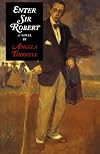
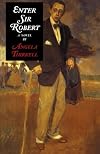
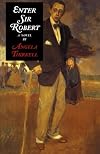
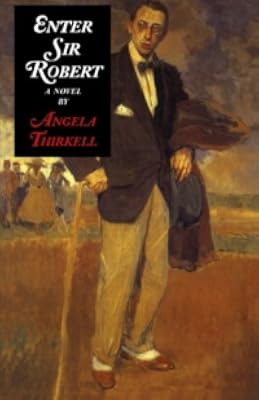
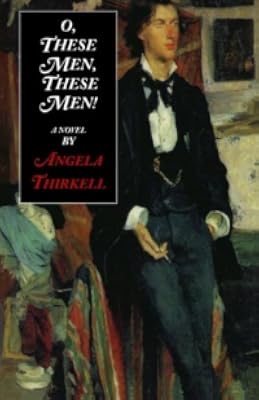
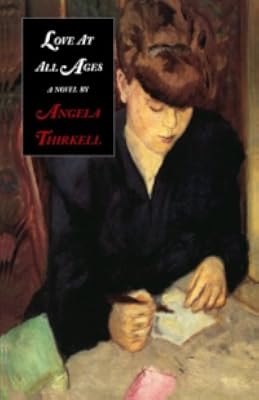
First of all, ignore this cover art! This painting does not resemble any character in this book, especially not retiring career soldier Sir Robert (who enters with the final sentence of the book)!
Unlike many Thirkell novels in this series,the romantic possibilities in this book are left unresolved. Emily Graham has grown into a young woman & is much less annoying than she was at the age of 13.
Unlike many Thirkell novels in this series,
More witty and amusing writing about the characters but there is no plot to speak of. And Sir Robert doesn't really Enter!
Less plot even than usual for Angela Thirkell. But still some giggles for dialogue from Lady Graham. Lots of connections to other Thirkell books, but not essential to know them all. No resolution at the end (but I know later books keep the stories going and have the same characters).
Read about 3 chapters and just couldn't bear to go on. Found it to be silly, uninteresting and going no where - a waste of time.
Ano0ther of the modern series set in Trollope's Barsetshire. I inherited these from my parents and have not read them.
Members
- Recently Added By
Author Information

47+ Works 8,526 Members
Some Editions
Series

Common Knowledge
- Canonical title
- Enter Sir Robert
- Original publication date
- 1955
- First words
- As it is some time since we were at Hatch End, we will take this opportunity of reminding our Reader (the one who says our books are so nice because it doesn't matter which you read or where you open it as they are all exactl... (show all)y the same--as indeed they are, with a difference) that it is a small village in the valley of the Rising, which here flows through water-meadows.
Classifications
Statistics
- Members
- 169
- Popularity
- 194,610
- Reviews
- 7
- Rating
- (3.78)
- Languages
- English
- Media
- Paper, Ebook
- ISBNs
- 4
- ASINs
- 6