On This Page
Description
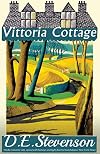
Caroline Dering, a widow with three grown children, lives a cheerful, quiet life near the idyllic English village of Ashbridge. But, things are about to liven up, as daughter Leda announces a problematic engagement to the son of the local squire, son James returns from service and pursues romance with the squire's independent daughter, and sister Harriet, a famous actress who latest play has bombed, retreats to Ashbridge for a break. Then there's Robert Shepperton, a charming widower show more recovering from the losses of war at the local These problems, as well as smaller challenges with an overbearing village organizer, the blustering Sir Michael, and Caroline's daily help ("who rejoices in the name of Comfort Podbury"), are resolved with all of D.E. Stevenson's flair for gentle humour, clever plotting, and characters who walk right off the page. show lessTags
Recommendations


















Member Reviews
Appallingly patronising towards the lower classes. One of the characters actually thought of a village woman as a peasant. Dated, even for 1949.
Caroline Dering, a middle-aged widow, lives at Vittoria Cottage. Nothing too dramatic happens. There are some dinner parties and some incidents involving neighbours. The Derings befriend a newcomer to the neighbourhood, Robert Shepperton. Caroline’s eldest daughter gets engaged and no one is very happy about it; Caroline and her sister (the actress Harriet Fane) visit each other; her son James returns home after three years in the army. And so on.
But this is a fascinating insight into postwar life in England, with rationing and rules about what one must do with eggs if one keeps more than a certain number of hens. And I like that Stevenson considers the concerns of a middle-aged widow worthy of this sort of attention -- and of this show more sort of romance.
She saw beauty in ordinary little things and took pleasure in it (and this was just as well because she had had very little pleasure in her life). She took pleasure in a well-made cake, a smoothly ironed napkin, a pretty blouse, laundered and pressed; she liked to see the garden well dug, the rich soil brown and gravid; she loved her flowers. When you are young you are too busy with yourself -- so Caroline thought -- you haven't time for ordinary little things but, when you leave youth behind, your eyes open and you see magic and mystery all around you: magic in the flight of a bird, the shape of a leaf, the bold arch of a bridge against the sky, footsteps at night and a voice calling in the darkness, the moment in a theatre before the curtain rises, the wind in the trees, or (in winter) an apple-branch clothed with pure white snow and icicles hanging from from a stone and sparkling with rainbow colours.
(I’m not sure how I feel about Stevenson’s portrayal of Caroline’s “daily help”, Comfort Podbury. Caroline obviously values Comfort’s friendship as well as her work -- Caroline has a lot of affection, sympathy and respect for Comfort, and so, it seems, does the author. But Stevenson is also very unflattering about Comfort’s obesity. Does that undermine the sympathy?) show less
But this is a fascinating insight into postwar life in England, with rationing and rules about what one must do with eggs if one keeps more than a certain number of hens. And I like that Stevenson considers the concerns of a middle-aged widow worthy of this sort of attention -- and of this show more sort of romance.
She saw beauty in ordinary little things and took pleasure in it (and this was just as well because she had had very little pleasure in her life). She took pleasure in a well-made cake, a smoothly ironed napkin, a pretty blouse, laundered and pressed; she liked to see the garden well dug, the rich soil brown and gravid; she loved her flowers. When you are young you are too busy with yourself -- so Caroline thought -- you haven't time for ordinary little things but, when you leave youth behind, your eyes open and you see magic and mystery all around you: magic in the flight of a bird, the shape of a leaf, the bold arch of a bridge against the sky, footsteps at night and a voice calling in the darkness, the moment in a theatre before the curtain rises, the wind in the trees, or (in winter) an apple-branch clothed with pure white snow and icicles hanging from from a stone and sparkling with rainbow colours.
(I’m not sure how I feel about Stevenson’s portrayal of Caroline’s “daily help”, Comfort Podbury. Caroline obviously values Comfort’s friendship as well as her work -- Caroline has a lot of affection, sympathy and respect for Comfort, and so, it seems, does the author. But Stevenson is also very unflattering about Comfort’s obesity. Does that undermine the sympathy?) show less
This is the kind of book that to me best exemplifies D.E. Stevenson's talent. A quiet domestic novel.
Caroline is a widow with two daughters and one son. They live in a cozy house in a small village. Caroline is a type of character that D.E. Stevenson does particularly well--one that somehow manages to be both naive and intelligent at the same time.
One day while she's out picking berries she meets Robert Shepperton, a fairly new lodger in town. No one really knows his history. He and Caroline hit it off pretty well and he enjoys stopping by the cottage often.
Besides their burgeoning friendship, the book also focuses on Caroline's children. One daughter is spoiled and demanding, and one daughter is clever and self-sufficient. But her son show more James is the only one of her offspring that's really after her own heart. He arrives home from a war midway through the book and it's easy to see why his mother holds him specially dear. (He, along with his eventual wife and some other relatives, also appear in Music in the Hills, Shoulder the Sky, and Bel Lamington.)
Caroline's younger sister Harriet, who is a famous actress, arrives for a prolonged visit and introduces some variety into their lives and a little bit of complication.
The book has a nice, fitting ending.
The only reason I don't give it (and some of D.E. Stevenson's other books) a higher rating is that, to be frank, there's a lack of excitement or plot climax. But when one wants a relaxing book with some good solid prose and almost all likeable characters, she is definitely an author to have at hand. show less
Caroline is a widow with two daughters and one son. They live in a cozy house in a small village. Caroline is a type of character that D.E. Stevenson does particularly well--one that somehow manages to be both naive and intelligent at the same time.
One day while she's out picking berries she meets Robert Shepperton, a fairly new lodger in town. No one really knows his history. He and Caroline hit it off pretty well and he enjoys stopping by the cottage often.
Besides their burgeoning friendship, the book also focuses on Caroline's children. One daughter is spoiled and demanding, and one daughter is clever and self-sufficient. But her son show more James is the only one of her offspring that's really after her own heart. He arrives home from a war midway through the book and it's easy to see why his mother holds him specially dear. (He, along with his eventual wife and some other relatives, also appear in Music in the Hills, Shoulder the Sky, and Bel Lamington.)
Caroline's younger sister Harriet, who is a famous actress, arrives for a prolonged visit and introduces some variety into their lives and a little bit of complication.
The book has a nice, fitting ending.
The only reason I don't give it (and some of D.E. Stevenson's other books) a higher rating is that, to be frank, there's a lack of excitement or plot climax. But when one wants a relaxing book with some good solid prose and almost all likeable characters, she is definitely an author to have at hand. show less
Historical fiction, women's fiction, old-fashioned light romance--all of these descriptors fit this charming book, just released in electronic form by Endeavor Press.
Originally published in 1949 and set contemporaneously, this is only historical fiction in retrospect. Caroline Dering is a middle-aged widow, living quietly in a country village with her two adolescent daughters, worrying about her son who is in Malay fighting terrorist guerillas. (And yes, they are repeatedly referred to as Terrorists, with a capital T.) Robert Shepperton, widowed and left homeless by the war, comes to Ashbridge for an extended stay, looking for peace and quiet. They fall into a friendship, and maybe something more. Meanwhile, life goes on. There are show more domestic dramas, village personalities, and a visit from Caroline's actress sister, who charms Robert.
This doesn't have the pacing that a modern romance reader expects, but it is nevertheless a thoroughly enjoyable romance. show less
Originally published in 1949 and set contemporaneously, this is only historical fiction in retrospect. Caroline Dering is a middle-aged widow, living quietly in a country village with her two adolescent daughters, worrying about her son who is in Malay fighting terrorist guerillas. (And yes, they are repeatedly referred to as Terrorists, with a capital T.) Robert Shepperton, widowed and left homeless by the war, comes to Ashbridge for an extended stay, looking for peace and quiet. They fall into a friendship, and maybe something more. Meanwhile, life goes on. There are show more domestic dramas, village personalities, and a visit from Caroline's actress sister, who charms Robert.
This doesn't have the pacing that a modern romance reader expects, but it is nevertheless a thoroughly enjoyable romance. show less
This was fun and well-paced up until the end, when it just sort of ended without wrapping up some of the loose ends.
Loved this book. Wonderful story of family and friends lives in small, English village. Interesting characters.
(Fiction, Vintage, Romance)
The work of D.E. Stevenson was recommended to me by our head librarian on one of my brief visits to our beautiful relatively new village library. We found on the shelf Vittoria Cottage, published in 1949 and the first of a trilogy.
I did enjoy the mid-twentieth century English village setting, but the plot was a little too much of a romance for me to be crazy about this book. 3 stars
The work of D.E. Stevenson was recommended to me by our head librarian on one of my brief visits to our beautiful relatively new village library. We found on the shelf Vittoria Cottage, published in 1949 and the first of a trilogy.
I did enjoy the mid-twentieth century English village setting, but the plot was a little too much of a romance for me to be crazy about this book. 3 stars
Members
- Recently Added By
Lists

Books Read in 2017
4,249 works; 129 members
Author Information

62 Works 8,712 Members
D. E. (Dorothy Emily) Stevenson was born in Edinburgh, Scotland on November 18, 1892. She married Captain James Reid Peploe in 1916. She wrote over 40 books in her lifetime. Her first novel Peter West was published in 1923. Her other books include Mrs. Tim of the Regiment, Miss Buncle's Book, Miss Buncle Married, and Listening Valley. Her Mrs. Tim show more books were inspired by the diaries she kept while an army wife. She died on December 30, 1973. (Bowker Author Biography) show less
Series

Belongs to Publisher Series
Furrowed Middlebrow (43)
Common Knowledge
- Original publication date
- 1949
- Original language
- English
Classifications
Statistics
- Members
- 237
- Popularity
- 135,559
- Reviews
- 9
- Rating
- (3.87)
- Languages
- English, Spanish
- Media
- Paper, Audiobook, Ebook
- ISBNs
- 15
- ASINs
- 17