On This Page
Description
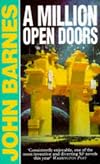
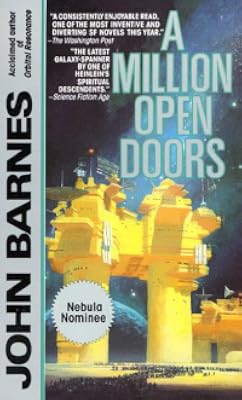
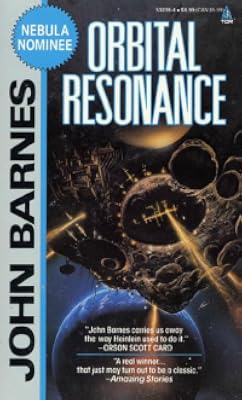
"Published just last year in hardcover, John Barnes's Orbital Resonance catapulted its author into the first rank of science fiction writers, earning a place on the final ballot for the Nebula Award and garnering praise from sources as diverse as Dean Ing ("A strong contender!") and Jane Yolen ("John Barnes is a writer we'd all do well to keep our eyes on"). Now Barnes returns with an even stronger followup, a classic of brilliant SF speculation and profoundly human concern, set against a show more sprawling interstellar future of complexity, danger, and hope." "The most isolated of humanity's Thousand Cultures, Nou Occitan - on the planet Wilson - is a place where duels are fought with equal passion over insults and artistic views alike. Where young men take loyalty seriously: to each other, to their art, to the women to whom they devote poetry and swordplay. A place of violent natural beauty, gradually being terraformed over centuries into a tamed - but not too tamed - home for a uniquely creative and flamboyant culture." "But change has come to Nou Occitan. Formerly isolated like all the other widely-scattered Cultures by the limitations of lightspeed, now this swashbuckling world finds itself being transformed by the springer, the new technology of instantaneous travel between the stars. In the urban centers, a small but growing number of Occitan youth embrace a new way of lifeinsufferably vulgar, to chivalrous Occitan eyes - in imitation of the newer, polyglot interstellar culture. Young Giraut, a traditionalist, knows this change is inevitable and merely hopes the old order will last long enough for him to enjoy the fruits of youth. But when Giraut's entendedora betrays him in the worst possible way, in his despair he casts aside his youthful pursuits and, expecting grim, expiatory exile, joins his elders on a two-year mission to negotiate new trading arrangements with Nou Occitan's closest neighbor, lightyears distant, the utilitarian culture of Caledony. Giraut expects boredom and misery among the moralistic, money-obsessed Caledons. What he doesn't expect is to change them - and to be changed by them." "For no human culture is all one thing. And just as the severe Caledon exterior masks a doughty, egalitarian straightforwardness Giraut never dreamed possible, likewise Giraut's own background provides him with vulnerabilities he never knew - along with just the right strengths to accidentally trigger Caledony's own long-simmering political and cultural crisis. As rebellion and song well up on a cold world long denied the fruits of both, Giraut must suddenly learn to manage and direct the age-old conflict between human nature and culture. For in the explosion about to happen, two worlds could be lost - or a universe gained."--BOOK JACKET.Title Summary field provided by Blackwell North America, Inc. All Rights Reserved show lessTags
Recommendations














Member Reviews
Nominated for both the Nebula and the Clarke Awards. Barnes seemed to have a moment in the mid-1990s, with a Hugo nomination, three Nebula nominations and three Clarke nominations. But no wins. And nothing since then except appearances on the Locus Award/readers’ poll pretty much every year until a decade ago (for his last published novel, in fact). A Million Open Doors is only the second book by Barnes I’ve read - I read Mother of Storms back in 1999.
A Million Open Doors is the first of four novels set in the Thousand Cultures. Set several centuries from now, Earth has colonised a number of worlds, each of which is home to one or more “cultures”, groups of people - ethnic, national, religious, some even completely invented. show more Like Nou Occitan, which is supposed to be some sort of Iberian Romantic culture of troubadours and duellists, but is really just massively sexist. The worlds were colonised by slower than light ships, but now “springers”, instantaneous transport, even across interstellar distances, connect them together.
When Giraut catches his paramour in flagrante delicto with a gang of “Interstellars” (youths aping what they think is an Earth culture by “beating up and degrading young girls”), he accompanies a friend to Caledony, which has just received its first springer. Caledon is a religious culture, which uses Christianity to justify some garbled economic philosophy. Giraut opens a school to teach Occitan culture - music, duelling, poetry, dancing, painting, etc - to the joyless Caledons. Unfortunately, the success of the Centre for Occitan Arts prompts a coup by hardliners, house arrest for the previous government, martial law and armed mobs on the streets.
To build support, Giraut and his liberal Caledon friends stage a camping trip across the continent, but there’s an accident in the mountains, resulting in several fatalities. While dashing back to get into comms range, Giraut discovers the ruin of an alien city. Meanwhile, while he was away, Council of Humanity troops have overthrown the hardliners…
Reading A Million Open Doors, I had trouble working out why it was science fiction. Yes, other planets, springers, spaceships, etc, but you could set the story on Earth. Some community full of rapists, another full of nutball religious types - I’m pretty sure you could find two towns that qualify in the US. Even the alien ruins could be the ruins of some prehistoric American culture. All the rest is just bells and whistles.
And when a science fiction novel is not science fiction, then what’s the point of it? And you also have to wonder why the novel appeared on two science fiction award shortlists. In other respects, it’s all just a little too textbook. Giraut is a sexist pig, but he comes to value and respect women - and even falls in love with one who’s not even attractive and whose physical faults he mentions repeatedly. Two characters are killed irretrievably - the technology exists to bring people back using personality recordings, and there’s even an example to illustrate it, the victim of a brutal sexual assault, torture and murder. (This is not so much everyday sexism as it is everyday sexual assault.) The bad guys get their just desserts - except, well, not really, a friend who insulted Giraut is humiliated (with a spanking, ffs), and the villainous pastor who seized power on Caledony is imprisoned off-world.
A Million Open Doors lost the Clarke to Jeff Noon’s Vurt, and the Nebula to Doomsday Book by Connie Willis (Sarah Canary or China Mountain Zhang would have been better winners). Even so, it didn’t belong on those shortlists. It’s mediocre, its one idea is in service to a story that doesn’t even need to be science fiction, and it’s offensive in parts. show less
A Million Open Doors is the first of four novels set in the Thousand Cultures. Set several centuries from now, Earth has colonised a number of worlds, each of which is home to one or more “cultures”, groups of people - ethnic, national, religious, some even completely invented. show more Like Nou Occitan, which is supposed to be some sort of Iberian Romantic culture of troubadours and duellists, but is really just massively sexist. The worlds were colonised by slower than light ships, but now “springers”, instantaneous transport, even across interstellar distances, connect them together.
When Giraut catches his paramour in flagrante delicto with a gang of “Interstellars” (youths aping what they think is an Earth culture by “beating up and degrading young girls”), he accompanies a friend to Caledony, which has just received its first springer. Caledon is a religious culture, which uses Christianity to justify some garbled economic philosophy. Giraut opens a school to teach Occitan culture - music, duelling, poetry, dancing, painting, etc - to the joyless Caledons. Unfortunately, the success of the Centre for Occitan Arts prompts a coup by hardliners, house arrest for the previous government, martial law and armed mobs on the streets.
To build support, Giraut and his liberal Caledon friends stage a camping trip across the continent, but there’s an accident in the mountains, resulting in several fatalities. While dashing back to get into comms range, Giraut discovers the ruin of an alien city. Meanwhile, while he was away, Council of Humanity troops have overthrown the hardliners…
Reading A Million Open Doors, I had trouble working out why it was science fiction. Yes, other planets, springers, spaceships, etc, but you could set the story on Earth. Some community full of rapists, another full of nutball religious types - I’m pretty sure you could find two towns that qualify in the US. Even the alien ruins could be the ruins of some prehistoric American culture. All the rest is just bells and whistles.
And when a science fiction novel is not science fiction, then what’s the point of it? And you also have to wonder why the novel appeared on two science fiction award shortlists. In other respects, it’s all just a little too textbook. Giraut is a sexist pig, but he comes to value and respect women - and even falls in love with one who’s not even attractive and whose physical faults he mentions repeatedly. Two characters are killed irretrievably - the technology exists to bring people back using personality recordings, and there’s even an example to illustrate it, the victim of a brutal sexual assault, torture and murder. (This is not so much everyday sexism as it is everyday sexual assault.) The bad guys get their just desserts - except, well, not really, a friend who insulted Giraut is humiliated (with a spanking, ffs), and the villainous pastor who seized power on Caledony is imprisoned off-world.
A Million Open Doors lost the Clarke to Jeff Noon’s Vurt, and the Nebula to Doomsday Book by Connie Willis (Sarah Canary or China Mountain Zhang would have been better winners). Even so, it didn’t belong on those shortlists. It’s mediocre, its one idea is in service to a story that doesn’t even need to be science fiction, and it’s offensive in parts. show less
Giraut is from the planet Nou Occitan, a place where duels are fought with equal passion over perceived insults and artistic views alike. A place where the language seems derived from Portuguese and there’s entirely too much of it, untranslated. Giraut is an enthusiastic member of a culture based around the ideals of the medieval troubadours, a culture of literature and art, dueling, and “macho” personal honor. However, with the invention of the "springer," instantaneous interstellar travel has now become possible. Now the young people of Nou Occitan are turning to the trendy but tacky Interstellars, new to their culture, and Giraut’s “entendedora,” girlfriend/whore, is one of these young women who do so. When he discovers show more this, he accepts an invitation to travel to the planet, Caledon, as part of an ambassadorial team to help the Caledonions deal with the imminent opening of a gateway on their planet. Caledon couldn’t be any more different from Nou Occitan. It has a patriarchal rigid religious culture where even cheerful color is banned. It is a puritan culture on an icy world -- one where terraforming was only partially carried out because apparently, “suffering is good for the soul.” The arts are dismissed as irrational (everything must be “rational”), and the flamboyant Occitan culture is considered immoral. It is in the inevitable clash between these two cultures where Giraut is forced to face himself and life and grow the hell up.
This book is a lot more exciting than what I’ve described. I’ve done a poor job. Giraut is shown to be a shallow cad who learns, to a certain degree, that he is and is forced to make some changes. Caledon undergoes some radical changes and we apparently learn puritanical religious cultures are essentially evil and stupid. At times, this is a very entertaining and interesting book. At times, it’s annoying as hell. Often, you can’t understand the words being used and there’s no dictionary, so you just have to guess. Often you just want to slap Giraut upside the head for being such a shallow, rather stupid young person who’s a snob. But then he does something good and you relent. At times, it feels like the author is preaching anti-religion to you and while I’m generally okay with that, as I’m not overly fond of most religious cultures, I can see where devoutly religious readers might be offended. Apparently, this is the first book in a series, although I’ve never seen any of the other books in the series. I’d be open to reading the second. So, above average. At times, quite good. At times, annoying. Three stars. Cautiously recommended. show less
This book is a lot more exciting than what I’ve described. I’ve done a poor job. Giraut is shown to be a shallow cad who learns, to a certain degree, that he is and is forced to make some changes. Caledon undergoes some radical changes and we apparently learn puritanical religious cultures are essentially evil and stupid. At times, this is a very entertaining and interesting book. At times, it’s annoying as hell. Often, you can’t understand the words being used and there’s no dictionary, so you just have to guess. Often you just want to slap Giraut upside the head for being such a shallow, rather stupid young person who’s a snob. But then he does something good and you relent. At times, it feels like the author is preaching anti-religion to you and while I’m generally okay with that, as I’m not overly fond of most religious cultures, I can see where devoutly religious readers might be offended. Apparently, this is the first book in a series, although I’ve never seen any of the other books in the series. I’d be open to reading the second. So, above average. At times, quite good. At times, annoying. Three stars. Cautiously recommended. show less
http://nwhyte.livejournal.com/1198461.html
A great read: perhaps reflecting a bit the fall of the Wall and globalisation more generally, it's about an encounter between cultures, the dour market-driven frozen colony of Caledony being forced to open up to the rest of the galaxy and in partiicular to the romantic troubadours of New Occitan. Lots of interesting politics and general growing-up for our Occitanian narrator as he realises more about the problems of his own society as a result of his Caledonian experience. I'll hunt out the rest of this series now.
A great read: perhaps reflecting a bit the fall of the Wall and globalisation more generally, it's about an encounter between cultures, the dour market-driven frozen colony of Caledony being forced to open up to the rest of the galaxy and in partiicular to the romantic troubadours of New Occitan. Lots of interesting politics and general growing-up for our Occitanian narrator as he realises more about the problems of his own society as a result of his Caledonian experience. I'll hunt out the rest of this series now.
I can't stop re-reading this book! It's one of my top-5 favorite books of all time! I'm interested to see what book this lost the Nebula to because it definitely deserved it! The language is so well thought out, the cultures so well fleshed-out, the narrator so strong, you feel so immersed and even culture-shocked.
John Barnes KNOWS how to write - he's not kidding around. You get a fantastic story and fantastic writing. You don't always get both.
John Barnes KNOWS how to write - he's not kidding around. You get a fantastic story and fantastic writing. You don't always get both.
SF by an author who I like.
This is the first-person story of a man taken from the southern-romantic society of Nou Occitan to the northern-Puritan society of Caledony. Both societies are going through a transition forced on them by circumstances, and both are shown to have virtues as well as serious defects. I’m reminded of Jack Vance, who delighted in inventing outlandish societies with bizarre laws and customs.
Barnes adds colour by frequently using phrases and sentences of the language of Nou Occitan. I presume this is in fact Occitan, a real language still spoken by some in the Languedoc region of southern France.
A strong minor theme is the role of women in society. He sets out to demonstrate by example that women are people too, that they’re just as good show more as men, that the pretty ones are not necessarily lovable, and that the lovable ones don’t need to be pretty. He means well, but he needs to learn more subtlety: his little parables are rather too obvious.
The book is imaginative and fluently written. Barnes has a wide range of interests, taking in science, art, language, society, and economics.
And yet, in retrospect, there’s something lacking here. What draws me back to a book is the desire to re-live the author’s imagined world and to meet his characters again. So far, it seems to me that Barnes has produced worlds and characters that are quite interesting to meet once, but not sufficiently fascinating or likeable to revisit again and again. show less
Barnes adds colour by frequently using phrases and sentences of the language of Nou Occitan. I presume this is in fact Occitan, a real language still spoken by some in the Languedoc region of southern France.
A strong minor theme is the role of women in society. He sets out to demonstrate by example that women are people too, that they’re just as good show more as men, that the pretty ones are not necessarily lovable, and that the lovable ones don’t need to be pretty. He means well, but he needs to learn more subtlety: his little parables are rather too obvious.
The book is imaginative and fluently written. Barnes has a wide range of interests, taking in science, art, language, society, and economics.
And yet, in retrospect, there’s something lacking here. What draws me back to a book is the desire to re-live the author’s imagined world and to meet his characters again. So far, it seems to me that Barnes has produced worlds and characters that are quite interesting to meet once, but not sufficiently fascinating or likeable to revisit again and again. show less
Dec 17, 2024 (Edited)English (UK)
Members
- Recently Added By
Lists

Arthur C. Clarke Award Winners and Shortlisted Books
219 works; 14 members
Author Information

63+ Works 8,336 Members
Some Editions
Awards and Honors
Awards
Series

Work Relationships
Is an expanded version of
Common Knowledge
- Canonical title
- A Million Open Doors
- Original publication date
- 1992
- First words
- We were in Pertz's Tavern, up in the hills above Noupeitau, with the usual people, ostensibly planning to go backpacking in Terraust and actually drinking on Aimerc' tab.
- Last words
- (Click to show. Warning: May contain spoilers.)We stayed to see the moon come up, but did not linger after that.
Classifications
Statistics
- Members
- 661
- Popularity
- 43,617
- Reviews
- 7
- Rating
- (3.63)
- Languages
- 6 — Dutch, English, French, German, Italian, Polish
- Media
- Paper
- ISBNs
- 9