
Roadmarks
by Roger Zelazny
On This Page
Description
The Road runs from the unimaginable past to the far future, and those who travel it have access to the turnoffs leading to all times and places-even to the alternate time-streams of histories that never happened. Why the Dragons of Bel'kwinith made the Road-or who they are--no one knows. But the Road has always been there and for those who know how to find it, it always will be! Dizzying in its virtuosity, gripping in its kaleidoscopic treatment of time, character, and action Roadmarks is a show more dazzling achievement. show lessTags
Recommendations




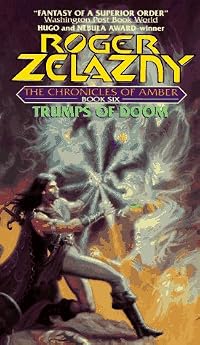


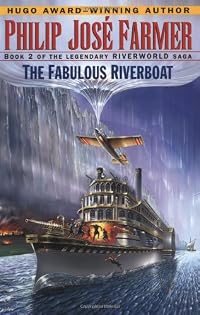

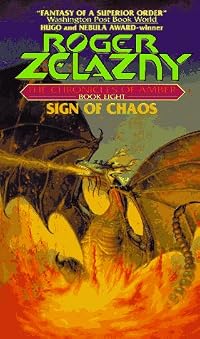






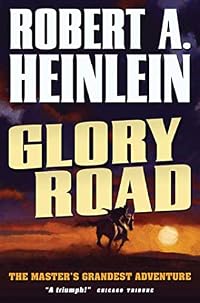

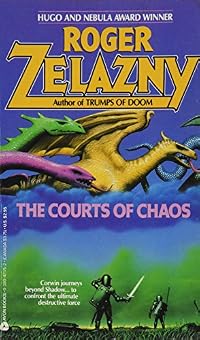

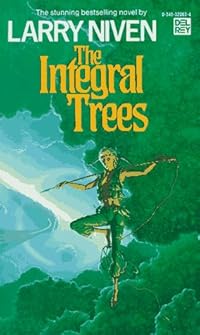

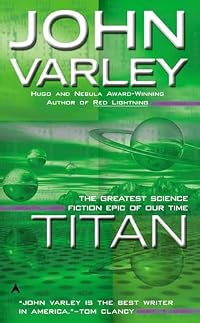


Member Recommendations


Member Reviews
I loved banging down the Road in a beater truck that is also a Transformer when it gets the aid of Baudelaire’s “Alexa” device. I totally loved the books qua A.I., in other words. I also think this is one of the better time-manipulation stories because a Road with exits and on-ramps that relate, in some way, to history is fantastic.
Fritz Leiber’s The Big Time (1961) does it better. And Douglas Adam’s The Hitchhiker’s Guide to the Galaxy (1979) does, too. No, those are not the same as Roadmarks, but I would hands down give those five stars. For all its interesting quirkiness, Roadmarks is fairly empty. Readers should read this novel so they know what the heck the rest of us are talking about.
Fritz Leiber’s The Big Time (1961) does it better. And Douglas Adam’s The Hitchhiker’s Guide to the Galaxy (1979) does, too. No, those are not the same as Roadmarks, but I would hands down give those five stars. For all its interesting quirkiness, Roadmarks is fairly empty. Readers should read this novel so they know what the heck the rest of us are talking about.
I'm slowly making my way through a big stack of old Roger Zelazny SF paperbacks I picked up at a library sale a while back. This one I'm pretty sure I'd actually read before, probably decades ago when I was in high school, but I remembered almost nothing about it.
It's an odd one, though, even for Zelazny. The basic premise is pretty nifty: there is a road that stretches through time, with entrances and exits at various centuries (ones that sometimes change if history is altered enough), and people who know how to find it can travel that road in cars or trucks or horse-drawn carriages or chariots. An imaginative enough conceit, but the structure and the various weird events in the story take it beyond that, to... well, I don't know what. show more The blurb on the back cover describes it as having a "kaleidoscopic treatment of time, character, and action," and that's probably the best possible description of it. It really does feel like you're looking at the story through a kaleidoscope. Short chapters show us glimpses of various people at various times without a great deal of context. It does all sort of add up to a full story, one focused on a man who drives up and down the road in his pickup truck searching for something, and on the people who are currently trying to kill him, but it does so in a weird, fragmented way that never quite lets you get your bearings very well, often while throwing some very wild images at you. (The Marquis de Sade riding a mind-controlled tyrannosaur, anyone?)
This does not work perfectly, but it does work better than you might expect. (I do also suspect it works best if you read the whole thing in something like one sitting -- it's less than 200 pages and not a very dense read, so that's entirely possible, but, alas, I did not do it that way.) There is ultimately something rather slight about it, and depending on how you tilt your head, it can all seem either pretty cool or utterly ridiculous. It was, in any case, a reasonably entertaining reading experience, though.
Rating: I cannot for the life of me figure out how to rate this. I'm going to call it 3.5/5, but I feel like it almost deserves an extra half star just for its sheer audacity. show less
It's an odd one, though, even for Zelazny. The basic premise is pretty nifty: there is a road that stretches through time, with entrances and exits at various centuries (ones that sometimes change if history is altered enough), and people who know how to find it can travel that road in cars or trucks or horse-drawn carriages or chariots. An imaginative enough conceit, but the structure and the various weird events in the story take it beyond that, to... well, I don't know what. show more The blurb on the back cover describes it as having a "kaleidoscopic treatment of time, character, and action," and that's probably the best possible description of it. It really does feel like you're looking at the story through a kaleidoscope. Short chapters show us glimpses of various people at various times without a great deal of context. It does all sort of add up to a full story, one focused on a man who drives up and down the road in his pickup truck searching for something, and on the people who are currently trying to kill him, but it does so in a weird, fragmented way that never quite lets you get your bearings very well, often while throwing some very wild images at you. (The Marquis de Sade riding a mind-controlled tyrannosaur, anyone?)
This does not work perfectly, but it does work better than you might expect. (I do also suspect it works best if you read the whole thing in something like one sitting -- it's less than 200 pages and not a very dense read, so that's entirely possible, but, alas, I did not do it that way.) There is ultimately something rather slight about it, and depending on how you tilt your head, it can all seem either pretty cool or utterly ridiculous. It was, in any case, a reasonably entertaining reading experience, though.
Rating: I cannot for the life of me figure out how to rate this. I'm going to call it 3.5/5, but I feel like it almost deserves an extra half star just for its sheer audacity. show less
The Road is a highway through time with exits to different centuries. Red Dorakeen has been traveling the Road for years, searching for a place that might no longer exist. He is accompanied by a sentient computer disguised as a paperback book that acts as his conscience, his keeper, and sometimes protector. At some point in his past (future?), Red had a falling out with a former business partner named Chadwick who hires a series of assassins to kill him.
Meanwhile, a young man named Randy discovers another computer disguised as a paperback book that once belonged to Red. From it, Randy learns that Red is his father. The book leads him to the Road and from there, to Leila, an old friend of Red's. Together, they set off to find him.
The show more format of the novel is unique and the story experimental. The chapters alternate between Red's adventures (titled "One") and the secondary characters (titled "Two"). The concept of the Road is brilliant and the plot is engaging if somewhat fragmented. The secondary characters are flat (especially Chadwick, Randy, and Leila) and the whole show goes off the rails near the end as if Zelazny rushed to finish it or perhaps he tried to cram too much into a short novel. Nevertheless, it was a fun read. show less
Meanwhile, a young man named Randy discovers another computer disguised as a paperback book that once belonged to Red. From it, Randy learns that Red is his father. The book leads him to the Road and from there, to Leila, an old friend of Red's. Together, they set off to find him.
The show more format of the novel is unique and the story experimental. The chapters alternate between Red's adventures (titled "One") and the secondary characters (titled "Two"). The concept of the Road is brilliant and the plot is engaging if somewhat fragmented. The secondary characters are flat (especially Chadwick, Randy, and Leila) and the whole show goes off the rails near the end as if Zelazny rushed to finish it or perhaps he tried to cram too much into a short novel. Nevertheless, it was a fun read. show less
Red Dorakeen, a traveler on The Road, a superhighway through time and alternate histories, is pursued by the Black Decade, ten assassins hired by a former partner. Red's journey finds a lost path with his estranged son Randy's parallel quest, both accompanied by sentient, AI-powered books of poetry: Baudelaire's Flowers of Evil for Red, Whitman's Leaves of Grass for Randy, guiding them through kaleidoscopic time-stream changes and strange encounters with historical figures and pulp characters
(Original Review, 1980)
I am confused, perhaps someone can explain this apparent error to me: (See pg 147 (Del Rey edition)): Randy and Leila are talking at a bar with "Leaves of Grass" (the book/microprocessor) on the table. However, Zelazny appears to get confused and bring "Flowers of Evil" (the other book/mp in the story) into the scene from out of nowhere and then it just as mysteriously leaves the scene; "Flowers said..." Am I confused or is Zelazny? “Roadmarks” is a pretty confusing book and so I can easily imagine having missed a scene someplace.
Roger Zelazny's recent novel "Roadmarks" is a somewhat retread of "Nine Princes in Amber". Here again we have a Road of Mystery that only a few can travel. This time it leads forward show more and backward in time rather than to alternate universes. We have a hero who longs to return to a place that he cannot remember, and we have random people trying to kill him. The difference is that "Nine Princes In Amber" did eventually supply motives and answers to its characters and "Roadmarks" does not. No reason is ever given for the hero's old friend to try to kill him or to stop trying to kill him once they meet up. No explanation is ever given of what the hero is doing trundling up and down the Road, and even he doesn't seem to know. At first you think that he's trying to recreate the circumstances that lead to America, since he dresses like a truck driver and keeps trying to smuggle guns to the Greeks so they can win at Marathon, but later you find that the Road runs right past Cleveland. Sure, maybe he'll tie it all together in a later book, but that's no excuse for making the first installment as incomplete as this. I also thought that "The Changeling", his last book, was a skimpy piece of work (though it didn't help that it was only a novella padded out with illustrations), so maybe Zelazny's mind just isn't in it any more.
I can also look at it through a different perspective. Although somewhat related to the Amber series, the style of writing is very different. In Amber, Zelazny described everything, presented everything, left very little to the imagination. This makes the books seem very rich but is ultimately disastrous. By the third book or so, the setting completely overwhelms any character development or plot, everything gets terribly involved, and when the series finally ends it's a sort of euthanasia. The Amber series is incredibly topheavy. In “Roadmarks”, on the other hand, Zelazny seems to be reacting to the sort of writing mess he got himself into in Amber. Oh sure, there's a Road, and travellers on it, and so forth, but the style has become much more spare. Zelazny is leaving much more to the imagination. He doesn't tell what it is that the protagonist is seeking: the important thing is that he's seeking something. By leaving out the background it becomes possible to tell a story comparable to Amber in one book instead of half a dozen. It doesn't work all that well, overall, but it's occasionally brilliant. The Amber series is better than “Roadmarks”, but “Roadmarks” is better than the nth member of the Amber series.
[2018 EDIT: This review was written at the time as I was running my own personal BBS server. Much of the language of this and other reviews written in 1980 reflect a very particular kind of language: what I call now in retrospect a “BBS language”.] show less
I am confused, perhaps someone can explain this apparent error to me: (See pg 147 (Del Rey edition)): Randy and Leila are talking at a bar with "Leaves of Grass" (the book/microprocessor) on the table. However, Zelazny appears to get confused and bring "Flowers of Evil" (the other book/mp in the story) into the scene from out of nowhere and then it just as mysteriously leaves the scene; "Flowers said..." Am I confused or is Zelazny? “Roadmarks” is a pretty confusing book and so I can easily imagine having missed a scene someplace.
Roger Zelazny's recent novel "Roadmarks" is a somewhat retread of "Nine Princes in Amber". Here again we have a Road of Mystery that only a few can travel. This time it leads forward show more and backward in time rather than to alternate universes. We have a hero who longs to return to a place that he cannot remember, and we have random people trying to kill him. The difference is that "Nine Princes In Amber" did eventually supply motives and answers to its characters and "Roadmarks" does not. No reason is ever given for the hero's old friend to try to kill him or to stop trying to kill him once they meet up. No explanation is ever given of what the hero is doing trundling up and down the Road, and even he doesn't seem to know. At first you think that he's trying to recreate the circumstances that lead to America, since he dresses like a truck driver and keeps trying to smuggle guns to the Greeks so they can win at Marathon, but later you find that the Road runs right past Cleveland. Sure, maybe he'll tie it all together in a later book, but that's no excuse for making the first installment as incomplete as this. I also thought that "The Changeling", his last book, was a skimpy piece of work (though it didn't help that it was only a novella padded out with illustrations), so maybe Zelazny's mind just isn't in it any more.
I can also look at it through a different perspective. Although somewhat related to the Amber series, the style of writing is very different. In Amber, Zelazny described everything, presented everything, left very little to the imagination. This makes the books seem very rich but is ultimately disastrous. By the third book or so, the setting completely overwhelms any character development or plot, everything gets terribly involved, and when the series finally ends it's a sort of euthanasia. The Amber series is incredibly topheavy. In “Roadmarks”, on the other hand, Zelazny seems to be reacting to the sort of writing mess he got himself into in Amber. Oh sure, there's a Road, and travellers on it, and so forth, but the style has become much more spare. Zelazny is leaving much more to the imagination. He doesn't tell what it is that the protagonist is seeking: the important thing is that he's seeking something. By leaving out the background it becomes possible to tell a story comparable to Amber in one book instead of half a dozen. It doesn't work all that well, overall, but it's occasionally brilliant. The Amber series is better than “Roadmarks”, but “Roadmarks” is better than the nth member of the Amber series.
[2018 EDIT: This review was written at the time as I was running my own personal BBS server. Much of the language of this and other reviews written in 1980 reflect a very particular kind of language: what I call now in retrospect a “BBS language”.] show less
Pure Zelazny: a story that keeps you guessing until the end. I found myself turning back a chapter or two several times during my read to clarify, and even started reading it again once I'd finished. Definitely recommended for fans of this author, and for those who want something that challenges the reader.
This out of print Zelazny novel is a little jade gem!
I have not read yet Baudelaire or Whitman, though I have been eying "Flowers of Evil" for some time now. I will enjoy it all the more because of the cybernetic Flowers.
I loved almost everything about this book—the cigar and pipe smoking, the way the chapters fell under either a One or Two, the travel upon the road of time, the memorable characters, the famous "guest characters" (Hitler, de Sade, Doc Savage, an ancient Sumerian, a crusader), the idea of a black decade and the ensuing flavorful assassins... The only things that I did not care for too much were Reyd's son Randy—in his quest for his daddy, and the ending of the book. It felt rushed and not thought out very well show more compared to the rest of the novel.
I was fascinated to learn that Zelazny had shuffled the "Two" chapters and inserted them randomly in the "One" chapters, even if the publisher had him later sort out a couple.
I certainly will be looking forward to reading more Roger Zelazny in the future. show less
I have not read yet Baudelaire or Whitman, though I have been eying "Flowers of Evil" for some time now. I will enjoy it all the more because of the cybernetic Flowers.
I loved almost everything about this book—the cigar and pipe smoking, the way the chapters fell under either a One or Two, the travel upon the road of time, the memorable characters, the famous "guest characters" (Hitler, de Sade, Doc Savage, an ancient Sumerian, a crusader), the idea of a black decade and the ensuing flavorful assassins... The only things that I did not care for too much were Reyd's son Randy—in his quest for his daddy, and the ending of the book. It felt rushed and not thought out very well show more compared to the rest of the novel.
I was fascinated to learn that Zelazny had shuffled the "Two" chapters and inserted them randomly in the "One" chapters, even if the publisher had him later sort out a couple.
I certainly will be looking forward to reading more Roger Zelazny in the future. show less
Members
- Recently Added By
Published Reviews
De tijd is een autosnelweg, compleet met afritten en motels, waarop een vrijbuiter Dorakeen eeuwig op weg is. Een oude makker hangt gevaar boven het hoofd, maar pas op het allerlaatst blijkt de onafwendbare dood een overgang naar een andere bestaansvorm te betekenen. Een prachtige bizarre omgeving, prima uitgewerkt, een complexe intrige met verrassende wendingen, veel plezierige intrigerende show more karakters... een van de betere amusementsromans van Zelazny in het vreemde SF-idioom.
(NBD|Biblion recensie, Annemarie Kindt) show less
(NBD|Biblion recensie, Annemarie Kindt) show less
added by karnoefel
Lists

Bibliography for Among Others
159 works; 15 members

S.F. Masterworks (Complete)
229 works; 15 members

SF Masterworks
193 works; 8 members

Books Read in 2019
4,052 works; 110 members

Books Read in 2021
5,361 works; 114 members
Author Information

335+ Works 72,505 Members
Roger Zelazny was born in Euclid, Ohio on May 13, 1937. After receiving a B.A. from Case Western Reserve University and a M.A. from Columbia University, he began publishing science fiction stories in 1962. He received six Hugo awards, three Nebula awards including one in 1966 for And Call Me Conrad and 2 Locus awards. He died of kidney failure show more secondary to colorectal cancer on June 14, 1995. (Bowker Author Biography) show less
Some Editions
Awards and Honors
Awards
Series
Belongs to Publisher Series
Work Relationships
Is contained in
Common Knowledge
- Canonical title*
- ロードマークス
- Original title
- Roadmarks
- Original publication date
- 1979-10
- People/Characters
- Chatsworth; Randy Dorakeen; Red Dorakeen; Leila; Mondamay; Timyin Tin (show all 9); Toba; Leaves of Grass; Flowers of Evil
- Important places
- alternate universes; Babylon; "the Road"
- Dedication
- To Ron Bounds, Bobbie Armbruster, Gary & Uschi Klüpfel, with happy memories of Oktoberfest
- First words
- "Pull over!" cried Leila.
- Quotations
- Frazier combed his hair with his fingers, patted it into place, leaned over to glance at himself in the rear view mirror, sighed. “ I haven’t run the Road that much myself. Mainly between Cleveland in the 1950’s and C... (show all)leveland in the 1980’s.” “What do you do?” “Tend bar, mostly. Also I buy stuff in the fifties and sell it in the eighties.” “Makes sense.” “Makes money too. –you ever have trouble with hijackers?” “None to speak of.” You must have some really fancy armaments on this thing.” “Nothing special.” “I’d think you’d need them.” “Shows how wrong you can be.” “What do you do if you’re suddenly up against it?” Red relit his cigar. “Maybe die,” he replied.
- Last words
- (Click to show. Warning: May contain spoilers.)He delivered the news from Marathon before he died.
- Original language
- English
- Canonical DDC/MDS
- 813.087621
*Some information comes from Common Knowledge in other languages. Click "Edit" for more information.
Classifications
- Genres
- Science Fiction, Fiction and Literature
- DDC/MDS
- 813.087621 — Literature & rhetoric American literature in English American fiction in English By type Genre fiction Adventure fiction Speculative fiction Science fiction Time travel
- LCC
- PZ4 .Z456 .R — Language and Literature Fiction and juvenile belles lettres Fiction and juvenile belles lettres Fiction in English
- BISAC
Statistics
- Members
- 1,265
- Popularity
- 19,236
- Reviews
- 20
- Rating
- (3.62)
- Languages
- 10 — Czech, Dutch, English, Estonian, French, German, Italian, Japanese, Polish, Spanish
- Media
- Paper, Audiobook, Ebook
- ISBNs
- 25
- ASINs
- 13