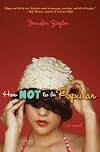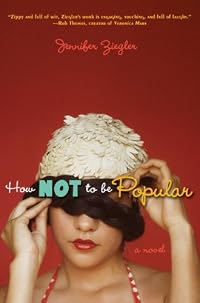
How Not to Be Popular
by Jennifer Ziegler 
On This Page
Description
Seventeen-year-old Sugar Magnolia Dempsey is tired of leaving friends behind every time her hippie parents decide to move, but her plan to be unpopular at her new Austin, Texas, school backfires when other students join her on the path to "supreme dorkdom."Tags
Recommendations









Member Reviews
Maggie's parents, free-wheeling aging hippies, believe in seeing the world, so they move to a new town every six or eight months. Every time Maggie makes friends, she has to leave them. Now they have left Portland, where she had friends and a boyfriend, to move to Austin, Texas. But she has a plan. She's always been relatively popular wherever they lived, and made friends easily. This time, to make sure it's easy when they move again, she is going to deliberately be as unpopular as possible. She will have no friends, so there will be no pain in leaving.
Her plan fails on two fronts. She does make friends... but she makes friends with some of the least popular kids in the school. And simultaneously, other students see her as someone show more particularly real and authentic, and begin to idolize her a bit.
The bulk of the book is somewhat funny (Chapter 6 is extremely funny!) but at the end of the book, when the moment of truth comes, it is hard on everyone: Maggie, her unpopular friends, and the reader as well. Of course, all is well in the end, but the resolution isn't wholly convincing, given how hard Maggie crashes. show less
Her plan fails on two fronts. She does make friends... but she makes friends with some of the least popular kids in the school. And simultaneously, other students see her as someone show more particularly real and authentic, and begin to idolize her a bit.
The bulk of the book is somewhat funny (Chapter 6 is extremely funny!) but at the end of the book, when the moment of truth comes, it is hard on everyone: Maggie, her unpopular friends, and the reader as well. Of course, all is well in the end, but the resolution isn't wholly convincing, given how hard Maggie crashes. show less
When Sugar Magnolia Dempsey's boyfriend Les breaks up with her in an email, shortly after she's moved to Austin, Sugar is heartbroken and knows with the certainty of an adolescent, that she absolutely can NOT put herself in that kind of situation again. She comes up with what she feels is a brilliant plan. She'll make herself so unappealing, through her dress, her actions, and her interests, that no one in their right mind would consider having anything to do with her. This intentional social suicide will guarantee total isolation, thus making it impossible for her to have her heart broken again. However, the best laid plans...
How Not to be Popular is absolutely fantastic. It has been a long time since I read a book that made me show more chuckle out loud and wish that I was surrounded by students so I could read the section out loud. The antics of Sugar, and their unanticipated consequences make this a highly enjoyable page turner. If you haven't yet had the pleasure of reading this book, WHAT are you waiting for. Go get it! show less
How Not to be Popular is absolutely fantastic. It has been a long time since I read a book that made me show more chuckle out loud and wish that I was surrounded by students so I could read the section out loud. The antics of Sugar, and their unanticipated consequences make this a highly enjoyable page turner. If you haven't yet had the pleasure of reading this book, WHAT are you waiting for. Go get it! show less
Definitely one of my more enjoyable forays into young adult literature. Sugar Magnolia "Maggie" Dempsey is the surprisingly well-adjusted daughter of hippie parents. While loving and supportive, her restless parents uproot Maggie every few months and move to another part of the country. As a young girl, Maggie loved the adventure and diversity of her parents nomadic lifestyle. However, Maggie is now in high school and this latest move has resulted in a break-up with her first serious boyfriend. Tired of making friends only to tearfully leave them a few months later, Maggie decides that she will protect herself this time by refusing to make friends. Thus begins her quest to become unpopular.
The book is laugh out loud funny as Maggie does show more her best to shun popularity through a series self-inflicted, horrifyingly embarrassing situations. The problem is that she's unwittingly setting trends as she goes against the social hierarchy of her new school. No matter how hard she tries to be a social outcast, she becomes the new "it" girl.
What makes the novel so relatable is Maggie. Maggie's smart, but not precocious. She's level-headed, but not so much so that she doesn't screw things up along the way. She's neither obnoxiously mature or immature--she just seems like a real teenager. And, to top it all off, she's funny and not wistfully pining for a vampire--my current requirements for young adult heroines. show less
The book is laugh out loud funny as Maggie does show more her best to shun popularity through a series self-inflicted, horrifyingly embarrassing situations. The problem is that she's unwittingly setting trends as she goes against the social hierarchy of her new school. No matter how hard she tries to be a social outcast, she becomes the new "it" girl.
What makes the novel so relatable is Maggie. Maggie's smart, but not precocious. She's level-headed, but not so much so that she doesn't screw things up along the way. She's neither obnoxiously mature or immature--she just seems like a real teenager. And, to top it all off, she's funny and not wistfully pining for a vampire--my current requirements for young adult heroines. show less
Sugar Magnolia Dempsey has had a peripatetic upbringing. That means she's moved around a lot. Her parents are hippie through and through. As in moving from commune to yurt to treehouse. And now they've moved to Austin, Texas. Maggie, as she prefers to be known, is just starting her senior year. And she's afraid she'll have to move again in three months. And now she's finally had enough. She's tired of all the moving. Therefore, she vows to not become attached to Austin so that when she moves it will be painless. No friends. No commitments.
In her previous schools, Maggie had always done her best to fit in with the In Crowd. She had always met with some success in doing this. But this also meant conforming to whatever norm was in place at show more the particular school. In Portland, Oregon, evidently, the norm was Outdoors-y and Slacker-ific. Not so in Austin. In Austin, the In Crowd is straight out of the movie Mean Girls. There's just no way that comparison cannot be made. Anyway, Maggie's strategy is to be as dorky as possible so as to repel people. Her parents have begun maanaging a thrift store in Austin. So Maggie starts wearing bizarre thrift store ensembles to school. Maggie thinks she'll be labeled a freak and everyone will want to stay away from her. This is not the case of course. Her fashions are a hit. She becomes popular. Obviously.
Being weird for the sake of being weird. It had not occurred to Sugar Magnolia that there was an appeal to this. But of course there is. I've certainly worn oddball outfits in my day. And there is definitely a rush when you get attention for pulling off a particularly unique sartorial feat. Maggie thinks she's being inauthentic because she's caluculated how to look as weird as she can. But she is viewed as authentic precisely becuase she doesn't know that what she is doing has appeal. And that's the level on which the book works. At the outset, Maggie thinks it is desirable to be popular. The popular kids get special favors, people look up to them, etc. It had never occurred to her that the really interesting kids are the idiosyncratic ones. But it is true. We know this because of Freaks and Geeks. And because we made it through high school ourselves. And it's not spoiling anything to reveal that, sure enough, Maggie learns this too.
Of course, this book is very unrealistic. There are tons of coincidences. The Queen Bee and her two sycophants seemed too close to the Mean Girls stereotype. And, c'mon, if you're really trying to be anonymous in a school of 2,000 students, wouldn't you try to be as bland as possible?
All that being said, however, this is a very funny book. The depictions of the countercultural parents are very funny. And Maggie is funny, too. You root for her in this book. You know her "plan" is ridiculous. But this is the thing, and this is why the book is a winner: Maggie really is a free spirit. She is genuine. You know that one day she will be introduced to the movie Harold and Maude. "Yes," she will say, "these are my people." show less
In her previous schools, Maggie had always done her best to fit in with the In Crowd. She had always met with some success in doing this. But this also meant conforming to whatever norm was in place at show more the particular school. In Portland, Oregon, evidently, the norm was Outdoors-y and Slacker-ific. Not so in Austin. In Austin, the In Crowd is straight out of the movie Mean Girls. There's just no way that comparison cannot be made. Anyway, Maggie's strategy is to be as dorky as possible so as to repel people. Her parents have begun maanaging a thrift store in Austin. So Maggie starts wearing bizarre thrift store ensembles to school. Maggie thinks she'll be labeled a freak and everyone will want to stay away from her. This is not the case of course. Her fashions are a hit. She becomes popular. Obviously.
Being weird for the sake of being weird. It had not occurred to Sugar Magnolia that there was an appeal to this. But of course there is. I've certainly worn oddball outfits in my day. And there is definitely a rush when you get attention for pulling off a particularly unique sartorial feat. Maggie thinks she's being inauthentic because she's caluculated how to look as weird as she can. But she is viewed as authentic precisely becuase she doesn't know that what she is doing has appeal. And that's the level on which the book works. At the outset, Maggie thinks it is desirable to be popular. The popular kids get special favors, people look up to them, etc. It had never occurred to her that the really interesting kids are the idiosyncratic ones. But it is true. We know this because of Freaks and Geeks. And because we made it through high school ourselves. And it's not spoiling anything to reveal that, sure enough, Maggie learns this too.
Of course, this book is very unrealistic. There are tons of coincidences. The Queen Bee and her two sycophants seemed too close to the Mean Girls stereotype. And, c'mon, if you're really trying to be anonymous in a school of 2,000 students, wouldn't you try to be as bland as possible?
All that being said, however, this is a very funny book. The depictions of the countercultural parents are very funny. And Maggie is funny, too. You root for her in this book. You know her "plan" is ridiculous. But this is the thing, and this is why the book is a winner: Maggie really is a free spirit. She is genuine. You know that one day she will be introduced to the movie Harold and Maude. "Yes," she will say, "these are my people." show less
Hilariously funny! Maggie has just moved to Austin, Texas with her loveably wacky hippie parents who have moved every few months, living all over the world, doing whatever they wanted when the mood struck them. Maggie left behind good friends and her boyfriend Trevor in Portland, Oregon. Trevor dumps her via a text message, and Maggie decides that she is never, ever getting attached to anyone again, since that would only make leaving painful (again). And thus begins the social experiment of unpopularity: Maggie decides to do exactly the opposite of what all of the popular kids do. She knows that quite well because she's been in the popular group all her life. Maggie starts off with clothes -- from the resale shop her father is running, show more she throws together outfits like gray mechanics overalls and black galoshes, accessorized by a Star Trek backpack and matching lunch box, and the next day a kimono, and the day after that she dresses like a psycho Bo Peep. The popular kids are predictably mean and shallow, and Maggie accidentally makes friends with Jack and Penny, and discovers they are quirky and wonderful people. How attached will she allow herself to get? Chick lit with a brain for 8th grade and up! show less
This novel is about a teenage girl named Maggie (real name: Sugar Magnolia) whose hippie parents don't like to live in one place for very long. As a result, Maggie is moving to yet another new town and is tired of leaving and eventually losing her friends. So, she hatches up a plan to be unpopular and thus not make any friends at all, but in the end (I don't think this is a spoiler for anyone) she does.
As a disclaimer, I have to say that I am a fan of adult chick lit, but have a harder time with YA chick lit, mostly because I was not as boy crazy as most of the teenage main characters in this genre. So, in the beginning, I really disliked this book. The main character initially comes across as whiny and snobby, every parent's nightmare show more of what their teenager will turn into. But after the first few chapters, the humor of her situation begins to seep through. She obviously loves her flighty parents who are embarrassingly funny and begins to realize how shallow she used to be. Eventually she begins to empathize with her new dorky friends (who sound like the type of people I would have hung around in high school). The novel is obviously not intended to be great literature, but rather a fun, quick read and I think it served its purpose pretty well. While I was reading, I could definitely see this novel spinning off into a teen chick movie in the vein of "Mean Girls", starring any of the popular teen actresses of the moment. show less
As a disclaimer, I have to say that I am a fan of adult chick lit, but have a harder time with YA chick lit, mostly because I was not as boy crazy as most of the teenage main characters in this genre. So, in the beginning, I really disliked this book. The main character initially comes across as whiny and snobby, every parent's nightmare show more of what their teenager will turn into. But after the first few chapters, the humor of her situation begins to seep through. She obviously loves her flighty parents who are embarrassingly funny and begins to realize how shallow she used to be. Eventually she begins to empathize with her new dorky friends (who sound like the type of people I would have hung around in high school). The novel is obviously not intended to be great literature, but rather a fun, quick read and I think it served its purpose pretty well. While I was reading, I could definitely see this novel spinning off into a teen chick movie in the vein of "Mean Girls", starring any of the popular teen actresses of the moment. show less
Sugar Magnolia (Maggie) Dempsey is the daughter of Les and Rosie, two hippies who constantly migrate because they believe that they should see all that the world has to offer. Maggie has never lived in the same place for more than a year. After leaving a boyfriend in Oregon the beginning of her senior year in high school, Maggie vows that she will not make any friends in Texas. Hoping to ward off potential friends, she dresses in outlandish outfits such as a kimono and accessorizes with the occasional potted plant or frog rain boots in addition to hanging out with the school’s “losers”. Maggie believes that if her plan works, she will be immune to the next move her oblivious parents decide to make.
The irony of How Not to be show more Popular is the best part of the book. While most teenagers strive for popularity, it comes naturally to Maggie so she must find a way to avoid it. Her intense dedication to this goal is humorous at times because of the different outlook on popularity.
Beginning each chapter is a tip from Maggie on how to achieve unpopularity which foreshadows her upcoming antics. This is a clever way to brace the reader for the embarrassing moments of high school. While including such realistic moments such as riding a bike in a massive dress down a busy road makes the story more personal, I found myself cringing at some of the truly awkward moments Maggie purposely places herself in.
The book’s theme is that people should not be concerned with who their friends are and what they look like. Although this theme is rather cliché, the reversed scenario is imaginative.
The ending is predictable in that the character does the right thing making it disappointing overall the book is a fun and easy read. show less
The irony of How Not to be show more Popular is the best part of the book. While most teenagers strive for popularity, it comes naturally to Maggie so she must find a way to avoid it. Her intense dedication to this goal is humorous at times because of the different outlook on popularity.
Beginning each chapter is a tip from Maggie on how to achieve unpopularity which foreshadows her upcoming antics. This is a clever way to brace the reader for the embarrassing moments of high school. While including such realistic moments such as riding a bike in a massive dress down a busy road makes the story more personal, I found myself cringing at some of the truly awkward moments Maggie purposely places herself in.
The book’s theme is that people should not be concerned with who their friends are and what they look like. Although this theme is rather cliché, the reversed scenario is imaginative.
The ending is predictable in that the character does the right thing making it disappointing overall the book is a fun and easy read. show less
Members
- Recently Added By
Author Information

10+ Works 851 Members
Jennifer Ziegler is a LibraryThing Author, an author who lists their personal library on LibraryThing.
Awards and Honors
Distinctions
Notable Lists
Common Knowledge
- Important places
- Austin, Texas, USA
- Epigraph
- It was the best of times, it was the worst of times... --Charles Dickens, A Tale of Two Cities
Fair is foul and foul is fair... --William Shakespeare, Macbeth - Dedication
- For Christy
- First words
- Oh crap.
Classifications
Statistics
- Members
- 346
- Popularity
- 90,979
- Reviews
- 24
- Rating
- (3.85)
- Languages
- English
- Media
- Paper, Ebook
- ISBNs
- 5
- ASINs
- 3