
Is Paris Burning?
by Larry Collins, Dominique Lapierre
On This Page
Description
"Is Paris burning?" is the question Hitler asked over and over as the French Second and American Fourth Divisions battered their way into the city. Few moments in history are as stirring as the Allied liberation of Paris. Yet few people are aware of how narrowly-and how miraculously-the city escaped Hitler's secret plan to reduce it to ashes. Is Paris Burning? reconstructs, in meticulous and riveting detail, the network of fateful events-day by day, moment by moment-that saved the City of show more Light. Best selling authors and renowned journalists Larry Collins and Dominique Lapierre spent three years researching this book, drawing on French Resistance radio messages, German military records, countless interviews, and secret correspondence between de Gaulle, Churchill, Roosevelt, and Eisenhower. Here they re-create the drama, the fervor, and the triumph that heralded one of the most dramatic events of our time. show lessTags
Recommendations












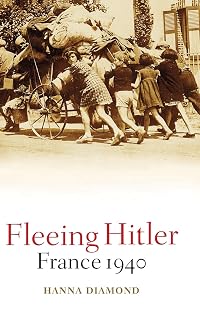

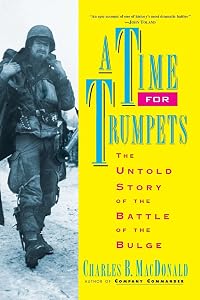
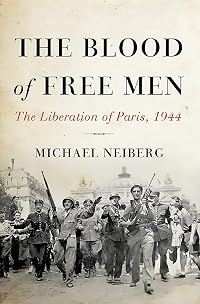

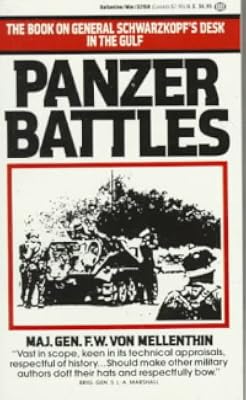






Member Recommendations


Member Reviews
Paris itself is a Hero of this story and the German, and presumably Nazi party member, General Von Choltitz is another. It is difficult to imagine now, from the perspective of a new century, just how much raw courage it must have taken to defy Hitler and the Nazi Regime of WWII. But Choltitz, the last Nazi Commandant of occupied Paris, did just that – repeatedly and persistently defying, ignoring and circumventing Hitler’s mad order that Paris, the world’s city of light, must be burned and destroyed on the German retreat.
Von Choltitz’s defiance, despite his family still being back in Germany, virtual hostages to Hitler’s murderous madness, saved this city from the careful plans of destruction by explosives and fire. With a show more mixture of machination, Nelsonian ‘blindness’, the connivance of Frenchmen and the creative ‘loss’ of communications Choltitz ensured the order was not carried out. This reflects his sense of historic responsibility and great personal courage and this brave and exceptional General deserves better and wider recognition. As does his defiance of even a personal direct order from Hitler – he defied and survived. An interesting outcome considering all those legal defenses built upon the claim that ‘Direct Orders’ in Nazi times left no choice but obedience that were consistently deployed in Germany.
An excellent well written book that grips the readers interest with a firm hold. show less
Von Choltitz’s defiance, despite his family still being back in Germany, virtual hostages to Hitler’s murderous madness, saved this city from the careful plans of destruction by explosives and fire. With a show more mixture of machination, Nelsonian ‘blindness’, the connivance of Frenchmen and the creative ‘loss’ of communications Choltitz ensured the order was not carried out. This reflects his sense of historic responsibility and great personal courage and this brave and exceptional General deserves better and wider recognition. As does his defiance of even a personal direct order from Hitler – he defied and survived. An interesting outcome considering all those legal defenses built upon the claim that ‘Direct Orders’ in Nazi times left no choice but obedience that were consistently deployed in Germany.
An excellent well written book that grips the readers interest with a firm hold. show less
This is a very accessible and entertaining read. The reader is left to explore the deeper politics on his own. This book will provide the motivation to do that. This is an important read. The French feared and denied the Nazi threat thru the 1930s which lead to disaster in 1940. It leaves one with the warning that, the price of liberty is eternal vigilance, which the French forgot. And, if a great people like the Germans could be so corrupted, then we all need to remain eternally vigilant to guard our souls.
To date I have read this book three times. The first time was in the mid 70s. It was in my Dad’s bookcase. I read it because it was there. As a teenager I had little understanding of the historical context. I read it then as a show more great historical adventure story. It fired my romantic view of Paris and a desire to see the locations of the story.
I read it the second time in 1984 after having visited Paris in the spring of 1983, and in anticipation of returning in the summer of 1984. I had the perspective of having been there and seen the bullet holes and strolled the Camps Elysees. At the time I was a young engineer living in Douala, Cameroon. I saw the spot on the banks of the Wouri River from where General Leclerc started his road back to Paris. There was a statue of him down town. I was living my own adventure and I was understood the epic sweep of the story and the courage of Leclerc, to start there, and travel so far, against such odds.
I read it the third time in August 2012 after numerous business visits to PAris over the years, the most recent a vacation in July of 2012 with my kids (I finsihed reading it on August 25th, the 67th anniversary of the liberation). This time I was struck more by the tragedy and pathos than the adventure. I noticed in my last visit that many of the bullet holes on the Police Prefecture have been filled since my previous visit. It was also poignant to me now that many of the people who lived these great events are gradually passing away. I was left with the sadness of a beautiful city and a romantic people that were so abused. Are we forgetting already? My teenage daughter noticed me reading it my third time. Paris had moved her, and so she asked to borrow it. I said “Sure, read it (she’ll love the real love stories and the danger), and think, it could all happen again, anywhere, even in America, if we don’t remember". show less
To date I have read this book three times. The first time was in the mid 70s. It was in my Dad’s bookcase. I read it because it was there. As a teenager I had little understanding of the historical context. I read it then as a show more great historical adventure story. It fired my romantic view of Paris and a desire to see the locations of the story.
I read it the second time in 1984 after having visited Paris in the spring of 1983, and in anticipation of returning in the summer of 1984. I had the perspective of having been there and seen the bullet holes and strolled the Camps Elysees. At the time I was a young engineer living in Douala, Cameroon. I saw the spot on the banks of the Wouri River from where General Leclerc started his road back to Paris. There was a statue of him down town. I was living my own adventure and I was understood the epic sweep of the story and the courage of Leclerc, to start there, and travel so far, against such odds.
I read it the third time in August 2012 after numerous business visits to PAris over the years, the most recent a vacation in July of 2012 with my kids (I finsihed reading it on August 25th, the 67th anniversary of the liberation). This time I was struck more by the tragedy and pathos than the adventure. I noticed in my last visit that many of the bullet holes on the Police Prefecture have been filled since my previous visit. It was also poignant to me now that many of the people who lived these great events are gradually passing away. I was left with the sadness of a beautiful city and a romantic people that were so abused. Are we forgetting already? My teenage daughter noticed me reading it my third time. Paris had moved her, and so she asked to borrow it. I said “Sure, read it (she’ll love the real love stories and the danger), and think, it could all happen again, anywhere, even in America, if we don’t remember". show less
An intense first-hand account of the final days of World War II in Paris -- the occupation, the resistance, and the final liberation. The military details are balanced with numerous personal vignettes to create a you-are-there quality to the narrative. The amazing thing is that even though we know the outcome (Paris survived intact) the authors create suspense in the whys and wherefores. Boffo nonfiction!!
Very interesting look at the very short period of time between the invasion of France by the Allies and the liberation of Paris. The initial plan was to bypass the city to end the war more quickly. Bold work by DeGaulle and resistance inside the city (both communists and Gaullists) altered that plan.
The book is a compilation of hundreds of stories chronologically put together to tell the big story and many of the small stories of triumph and heartbreak that make life so real. Great insight into a time that many have forgotten.
The book is a compilation of hundreds of stories chronologically put together to tell the big story and many of the small stories of triumph and heartbreak that make life so real. Great insight into a time that many have forgotten.
Between de Gaulle and the Communists, I was rooting for Eisenhower. It was rather riveting, though.
891 Is Paris Burning? by Larry Collins and Dominique LaPierre (read 27 Jan 1967) When I read these authors' book Freedom at Midnight on 3 March 1991 I said to myself: "I remember I did not think much of the author's technique when I read this book. So it was with some hesitation that I began their later book." But I enjoyed Freedom at Midnight very much, so either their technique improved, or my appreciation of it improved. But at the time I read this book I did not like it, being it is so journalistic and relies so much on oral interviews and ignores other research.
This was a great book about the liberation of France during WWII. It started off slow but I was drawn in by this amazing piece of history. Ernest Hemingway is also part of this extraordinary time.
Members
- Recently Added By
Lists

Best Military History Books
123 works; 21 members
Author Information

17+ Works 6,248 Members

46+ Works 8,389 Members
Some Editions
Awards and Honors
Distinctions
Series
Belongs to Publisher Series
Common Knowledge
- Canonical title
- Is Paris Burning?
- Original title
- Paris brûle-t-il?
- Original publication date
- 1965
- People/Characters
- Henri Rol-Tanguy; Jacques Chaban-Delmas; Yvon Morandat; Françoise Labbé; Philippe Leclerc; General Dietrich von Choltitz (show all 7); Charles de Gaulle
- Important places
- Paris, France; France
- Important events
- World War II (1939 | 1945); Operation Overlord (1944-06-06 | 1944-08-30); Liberation of Paris (1944-08-19 | 1944-08-25)
- Related movies
- Is Paris Burning? (1966)
- Epigraph*
- 25 augustus 1944: de bevrijding van de Franse hoofdstad
- First words
- He was never late.
- Last words
- (Click to show. Warning: May contain spoilers.)Commander in Chief of the Aries of the West transmitted the following message to Adolf Hitler's headquarters:
I cannot say if his failure was due to a wound caused by shellfire, or a weakening of his will to resist and his capacity to act by an intervention of the enemy by special arms. Such a possibility cannot be excluded.
MODEL
Commander in Chief/Wes
3rd Bureau No. 770/44
*Some information comes from Common Knowledge in other languages. Click "Edit" for more information.
Classifications
- Genres
- History, Nonfiction, General Nonfiction
- DDC/MDS
- 940.5421436 — History & geography History of Europe History of Europe 1918- Military history of World War II Campaigns and battles by theatre European theatre France
- LCC
- D762 .P3 .L34 — History of Europe, Asia, Africa and Oceania History (General) World War II (1939-1945)
- BISAC
Statistics
- Members
- 1,223
- Popularity
- 20,206
- Reviews
- 19
- Rating
- (3.98)
- Languages
- 11 — Chinese, Czech, Dutch, English, Finnish, French, German, Icelandic, Italian, Spanish, Swedish
- Media
- Paper, Audiobook, Ebook
- ISBNs
- 56
- UPCs
- 2
- ASINs
- 44