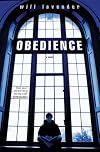
Obedience
by Will Lavender
On This Page
Description
“With superb confidence, Lavender constructs a brilliant fictional web of lies, inventively warping the psychological thriller to fit the confines of a scholarly investigation.” —Kirkus Reviews When the students in Winchester University’s Logic and Reasoning 204 arrive for their first day of class, they are greeted not with a syllabus or texts, but with a startling assignment from Professor Williams: Find a hypothetical missing girl named Polly. If after being given a series of clues show more and details the class has not found her before the end of the term in six weeks, she will be murdered. At first the students are as intrigued by the premise of their puzzle as they are wary of the strange and slightly creepy Professor Williams. But as they delve deeper into the mystery, they begin to wonder: Is the Polly story simply a logic exercise, designed to teach them rational thinking skills, or could it be something more sinister and dangerous? The mystery soon takes over the lives of three students as they find disturbing connections between Polly and themselves. Characters that were supposedly fictitious begin to emerge in reality. Soon, the boundary between the classroom assignment and the real world becomes blurred—and the students wonder if it is their own lives they are being asked to save. From the Hardcover edition. show lessTags
Recommendations











Member Reviews
First off, I have a bone to pick with the author, Will Lavender. I had set some goals for this weekend which did not get met once I opened the cover of this book. Yes, it was that diverting.
Secondly, after finishing, I looked for some reviews other than Salon's. Amazon has forty-five reviews. What is astonishing is the almost perfect divide between those who loved the book and those who hated it. Obviously I belong to the former group. I will get to those reviews later.
Thirdly, Obedience ostensibly pays homage to the famous experiments by Stanley Milgram. Unfortunately I cannot say more about this without giving away a major clue.
Obedience begins on the first day of a college course in Logic. Professor Williams produces no syllabus, show more reading list or plan for the six week course. All he will tell the students is that a young girl, Polly, will die at the end of that period unless they can solve the mystery and find her. Clues are e-mailed to the students each week. The class does meet twice a week and tries to use logic to solve the mystery using the clues and their own common sense.
The story concentrates on three of the students and their different reactions as the plot becomes more convoluted and the lines between reality and fantasy seem to dissolve. Prof. Williams sends clues and photos which increasingly cause the students to think the whole class is a ruse to involve them in the search for a young girl who has been missing for twenty years. The two cases gradually become one and, unless you are paying close attention, you won't realize what is going on until the final chapter. (Unfortunately for me, I figured it out about halfway through.) Here is where the book's detracters have a problem. Apparently they cannot suspend disbelief. Since the author is a college professor I am quite certain he knows the ethics and limits of a college setting. He has chosen to work outside those limits. A suspension of disbelief is necessary for the novel to work. Sort of like having to suspend disbelief while watching Harrison Ford at 62 doing things that are very hard to believe in the latest Indiana Jones film. Most films nowadays ask you to suspend your disbelief. I see no problem with novels that do so as well. Without that you cannot possibly enjoy this book. That is too bad. It is a good romp. It is not great literature nor is it intended to be. It is beach reaching, and damned good as such.
Obedience reminded me strongly of Mulholland Drive which I watched again just a couple of weeks ago. It would make a fantastic film but I hope David Lynch doesn't do it. I would like to see what another director would do with it. If you are headed to the beach or wherever you go to relax, you might love this book. I did. show less
Secondly, after finishing, I looked for some reviews other than Salon's. Amazon has forty-five reviews. What is astonishing is the almost perfect divide between those who loved the book and those who hated it. Obviously I belong to the former group. I will get to those reviews later.
Thirdly, Obedience ostensibly pays homage to the famous experiments by Stanley Milgram. Unfortunately I cannot say more about this without giving away a major clue.
Obedience begins on the first day of a college course in Logic. Professor Williams produces no syllabus, show more reading list or plan for the six week course. All he will tell the students is that a young girl, Polly, will die at the end of that period unless they can solve the mystery and find her. Clues are e-mailed to the students each week. The class does meet twice a week and tries to use logic to solve the mystery using the clues and their own common sense.
The story concentrates on three of the students and their different reactions as the plot becomes more convoluted and the lines between reality and fantasy seem to dissolve. Prof. Williams sends clues and photos which increasingly cause the students to think the whole class is a ruse to involve them in the search for a young girl who has been missing for twenty years. The two cases gradually become one and, unless you are paying close attention, you won't realize what is going on until the final chapter. (Unfortunately for me, I figured it out about halfway through.) Here is where the book's detracters have a problem. Apparently they cannot suspend disbelief. Since the author is a college professor I am quite certain he knows the ethics and limits of a college setting. He has chosen to work outside those limits. A suspension of disbelief is necessary for the novel to work. Sort of like having to suspend disbelief while watching Harrison Ford at 62 doing things that are very hard to believe in the latest Indiana Jones film. Most films nowadays ask you to suspend your disbelief. I see no problem with novels that do so as well. Without that you cannot possibly enjoy this book. That is too bad. It is a good romp. It is not great literature nor is it intended to be. It is beach reaching, and damned good as such.
Obedience reminded me strongly of Mulholland Drive which I watched again just a couple of weeks ago. It would make a fantastic film but I hope David Lynch doesn't do it. I would like to see what another director would do with it. If you are headed to the beach or wherever you go to relax, you might love this book. I did. show less
I love the premise of this book. Three students are enrolled in a class called Logic and Reasoning for six weeks. Their professor tells them a story of a murder that is going to happen at the end of the six weeks if the class does not solve it. Unfortunately, the premise is the best part of the book! Remember the rules that Agatha Christie supposedly broke with regards to narration in "The Murder of Roger Ackroyd"? Well, this author too plays with his audience but not as successfully as Christie did. It feels like cheating because unlike in Christie's book, you cannot go back and see for yourself where the gaps in narration might have led you down the right path to the murderer had you only paid more attention.
An interesting premise that was executed well enough. A professor with an obscure background sets a rather weird curriculum for his logic class at a local college. He tells them that they have to solve the puzzle of the disappearance of Polly. She’s been taken hostage and will be killed at the end of term; exactly 6 weeks away. As the clues are delivered, paranoia and suspicion run rampant through the students. Just who can be trusted? Can the clues be trusted? What aren’t they being told? Is this just a puzzle or is someone really going to die?
The 3 students in focus are Mary, Brian and Dennis. Mary and Dennis have a bit of a history together and Brian has a history period. They’re all pretty well drawn without being too quirky. show more Mary’s pretty straight up and seriously wants to do well and get her shit together so she can graduate and embark on some kind of career. Dennis is the son of an endowment-dispersing alumnus and has a thing on with the Dean’s wife. Brian’s older brother recently shot himself and his whole family is falling apart.
Each student is played and as they progress they figure out to what degree they are being played. Mary especially is targeted as part of this enterprise, but she can’t figure out if it’s just a puzzle or something much more sinister. At first she suspects the professor, but then events seem to exonerate him and she and Brian go off in that direction; that others are responsible and the professor is just as victimized as the rest of them. Then other things start to come to light and they doubt this, especially Brian. They go their separate ways only to meet up again in a very unexpected way.
The convoluted nature of the conspiracy novel is one I’ve always been drawn to. Not because I can figure them out before the writer wants me to, but because it’s fascinating to see how deep the plot goes and just how many people it involves. It’s hard to keep something like that entirely secret and there are a few in this story who leak info to Mary and the others. When the students do unexpected things, events also become clearer and it’s fun to watch pieces fall into place, but still have no idea what the picture looks like. A decent, escapist book. show less
The 3 students in focus are Mary, Brian and Dennis. Mary and Dennis have a bit of a history together and Brian has a history period. They’re all pretty well drawn without being too quirky. show more Mary’s pretty straight up and seriously wants to do well and get her shit together so she can graduate and embark on some kind of career. Dennis is the son of an endowment-dispersing alumnus and has a thing on with the Dean’s wife. Brian’s older brother recently shot himself and his whole family is falling apart.
Each student is played and as they progress they figure out to what degree they are being played. Mary especially is targeted as part of this enterprise, but she can’t figure out if it’s just a puzzle or something much more sinister. At first she suspects the professor, but then events seem to exonerate him and she and Brian go off in that direction; that others are responsible and the professor is just as victimized as the rest of them. Then other things start to come to light and they doubt this, especially Brian. They go their separate ways only to meet up again in a very unexpected way.
The convoluted nature of the conspiracy novel is one I’ve always been drawn to. Not because I can figure them out before the writer wants me to, but because it’s fascinating to see how deep the plot goes and just how many people it involves. It’s hard to keep something like that entirely secret and there are a few in this story who leak info to Mary and the others. When the students do unexpected things, events also become clearer and it’s fun to watch pieces fall into place, but still have no idea what the picture looks like. A decent, escapist book. show less
The premise of this book drew me in -- I was excited about a novel that applied rigorous philosophical methodology to a murder investigation. Too bad there is nothing remotely philosophical (let alone rigorous) in the author's approach to this mystery. The characters occasionally mention applying the rules of logic to the case, but nine times out of ten they wind up relying on pure intuition, or worse yet, the very obvious hand of the author guiding them where they need to go.
I wanted this book to be a perfectly orchestrated intellectual puzzle -- instead it was a mess of unlikeable characters behaving in unconvincing, sometimes downright preposterous ways. Also, it went on way too long... two thirds of the book are devoted to the show more heroes wandering around rural Indiana, asking people questions, and coming away with absolutely no new information. What a waste! show less
I wanted this book to be a perfectly orchestrated intellectual puzzle -- instead it was a mess of unlikeable characters behaving in unconvincing, sometimes downright preposterous ways. Also, it went on way too long... two thirds of the book are devoted to the show more heroes wandering around rural Indiana, asking people questions, and coming away with absolutely no new information. What a waste! show less
This was a compelling read -- difficult to put down. I'm not entirely sure that all of the threads were tied off in the end, and there's a definite failure, at several points, to meet up with reality... but I still think it's pretty powerfully told. In fact, I think the way in which it breaks with reality allows it instead to poke at our perceptions of the reality of our own lives, and the degrees to which we feel that we have agency. I think you can frame it as an interesting "what-if" world to play with a particular fear instead of a broken point in the story. [And I don't think I can say more without delving deeply into spoiler land.]
I wasted a week on this book, that is for sure! Everything about it was great, until the last 50 pages when all the questions were answered.
This is a thriller set on a college campus, specifically in a Logic and Reasoning class. Professor Williams opens his 6 week class by informing the class that if they don't find a girl named Polly by the end of the 6 weeks, she will die. It sounds super exciting, and I can't put the book down.
As the book unfolds the class seems to find clues to this mystery everywhere they go. They also find that the mystery they are working on parallels in a mystery of Deanna Ward, a girl that disappeared a few counties over years ago, and was never found. The students think that they have walked into not just a show more game, but something much more sinister.
The ending is ridiculous. I was actually angry that after all this build up and suspense I am left with this unbelievable ending. I suggest passing on this book. While the bulk of it is very engaging, the way it ends and how the questions are wrapped out falls short of the mark. Its like the author, Will Lavendar worked really hard on the entire book and then at the end just gave up and threw in an ending that didn't make a lot of sense show less
This is a thriller set on a college campus, specifically in a Logic and Reasoning class. Professor Williams opens his 6 week class by informing the class that if they don't find a girl named Polly by the end of the 6 weeks, she will die. It sounds super exciting, and I can't put the book down.
As the book unfolds the class seems to find clues to this mystery everywhere they go. They also find that the mystery they are working on parallels in a mystery of Deanna Ward, a girl that disappeared a few counties over years ago, and was never found. The students think that they have walked into not just a show more game, but something much more sinister.
The ending is ridiculous. I was actually angry that after all this build up and suspense I am left with this unbelievable ending. I suggest passing on this book. While the bulk of it is very engaging, the way it ends and how the questions are wrapped out falls short of the mark. Its like the author, Will Lavendar worked really hard on the entire book and then at the end just gave up and threw in an ending that didn't make a lot of sense show less
Better than Dominance - the pacing works - and sharing some of the same exploration of reality getting blurry around the edges, but still with one central implausibility. No ethics board would OK Milgram's experiment today, never mind this stuff. Add a mad scientist dynamic and that whole problem disappears. There were a few other lazy moments, as well, but I can't say I didn't enjoy it.
Members
- Recently Added By
Lists

Dark Academia Novels
59 works; 11 members
Author Information
Some Editions
Common Knowledge
- Canonical title
- Obedience
- Original title
- Obedience
- Original publication date
- 2008
- People/Characters
- Brian House; Dennis Flaherty; Mary Butler
- Important places
- USA; Indiana, USA
- Epigraph
- When bewilderment on a subject seemed to have peaked, often with the class baffled into silence, Zechman would move on to another topic. But he never made a positive statement, never gave anything which resembled an answer, n... (show all)ot even a hint. He just stood up there in his black suit with an expression of muted concern and kept asking questions; and as confusion grew, so did dissatisfaction. No one was quite sure what Zechman wanted from us. Were we stupid? Were the questions bad? What were we supposed to be learning? It was almost as if Zechman had set out to intensify that plague of uncertainty which afflicted us all.
By Friday, the level of anxiety in the class had mounted to a kind of fury.
- Scott Turow, One L - First words
- Run an internet search using the name Deanna Ward. [Prologue]
The strange thing about Williams was that nobody had ever seen him. [Chapter 1] - Quotations*
- Polly says het back hurts - And she's just as bored as me - She caugth me of my guard - It amazes me, the will of instinct - (Nirvana - Polly)
- Last words
- (Click to show. Warning: May contain spoilers.)"Orman," the man said. "Edward Conrad Orman."
- Blurbers
- Baldacci, David; Slaughter, Karin; Unger, Lisa; Goodman, Carol; Abrahams, Peter; Freeman, Brian
- Original language
- English
*Some information comes from Common Knowledge in other languages. Click "Edit" for more information.
Classifications
Statistics
- Members
- 490
- Popularity
- 61,882
- Reviews
- 29
- Rating
- (2.91)
- Languages
- 8 — Chinese, Dutch, English, French, German, Italian, Spanish, Swedish
- Media
- Paper, Audiobook, Ebook
- ISBNs
- 16
- ASINs
- 1