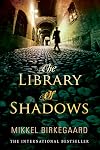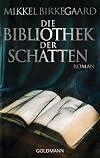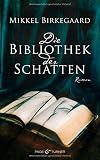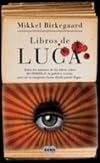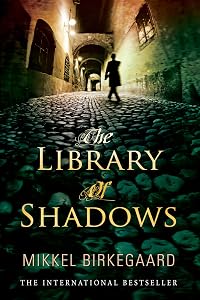
The Library of Shadows
by Mikkel Birkegaard
On This Page
Description
'When Luca Campelli dies a sudden and violent death, his son Jon inherits his second-hand bookshop, Libri di Luca, in Copenhagen. Jon has not seen his father for twenty years since the mysterious death of his mother. When Luca's death is followed by an arson attempt on the shop, Jon is forced to explore his family's past. Unbeknown to Jon, the bookshop has for years been hiding a remarkable secret. It is the meeting place of a society of booklovers and readers, who have maintained a show more tradition of immense power passed down from the days of the great library of ancient Alexandria. Now someone is trying to destroy them..."--P. [4] of cover. show lessTags
Recommendations











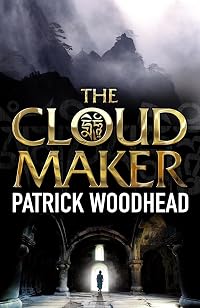
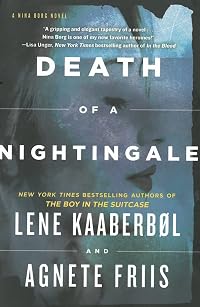

Member Recommendations
by anonymous user
LauraDuncan Another book about the power of words and reading to influence people
Member Reviews
When evaluating a book, or indeed any sort of artistic expression, the first and often unconscious step is establishing the thresholds or criteria against which it should be fairly judged. Not all plays ought be held against the standard of Shakespeare, nor all novels Dostoevsky. From the moment you first pick up a book, thoughtfully heft its weight in your hand, absorb the cover art and typeface, and casually skim the publisher blurbs and reviewer call-quotes, you begin a process of shaping expectations. These "first impressions" are typically completed -- occasionally refuted, but certainly concluded -- as you slowly begin picking your way through the opening sentence, paragraph, and page.
By the end of the first chapter, the show more experienced reader will have established a ready model of the audience for whom this book was intended, the literary tradition it builds from and chooses to extend, the ancient themes it has picked up and will shortly re-tell with variations anew. Consciously or otherwise, the reader has already begun cross-referencing an index of comparison points: other books with similar style, comparable diction, analogous theme, congruent historical or geographical setting, parallel plot, etc. These will become the benchmarks against which this new entry will be measured -- and the water mark will be high, for indeed "novel" comes from the Latin novus or "new", and readers will expect recent entries to build upon and therefore plausibly surpass the achievements of those who have gone before; mere regurgitation or mimicry merit little praise.
And therein lies my problem with "The Library of Shadows", the latest submission in the subgenre of supernatural literary thriller. The author dearly wishes to be placed on a shelf alongside recent bestsellers such as "The Club Dumas", "The Dante Club", Elizabeth Kostova's "The Historian", and even masters such as Umberto Eco. This categorization is not subjective on my part: Arturo Perez-Reverte is mentioned by name in the text, as is "The Name of the Rose", and special attention is given to a reading of "The Divine Comedy". These unsubtle allusions could be amusingly self-referential in a genuine genre entry, but come across as almost embarrassingly pleading in a novel of this calibre.
For the fact is that "Library" does not measure up to the standards it self-selects and so desperately echos. Its fantastic suppositions beggar belief, lacking even the internal logic so critical to establishing suspension-of-disbelief and effective empathy between reader and text. The "whodunnit" aspect of the mystery, the morality play of motivations, as well as the supernatural element which sets the plot in motion, are all presented with such clumsy cliches that I found myself wondering if this was a book written for children. Indeed, with one or two snips of the editor's scissors, this could make excellent juvenile fiction, an easy on-ramp to spark interest in better books featuring similar themes: dark and dank libraries filled with forgotten folios, musty old tomes of legend and lore whose cryptic secrets spell ecstasy or horror for the unwary reader.
Sadly, this book is unlikely to be ever placed in those hallowed back-rooms, held behind counter and glass for curious cognoscente or discerning dilettante; I fear it is bound to remain ever caged in the sunlit paperback racks fronting friendly High Street shops. At best, it may provide an early map, a hint to precocious young readers that books do exist which can carry the recondite connoisseur down circuitous paths to more vivid visions and rewarding resolutions, when the time is right.
Today, two stars; for too little, too late. show less
By the end of the first chapter, the show more experienced reader will have established a ready model of the audience for whom this book was intended, the literary tradition it builds from and chooses to extend, the ancient themes it has picked up and will shortly re-tell with variations anew. Consciously or otherwise, the reader has already begun cross-referencing an index of comparison points: other books with similar style, comparable diction, analogous theme, congruent historical or geographical setting, parallel plot, etc. These will become the benchmarks against which this new entry will be measured -- and the water mark will be high, for indeed "novel" comes from the Latin novus or "new", and readers will expect recent entries to build upon and therefore plausibly surpass the achievements of those who have gone before; mere regurgitation or mimicry merit little praise.
And therein lies my problem with "The Library of Shadows", the latest submission in the subgenre of supernatural literary thriller. The author dearly wishes to be placed on a shelf alongside recent bestsellers such as "The Club Dumas", "The Dante Club", Elizabeth Kostova's "The Historian", and even masters such as Umberto Eco. This categorization is not subjective on my part: Arturo Perez-Reverte is mentioned by name in the text, as is "The Name of the Rose", and special attention is given to a reading of "The Divine Comedy". These unsubtle allusions could be amusingly self-referential in a genuine genre entry, but come across as almost embarrassingly pleading in a novel of this calibre.
For the fact is that "Library" does not measure up to the standards it self-selects and so desperately echos. Its fantastic suppositions beggar belief, lacking even the internal logic so critical to establishing suspension-of-disbelief and effective empathy between reader and text. The "whodunnit" aspect of the mystery, the morality play of motivations, as well as the supernatural element which sets the plot in motion, are all presented with such clumsy cliches that I found myself wondering if this was a book written for children. Indeed, with one or two snips of the editor's scissors, this could make excellent juvenile fiction, an easy on-ramp to spark interest in better books featuring similar themes: dark and dank libraries filled with forgotten folios, musty old tomes of legend and lore whose cryptic secrets spell ecstasy or horror for the unwary reader.
Sadly, this book is unlikely to be ever placed in those hallowed back-rooms, held behind counter and glass for curious cognoscente or discerning dilettante; I fear it is bound to remain ever caged in the sunlit paperback racks fronting friendly High Street shops. At best, it may provide an early map, a hint to precocious young readers that books do exist which can carry the recondite connoisseur down circuitous paths to more vivid visions and rewarding resolutions, when the time is right.
Today, two stars; for too little, too late. show less
It's always frustrating to read a really good book in Danish, because I know the chances of it getting translated into English are very slim, and I want to recommend it to others and discuss it with them!
And the first half of this book was "really good". The set-up was interesting, the writing captivating, I got really fond of both Jon and Katherina, and I was completely fascinated by the concept of influencing/manipulating others through reading.
Unfortunately, about half way through the book, a blatant plot-device was used to move the story along. I'd seen it coming a mile off, so it annoyed me that Jon and Katherina hadn't too, and that they were trusting and unsuspecting enough not to see it. The same effect could easily have been show more achieved in a different way.
The last 100 pages seemed rushed, and not as well thought-out as the rest of the book, leaving me not quite as blown away as I'd expected to be, and with a number of questions left unanswered.
Edit: turns out this book actually has been translated. I stand corrected. show less
And the first half of this book was "really good". The set-up was interesting, the writing captivating, I got really fond of both Jon and Katherina, and I was completely fascinated by the concept of influencing/manipulating others through reading.
Unfortunately, about half way through the book, a blatant plot-device was used to move the story along. I'd seen it coming a mile off, so it annoyed me that Jon and Katherina hadn't too, and that they were trusting and unsuspecting enough not to see it. The same effect could easily have been show more achieved in a different way.
The last 100 pages seemed rushed, and not as well thought-out as the rest of the book, leaving me not quite as blown away as I'd expected to be, and with a number of questions left unanswered.
Edit: turns out this book actually has been translated. I stand corrected. show less
Great book! The translation is wonderful; so I'm thinking the original must be flawless. I admired the way the narrative keeps you reading, and reading, and reading like the Energizer bunny. I loved the main plot: books can affect you in countless ways and reading is a very powerful thing. I wish I could visit Libri di Luca; by reading about it, I was able to visualize it to the letter, and most important of all, I was almost able to smell it... wonderful place. Jon and Katherina make a great pair in all senses: romantically and powerful-wise. The rest of the characters play along nicely; but nothing like the main pair and Luca, the long lost father. I totally recommend this book: great suspense and most important of all: it's for all show more of us book-lovers. show less
When the power of reading goes too far and evil can lurk behind each new book.
This one I likened to a wave in the ocean. It starts out slowly but builds in intensity and finally breaks onto the shore. Having said that though, I'm not sure it is the best thriller out there but I did enjoy it.
The idea is that when certain people read, they have the power to add emotion and suggestion to the text and impart this to their listeners. There is also another group who have the power, as listeners, to influence and control a person's reading of a given text. Our main characters are the good guys who use their abilities for good, ie. to influence decisions on reading programmes in schools or council plans to close libraries.. they strive to keep show more reading alive and loved in the world.
The 'Shadow Organisation' (really stupid name) uses their powers to better their own positions in the business world, politically, financially, and basically see it as a means to achieve more power and influence everywhere.
Jon Campelli is a good guy but with extraordinary powers that the bad guys covet. He can do things no one else can and the power at his disposal is the main crux of the plot.
I enjoyed this read but there were some slow patches in the writing and the ending, although well-rounded, seemed quite abrupt. Possibly my third ever thriller novel so I don't have too much to use as a basis for comparison, but for what it's worth, I liked it. show less
This one I likened to a wave in the ocean. It starts out slowly but builds in intensity and finally breaks onto the shore. Having said that though, I'm not sure it is the best thriller out there but I did enjoy it.
The idea is that when certain people read, they have the power to add emotion and suggestion to the text and impart this to their listeners. There is also another group who have the power, as listeners, to influence and control a person's reading of a given text. Our main characters are the good guys who use their abilities for good, ie. to influence decisions on reading programmes in schools or council plans to close libraries.. they strive to keep show more reading alive and loved in the world.
The 'Shadow Organisation' (really stupid name) uses their powers to better their own positions in the business world, politically, financially, and basically see it as a means to achieve more power and influence everywhere.
Jon Campelli is a good guy but with extraordinary powers that the bad guys covet. He can do things no one else can and the power at his disposal is the main crux of the plot.
I enjoyed this read but there were some slow patches in the writing and the ending, although well-rounded, seemed quite abrupt. Possibly my third ever thriller novel so I don't have too much to use as a basis for comparison, but for what it's worth, I liked it. show less
One of those books that might have been excellent, but instead turned out rather meh. There's a bit of really nice description about the power of books and reading, and some lovely, lush bookstore scenery, though, but the main plot line leaves quite a bit to be desired.
While the general premise of the book isn't terrible (that there's a small group of readers who have particular abilities to influence the way other people experience the reading of a book), the way this works out in practice just gets somewhat silly and nebulous, and all breaks down toward the end of the book.
While the general premise of the book isn't terrible (that there's a small group of readers who have particular abilities to influence the way other people experience the reading of a book), the way this works out in practice just gets somewhat silly and nebulous, and all breaks down toward the end of the book.
''Texts without a reader can't speak. A reader is required, but then they certainly do speak. They sing, they whisper, they even scream.''
It was fairly decent, but not as good as I expected it to be. The build up of the story was really good, and pretty exciting. It got weak and disjointed towards the end, though.
It was fairly decent, but not as good as I expected it to be. The build up of the story was really good, and pretty exciting. It got weak and disjointed towards the end, though.
For some reason, the tone of this book reminded me of the 1970s TV horror movies: an ordinary person somehow gets drawn into a disturbing situation full of odd happenings and emotional betrayals. In the movies, the evil tended to win the day. That's not the case here.
A lawyer inherits a bookshop from his estranged father, and learns that some people possess strange powers related to reading. Transmitters can influence the listener, while receivers can get inside the head of anyone reading. While the bookstore has been the center of a local group of Lectors, there appears a different organization with malevolent designs. A showdown of readers drives the book toward its conclusion.
The abilities of Lectors puts a different spin on the show more imagined influence that libraries can have. While here the power involves actually reading, a different view is offered in the Invisible Library series in which librarians speak The Language to which the world must respond. These descriptions of the power hidden within the library and its books can be captivating to anyone that thinks libraries are special, even without the magic powers.
Plot-wise, the story probably doesn't survive close scrutiny, but that's beside. show less
A lawyer inherits a bookshop from his estranged father, and learns that some people possess strange powers related to reading. Transmitters can influence the listener, while receivers can get inside the head of anyone reading. While the bookstore has been the center of a local group of Lectors, there appears a different organization with malevolent designs. A showdown of readers drives the book toward its conclusion.
The abilities of Lectors puts a different spin on the show more imagined influence that libraries can have. While here the power involves actually reading, a different view is offered in the Invisible Library series in which librarians speak The Language to which the world must respond. These descriptions of the power hidden within the library and its books can be captivating to anyone that thinks libraries are special, even without the magic powers.
Plot-wise, the story probably doesn't survive close scrutiny, but that's beside. show less
Members
- Recently Added By
Lists

Books Read in 2013
1,630 works; 51 members

To Read - Literature / Fiction
26 works; 1 member

Books about Books
149 works; 23 members

My E-Book Collection - Opinions Welcome
92 works; 10 members

Books Read in 2016
4,666 works; 199 members

6 Books Set in Mysterious Libraries
6 works; 1 member
Author Information

14 Works 1,037 Members
Some Editions
Awards and Honors
Awards
Series
Belongs to Publisher Series
Common Knowledge
- Canonical title*
- Libri di Luca
- Original title
- Libri di Luca
- Original publication date
- 2007
- People/Characters
- Jon Campelli; Luca Campelli; Otto Remer
- Important places
- Copenhagen, Denmark; Alexandria, Egypt
- First words
- Luca Campelli's wish to die surrounded by his beloved books came true late one night in October.
- Last words
- (Click to show. Warning: May contain spoilers.)He no longer needed to feel alone.
*Some information comes from Common Knowledge in other languages. Click "Edit" for more information.
Classifications
- Genres
- Fiction and Literature, Fantasy
- DDC/MDS
- 839.8138 — Literature & rhetoric German & related literatures Other Germanic literatures Danish and Norwegian literatures Danish Danish fiction 2000–
- LCC
- PT8177.12 .I75 .L5313 — Language and Literature German, Dutch and Scandinavian literatures Danish literature Individual authors or works 2001-
- BISAC
Statistics
- Members
- 947
- Popularity
- 28,079
- Reviews
- 46
- Rating
- (3.29)
- Languages
- 14 — Catalan, Danish, Dutch, English, Finnish, French, German, Hungarian, Italian, Norwegian (Bokmål), Polish, Portuguese, Spanish, Swedish
- Media
- Paper, Audiobook, Ebook
- ISBNs
- 37
- ASINs
- 5