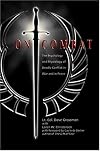
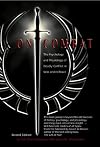
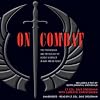
On Combat, The Psychology and Physiology of Deadly Conflict in War and in Peace
by Dave Grossman
On This Page
Description
The director of the Killology Research Group shares "a thorough examination of the emotional and physical effects of deadly conflict" (Kirkus Reviews). On Combat examines the stress resulting from engaging in deadly battle and its effects on the human body, from the heart and the nervous system to visual and auditory perception to memory. The historical perspective on the evolution of combat provided in this text further deepens our understanding of the brave men and women who train their show more minds and bodies to go to that place from which others flee. Lt. Col. Dave Grossman, a war veteran and former West Point psychology professor, presents combat coping strategies, demonstrating how one can train the mind to be inoculated against stress, fear, and even pain. This fresh and informative look at post-traumatic stress disorder (PTSD) details how to prevent it, how to survive it, how to come out of it stronger, and how to help others who are experiencing it. Grossman underscores the importance of post-combat debriefing, when warriors gather to share, learn from each other, and begin to heal from the horror. Based on extensive new research, Grossman's findings are supported by revealing quotes and anecdotes from combat veterans and other leaders in the warrior community. show lessTags
Recommendations

Member Reviews
In combat, it’s normal to pee or shit your pants, but very few people tell you about that. Grossman does, along with other normal reactions to situations in which other people are trying to kill you and you are trying to kill them. Police and soldiers are “warriors” who need a “sheepdog ethic” to protect normal people/sheep—Grossman says this isn’t a judgment and that sheep are perfectly valuable, but civilization would collapse without warriors to protect against the wolves (warriors gone wrong). There’s also a lot about the importance of practice—in extremis, people sink to the level of their training; if they don’t freeze, they do what they have been in the habit of doing. Thus it is vital to create proper habits show more that increase the chances of survival in battle, including “tactical breathing,” which is really just deep breathing/Lamaze breathing with a manlier name. It’s a mix of new agey with worshiping militarism that I wouldn’t have expected, but found thought-provoking. He spends a lot of time attacking the media, especially violent video games, for creating killers who aren’t warriors, who are trained to kill and keep killing without thinking about it. The biggest weakness is Grossman’s inability to discuss the ways in which police are not soldiers in war, facing enemies in uniform. The elephant in the room is all the people the police are killing unnecessarily; while Grossman talks a lot about deciding in advance that one is willing to kill to protect the lives of other people, or even oneself, he does not talk about how to mentally prepare oneself for making a life-or-death decision in a way that decreases the likelihood that anyone will die. show less
This is difficult book to review, there are some very good parts in it, and some very bad. The author definitely seems to have no problem with "self-esteem" asking if a person who he called the Anti-Grossman (the authors name) is similar to the Anti-Christ (essentially comparing himself to Christ I presume). At other times he simple makes statements that are clearly not factual such as the reference to Socrates (not Plato's) Republic, while at the same time comes across very preaching and proselytizing. In one chapter he praises the Psychology community when he uses them to strengthen his claim (about media violence), while in same time puts them down when his disagrees (about PTSD). The book should have been much shorter focusing on show more the elements Colonel Grossman is an expert on, which would have made it a better use of time and energy. Some of the language used was off putting such as referring to civilians as "sheep" throughout the book, but also use of some disrespectful terms such as Japs, Krauts, etc ... I would definitely encourage people to read this book as it has valuable perspectives, but would encourage the author to be less judgemental and maybe consider that people who disagree with him have a valid point too. show less
While the main audiance of this book might be designed to be police officers or those in the armed forces, it was a very interesting read from any perspective.
A few of the chapters go into detail into the effect of video games on children (as well as TV and movies). This was really fascinating to read because talking to my students, I can see how much they love those games, and while I never thought highly of them, I may also have underminded their importance (or destructiveness, as it were) on children.
That is a portion of this book, but the main points of the book describe what it means to be a 'warrior'--and what a warrior might expect before, during and after combat. Combat can be described in many ways. Before it takes place, show more it's important to be prepared mentally and physically. Training is key, as our bodies literally shut down when we are stressed, and one sinks to the level of their training. Mentally and emotionally, we need to know what we are willing to do, so we are not cursed with indecision at the moment of crisis.
During the crisis, it is important to try to keep our bodies within a healthy heart rate (breathing techniques help), because physiologically speaking, if our heart rate gets too high, we shut down. (Not desired!) After a crisis, we need to debrief. We need to talk with others to either share our pain, or share our joy. We made it, we are alive. The debriefing is only as important as your mental health after a crisis is to you. There is catharsis in talking about what happened.
While I am not a police officer, or in any branch of the armed forces, this book gave me a lot to think about in relation to school safety and shootings, and how adults (myself included) should respond to such a threat or actual event.
I think the message I am taking from the book is: whereas I would absolutely hate to be in a position to need the infomraiton in this book....I would much rather be prepared if I'm ever forced into such a situation! show less
A few of the chapters go into detail into the effect of video games on children (as well as TV and movies). This was really fascinating to read because talking to my students, I can see how much they love those games, and while I never thought highly of them, I may also have underminded their importance (or destructiveness, as it were) on children.
That is a portion of this book, but the main points of the book describe what it means to be a 'warrior'--and what a warrior might expect before, during and after combat. Combat can be described in many ways. Before it takes place, show more it's important to be prepared mentally and physically. Training is key, as our bodies literally shut down when we are stressed, and one sinks to the level of their training. Mentally and emotionally, we need to know what we are willing to do, so we are not cursed with indecision at the moment of crisis.
During the crisis, it is important to try to keep our bodies within a healthy heart rate (breathing techniques help), because physiologically speaking, if our heart rate gets too high, we shut down. (Not desired!) After a crisis, we need to debrief. We need to talk with others to either share our pain, or share our joy. We made it, we are alive. The debriefing is only as important as your mental health after a crisis is to you. There is catharsis in talking about what happened.
While I am not a police officer, or in any branch of the armed forces, this book gave me a lot to think about in relation to school safety and shootings, and how adults (myself included) should respond to such a threat or actual event.
I think the message I am taking from the book is: whereas I would absolutely hate to be in a position to need the infomraiton in this book....I would much rather be prepared if I'm ever forced into such a situation! show less
I found this book a let-down from the very valuable "On Killing", and seams between the assembled presentations were very obvious. But a good addition to the anti-NRA propaganda which sadly is necessary at this point. "All it takes to stop a greedy man looking to sell a gun....is information", especially in this format.
There is a lot of inspirational poetry, though, some good stuff, there.
There is a lot of inspirational poetry, though, some good stuff, there.
This is a self-help book for people whose lives involve the deliberate use of violence -- police officers and military personnel, mainly. Like in most examples of the genre, some of the science seems a little suspect (by which I mean twisted to fit the aims of the author, not fabricated) and the cheer-leading can get a little tiring, but it's sincere, personal, and fairly well written. I can imagine the core audience getting some benefit by reading (and re-reading) the book and the book's popularity and the uptake of some of its distinct terminology into common (though restricted) usage attests to its value. For those of us with distant contact with violence, distant either in time or in circumstances, the book has less value.
An absolutely essential book for anyone who intends to take responsibility for their own safety or the safety of others. If you carry a weapon in the line of duty or for your own personal protection you need to read this book.
Grossman takes an in-depth look at the physiological and psychological effects of a lethal encounter, both during the event and the aftermath. He backs up his conclusions with solid research and empirical data gathered from actual events, including interviews with survivors from law enforcement and the military.
Grossman's narrative includes a religious perspective that some readers may find at the least irrelevant, and at the most distracting. I would encourage those readers to focus on the facts, as they are still show more extremely valuable regardless of the author's personal opinions. show less
Grossman takes an in-depth look at the physiological and psychological effects of a lethal encounter, both during the event and the aftermath. He backs up his conclusions with solid research and empirical data gathered from actual events, including interviews with survivors from law enforcement and the military.
Grossman's narrative includes a religious perspective that some readers may find at the least irrelevant, and at the most distracting. I would encourage those readers to focus on the facts, as they are still show more extremely valuable regardless of the author's personal opinions. show less
Amazing review of the psychology of combat and killing in combat. Many excellent comments both positive and negative on how the US Military has handled its combatants over the years, and especially in Viet Nam. Written with sympathy for and by an US Military officer, this book is an outstanding discussion of how to train soldiers.
Members
- Recently Added By
Author Information

11+ Works 2,955 Members
Common Knowledge
- Original publication date
- 2004
- Canonical DDC/MDS
- 355.0019
Classifications
Statistics
- Members
- 810
- Popularity
- 34,237
- Reviews
- 13
- Rating
- (4.10)
- Languages
- English, French, German, Spanish
- Media
- Paper, Audiobook, Ebook
- ISBNs
- 16
- ASINs
- 6