On This Page
Description
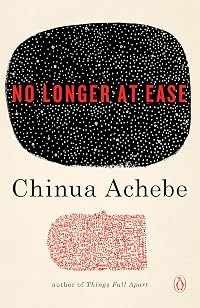
A classic story of moral struggle in an age of turbulent social change and the final book in Chinua Achebe's The African TrilogyWhen Obi Okonkwo, grandson of Okonkwo, the main character in Things Fall Apart returns to Nigeria from England in the 1950s, his foreign education separates him from his African roots. No Longer at Ease, the third and concluding novel in Chinua Achebe's The African Trilogy, depicts the uncertainties that beset the nation of Nigeria, as independence from colonial show more rule loomed near. In Obi Okonkwo's experiences, the ambiguities, pitfalls, and temptations of a rapidly evolving society are revealed. He is part of a ruling Nigerian elite whose corruption he finds repugnant. His fate, however, overtakes him as he finds himself trapped between the expectation of his family, his village—both representations of the traditional world of his ancestors—and the colonial world. A story of a man lost in cultural limbo, and a nation entering a new age of disillusionment, No Longer at Ease is a powerful metaphor for his generation of young Nigerians. show less
Tags
Recommendations
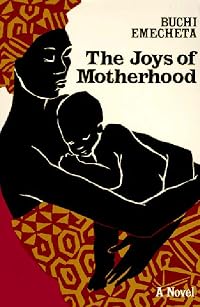
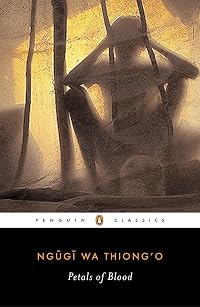
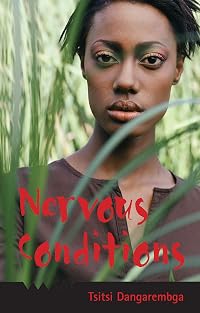
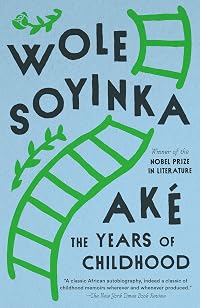
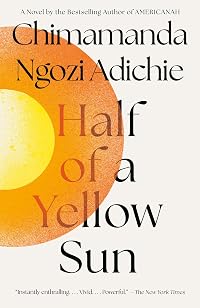

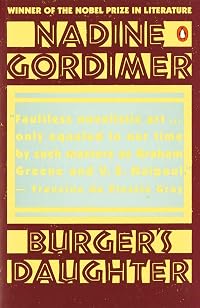
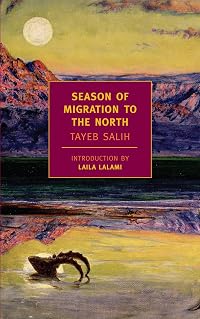


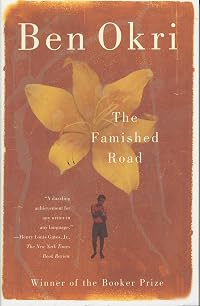
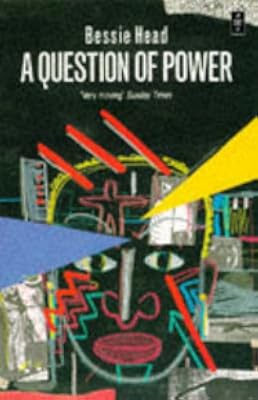


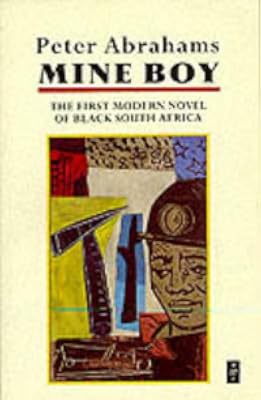
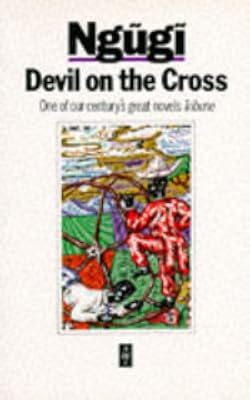
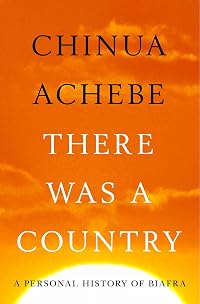
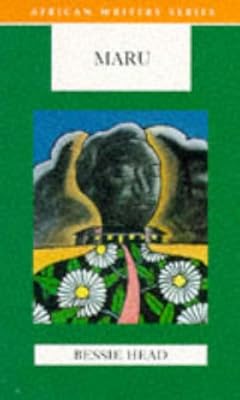
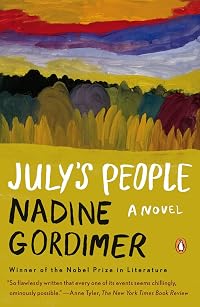

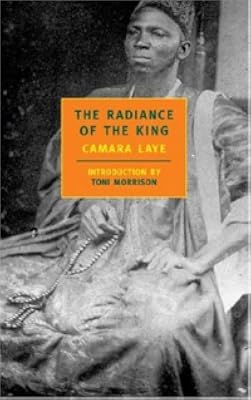
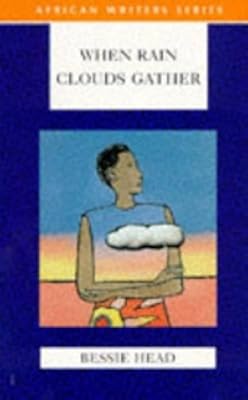
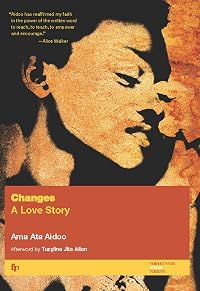
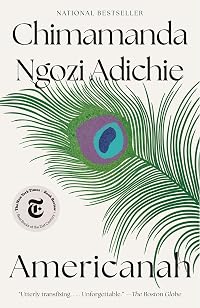
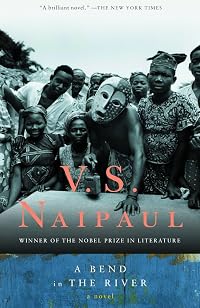




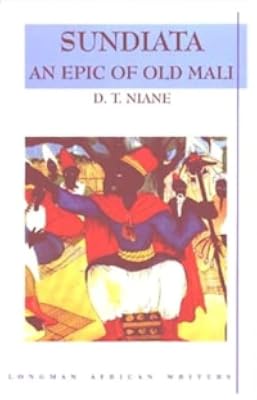
Member Recommendations
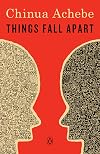
Member Reviews
Achebe manages to tell a thoroughly African story in a way that reaches other cultures and times. His writing is marvelous, thoughtful, and cautiously hopeful. Obi (the grandson of Okonkwo is Things Fall Apart) is newly home from college, needs a job, in 1950s Nigeria. Obi is complex and brilliantly drawn. His beliefs and habits come from his Christian family, his Nigerian heritage, and his British education. Reflecting at times each of these cultures, his motives and actions are misunderstood. He is in an odd juxtaposition. He's absorbed western ideas of sound government that are at odds with the Nigerian way of life, but he has grown up in a Christian home, which is at odds with the traditional Nigerian way of life as well. How does show more he reconcile his desire to do good in the country he loves, with the realization that he is no longer at ease in his own family and his country?
The title, No Longer at Ease, comes from TS Eliot's poem "The Return of the Magi." Eliot's influence on Achebe's writing is substantial. (Compare Achebe's trilogy with Ralph Ellison's Invisible Man. Similar themes but in America with black and white Americans) show less
The title, No Longer at Ease, comes from TS Eliot's poem "The Return of the Magi." Eliot's influence on Achebe's writing is substantial. (Compare Achebe's trilogy with Ralph Ellison's Invisible Man. Similar themes but in America with black and white Americans) show less
Short, poignant, and oppressive. In There Was a Country Achebe wrote about how he matured in the most fortunate generation of Nigeria; when the colonial state ran well in something approaching a meritocracy, before the country slided into corruption and violence. Obi Okonkwo is on the darker side of that. Caught between the traditional world of his village and the rapidly chaning urban landscape of Lagos, he runs afoul of both and it leads to his humiliation. In the process his emergent middle class ideals are found to be untenable and are discarded. In that I suppose is Achebe's very prescient pessimism of post-colonial Nigeria. If this new, educated class are "forced" to engage in the pragmatic corruption endemic to the civil service, show more who would build the functional Nigerian state? There lied the one issue I had with the book. Obi never felt like that strong of a character to me. While he had some strong traits, he was proud and essentially wouldn't take shit, it was hard to find where his strong ideals came from.
At the fore of all of the African trilogy is the dangerous nature of inflexible masculinity. It is the downfall of both Okonkwo and Ezeulu. We find the same stubborness in Obi, but at the same time we find the desire to adopt the new and the modern found in his father. In contrast with the protagonists of the other two novels what I think ultimately fails Obi is his inabliity to be a strong decisive man like his father and grandfather. It would have required him to forsake his traditions, and his family, but if he had been the man Clara needed, while being flexible enough in his masculinity to accept her help, they could have made it all work out in Lagos. show less
At the fore of all of the African trilogy is the dangerous nature of inflexible masculinity. It is the downfall of both Okonkwo and Ezeulu. We find the same stubborness in Obi, but at the same time we find the desire to adopt the new and the modern found in his father. In contrast with the protagonists of the other two novels what I think ultimately fails Obi is his inabliity to be a strong decisive man like his father and grandfather. It would have required him to forsake his traditions, and his family, but if he had been the man Clara needed, while being flexible enough in his masculinity to accept her help, they could have made it all work out in Lagos. show less
NO LONGER AT EASE is a beautifully realized tug-of-war with a human being as the rope. Obi Okonkwo returns to Africa after being educated in England thinking that he pretty much knows who he is. The ease with which he defines himself is tested as soon as he gets off the boat and begins his new life. Obi is caught between white and black cultures, European and African mindsets, poverty versus affluence, family versus personal and even how a man deals with women. Author Chinua Achebe does not allow Obi to battle one conflict at a time but instead marvelously shows how there might be multiple issues pulling on either side of the rope at any given time. In the midst of Obi's battles, the novel deftly ribs everyone with a soft touch. show more Characters cannot help but reveal themselves. As they so often fall back on the clichés of their own cultures and natures, they reveal how limited their understanding of the world around them really is. Obi is blind to some of the things that might make his life easier (for someone facing financial worries, it never occurs to him to dismiss his driver or his houseboy) but the author allows us to see it if we will--nothing is forced at the reader. The world is presented and the reader has to realize what Obi does not on their own. While Achebe's previous book THINGS FALL APART deals with a community and culture being destroyed dramatically by advancing machines spewing black smoke and death, NO LONGER AT EASE shows a slower crumbling destruction without a clue what if anything might rise from the debris. While I liked the previous book better--probably because on a human level it was easier to follow a protagonist who truly knew who he was--I still enjoyed this one though I wish it had more to it. At a light 154 pages, I wished it had a little more heft to it. Would like to have known a little bit more about a lot of other characters and learned more about Obi's culture but it is the rope and what the rope feels like as it gets pulled that is emphasized and not those pulling on the rope. show less
It's been awhile since I read Things Fall Apart--one of the best books I think I've read, in many ways. No Longer at Ease perhaps lacks some of the emotional impact of the first book, but it is a subtler drama, and expertly written. These are two books I wish everyone would read. Maybe several times.
I have just read the previous reviews of this book. Although Obi gives in to bribery and is punished for it, I don't see the book as a condemnation of traditional culture, but as a careful examination of the pressures placed on an idealistic and independent person by the compression of two cultures together. I don't read this as the end of his life, but as a painful point he can recover from. Remember that we learn throughout the book that show more the Umuofia do not abandon each other even for fairly serious failings in judgement. The character is drawn with such clarity and compassion that I believe in his integrity and his ability to absorb and learn from his ordeal. We all have terrible trials in our lives. They do not need to be the end of us, and Obi is far from alone in his world. show less
I have just read the previous reviews of this book. Although Obi gives in to bribery and is punished for it, I don't see the book as a condemnation of traditional culture, but as a careful examination of the pressures placed on an idealistic and independent person by the compression of two cultures together. I don't read this as the end of his life, but as a painful point he can recover from. Remember that we learn throughout the book that show more the Umuofia do not abandon each other even for fairly serious failings in judgement. The character is drawn with such clarity and compassion that I believe in his integrity and his ability to absorb and learn from his ordeal. We all have terrible trials in our lives. They do not need to be the end of us, and Obi is far from alone in his world. show less
I enjoyed engaging with the message of the book more than I enjoyed reading the book but that was enough to keep me moving forward.
To me there are clear echoes of Things Fall Apart in this novel. Of course we have a descendant of Okonkwo from TFA in Obi Okonkwo, our narrator. The more compelling connection, however, is the picture of a modernizing Nigeria and the divisive influence of white men that started with the missionaries in TFA and echoes through the white businessmen and civil service workers that create a division between a modern Lagos with oppressive social stratification disguised as equality and opportunity contrasted and a more rural Nigeria that looks increasingly distant, fragile, and alien.
To me there are clear echoes of Things Fall Apart in this novel. Of course we have a descendant of Okonkwo from TFA in Obi Okonkwo, our narrator. The more compelling connection, however, is the picture of a modernizing Nigeria and the divisive influence of white men that started with the missionaries in TFA and echoes through the white businessmen and civil service workers that create a division between a modern Lagos with oppressive social stratification disguised as equality and opportunity contrasted and a more rural Nigeria that looks increasingly distant, fragile, and alien.
This novel opens with Nigerian civil servant Obi Okonkwo in the dock for taking a bribe. The rest of the novel tells us how he got there. Achebe explores the clash of cultures between Nigerians and British colonial administrators, with Obi as a tragic hero. Readers will come away with a better understanding of the negative effects of colonialism and the cultural tensions in the years leading up to Nigerian independence.
Not quite as enjoyable as the first book, Things Fall Apart, but a decent sequel nonetheless. Although many of the circumstances that were faced by the father in the first book are dealt with by the son here (i.e. social status) these issues are presented in different ways, a generation later, with a somewhat more modern feel. It shows that even with the changes between generations, many things remain the same. 3.5/5 stars.
Members
- Recently Added By
Lists

Best African Books
126 works; 46 members
Best of World Literature
437 works; 52 members

Black Authors
386 works; 28 members

Books Read in 2014
2,344 works; 89 members
Best African and African diaspora books
111 works; 4 members

Books Read in 2017
4,249 works; 129 members

Harold Bloom - The Western Canon: D. The Chaotic Age
833 works; 24 members
Author Information

61+ Works 32,982 Members
Albert Chinualumogu Achebe was born on November 16, 1930 in Ogidi, Nigeria. He studied English, history and theology at University College in Ibadan from 1948 to 1953. After receiving a second-class degree, he taught for a while before joining the Nigeria Broadcasting Service in 1954. He was working as a broadcaster when he wrote his first two show more novels, and then quit working to devote himself to writing full time. Unfortunately his literary career was cut short by the Nigerian Civil War. During this time he supported the ill-fated Biafrian cause and served abroad as a diplomat. He and his family narrowly escaped assassination. After the civil war, he abandoned fiction for a period in favor of essays, short stories, and poetry. His works include Things Fall Apart, Arrow of God, No Longer at Ease, A Man of the People, Anthills of the Savannah, and There Was a Country. He also wrote four children's books including Chike and the River and How the Leopard Got His Claws. In 2007, he won the Man Booker International Prize for his "overall contribution to fiction on the world stage." He also worked as a professor of literature in Nigeria and the United States. He died following a brief illness on March 21, 2013 at the age of 82. (Bowker Author Biography) show less
Some Editions
Awards and Honors
Notable Lists
Series

Belongs to Publisher Series
Work Relationships
Is contained in
Has as a student's study guide
Common Knowledge
- Canonical title*
- Weerzien met vreemden
- Original title
- No longer at ease
- Original publication date
- 1960
- Important places
- Lagos, Nigeria
- First words
- For three or four weeks Obi Okonkwo had been steeling himself against this moment.
- Last words
- (Click to show. Warning: May contain spoilers.)And we must presume that, in spite of his certitude, Mr. Green did not know either.
- Original language
- Anglès; English
*Some information comes from Common Knowledge in other languages. Click "Edit" for more information.
Classifications
Statistics
- Members
- 1,740
- Popularity
- 12,778
- Reviews
- 32
- Rating
- (3.71)
- Languages
- 13 — Danish, Dutch, English, French, German, Galician, Italian, Polish, Portuguese, Spanish, Swahili, Swedish, Turkish
- Media
- Paper, Audiobook, Ebook
- ISBNs
- 56
- ASINs
- 23