The Saga of Gísli Súrsson
by Anonymous
On This Page
Description
The Saga of Gisli was written early in the thirteenth century. It offers an imaginative reconstruction of the story of a man and his family who came to Iceland from Norway about AD 960. Soon after 960 Gisli, the central figure, was outlawed for killing his brother-in-law, and then, for thirteen years or more, he lived in hiding in remote parts of the northwest of Iceland until he was finally caught and killed by his enemies. Around this imaginative core the author has spun a web of show more conflicting passions - love, hare and jealousy between man and wife, brother and sister, brother-in-law - intricate emotional bonds which are here seen ironically patterned against a background of inevitable fate. Gisli, the hero, is portrayed not only as a man of strength and courage, but also a poet and dreamer, tormented in his outlawry by nightmarish visions which seem gradualy to sap his will to resist. The author's probing into the emotional depths of his characters, the superbly effective architecture of his narrative leading to the central climax, his sense of the dramatic, and his cool, compelling style all combine to make this one of the most memorable of all the Icelandic sagas. show lessTags
Recommendations



















Member Reviews
To paraphrase Pete ("I've never met a dessert I didn't like"), I've never met an Icelandic saga I didn't love. But I haven't read them all yet.
Gisli came up next on my list as the logical beginning of what will be, for me, a trilogy. Part two, which I have just begun, is Overing and Osborn's Landscape of Desire, which features a chapter on the Saga of Grettir. Part three is a Master's Thesis, written by Lisa Brewer, "No one guessed who I was when I came here this morning: Humor as political subversion in the Medieval Icelandic outlaw sagas of Gisli and Grettir, 2008. Overing, of Landscape of Desire, is Brewer's thesis advisor. So you can see that the third part of my reading trilogy ties the first parts together, and that I would want show more to read Gisli's saga before embarking upon Lisa's thesis.
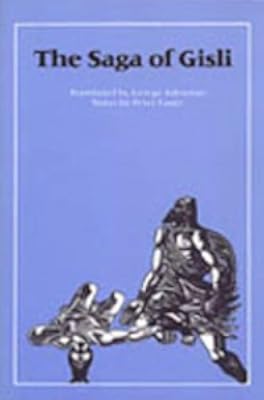
I had purchased a first edition of Gisli because of its woodcut illustrations by Rockwell Kent. The illustrations are over-the-top heroic style, and very attractive. I found the text stilted and archaic, however. I struggled through it, and at some point it occured to me that I had another edition of Gisli in my copy of The Sagas of Icelanders (if you don't have a copy, you can purchase a used copy for only $10. or so--what a deal for a nearly 800 page hardcover book!). When I finished the Ralph Allen edition, I turned to the newer translation in The Sagas, by Martin Regal, and found it much more readable. My quotes, however, are from the Allen translation.
Gisli is different from many of the saga heroes in that he is a true hero in a more modern sense of the word. Many of our other saga friends, such as Grettir and Egil, could more accurately be called antiheroes.
Gisli is exceedingly fair and kind in spirit; he is also forgiving. Gisli holds himself to a higher standard of behavior and generosity than he does other men. As his brother Thorkel puts it,
"Unlike is Gisli to other men in patience; much better he acts than we."
Gisli's relationship with his brother Thorkel is always problematic, despite Gisli's continual efforts to improve things. In a telling exchange, Gisli says to Thorkel:
"... if anything should chance to happen in my lifetime of such moment that it seems to thee equally as great as this appears to me, thou shouldst then promise me this, to act with the same restraint as thou now askest of me."
I don't mean to give you the impression that Gisli was a mild-mannered, peaceful man. On the contrary, he was a great warrior. But he was also an extremely fair man. There is humor, pathos, and poetry in this saga, and I encourage you to read it. As for me, it is a beguiling foretaste of the next two readings in my "trilogy." show less
Gisli came up next on my list as the logical beginning of what will be, for me, a trilogy. Part two, which I have just begun, is Overing and Osborn's Landscape of Desire, which features a chapter on the Saga of Grettir. Part three is a Master's Thesis, written by Lisa Brewer, "No one guessed who I was when I came here this morning: Humor as political subversion in the Medieval Icelandic outlaw sagas of Gisli and Grettir, 2008. Overing, of Landscape of Desire, is Brewer's thesis advisor. So you can see that the third part of my reading trilogy ties the first parts together, and that I would want show more to read Gisli's saga before embarking upon Lisa's thesis.
I had purchased a first edition of Gisli because of its woodcut illustrations by Rockwell Kent. The illustrations are over-the-top heroic style, and very attractive. I found the text stilted and archaic, however. I struggled through it, and at some point it occured to me that I had another edition of Gisli in my copy of The Sagas of Icelanders (if you don't have a copy, you can purchase a used copy for only $10. or so--what a deal for a nearly 800 page hardcover book!). When I finished the Ralph Allen edition, I turned to the newer translation in The Sagas, by Martin Regal, and found it much more readable. My quotes, however, are from the Allen translation.
Gisli is different from many of the saga heroes in that he is a true hero in a more modern sense of the word. Many of our other saga friends, such as Grettir and Egil, could more accurately be called antiheroes.
Gisli is exceedingly fair and kind in spirit; he is also forgiving. Gisli holds himself to a higher standard of behavior and generosity than he does other men. As his brother Thorkel puts it,
"Unlike is Gisli to other men in patience; much better he acts than we."
Gisli's relationship with his brother Thorkel is always problematic, despite Gisli's continual efforts to improve things. In a telling exchange, Gisli says to Thorkel:
"... if anything should chance to happen in my lifetime of such moment that it seems to thee equally as great as this appears to me, thou shouldst then promise me this, to act with the same restraint as thou now askest of me."
I don't mean to give you the impression that Gisli was a mild-mannered, peaceful man. On the contrary, he was a great warrior. But he was also an extremely fair man. There is humor, pathos, and poetry in this saga, and I encourage you to read it. As for me, it is a beguiling foretaste of the next two readings in my "trilogy." show less
What a strange little story. Granted, it was the custom of the time to be written in that way and I am not accustomed to it... Still, I am not sure I would read it again and think I would have done better being taught it and its significance. There were parts here and there that really glimmered, but I was often confused as to who was who...
Gisle Surssons saga är en av de tidigaste och kortaste islänningasagorna, men knappast sämre för det: temat är det staidiga av oundvikliga fejder och dråp, med insprängd vers och manlig kärvhet. Handlingen är att Gisle enligt tidens sed måste hämnas dråpet på sin fosterbror, ett värv som inte blir lättare av att dråparen troligen är en nära frände som drivits därtill av någon kvinnoaffär. Han döms fredlös, och hans plåga från upprepade mardrömmar om en kvinna som baddar honom med blod lindras endast något av en tidigare dröm om en annan kvinna som visat honom på sju brinnande eldar och i biblisk stil meddelat att de visar hur många år han kvar att leva.
Hans tid som fredlös är som hämtad ur Robin Hood show more eller Gustav Vasas öden och äventyr, bara mer våldsam – Gisle vet att det handlar om att döda eller dödas och att slavars liv kan kastas bort –; det är hela tiden med knapp nöd som han undkommer, samtidigt som hustrun Aud visar sig stå trofast vid sin mans sida och även förnedrar de som söker efter honom. Eftersom isländska sagor slutar när deras hjältar gör det, så kommer det dock till slut till en uppgörelse i stor och god stil.
Språket är vad man kan förvänta sig, korthugget och objektivt, stilistiskt högt drivet. Sättet nya personer presenteras är sedvanligt osentimentalt: »Torkel hette en man«, och även om sagan har den sedvanliga fixeringen vid att presentera släktskap och presentationssättet gör att man inte kan veta om den presenterade personen kommer att visa sig viktig eller bara är en bifigur så kommer man snart över detta. Översättaren Mats Malm verkar ha gjort ett gott jobb; stilen är passande klar utan onödiga arkaismer men ändå med en känsla av ålder, och det hedrar honom att han tagit med de många kvädena oöversatta bredvid sina översättningar, som mer är inriktade på att meningen skall framgå än att drottkvätts egenheter skall framgå.
På det hela taget är detta nog en mycket god startpunkt för den som är nyfiken på de isländska sagorna men kanske vill prova på en kortare innan den ger sig i kast med de om Egil Skallagrimsson eller Njal. show less
Hans tid som fredlös är som hämtad ur Robin Hood show more eller Gustav Vasas öden och äventyr, bara mer våldsam – Gisle vet att det handlar om att döda eller dödas och att slavars liv kan kastas bort –; det är hela tiden med knapp nöd som han undkommer, samtidigt som hustrun Aud visar sig stå trofast vid sin mans sida och även förnedrar de som söker efter honom. Eftersom isländska sagor slutar när deras hjältar gör det, så kommer det dock till slut till en uppgörelse i stor och god stil.
Språket är vad man kan förvänta sig, korthugget och objektivt, stilistiskt högt drivet. Sättet nya personer presenteras är sedvanligt osentimentalt: »Torkel hette en man«, och även om sagan har den sedvanliga fixeringen vid att presentera släktskap och presentationssättet gör att man inte kan veta om den presenterade personen kommer att visa sig viktig eller bara är en bifigur så kommer man snart över detta. Översättaren Mats Malm verkar ha gjort ett gott jobb; stilen är passande klar utan onödiga arkaismer men ändå med en känsla av ålder, och det hedrar honom att han tagit med de många kvädena oöversatta bredvid sina översättningar, som mer är inriktade på att meningen skall framgå än att drottkvätts egenheter skall framgå.
På det hela taget är detta nog en mycket god startpunkt för den som är nyfiken på de isländska sagorna men kanske vill prova på en kortare innan den ger sig i kast med de om Egil Skallagrimsson eller Njal. show less
Aug 16, 2009Swedish
Présentation de l'éditeur : Gili est un Viking hors du commun ; habité de généreux idéaux, fils respectueux, frère fidèle et mari aimant, il se trouve bien malgré lui dans une situation compliquée. Victime d'un destin impitoyable, il doit choisir entre venger son frère ou perdre son honneur. Vengeance, jalousie, trahison, tous ces ingrédients sont rassemblés pour nous offrir une histoire de vaillance, d'amour et de mort dans le monde rude des fiers guerriers vikings.
Sep 4, 2011French
Présentation de l'éditeur : Gili est un Viking hors du commun ; habité de généreux idéaux, fils respectueux, frère fidèle et mari aimant, il se trouve bien malgré lui dans une situation compliquée. Victime d'un destin impitoyable, il doit choisir entre venger son frère ou perdre son honneur. Vengeance, jalousie, trahison, tous ces ingrédients sont rassemblés pour nous offrir une histoire de vaillance, d'amour et de mort dans le monde rude des fiers guerriers vikings.
Jun 7, 2011French
Ratings
Members
- Recently Added By
Lists

Favourite Medieval Books
49 works; 17 members

100 Books to Read in a Lifetime (That Are Older Than 200 Years)
415 works; 176 members
Author Information
51 Works 14,489 Members
Some Editions
Series
Belongs to Publisher Series
Work Relationships
Common Knowledge
- Canonical title
- The Saga of Gísli Súrsson
- Original title
- Gísla saga Súrssonar
- Alternate titles
- Gisli's Saga; The Saga of Gisli; Gisli Sursson's saga
- Original publication date
- c. 1210
- People/Characters*
- Gisle Sursson; Torkel Sursson; Aud Vesteinsdotter; Eyjolf
- Important places*
- Dyrafjord, Island; Breidafjord, Island
- Blurbers
- Varma, Devendra P.
- Disambiguation notice*
- Joonas Ahola on suomentanut ja toimittanut teoksen.
*Some information comes from Common Knowledge in other languages. Click "Edit" for more information.
Classifications
- Genre
- Fiction and Literature
- DDC/MDS
- 839.6 — Literature & rhetoric German & related literatures Other Germanic literatures Old Norse, Old Icelandic, Icelandic, Faroese literatures
- LCC
- PT7269 .G4 .E55 — Language and Literature German, Dutch and Scandinavian literatures Old Norse literature: Old Icelandic and Old Norwegian Individual sagas and historical works
- BISAC
Statistics
- Members
- 268
- Popularity
- 120,972
- Reviews
- 5
- Rating
- (4.00)
- Languages
- 14 — Danish, Dutch, English, Finnish, French, German, Icelandic, Italian, Norwegian (Nynorsk), Norwegian (Bokmål), Old Norse, Norwegian, Spanish, Swedish
- Media
- Paper
- ISBNs
- 18
- ASINs
- 2