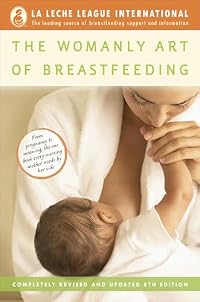
The Womanly Art of Breastfeeding
by La Leche League International
On This Page
Description
A guide for expectant and new mothers on breastfeeding thier baby.Tags
Recommendations




Member Reviews
The most destructive and manipulative book I was given while pregnant. By far.
I planned to fully breastfeed, and read the book with that goal in mind. I couldn't believe how unpleasant and judgemental the tone could get in this book. And I was appalled at how many false and thoroughly disproved statements were made about formula. I came away completely disgusted with how the book's authors regard women who formula-feed.
I read this book before I had my child, specifically to prepare for my plan of exclusive breastfeeding. I came away nauseated at how cruel and dismissive the book was, toward anyone who didn't toe the EBF line. Under a veneer of pseudo-soothing language, the implications were clear.
As someone who was already planning to show more breastfeed, the book should have been preaching to the choir. But it just made me angry with its nonstop smugness.
It made me wonder, why did the author write this book? To explain and promote breastfeeding, or to be covertly hateful toward people who don't? Because the book would have been much better without that second part.
In the end, this not a book for people who want rational breastfeeding/infant feeding advice. It's a support guide for people who have a great deal of identity invested in breastfeeding. I should have been clued in by the title referring to breastfeeding as an "art". show less
I planned to fully breastfeed, and read the book with that goal in mind. I couldn't believe how unpleasant and judgemental the tone could get in this book. And I was appalled at how many false and thoroughly disproved statements were made about formula. I came away completely disgusted with how the book's authors regard women who formula-feed.
I read this book before I had my child, specifically to prepare for my plan of exclusive breastfeeding. I came away nauseated at how cruel and dismissive the book was, toward anyone who didn't toe the EBF line. Under a veneer of pseudo-soothing language, the implications were clear.
As someone who was already planning to show more breastfeed, the book should have been preaching to the choir. But it just made me angry with its nonstop smugness.
It made me wonder, why did the author write this book? To explain and promote breastfeeding, or to be covertly hateful toward people who don't? Because the book would have been much better without that second part.
In the end, this not a book for people who want rational breastfeeding/infant feeding advice. It's a support guide for people who have a great deal of identity invested in breastfeeding. I should have been clued in by the title referring to breastfeeding as an "art". show less
I was given this book when pregnant, and have serious doubts about it. I am still breastfeeding, with a baby now 15 weeks, but in spite of the book, rather than because of it.
- First of all, the length is hugely off-putting if you want to breastfeed. It looks deeply intimidating.
- Poorly indexed. You don't have to read the whole thing (I certainly didn't), but it's a nightmare to find the information you want as the index is so poor. For instance, I wanted to find out what to do about blocked ducts, but could I find either "ducts" or "blocked" in the index? No. Found it by accident in the "mastitis" section. Not helpful as it assumes prior knowledge. I was better off Googling for info on Mumsnet.
- Judgmental - there is an awful lot here show more about how bad formula is (my baby would have been seriously ill without formula as my milk was so delayed coming in - we had to be readmitted to hospital so she could be tube fed). There is no nuance, or attempt to explain pros and cons, whereas I found breastfeeding had a lot of cons (yes, I am still doing it). Making out that formula is like poison isn't good for mothers or babies.
- Unrealistic - I'm not sure who the mothers are who have the time to lounge around naked with their babies for days at a time, but I certainly haven't come across them. The unrealistic expectations set out in this book set women up to fail, with all the damage that then does to early motherhood.
- Cutesy patronising style - this really grated. I couldn't have read it straight through even if I'd wanted to, as the style is SO annoying. There are silly little anecdotes (I'd rather have some hard evidence). Poo is always called "poop".
- Agenda - the book heavily promotes attachment parenting, whereas I just wanted advice on breastfeeding, not a whole parenting style.
I'm sure there are better books out there about breastfeeding. The best advice I got was to do my best, top up with formula, and don't worry about it. show less
- First of all, the length is hugely off-putting if you want to breastfeed. It looks deeply intimidating.
- Poorly indexed. You don't have to read the whole thing (I certainly didn't), but it's a nightmare to find the information you want as the index is so poor. For instance, I wanted to find out what to do about blocked ducts, but could I find either "ducts" or "blocked" in the index? No. Found it by accident in the "mastitis" section. Not helpful as it assumes prior knowledge. I was better off Googling for info on Mumsnet.
- Judgmental - there is an awful lot here show more about how bad formula is (my baby would have been seriously ill without formula as my milk was so delayed coming in - we had to be readmitted to hospital so she could be tube fed). There is no nuance, or attempt to explain pros and cons, whereas I found breastfeeding had a lot of cons (yes, I am still doing it). Making out that formula is like poison isn't good for mothers or babies.
- Unrealistic - I'm not sure who the mothers are who have the time to lounge around naked with their babies for days at a time, but I certainly haven't come across them. The unrealistic expectations set out in this book set women up to fail, with all the damage that then does to early motherhood.
- Cutesy patronising style - this really grated. I couldn't have read it straight through even if I'd wanted to, as the style is SO annoying. There are silly little anecdotes (I'd rather have some hard evidence). Poo is always called "poop".
- Agenda - the book heavily promotes attachment parenting, whereas I just wanted advice on breastfeeding, not a whole parenting style.
I'm sure there are better books out there about breastfeeding. The best advice I got was to do my best, top up with formula, and don't worry about it. show less
I read this after having nursed three children for a little less than two years each (probably a total of five years spent nursing) because I was curious if there was anything I didn't already know. I skimmed a lot but there were helpful things I learned. I didn't agree with everything- after reading I felt guilty for weaning my children from nursing at night (all over a year old) because of back pain I suffer from. But I believe there needs to be a strong voice for women nursing as long as they are able and this book provides that. It reminds me of my first labor experience- I had a midwife who kept telling me that it was ok to take pain medication if I needed to, which to my mind felt like she was telling me I couldn't be successful show more at labor. But it was my mom telling me, "You can do it, you don't want to give up, an unmediated birth is what you wanted, it's important to you," gave me confidence and comfort in spite of the pain. Women need cheerleaders like that in breast feeding. show less
This is a hugely valuable book if you go into it with the right expectations.
What are the right expectations? (1) La Leche League's purpose is to encourage breastfeeding for as long as baby and mom can and want to. (2) They believe the breastfeeding relationship is more important than the milk on its own, and so encourages moms to do whatever they can to keep that up during the duration of breastfeeding, including encouraging moms to not go back to work during that period. So this isn't a book to read if you're upset by either of those premises. You'll focus on those premises and the reasoning that follows and miss all the valuable content.
If you agree with those premises or if, like me, you agree with most of the underlying essence and show more are willing to overlook some of leaps to conclusions, then this book is jam packed with practical, detailed information.
Part one is the preliminary section. It discusses why moms should breastfeed, the importance of building a support community, birth and breastfeeding, and latching.
Part two describes how breastfeeding and the breastfeeding relationship changes as the baby grows. These sections can be a little bit repetitive on a straight read through, but the self-contained nature is valuable in a reference material.
Part three talks about specific issues: sleep, introducing solids, returning to work (a somewhat frustrating chapter, but not as much as it seems it might be because the authors recognize that for many women, it's not a choice), pumping, weaning, difficult breastfeeding situations, and a long chapter on "tech support" for specific breastfeeding issues.
Part four gives some history of La Leche League and provides a number of useful one page summaries of key points and various recording tools (e.g., a diaper log).
Overall, while this book was definitely not a neutral presentation of breastfeeding, it is still a primarily practically oriented, fact based resource -- one that is much more detailed than most other resources I have seen on breastfeeding. show less
What are the right expectations? (1) La Leche League's purpose is to encourage breastfeeding for as long as baby and mom can and want to. (2) They believe the breastfeeding relationship is more important than the milk on its own, and so encourages moms to do whatever they can to keep that up during the duration of breastfeeding, including encouraging moms to not go back to work during that period. So this isn't a book to read if you're upset by either of those premises. You'll focus on those premises and the reasoning that follows and miss all the valuable content.
If you agree with those premises or if, like me, you agree with most of the underlying essence and show more are willing to overlook some of leaps to conclusions, then this book is jam packed with practical, detailed information.
Part one is the preliminary section. It discusses why moms should breastfeed, the importance of building a support community, birth and breastfeeding, and latching.
Part two describes how breastfeeding and the breastfeeding relationship changes as the baby grows. These sections can be a little bit repetitive on a straight read through, but the self-contained nature is valuable in a reference material.
Part three talks about specific issues: sleep, introducing solids, returning to work (a somewhat frustrating chapter, but not as much as it seems it might be because the authors recognize that for many women, it's not a choice), pumping, weaning, difficult breastfeeding situations, and a long chapter on "tech support" for specific breastfeeding issues.
Part four gives some history of La Leche League and provides a number of useful one page summaries of key points and various recording tools (e.g., a diaper log).
Overall, while this book was definitely not a neutral presentation of breastfeeding, it is still a primarily practically oriented, fact based resource -- one that is much more detailed than most other resources I have seen on breastfeeding. show less
This book is way biased toward exclusive breastfeeding for as long as possible and unmedicated childbirth. If you going into it knowing that much and are prepared to take from it what works for you and leave the rest behind, I highly recommend it! A lot of good advice and information.
I wanted advice on breastfeeding, but apparently purchased a 400+ page advertisement for LLL meetings and products, with propaganda thrown in for good measure. "The Womanly Art of Breastfeeding" offers basic infant advice found in any good parenting/pregnancy book, and from my perspective offered nothing significant either in terms of infant care or breastfeeding advice. The tone of the guide itself was a large detractor for me - as was being told every other page that "x" was available for purchase from LLL, or that "Ms. Y" attended a LLL meeting and everything was just peachy (most often without sharing the advice that seemed to make everything better). Personally, I believe this book is a big waste of time and money - you can find show more the same information elsewhere without all the additional ads and scare tactics! show less
This new edition is a big improvement over older ones I've seen, but I found some elements of it off-putting and suspected that they weren't well backed up by research. I can't be bothered to look up the exact sentence, but somewhere in the early chapters there was something to the effect of: "Any amount of formula is damaging." Really? How? Is one bottle of formula measurably detrimental? I find that hard to stomach. The emphasis on natural birth is ok, but the vast majority of women have some interventions especially in their first births. Starting off by saying to most of us that we're off to a bad start with breastfeeding is really annoying, and pointless.
That said, there was a lot of good information, particularly in the later show more chapters of the books which deal with challenges and different situations. Because really, that's when you need help, not if you have the perfect storybook childbirth and smooth sailing from there on. show less
That said, there was a lot of good information, particularly in the later show more chapters of the books which deal with challenges and different situations. Because really, that's when you need help, not if you have the perfect storybook childbirth and smooth sailing from there on. show less
Members
- Recently Added By
Author Information

28 Works 2,136 Members
Some Editions
Common Knowledge
- Canonical title
- The Womanly Art of Breastfeeding
- Original publication date
- 1958; 1997 (Sixth Edition) (Sixth Edition)
- Dedication
- We dedicate this book with much love to the many caring parents who have helped make La Leche League what it is today, and to our patient, loving husbands and children, all of whom helped the seven of us learn the womanly art... (show all) of breastfeeding.
This book could not have been written and the basic principles underlying the work of La Leche League would not have withstood the test of time, had it not been for the unfailing counsel of Doctors Herbert Ratner and Gregory White, who have wholeheartedly supported us from the earliest days of La Leche League. For this, we are most grateful. [Sixth Edition] - First words
- Breastfeeding is the most natural source of nourishment and security for your baby. [Chapter 1, Sixth Edition]
- Original language
- English
Classifications
- Genres
- Nonfiction, Health & Wellness, General Nonfiction
- DDC/MDS
- 649.33 — Technology Home economics & family management Child rearing; home care of people with illnesses and disabilities by family and friends Breastfeeding
- LCC
- RJ216 .W72 — Medicine Pediatrics Pediatrics Nutrition and feeding of children and adolescents
- BISAC
Statistics
- Members
- 1,899
- Popularity
- 11,191
- Reviews
- 17
- Rating
- (4.19)
- Languages
- English, French, Italian, Spanish
- Media
- Paper, Audiobook, Ebook
- ISBNs
- 37
- ASINs
- 18