
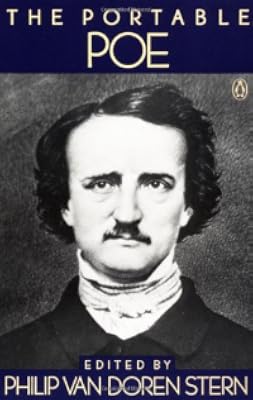
The Portable Edgar Allan Poe
by Edgar Allan Poe, Philip van Doren Stern (Editor)
On This Page
Description
The first new edition of this landmark anthology since 1945 presents a more complicated, perverse, and culturally engaged Poe. Along with the author's familiar masterworks in poetry and fiction, this new Portable Poe includes satirical tales that reflect his critique of American culture.Tags
Recommendations




















Member Reviews
An excellent collection of the eerie Edgar Allen Poe's works. Poe was a tortured, haunted genius who, as the introduction by Philip Van Doren Stern states, was "the most often read of all his contemporaries, but this is no accident, for this neurotic and unhappy artist is strangely modern, oddly in keeping with our unhappy and neurotic age. He knew what the death wish was long before Freud defined it. He was in love with violence half a century before Hemingway was born; he knew how to create suspense before the psycho-thriller was thought of; he used the theme of the double self before the term 'split personality' was invented. And, most important of all, he was endlessly concerned with inner conflict - the major theme of present-day show more literature."
There are many classics here that are truly great, including The Tell-Tale Heart, The Cask of Amontillado, The Pit and the Pendulum, The Premature Burial, and the poem The Raven.
I also loved several of his lesser known works: William Wilson, Berenice, Ligeia, and the Gold-Bug.
Quotes:
On terror, from William Wilson:
"...when the bright rays fell vividly upon the sleeper, and my eyes, at the same moment, upon his countenance. I looked; - and a numbness, an iciness of feeling instantly pervaded my frame. My breast heaved, my knees tottered, my whole spirit became possessed with an objectless yet intolerable horror."
from Berenice:
"...his tones grew thrillingly distinct as he whispered me of a violated grave - of a disfigured body enshrouded, yet still breathing, still palpitating, still alive!"
On insanity, from Eleonora:
"Men have called me mad; but the question is not yet settled, whether madness is or is not the loftiest intelligence - whether much that is glorious - whether all that is profound - does not spring from disease of thought - from moods of mind exalted at the expense of the general intellect. They who dream by day are cognizant of many things which escape those who dream only by night."
On reality, from A Dream Within a Dream:
"Is all that we see or seem
But a dream within a dream?"
On death, from The Pit and the Pendulum:
"And then there stole into my fancy, like a rich musical note, the thought of what sweet rest there must be in the grave. The thought came gently and stealthily, and it seemed long before it attained full appreciation; but just as my spirit came at length properly to feel and entertain it, the figures of the judges vanished, as if magically, from before me; the tall candles sank into nothingness; their flames went out utterly; the blackness of darkness supervened; all sensations appeared swallowed up in a mad rushing descent as of the soul into Hades. Then silence, and stillness, and night were the Universe."
Of fear, from The Premature Burial:
"It may be asserted, without hesitation, that no event is so terribly well adapted to inspire the supremeness of bodily and of mental distress, as is burial before death. The unendurable oppression of the lungs - the stifling fumes from the damp earth - the clinging of the death garments - the rigid embrace of the narrow house - the blackness of absolute Night - the silence like a sea that overwhelms - the unseen but palpable presence of the Conqueror Worm - these things, with thoughts of the air and grass above, with memory of dear friends who would fly to save us if but informed of our fate, and with consciousness that of this fate they can never be informed..."
On sorrow, from Berenice:
"...out of joy is sorrow born. Either the memory of past bliss is the anguish of to-day, or the agonies which are have their origin in the ecstasies which might have been."
On obsessive madness, from The Tell-Tale Heart:
"It was impossible to say how first the idea entered my brain, but once conceived, it haunted me day and night. Object there was none. He had never wronged me. He had never given me insult. For his gold I had no desire. I think it was his eye! yes, it was this! He had the eye of a vulture - a pale, blue eye, with a film over it. Whenever it fell upon me, my blood ran cold; and so by degrees - very gradually - I made up my mind to take the life of the old man, and thus rid myself of the eye forever."
On sin from The Black Cat; what an awful and terrifying passage this is:
"One morning, in cold blood, I slipped a noose about its neck and hung it to the limb of a tree; - hung it with the tears streaming from my eyes, and with the bitterest remorse at my heart; - hung it because I knew that it had loved me, and because I felt it had given me no reason of offence; - hung it because I knew that in so doing I was committing a sin - a deadly sin that would so jeopardize my immortal soul as to place it - if such a thing were possible - even beyond the reach of the most infinite mercy of the Most Merciful and Most Terrible God."
Lastly from the Gold-Bug:
"Why taint noffin but a skull - somebody bin lef him head up de tree, and de crows done gobble ebery bit ob de meat off." show less
There are many classics here that are truly great, including The Tell-Tale Heart, The Cask of Amontillado, The Pit and the Pendulum, The Premature Burial, and the poem The Raven.
I also loved several of his lesser known works: William Wilson, Berenice, Ligeia, and the Gold-Bug.
Quotes:
On terror, from William Wilson:
"...when the bright rays fell vividly upon the sleeper, and my eyes, at the same moment, upon his countenance. I looked; - and a numbness, an iciness of feeling instantly pervaded my frame. My breast heaved, my knees tottered, my whole spirit became possessed with an objectless yet intolerable horror."
from Berenice:
"...his tones grew thrillingly distinct as he whispered me of a violated grave - of a disfigured body enshrouded, yet still breathing, still palpitating, still alive!"
On insanity, from Eleonora:
"Men have called me mad; but the question is not yet settled, whether madness is or is not the loftiest intelligence - whether much that is glorious - whether all that is profound - does not spring from disease of thought - from moods of mind exalted at the expense of the general intellect. They who dream by day are cognizant of many things which escape those who dream only by night."
On reality, from A Dream Within a Dream:
"Is all that we see or seem
But a dream within a dream?"
On death, from The Pit and the Pendulum:
"And then there stole into my fancy, like a rich musical note, the thought of what sweet rest there must be in the grave. The thought came gently and stealthily, and it seemed long before it attained full appreciation; but just as my spirit came at length properly to feel and entertain it, the figures of the judges vanished, as if magically, from before me; the tall candles sank into nothingness; their flames went out utterly; the blackness of darkness supervened; all sensations appeared swallowed up in a mad rushing descent as of the soul into Hades. Then silence, and stillness, and night were the Universe."
Of fear, from The Premature Burial:
"It may be asserted, without hesitation, that no event is so terribly well adapted to inspire the supremeness of bodily and of mental distress, as is burial before death. The unendurable oppression of the lungs - the stifling fumes from the damp earth - the clinging of the death garments - the rigid embrace of the narrow house - the blackness of absolute Night - the silence like a sea that overwhelms - the unseen but palpable presence of the Conqueror Worm - these things, with thoughts of the air and grass above, with memory of dear friends who would fly to save us if but informed of our fate, and with consciousness that of this fate they can never be informed..."
On sorrow, from Berenice:
"...out of joy is sorrow born. Either the memory of past bliss is the anguish of to-day, or the agonies which are have their origin in the ecstasies which might have been."
On obsessive madness, from The Tell-Tale Heart:
"It was impossible to say how first the idea entered my brain, but once conceived, it haunted me day and night. Object there was none. He had never wronged me. He had never given me insult. For his gold I had no desire. I think it was his eye! yes, it was this! He had the eye of a vulture - a pale, blue eye, with a film over it. Whenever it fell upon me, my blood ran cold; and so by degrees - very gradually - I made up my mind to take the life of the old man, and thus rid myself of the eye forever."
On sin from The Black Cat; what an awful and terrifying passage this is:
"One morning, in cold blood, I slipped a noose about its neck and hung it to the limb of a tree; - hung it with the tears streaming from my eyes, and with the bitterest remorse at my heart; - hung it because I knew that it had loved me, and because I felt it had given me no reason of offence; - hung it because I knew that in so doing I was committing a sin - a deadly sin that would so jeopardize my immortal soul as to place it - if such a thing were possible - even beyond the reach of the most infinite mercy of the Most Merciful and Most Terrible God."
Lastly from the Gold-Bug:
"Why taint noffin but a skull - somebody bin lef him head up de tree, and de crows done gobble ebery bit ob de meat off." show less
Edgar Allan Poe was a depressive indolent drunk failure who married his 13-year-old cousin and spent his life composing purposefully obnoxious, repellant stories because "To be appreciated, you must be read," and he felt that the controversy would get him read. Which was astute of him.
His Dupin stories are interesting if you're a Holmes fan, since Conan Doyle's debt to them is obvious, but they're nowhere near as good as the Holmes stories. Fucking orangutans, man. His horror is hit or miss. Pit and the Pendulum is truly disturbing; Fall of the House of Usher is a little boring.
And he was just obsessed with being buried alive. Man, like all his stories are about that. Loss of Breath is my favorite, I think.
His Dupin stories are interesting if you're a Holmes fan, since Conan Doyle's debt to them is obvious, but they're nowhere near as good as the Holmes stories. Fucking orangutans, man. His horror is hit or miss. Pit and the Pendulum is truly disturbing; Fall of the House of Usher is a little boring.
And he was just obsessed with being buried alive. Man, like all his stories are about that. Loss of Breath is my favorite, I think.
Now, I'd like to start by saying I am not a very smart person and that might be why I struggled so much with this book. It was... quite a chore for me to read this.
I can't remember where I read it, but I really enjoyed the Tell-Tale Heart so I thought I would enjoy the rest of his stories, as well, but I was so very wrong. I'm not saying they are bad, not at all, but they just aren't for me. To me, these tales were very... dull and drawn out. Most of it went over my head and I found myself zoning out and having to reread several paragraphs multiple times before the words would take.
The strangest part is that this book felt almost supernatural. No matter how many pages I read, it never seemed to get shorter and it felt like it took ages show more to finish it. But maybe that's just because it was such a struggle to force myself to finish it, I don't know. It just felt like no matter how many pages I turned, it took longer than it should to reach the end. show less
I can't remember where I read it, but I really enjoyed the Tell-Tale Heart so I thought I would enjoy the rest of his stories, as well, but I was so very wrong. I'm not saying they are bad, not at all, but they just aren't for me. To me, these tales were very... dull and drawn out. Most of it went over my head and I found myself zoning out and having to reread several paragraphs multiple times before the words would take.
The strangest part is that this book felt almost supernatural. No matter how many pages I read, it never seemed to get shorter and it felt like it took ages show more to finish it. But maybe that's just because it was such a struggle to force myself to finish it, I don't know. It just felt like no matter how many pages I turned, it took longer than it should to reach the end. show less
Unfortunately, we did not spend a lot of time reading Poe in class. We only read a few of his short stories and, honestly, not enough to truly get a taste of his writings. What we did read I absolutely loved! I am renting this text from the bookstore and just *might* spend the extra few dollars to purchase it. I have really enjoyed his writings! Him, on the other hand, I have no care for. He creeps me out!
Adrianne
Adrianne
To be honest, I only read about a third of this - all that was required for class. Spooky! But a little repetitive to read all in one sitting.
To be honest, I only read about a third of this - all that was required for class. Spooky! But a little repetitive to read all in one sitting.
To be honest, I only read about a third of this - all that was required for class. Spooky! But a little repetitive to read all in one sitting.
Members
- Recently Added By
Lists

Sonlight Books
1,487 works; 25 members
Author Information

3,802+ Works 107,340 Members
Edgar Allan Poe was born in Boston, Massachusetts on January 19, 1809. In 1827, he enlisted in the United States Army and his first collection of poems, Tamerlane and Other Poems, was published. In 1835, he became the editor of the Southern Literary Messenger. Over the next ten years, Poe would edit a number of literary journals including the show more Burton's Gentleman's Magazine and Graham's Magazine in Philadelphia and the Broadway Journal in New York City. It was during these years that he established himself as a poet, a short story writer, and an editor. His works include The Fall of the House of Usher, The Tell-Tale Heart, The Murders in the Rue Morgue, The Mystery of Marie Roget, A Descent into the Maelstrom, The Masque of the Red Death, and The Raven. He struggle with depression and alcoholism his entire life and died on October 7, 1849 at the age of 40. (Bowker Author Biography) show less
Series
Belongs to Publisher Series
Work Relationships
Contains
Common Knowledge
- Canonical title
- The Portable Edgar Allan Poe
- Original title
- The Portable Poe
- Original publication date
- 1945
- People/Characters
- Allamistakeo
- Original language
- English
Classifications
- Genres
- Fiction and Literature, Poetry, Horror
- DDC/MDS
- 818.309 — Literature & rhetoric American literature in English American miscellaneous writings in English Middle 19th Century 1830-61
- LCC
- PS2602 .S68 — Language and Literature American literature American literature Individual authors 19th century
- BISAC
Statistics
- Members
- 1,003
- Popularity
- 25,954
- Reviews
- 10
- Rating
- (4.20)
- Languages
- English, Italian, Korean, Turkish
- Media
- Paper, Audiobook, Ebook
- ISBNs
- 16
- ASINs
- 19
