On This Page
Description
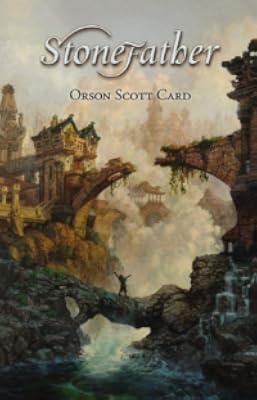
When Runnel, a friendless peasant from a village so humble that money is a new concept, leaves his mountain valley, he is completely unaware of his magical talents. Seeking his fortune, he stumbles into a centuries-old feud when he travels to Mitherhome, the city of the water mages. He accepts a servant's position in the household of the sole stone mage permitted within the city walls, and there his untapped magical talents and his fascination with his master's abilities are a predictably show more dangerous combination. Soon, without meaning to, he complicates and endangers the lives of everyone he has come to know and care about, for when it comes to magic, there are rules and laws, and the untrained mage-to-be must be careful not to tap into deep forces and ancient enmities. Otherwise, other people might end up paying the price for his mistakes.. show less
Tags
Recommendations











Member Reviews
Runnel grows up in a secluded mountain town on the edge of the Mitherhome serving the water god. His family treats him poorly, so he decides to make his way to the city. He is hired as a servant to the only rock mage allowed to practice in the town and discovers his affinity for stone. In a rather abrupt climax, Runnel challenges the water mages who run the town.
I enjoyed Runnel's journey to the city as well as his growth as he learned about city customs such as money and the hierarchy of the household. When it came to his discovery of his power and the eventual standoff, I felt that the transition from naive and ignorant servant to (don't want to write spoilers) was extremely quick and unbelievable. At least a little training montage show more might have been beneficial. show less
I enjoyed Runnel's journey to the city as well as his growth as he learned about city customs such as money and the hierarchy of the household. When it came to his discovery of his power and the eventual standoff, I felt that the transition from naive and ignorant servant to (don't want to write spoilers) was extremely quick and unbelievable. At least a little training montage show more might have been beneficial. show less
Much like, "A War of Gifts" is a stand alone story within the Ender-verse, one that can be read quickly and without further attachment to the other aspects of the story, Stonefather is a novella-length story in the Mithermages-verse. Though, given that I love Ender and Danny, wholly and completely, I can't be sure that I would enjoy these snapshots into their worlds without my draw to the main characters.
I enjoyed reading the story of Runnel, though, at times it felt too long and at others too short. Yes, he was not embraced by this community, and he left, but the explanation was shallow. I can see intent there - OSC wanting the readers to connect with the idea of an "outsider" by not allowing us to get to know him? OSC wanting the show more readers to accept life as Runnel had to accept it without too much thought put into it, as thought would lead to pausing and pausing could lead to death? OSC wanting to only hint at the imagery of a blossoming Stonefather who had a stoney face?
I hope that I get to know more of Runnel in the upcoming MIthermages series. I want to know about Runnel and Lark's explorations of stone and bird magery. I want to know further history and legends that Runnel asks Brickel to teach him.
But at the same time, I'll be honest, I'll be able to live without it, too. I have to give OSC credit for leaving me wanting more, but for also finishing the story completely in a mere 112 pages in case I don't get it. show less
I enjoyed reading the story of Runnel, though, at times it felt too long and at others too short. Yes, he was not embraced by this community, and he left, but the explanation was shallow. I can see intent there - OSC wanting the readers to connect with the idea of an "outsider" by not allowing us to get to know him? OSC wanting the show more readers to accept life as Runnel had to accept it without too much thought put into it, as thought would lead to pausing and pausing could lead to death? OSC wanting to only hint at the imagery of a blossoming Stonefather who had a stoney face?
I hope that I get to know more of Runnel in the upcoming MIthermages series. I want to know about Runnel and Lark's explorations of stone and bird magery. I want to know further history and legends that Runnel asks Brickel to teach him.
But at the same time, I'll be honest, I'll be able to live without it, too. I have to give OSC credit for leaving me wanting more, but for also finishing the story completely in a mere 112 pages in case I don't get it. show less
A very short fantasy that does justice to the "rags to powers" formula. Don't expect anything innovative here, just a well-told story that can be read in one or two sittings.
By the famous Orson Scott Card, Stonefather is claimed to be the prelude to a brand new fantasy series, called the Mithermages.
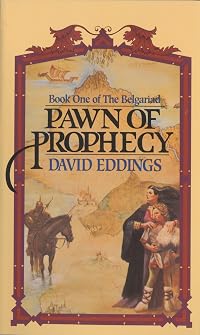
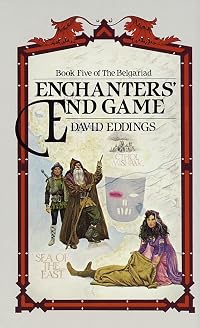
All in all, the novella has a charming quality due to its simplicity. Characters are basically what they are with no deep complexity, and the story is as basic and simple as they have come before (Star Wars, Sword in the Stone, Wheel of Time, The Belgariad).
However by the end, it may seem the story is a bit too simplistic as the ending comes straight out of the o'l school of deus ex machina of writing. What little character development and build up there was is tossed out of the window. Though, considering the time invested in this quick read, it's not really something to be frustrated about.
Overall, I would show more say this is worth your time, since it's a very quick read (finished in two days). Plus, it makes for a nice introduction to a world that will be part of a greater story. show less
All in all, the novella has a charming quality due to its simplicity. Characters are basically what they are with no deep complexity, and the story is as basic and simple as they have come before (Star Wars, Sword in the Stone, Wheel of Time, The Belgariad).
However by the end, it may seem the story is a bit too simplistic as the ending comes straight out of the o'l school of deus ex machina of writing. What little character development and build up there was is tossed out of the window. Though, considering the time invested in this quick read, it's not really something to be frustrated about.
Overall, I would show more say this is worth your time, since it's a very quick read (finished in two days). Plus, it makes for a nice introduction to a world that will be part of a greater story. show less
reposted from raygunreviews.wordpress.com
It is no big secret that I'm a fan of Orson Scott Card. Nor is it a big secret that many others are also fans. OSC is one of the bestselling authors in both the science fiction and fantasy genres. He has built that reputation over more than three decades with both stand-alone novels and series, but more because of the latter.
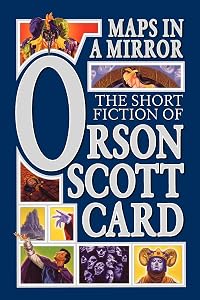
In science fiction, he's best known for his Ender's Game and Ender's Shadow series. In fantasy, he's written one series -- The Tales of Alvin Maker -- plus a number of stand alones, but he is now expanding out into another series. I would have said it is a new series, but one of his early short stories, "Sandmagic" from 1979 (and later included in Maps in a Mirror), is set show more in the Mithermages world. However, since three decades has passed since the publication of "Sandmagic", one could as well say that the series is starting anew with Stonefather.
Stonefather is a limited-edition novella chapbook by Subterranean Press. It serves as a brief introduction to the Mithermages world before Card dives in with The Lost Gate, due out today from Tor.
The story is a fairly standard one that follows a young boy who feels out of place in the world he lives in and so he heads out to find himself. In this case, the young boy is Runnel who has grown up in the village of Farzibeck, which is dedicated to the water god Yeggut (hence his water name). But he's a younger son of a large family, and so he is not of much value to his parents, other than as a hand on the work that must be done to maintain a subsistence existence. So one day, Runnel just starts walking and ends up in Mitherhome, the city of the water mages.
Of course, once there, Runnel begins to find himself, with the story culminating in him discovering who he is and his place in the world.
As you can see, the plot is fairly formulaic and not to interesting in and of itself. Card, however, is a master writer and so even a story with an unexceptional plot is interesting in his hands. At 112 pages, this is indeed a novella and manages to keep the reader's attention for its short length, but I'm sure if it was longer, it would have become flat and boring quickly. Still, though, Card has created an interesting fantasy world that makes me want to follow up on the series and read The Lost Gate soon, now that it has come out. show less
It is no big secret that I'm a fan of Orson Scott Card. Nor is it a big secret that many others are also fans. OSC is one of the bestselling authors in both the science fiction and fantasy genres. He has built that reputation over more than three decades with both stand-alone novels and series, but more because of the latter.
In science fiction, he's best known for his Ender's Game and Ender's Shadow series. In fantasy, he's written one series -- The Tales of Alvin Maker -- plus a number of stand alones, but he is now expanding out into another series. I would have said it is a new series, but one of his early short stories, "Sandmagic" from 1979 (and later included in Maps in a Mirror), is set show more in the Mithermages world. However, since three decades has passed since the publication of "Sandmagic", one could as well say that the series is starting anew with Stonefather.
Stonefather is a limited-edition novella chapbook by Subterranean Press. It serves as a brief introduction to the Mithermages world before Card dives in with The Lost Gate, due out today from Tor.
The story is a fairly standard one that follows a young boy who feels out of place in the world he lives in and so he heads out to find himself. In this case, the young boy is Runnel who has grown up in the village of Farzibeck, which is dedicated to the water god Yeggut (hence his water name). But he's a younger son of a large family, and so he is not of much value to his parents, other than as a hand on the work that must be done to maintain a subsistence existence. So one day, Runnel just starts walking and ends up in Mitherhome, the city of the water mages.
Of course, once there, Runnel begins to find himself, with the story culminating in him discovering who he is and his place in the world.
As you can see, the plot is fairly formulaic and not to interesting in and of itself. Card, however, is a master writer and so even a story with an unexceptional plot is interesting in his hands. At 112 pages, this is indeed a novella and manages to keep the reader's attention for its short length, but I'm sure if it was longer, it would have become flat and boring quickly. Still, though, Card has created an interesting fantasy world that makes me want to follow up on the series and read The Lost Gate soon, now that it has come out. show less
It´s just a tale about a despised child that becomes the most powerful mage. The natural kind of magic of this world reminds me of the magic of Le Guin's Annals of the Westerrn shore (gifts, voices, powers), but such brief a tale does not allow the author to develop characters. The main character transformation is to sudden to be convincing. The romantic ending is unauthentic and completely unbelievable. But I am a fan of Orson and so I have enjoyed the book and look forward for the saga to wich it preludes.
I dont think Orson Scott Card is capable of writing something not worth reading. heading out to the library to get Gatefather... (this was an appetizer!)
Great story!
Great story!
Members
- Recently Added By
Lists

Favorite Short Fiction
228 works; 99 members
Author Information

575+ Works 214,674 Members
Orson Scott Byron Walley Card, was born in 1951 and studied theater at Brigham Young University. He received his B.A. in 1975 and his M.A. in English in 1981. He wrote plays during that time, including Stone Tables (1973) and the musical, Father, Mother, Mother and Mom (1974). A Mormon, Scott served a two-year mission in Brazil before starting show more work as a journalist in Utah. He also designed games at Lucas Film Games, 1989-92. He is best known for his science fiction novels, including the popular Ender series. Well known titles include A Planet Called Treason (1979), Treasure Box (1996), and Heartfire (1998). He has also written the guide called How to Write Science Fiction and Fantasy (1990). His novel Ender's Game and its sequel Speaker for the Dead, both won Hugo and Nebula awards, making Card the only author to win both prizes in consecutive years. His titles Shadows in Flight, Ruins and Ender's Game made The New York Times Best Seller List. He is also the author of The First Formic War Series, which includes the titles Earth Unaware, Earth Afire, and Earth Awakens. (Bowker Author Biography) show less
Some Editions
Series

Belongs to Publisher Series
Work Relationships
Is contained in
Common Knowledge
- Canonical title
- Stonefather
- Original publication date
- 2008-10-31
- First words
- When Runnel was born, he was given a water name even though there had never been a wetwizard in the family.
Classifications
Statistics
- Members
- 181
- Popularity
- 181,609
- Reviews
- 15
- Rating
- (3.65)
- Languages
- English, French
- Media
- Paper, Audiobook, Ebook
- ISBNs
- 9
- ASINs
- 2