England, Their England
by A. G. Macdonell
On This Page
Description
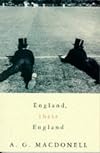
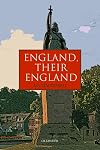
England, Their England is an affectionately satirical inter-war comic novel first published in 1933. It hit the right spot at the time and became a bestseller, and has endured as a classic of humor, transcending the passage of time. It is particularly famed for its portrayal of a village cricket match. The plot -- if there can be said to be a plot -- is set in 1920s England, the book is written as if a travel memoir by a young Scotsman who had been invalided away from the Western Front, show more "Donald Cameron", whose father's will forces him to reside in England. There he writes for a series of London newspapers, before being commissioned by a Welshman to write a book about the English from the view of a foreigner. Taking to the country and provincial cities, Donald spends his time doing research for a book on the English by consorting with journalists and minor poets,attending a country house weekend, serving as private secretary to a Member of Parliament, attending the League of Nations, and playing village cricket. The village cricket match is the most celebrated episode in the novel, and a reason cited for its enduring appeal. An important character is Mr Hodge; a caricature of Sir John Squire (poet and editor of the London Mercury) while the cricket team described in the book's most famous chapter is a representation of Sir John's Cricket Club -- the Invalids -- which survives today. The book ends in the ancient city of Winchester, where MacDonnell had gone to school. show lessTags
Recommendations



















Member Reviews
This book was a huge success in the 1930's but in recent years has rather fallen into neglect - a great pity, as it deserves to stand with "Three Men in a Boat" as a humorous classic. In fact it has more than just humour in common with Jerome K. Jerome's book, as it is essentially a series of set-pieces including a village cricket match (widely regarded as the book's high point), a game of golf, a country house weekend and a fox hunt. The tone doesn't vary as much as in Jerome's book (although there are occasional purple patches, they don't descend into sentimentality as much). The central character, Donald Cameron, is a Scot, and the essential point of the whole novel is that he is trying to write a book about the English, which leads show more him to participate in the various activities, but somehow he never seems to be able to form a coherent picture. The ending is a bit arbitrary, and structurally the book is weak (though no more so than, say, "The Pickwick Papers"), but if you can find a copy it is well worth your while. show less
I picked this up because it was carried by a character in Uprooted by Lynne Reid Banks. It is quite funny in parts. Some of it is more difficult for an American to understand (like the chapter on cricket). But the general idea comes across. There is not much of a plot. It is a fond look at the foibles of the English written by a Scot. A fun read.
I refuse to tag this as a novel. Evelyn Waugh made excellent novels out of this material. but Macdonnell isn't really trying. Very funny however.
I had never heard of this book before I started reading from the Guardian's list of 1000 novels. It was so funny! I started chuckling on the very first page.
I had never heard of this book before I started reading from the Guardian's list of 1000 novels. It was so funny! I started chuckling on the very first page.
this is looking to be a good hoot, a novel of high satire from times gone by but still relevant is this bland day and age.
the cricket match isn't the funniest bit- go more for biting satire on the UN etc.
Members
- Recently Added By
Lists

The Guardian's 1000 Novels Everyone Must Read
1,005 works; 548 members

Folio Society
831 works; 53 members

Classic British Humor
41 works; 8 members

In and About the 1920s
181 works; 31 members

cricket in fiction
14 works; 2 members

A Good Read (Radio 4)
287 works; 1 member

Books With Place Names in the Title
257 works; 11 members
Author Information

20+ Works 642 Members
Some Editions
Awards and Honors
Awards
Notable Lists
Series
Belongs to Publisher Series
Work Relationships
Contains
Is abridged in
Common Knowledge
- Original publication date
- 1933
- People/Characters
- Donald Cameron
- Important places
- London, England, UK
- Dedication
- To J. C. Squire
The English Poet - First words
- The events which are described in this book had their real origin in a conversation which took place between two artillery subalterns on the Western Front in the beginning of October 1917.
- Last words
- (Click to show. Warning: May contain spoilers.)Donald got up and yawned and stretched himself and went off to find some tea.
Classifications
Statistics
- Members
- 403
- Popularity
- 77,314
- Reviews
- 10
- Rating
- (3.41)
- Languages
- English, German, Spanish
- Media
- Paper, Audiobook, Ebook
- ISBNs
- 17
- ASINs
- 23