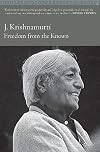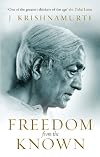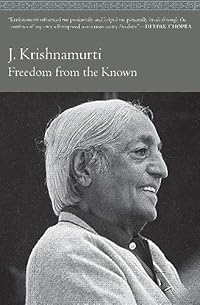
Freedom from the Known
by Jiddu Krishnamurti
On This Page
Description
Born in poverty in India, Jiddu Krishnamurti (1895-1986) became a leading spiritual and philosophical thinker whose ideas continue to influence us today. George Bernard Shaw declared that he was the most beautiful human being he had ever seen and Aldous Huxley was one of his close friends. Whether debating politics with Nehru, discussing theories with Rupert Sheldrake and Iris Murdoch, or challenging his students not to take his words at face value, Krishnamurti engaged fully with every show more aspect of life. He is regarded by many modern religious figures as a great teacher, an extraordinary individual with revolutionary insights; Joseph Campbell, Alan Watts, Eckhart Tolle and Deepak Chopra are all indebted to his writings.Freedom from the Known is one of Krishnamurti's most accessible works. Here, he reveals how we can free ourselves radically and immediately from the tyranny of the expected. By changing ourselves, we can alter the structure of society and our relationships. The vital need for change and the recognition of its very possibility form an essential part of this important book's message. show lessTags
Recommendations



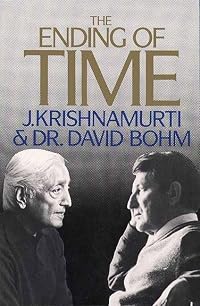
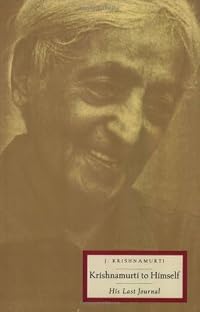






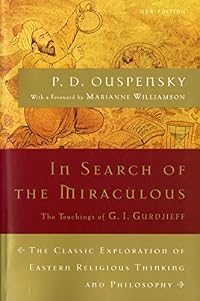
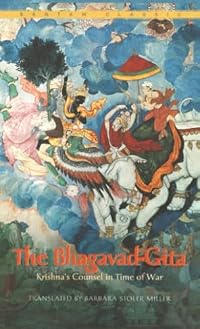
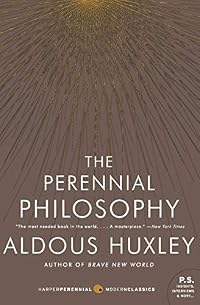
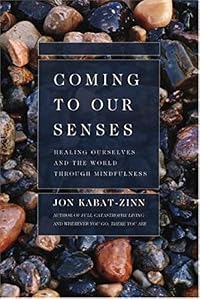
Member Recommendations

Member Reviews
A tricky little read. I think I was able to discern what he was getting at because I'd read a nice illustrated guide to his thought called Krishnamurti for Beginners. But this book rewarded the effort. It's like an advanced course for developing ego-less non-attachment.
I read this book because it was part of a project I was working on.
Occasionally I read a sentence or paragraph and a smile appeared on my face and I felt like the author really understood. Other times, I felt that he was trying too hard to convince. His whole premise is that we should discover for ourselves, not follow convention or authority, but yet he's constantly telling rather than discussing. Starting a paragraph with a series of questions doesn't stop the voice sounding like a lecture.
I am not stupid and I am not dull, yet Krishnamurti seems determined to convince me that I am and the reason is that I'm so caught up with my own thinking, my own analysis that I can't see anything for real. I don't actually have a problem with the show more fact that I'll always see the world through my conditioning, because I don't believe that there is any other way of my seeing the world. Here, I feel Krishnamurti is determined to make me believe that my conditioning is a problem, but identifying is as problematic suggests a solution. There is no solution for 'conditioning' because the past is just the past and cannot be 'solved'. Even sitting quietly and being entirely attentive doesn't remove my societal conditioning. I might have a momentarily calmed mind, but how I respond to the experience is dictated by my same past.
That said, buried in this book are some ideas that many people could benefit from by mulling over a little.
At the end of the book, he sums it up by saying anyone who claims to know love or to know silence doesn't. That of course includes himself. show less
Occasionally I read a sentence or paragraph and a smile appeared on my face and I felt like the author really understood. Other times, I felt that he was trying too hard to convince. His whole premise is that we should discover for ourselves, not follow convention or authority, but yet he's constantly telling rather than discussing. Starting a paragraph with a series of questions doesn't stop the voice sounding like a lecture.
I am not stupid and I am not dull, yet Krishnamurti seems determined to convince me that I am and the reason is that I'm so caught up with my own thinking, my own analysis that I can't see anything for real. I don't actually have a problem with the show more fact that I'll always see the world through my conditioning, because I don't believe that there is any other way of my seeing the world. Here, I feel Krishnamurti is determined to make me believe that my conditioning is a problem, but identifying is as problematic suggests a solution. There is no solution for 'conditioning' because the past is just the past and cannot be 'solved'. Even sitting quietly and being entirely attentive doesn't remove my societal conditioning. I might have a momentarily calmed mind, but how I respond to the experience is dictated by my same past.
That said, buried in this book are some ideas that many people could benefit from by mulling over a little.
At the end of the book, he sums it up by saying anyone who claims to know love or to know silence doesn't. That of course includes himself. show less
"The world accepts and follows the traditional approach. The primary cause of disorder in ourselves is the seeking of reality promised by another; we mechanically follow somebody who will assure us a comfortable spiritual life." To understand one’s self, Krishnamurti believed, is the beginning of wisdom. Understanding is not accepting a description of the view of the world mapped by another no matter how lofty the map maker. Krisnamurti encouraged making your own map. This book should create a revolution within you. It is the start of a fantastic journey.
In my fathers home library, I had seen Jiddu Krishnamurti's books. I never read any of it, but I have heard his Lectures. For those who don't know about Jiddu Krishnamurti, he was a renown modern-day philosopher, speaker and writer on philosophical and spiritual subjects. He specialized on the subjects like "Human nature" & "The Self". Some of his discourses are recorded and available as videos. After hearing some audio version of this book, I decided to download the book into my Nook. In various lists on the internet this book has been spoken highly of, and listed among the books which could change "the perspective of thinking".
Jiddu Krishnamurti's, " Freedom From The Known " is a thin philosophical non-fiction book, containing only show more 14 Chapters (just 128 pages). The book deals with numerous intellectual subjects. It speaks of the reasonable way to see the world. To recognize ourselves both inwardly and outwardly. The bondage by various elements like love, hatred, fear etc. To put the content of this book in one phrase, the book deals with the "realities of life". The books begins by questioning the human nature. The Man, Mind and the Existence. Then it moves on to more introspections. Subjects like consciousness, pleasure and fear, love, freedom, death, memories and experiences, passion and finally the required revolution. Before we start thinking and analysing on these subjects, separate chapters are provided for the subjects like "What is Thinking ? " and "Observer & the Observed", which will even question our way of thinking and enrich it. Book follows the same pattern of his discourses, i.e like addressing an audience.
I was really impressed by this deeply introspective philosophical book. This book gave me a fresh outlook on the world, and helped me replenish inadequacies in my thinking. After reading this book, I was able the see the world differently. This is one of those books which will change the way you see the world. Even though the book is written in simple English, since the book covers a lot of deep subjects, multiple reads might be required. Like all philosophical essays, it should be read by reserving adequate time for it. This book increases our vision,while the introspection is left to us. Unlike all 'religions' and some 'gurus' who serve ready-made dogma to everybody's questions and blinds people by demanding faith, Jiddu Krishnamurti through "The Freedom From The Known" invites us to think, analyse and realize together the question of our very existence . Highly Recommended. 5 stars.
Read Full Book ( Web Version ) -> FREEDOM FROM THE KNOWN
show less
Jiddu Krishnamurti's, " Freedom From The Known " is a thin philosophical non-fiction book, containing only show more 14 Chapters (just 128 pages). The book deals with numerous intellectual subjects. It speaks of the reasonable way to see the world. To recognize ourselves both inwardly and outwardly. The bondage by various elements like love, hatred, fear etc. To put the content of this book in one phrase, the book deals with the "realities of life". The books begins by questioning the human nature. The Man, Mind and the Existence. Then it moves on to more introspections. Subjects like consciousness, pleasure and fear, love, freedom, death, memories and experiences, passion and finally the required revolution. Before we start thinking and analysing on these subjects, separate chapters are provided for the subjects like "What is Thinking ? " and "Observer & the Observed", which will even question our way of thinking and enrich it. Book follows the same pattern of his discourses, i.e like addressing an audience.
I was really impressed by this deeply introspective philosophical book. This book gave me a fresh outlook on the world, and helped me replenish inadequacies in my thinking. After reading this book, I was able the see the world differently. This is one of those books which will change the way you see the world. Even though the book is written in simple English, since the book covers a lot of deep subjects, multiple reads might be required. Like all philosophical essays, it should be read by reserving adequate time for it. This book increases our vision,while the introspection is left to us. Unlike all 'religions' and some 'gurus' who serve ready-made dogma to everybody's questions and blinds people by demanding faith, Jiddu Krishnamurti through "The Freedom From The Known" invites us to think, analyse and realize together the question of our very existence . Highly Recommended. 5 stars.
Read Full Book ( Web Version ) -> FREEDOM FROM THE KNOWN
show less
un-know thyself
"To find out actually what takes place when you die you must die. This isn't a joke. You must die - not physically but psychologically, inwardly, die to the things you have cherished and to the things you are bitter about. If you have died to one of your pleasures, the smallest or the greatest, naturally, without any enforcement or argument, then you will know what it means to die. To die is to have a mind that is completely empty of itself, empty of its daily longings, pleasures and agonies. Death is a renewal, a mutation, in which thought does not function at all because thought is old. When there is death there is something totally new. Freedom from the known is death, and then you are living." (Jiddu Krishnamurti.) - show more This vast, little book could well transform your life. show less
"To find out actually what takes place when you die you must die. This isn't a joke. You must die - not physically but psychologically, inwardly, die to the things you have cherished and to the things you are bitter about. If you have died to one of your pleasures, the smallest or the greatest, naturally, without any enforcement or argument, then you will know what it means to die. To die is to have a mind that is completely empty of itself, empty of its daily longings, pleasures and agonies. Death is a renewal, a mutation, in which thought does not function at all because thought is old. When there is death there is something totally new. Freedom from the known is death, and then you are living." (Jiddu Krishnamurti.) - show more This vast, little book could well transform your life. show less
This is must read book for those who wish to know the philosophy of J Krishnamuthy. It is not easy to understand his thoughts unless you have read couple of his books. This may be the first book to start with. I learned many new ideas and thoughts when I read this book. Krishnamuthy is different than any other philosopher since his thoughts are original and he never quotes from any other book or Scripture for supporting his point of view.
A synthesis of Krishnamurti's thought on the human predicament.
Members
- Recently Added By
Author Information

780+ Works 10,761 Members
Jiddu Krishnamurti was born on May 11, 1895 in Madanapalle, India. As children, he and his brother were adopted by Dr. Annie Besant, then president of the Theosophical Society. She and others proclaimed that Krishnamurti was to be a world teacher whose coming the Theosophists had predicted. To prepare the world for this coming, a world-wide show more organization called the Order of the Star in the East was formed and Krishnamurti was made its head. In 1929, he renounced the role that he was expected to play, dissolved the Order, and returned all the money and property that had been donated for this work. From then until his death, he traveled the world speaking to large audiences and to individuals about the need for a radical change in mankind. He belonged to no religious organization, sect or country, nor did he subscribe to any school of political or ideological thought. On the contrary, he maintained that these are the factors that divide human beings and bring about conflict and war, and that we are all human beings first. He was a philosopher whose teachings of more than 20,000,000 words are published in more than 75 books, 700 audiocassettes, and 1200 videocassettes. He died of pancreatic cancer on February 17, 1986 at the age of 90. (Bowker Author Biography) show less
Some Editions
Work Relationships
Has as a commentary on the text
Common Knowledge
- Original publication date
- 1969
Classifications
Statistics
- Members
- 876
- Popularity
- 30,755
- Reviews
- 17
- Rating
- (4.02)
- Languages
- 11 — Dutch, English, Estonian, Finnish, French, German, Italian, Polish, Russian, Spanish, Turkish
- Media
- Paper, Audiobook, Ebook
- ISBNs
- 35
- ASINs
- 13