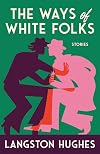
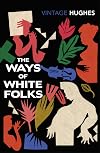
The Ways of White Folks: Stories (Vintage Classics)
by Langston Hughes 
On This Page
Description
A collection of vibrant and incisive short stories depicting the sometimes humorous, but more often tragic interactions between Black people and white people in America in the 1920s and '30s. One of the most important writers to emerge from the Harlem Renaissance, Langston Hughes may be best known as a poet, but these stories showcase his talent as a lively storyteller. His work blends elements of blues and jazz, speech and song, into a triumphant and wholly original idiom. Stories included show more in this collection: - Cora Unashamed - Slave on the Block - Home - Passing - A Good Job Gone - Rejuvenation Through Joy - The Blues I'm Playing - Red-Headed Baby - Poor Little Black Fellow - Little Dog - Berry - Mother and Child - One Christmas Eve - Father and Son This audio title is masterfully narrated by award-winning narrator and actor, J.D. Jackson. Produced and published by Echo Point Books & Media, an independent bookseller in Brattleboro, Vermont. ©1934, 1962 The Estate of J. Langston Hughes and International Literary Properties, LLC (P.) show lessTags
Recommendations









Member Reviews
These may be short stories, but they are not short reads--nor should they be. Langston Hughes gives us a multi-dimensional look at racism through vivid characterization and writing that can be both acidic and tender. "Slave on the Block" looks at fetishization. "Home" and "The Blues I'm playing" should be required reading for music students--especially those studying the classical tradition. The final and longest story, "Father and Son" exposes the workings of classism and colorism, and is one of the most powerful short stories I have ever read. Throughout the book, questions of "home" and what that means seem to surface time and time again. This is one of the most important short story collections of the twentieth century, and is an show more essential inroad to understanding race relations in the U.S. show less
What made this collection of stories so intense was the quick shifts in tone. You never knew whether Hughes was going to try and make you laugh at the absurd delusions/appropriations of white people or punch you right in the gut with an unflinching depiction of the visceral brutality of racism. Hughes poetry shines more than his prose, but these stories still showcase the power of his imagination and scathing social commentary.
After finishing Langston Hughes' collection of stories, "The Ways of White Folks," I'm now convinced that Hughes is one of the most under-recognized fiction-talents of the 20th century. Whatever the establishment hangups are for digging deeper into Hughes' fiction writing, it is time to recognize the timeless poignancy of Langston's non-poetry work.
His striking, nuanced depictions of racial tensions in communities all around the United States approach the dexterity and efficiency of Flannery O'Connor's, short stories. With the resurgence of racial tensions in the early twenty-first century, Hughes' fiction is sure to be an influence on a new generation of novelists and short story writers.
His striking, nuanced depictions of racial tensions in communities all around the United States approach the dexterity and efficiency of Flannery O'Connor's, short stories. With the resurgence of racial tensions in the early twenty-first century, Hughes' fiction is sure to be an influence on a new generation of novelists and short story writers.
The ways of white folks, as told by Langston Hughes in these short stories? Condescending in the best cases, cruel and murderous in the worst, and racist in all. I loved the variation in ‘voice’ and style Hughes employed and the fact that he wrote this in 1933-1934.
Some of my favorites in this collection to give a flavor:
- “Home”, about an ailing musician who returns to America from Europe; he finds a music teacher who appreciates his talent, but that others cannot see past his color. (“The eyes of the white men about the station were not kind. He heard some one mutter, ‘Nigger.’ His skin burned. For the first time in half a dozen years he felt his cover. He was home.”)
- “A Good Job Gone”, about a rich white man who show more falls hard for a black woman and tries unsuccessfully to buy her love. (“’A white bastard!’ she said. ‘Just because they pay you, they always think they own you. No white man’s gonna own me. I laugh with ‘em and they think I like ‘em. Hell, I’m from Arkansas where the crackers lynch niggers in the streets. How could I like ‘em?’”)
- “Poor Little Black Fellow”, about an orphaned black child taken in by rich white people, but who clearly consider him like an animal or pet, one which is domesticated early, but which later grows up and is harder to manage.
Many more. Great cover photo too.
Quotes:
On magnetism:
“There are people (you’ve probably noted it also) who have the unconscious faculty of making the world spin around themselves, throb and expand, contract and go dizzy. Then, when they are gone away, you feel sick and lonesome and meaningless.
In the chemistry lab at school, did you ever hold a test tube, pouring in liquids and powders and seeing nothing happen until a certain liquid or a certain powder is poured in and then everything begins to smoke and fume, bubble and boil, hiss to foam, and sometimes even explode? The tube is suddenly full of action and movement and life. Well, there are people like those certain liquids or powders; at a given moment they come into a room, or into a town, even into a country – and the place is never the same again. Things bubble, boil, change.”
On music:
“This, the dream and the dreamer, wandering in the desert from Hopkinsville to Vienna in love with a streetwalker named Music … Listen, you bitch, I want you to be beautiful as the moon in the night on the edge of the Missouri hills. I’ll make you beautiful…”
On Paris:
“Paris, loveliest of cities, where at dusk the lights are a great necklace among the trees of the Champs Elysees. Paris, song-city of the world. Paris, with the lips of a lovely woman kissing without fear. June, in Paris.” show less
Some of my favorites in this collection to give a flavor:
- “Home”, about an ailing musician who returns to America from Europe; he finds a music teacher who appreciates his talent, but that others cannot see past his color. (“The eyes of the white men about the station were not kind. He heard some one mutter, ‘Nigger.’ His skin burned. For the first time in half a dozen years he felt his cover. He was home.”)
- “A Good Job Gone”, about a rich white man who show more falls hard for a black woman and tries unsuccessfully to buy her love. (“’A white bastard!’ she said. ‘Just because they pay you, they always think they own you. No white man’s gonna own me. I laugh with ‘em and they think I like ‘em. Hell, I’m from Arkansas where the crackers lynch niggers in the streets. How could I like ‘em?’”)
- “Poor Little Black Fellow”, about an orphaned black child taken in by rich white people, but who clearly consider him like an animal or pet, one which is domesticated early, but which later grows up and is harder to manage.
Many more. Great cover photo too.
Quotes:
On magnetism:
“There are people (you’ve probably noted it also) who have the unconscious faculty of making the world spin around themselves, throb and expand, contract and go dizzy. Then, when they are gone away, you feel sick and lonesome and meaningless.
In the chemistry lab at school, did you ever hold a test tube, pouring in liquids and powders and seeing nothing happen until a certain liquid or a certain powder is poured in and then everything begins to smoke and fume, bubble and boil, hiss to foam, and sometimes even explode? The tube is suddenly full of action and movement and life. Well, there are people like those certain liquids or powders; at a given moment they come into a room, or into a town, even into a country – and the place is never the same again. Things bubble, boil, change.”
On music:
“This, the dream and the dreamer, wandering in the desert from Hopkinsville to Vienna in love with a streetwalker named Music … Listen, you bitch, I want you to be beautiful as the moon in the night on the edge of the Missouri hills. I’ll make you beautiful…”
On Paris:
“Paris, loveliest of cities, where at dusk the lights are a great necklace among the trees of the Champs Elysees. Paris, song-city of the world. Paris, with the lips of a lovely woman kissing without fear. June, in Paris.” show less
The ways of white folks, I mean some white folks, is too much for me. I reckon they must be a few good ones, but most of 'em ain't good -- leastwise they don't treat me good. And Lawd knows, I ain't never done nothin' to 'em, nothin' a-tall." (From Berry, p. 181)
This slim volume of fourteen stories explores the myriad of ways in which white people in America demonstrate prejudice against blacks. Published in 1933, most of the stories take place in that time period, and are set in either New York City or the rural South. In some the racism is overt and violent (think lynchings), but prejudice can be subtle as well. Take, for example, the maid whose family keeps her waiting on Christmas Eve and then is unable to pay her full wages, never show more thinking of the impact this has on the maid and her young son. Or the single woman living alone, who is so confused and conflicted by her feelings for the black janitor in her apartment building, that she is compelled to move.
There were no happy endings here. Even the stories that satirize whites made me squirm more than smile. In fact, I was able to read no more than 3 stories in a single sitting, and was glad I had other reading material close at hand. Hughes writes well; the intensity was just hard to take. And after a while, it even began to feel a bit repetitious. The situations and characters were different, but the behaviors and outcomes were similar: black characters were subservient, whites were either oblivious or overtly racist, and things always ended badly. Readers may want to choose just a few stories to get the essence of this work; in fact, the first three are representative:
- Cora Unashamed: a woman who has worked for a white family all her life. She is treated somewhat respectfully, until she begins to speak out about a family member's pregnancy.
- Slave on a Block: profiles a white couple who "went in for Negroes ... a race that was already too charming and naïve and lovely for words." This story was the most squirm-inducing for me.
- Home: a young violinist returns to Missouri after several years in Europe, and encounters prejudice he had not experienced abroad. The ending is intense and difficult. show less
This slim volume of fourteen stories explores the myriad of ways in which white people in America demonstrate prejudice against blacks. Published in 1933, most of the stories take place in that time period, and are set in either New York City or the rural South. In some the racism is overt and violent (think lynchings), but prejudice can be subtle as well. Take, for example, the maid whose family keeps her waiting on Christmas Eve and then is unable to pay her full wages, never show more thinking of the impact this has on the maid and her young son. Or the single woman living alone, who is so confused and conflicted by her feelings for the black janitor in her apartment building, that she is compelled to move.
There were no happy endings here. Even the stories that satirize whites made me squirm more than smile. In fact, I was able to read no more than 3 stories in a single sitting, and was glad I had other reading material close at hand. Hughes writes well; the intensity was just hard to take. And after a while, it even began to feel a bit repetitious. The situations and characters were different, but the behaviors and outcomes were similar: black characters were subservient, whites were either oblivious or overtly racist, and things always ended badly. Readers may want to choose just a few stories to get the essence of this work; in fact, the first three are representative:
- Cora Unashamed: a woman who has worked for a white family all her life. She is treated somewhat respectfully, until she begins to speak out about a family member's pregnancy.
- Slave on a Block: profiles a white couple who "went in for Negroes ... a race that was already too charming and naïve and lovely for words." This story was the most squirm-inducing for me.
- Home: a young violinist returns to Missouri after several years in Europe, and encounters prejudice he had not experienced abroad. The ending is intense and difficult. show less
Well, this isn't the book I thought I was getting. I thought I was going to read a semi-autobiographical story of a young, African-American man's growing up in Kansas. My mother grew up in Kansas about the same time, so I was interested in one of those compare and contrast kinds of thingies.
But, I goofed up. This particular book is a collection of short stories that deals with the interactions of black and white people back in the days of Jim Crow and long before any significant civil rights movement. I generally try to avoid short stories, but this collection was well worth reading. Basically, it describes the strange ways in which "white folks" interact with non-white folks, non-white by dint of having some African-American ancestry. show more
The ways of white folks in the 30s weren't all that different from their ways in the 1950s and 60s, when I was growing up. Actually, they're still not all that different in the 21st century in some ways, although some of the more overt oppression has been muted. But we still have plenty of white folks who actively try to suppress non-white folks (race-targeted voter suppression, maintenance of segregated communities with concomitant lack of access to decent education and health care, etc.). Then, we still have the "better class" of white folks who patronize the non-white folks, and/or find their alleged primitivism amusing, but don't give them credit for being able to have "proper" opinions and preferences. A sad commentary on us all.
But, I goofed up. This particular book is a collection of short stories that deals with the interactions of black and white people back in the days of Jim Crow and long before any significant civil rights movement. I generally try to avoid short stories, but this collection was well worth reading. Basically, it describes the strange ways in which "white folks" interact with non-white folks, non-white by dint of having some African-American ancestry. show more
The ways of white folks in the 30s weren't all that different from their ways in the 1950s and 60s, when I was growing up. Actually, they're still not all that different in the 21st century in some ways, although some of the more overt oppression has been muted. But we still have plenty of white folks who actively try to suppress non-white folks (race-targeted voter suppression, maintenance of segregated communities with concomitant lack of access to decent education and health care, etc.). Then, we still have the "better class" of white folks who patronize the non-white folks, and/or find their alleged primitivism amusing, but don't give them credit for being able to have "proper" opinions and preferences. A sad commentary on us all.
“the ways of white folks, I mean some white folks, is too much for me. I reckon they must be a few good ones, but most of ’em ain’t good—leastwise they don’t treat me good. And Lawd knows, I ain’t never done nothin’ to ’em, nothin’ a-tall.”show less
His is an easy, conversational manner, but the man doesn't pull any punches. Ouch. And Wow. Written about 80 years ago, but just as on target today about race, about people, about society. Powerful writing. Powerful book. Highly recommended.
Members
- Recently Added By
Author Information

254+ Works 14,609 Members
Langston Hughes, February 1, 1902 - May 22, 1967 Langston Hughes, one of the foremost black writers to emerge from the Harlem Renaissance, was born on February 1, 1902, in Joplin, Mo. Hughes briefly attended Columbia University before working numerous jobs including busboy, cook, and steward. While working as a busboy, he showed his poems to show more American poet Vachel Lindsay, who helped launch his career. He soon obtained a scholarship to Lincoln University and had several works published. Hughes is noted for his depictions of the black experience. In addition to the black dialect, he incorporated the rhythms of jazz and the blues into his poetry. While many recognized his talent, many blacks disapproved of his unflattering portrayal of black life. His numerous published volumes include, "The Weary Blues," "Fine Clothes to the Jew," and "Montage of a Dream Deferred." Hughes earned several awards during his lifetime including: a Guggenheim fellowship, an American Academy of Arts and Letters Grant, and a Spingarn Medal from the NAACP. Langston Hughes died of heart failure on May 22, 1967. (Bowker Author Biography) show less
Langston Hughes has a Legacy Library. Legacy libraries are the personal libraries of famous readers, entered by LibraryThing members from the Legacy Libraries group.
Awards and Honors
Distinctions
Series
Belongs to Publisher Series
Work Relationships
Contains
Is abridged in
Common Knowledge
- Original publication date
- 1934
Classifications
Statistics
- Members
- 801
- Popularity
- 34,717
- Reviews
- 10
- Rating
- (4.20)
- Languages
- English, French
- Media
- Paper, Audiobook, Ebook
- ISBNs
- 9
- ASINs
- 9