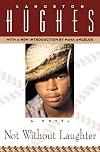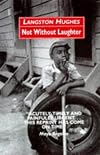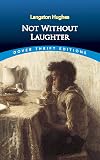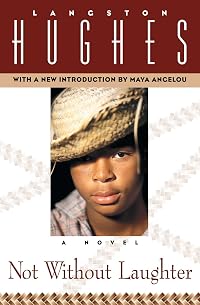
Not Without Laughter
by Langston Hughes 
On This Page
Description
Not Without Laughter is drawn in part from the author's own recollections of youth and early manhood. This stirring coming-of-age tale unfolds in 1930s rural Kansas. A poignant portrait of African-American family life in the early twentieth century, it follows the story of young Sandy Rogers as he grows from a boy to a man. We meet Sandy's mother, Annjee, who works as a housekeeper for a wealthy white family; his strong-willed grandmother, Hager; Jimboy, Sandy's father, who travels the show more country looking for work; Aunt Tempy, the social climber; and Aunt Harriet, the blues singer who has turned away from her faith. A fascinating chronicle of a family's joys and hardships, Not Without Laughter is a vivid exploration of growing up and growing strong in a racially divided society. A rich and important work, it masterfully echoes the black American experience. show lessTags
Recommendations








Member Reviews
"When you starts hatin' people, you gets uglier than they is - an I ain't never had no time for ugliness, 'cause that's where de devil comes in - in ugliness!"
"...I knows there ain't no room in de world fo' nothin' mo'n love. I knows, chile! Ever'thing there is but lovin' leaves a rust on yo' soul. An' to love sho 'nough, you got to have a spot in yo' heart fo' ever'body - great an' small, white an' black, an' them what's good an' them what's evil - 'cause love ain't got no crowded-out places where de good ones stays an' de bad ones can't come in. When it gets that way then it ain't love."
"...I knows there ain't no room in de world fo' nothin' mo'n love. I knows, chile! Ever'thing there is but lovin' leaves a rust on yo' soul. An' to love sho 'nough, you got to have a spot in yo' heart fo' ever'body - great an' small, white an' black, an' them what's good an' them what's evil - 'cause love ain't got no crowded-out places where de good ones stays an' de bad ones can't come in. When it gets that way then it ain't love."
This well-written book is said to be Hughes bildungsroman, which of course made it sadder than it already was. It presented the lives of many working class Blacks living mostly in Kansas. Sandy begins as a child and at the end is possibly about to begin high school. He has always accepted much responsibility and cared about many people, especially his diverse family. He is often treated kindly, but he is also discriminated against due only to the fact that he is Black and that systemic racism is such a part of the United States. His personality is such that he is able to laugh at times when I expect he was really very hurt or disappointed. That is the derivation of the title. This book was originally published in 1930, and these show more problems are unfortunately still prevalent today. show less
Sandy is Anjee’s young son. They live in Stanton, Kansas with his grandmother, Aunt Hager, and Aunt Harriet. Aunt Hager washes, dries and irons her white neighbors’ laundry while trying to keep her family whole. Anjee works as a cook/housekeeper in an unappreciative white family’s home in town while missing her wandering, irresponsible husband, and Harriet attends high school and is growing up too fast.
Life is hard but folks keep their spirits up: the older blacks turn to church and acceptance, the younger vent by rebelliously dancing and drinking all night. Sandy learns the good, bad and the in-between in both whites and blacks. He sees the beauty of the black spirit in all its forms, and how education will bring change and show more equality.
Hughes’ first novel is a testament to his range of writing skill. Adept at capturing mood, conveying feelings; he plays language more brilliantly than Jimboy plays guitar.
Unassumingly beautiful and powerful! show less
Life is hard but folks keep their spirits up: the older blacks turn to church and acceptance, the younger vent by rebelliously dancing and drinking all night. Sandy learns the good, bad and the in-between in both whites and blacks. He sees the beauty of the black spirit in all its forms, and how education will bring change and show more equality.
Hughes’ first novel is a testament to his range of writing skill. Adept at capturing mood, conveying feelings; he plays language more brilliantly than Jimboy plays guitar.
Unassumingly beautiful and powerful! show less
Reason read: Sora book (free from AudioSync Summer Program). Published 1930 so is a classic. Story of a young black man growing up in Kansas. It covers issues of an African American family life growing up in the early 20th century. Issues touched on include the effects of class and religion on the community. The main storyline focuses on Sandy's "awakening to the sad and the beautiful realities of black life. James, known as Sandy, is a 10 years-old boy that lives with his grandmother, Aunt Hager, his mother, Annjee, and teenage aunt, Harriett. Sandy's father, Jimboy, is frequenty out of work and traveling about.
It seems that we're in Kansas, in an African American community, in 1912 and beyond.
Whenever I go on vacation, I try to read some books by
African American authors. I think I only managed this one this year. The issue for me, is that I can't possibly understand other people, unless I learn about them by reading about their lives (African Americans, Japanese, Chinese, etc.). This book, although written some 87 years ago, is still a fresh lens to help us privileged, comfortably well-off white folks see ourselves as others see us; others in this case, being African Americans.
An additional interesting thing about this book is that it follows the life of a young, African American boy who lived in Kansas, from about 1912 to 1918 or so. The show more boy was something like 7 to 14 over this period (fuzzy math). My mother was a young girl growing up in Kansas at the same time, although she was a bit younger. So, it's interesting to read about young African American children in Kansas and to compare it with my mother's stories of growing up.
Langston Hughes was best known as a top notch poet. But this book shows that he's also a rather good novelist. The writing is wonderful. show less
Whenever I go on vacation, I try to read some books by
African American authors. I think I only managed this one this year. The issue for me, is that I can't possibly understand other people, unless I learn about them by reading about their lives (African Americans, Japanese, Chinese, etc.). This book, although written some 87 years ago, is still a fresh lens to help us privileged, comfortably well-off white folks see ourselves as others see us; others in this case, being African Americans.
An additional interesting thing about this book is that it follows the life of a young, African American boy who lived in Kansas, from about 1912 to 1918 or so. The show more boy was something like 7 to 14 over this period (fuzzy math). My mother was a young girl growing up in Kansas at the same time, although she was a bit younger. So, it's interesting to read about young African American children in Kansas and to compare it with my mother's stories of growing up.
Langston Hughes was best known as a top notch poet. But this book shows that he's also a rather good novelist. The writing is wonderful. show less
interesting social study of a young black American boy, Sandy, brought up mainly by his hardworking grandmother Hager, a laundrywoman, his mother Anjee and two very different aunts, the rebel Harriett who becomes a jazz singer, and snobbish Tempy - written with a poetic, music-filled voice, ending on a note of hope. This is a very beautiful edition.
I had no idea that Langston Hughes had written a novel. I really enjoy his poetry, so I was very excited to find this book.
It is the coming-of-age story of an Africa American boy in Kansas during the early Twentieth Century. Since I'm not African American, I don't really know what that experience is like, but this felt very genuine. It felt as if Hughes perhaps drew on his own early experiences.
This novel has a lot of heart, and there also seems to be a certain rhythm to the writing which I loved.
It is the coming-of-age story of an Africa American boy in Kansas during the early Twentieth Century. Since I'm not African American, I don't really know what that experience is like, but this felt very genuine. It felt as if Hughes perhaps drew on his own early experiences.
This novel has a lot of heart, and there also seems to be a certain rhythm to the writing which I loved.
Members
- Recently Added By
Lists

Phi Beta Kappa reading list
260 works; 8 members

Willoyd's Tour of the USA
25 works; 1 member

Best Books of 1926-1935
403 works; 10 members

Books Read in 2024
4,727 works; 128 members
Author Information

254+ Works 14,614 Members
Langston Hughes, February 1, 1902 - May 22, 1967 Langston Hughes, one of the foremost black writers to emerge from the Harlem Renaissance, was born on February 1, 1902, in Joplin, Mo. Hughes briefly attended Columbia University before working numerous jobs including busboy, cook, and steward. While working as a busboy, he showed his poems to show more American poet Vachel Lindsay, who helped launch his career. He soon obtained a scholarship to Lincoln University and had several works published. Hughes is noted for his depictions of the black experience. In addition to the black dialect, he incorporated the rhythms of jazz and the blues into his poetry. While many recognized his talent, many blacks disapproved of his unflattering portrayal of black life. His numerous published volumes include, "The Weary Blues," "Fine Clothes to the Jew," and "Montage of a Dream Deferred." Hughes earned several awards during his lifetime including: a Guggenheim fellowship, an American Academy of Arts and Letters Grant, and a Spingarn Medal from the NAACP. Langston Hughes died of heart failure on May 22, 1967. (Bowker Author Biography) show less
Langston Hughes has a Legacy Library. Legacy libraries are the personal libraries of famous readers, entered by LibraryThing members from the Legacy Libraries group.
Some Editions
Series
Belongs to Publisher Series
Work Relationships
Is contained in
Is abridged in
Has as a student's study guide
Common Knowledge
- Original publication date
- 1930-07-25
- Dedication
- To J. E. and Amy Spingarn
- First words
- Aunt Hager Williams stood in her doorway and looked out at the sun.
- Last words
- (Click to show. Warning: May contain spoilers.)"An' we'll understand it better by an' by!"
- Blurbers
- Rmapersand, Arnold
Classifications
Statistics
- Members
- 784
- Popularity
- 35,687
- Reviews
- 17
- Rating
- (3.89)
- Languages
- English, Italian, Swedish
- Media
- Paper, Audiobook, Ebook
- ISBNs
- 30
- UPCs
- 1
- ASINs
- 26