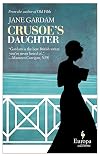
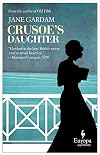
Crusoe's Daughter
by Jane Gardam
On This Page
Description
In 1904, six-year-old Polly Flint is sent to live with her aunt's in a house by the sea. Orphaned shortly thereafter, Polly will spend the next eighty years stranded in this quiet corner of the world as 20th century rages in the background. Throughout it all Polly returns again and again to the story of Robinson Crusoe, who, marooned like her, fends off the madness of isolation with imagination.Tags
Recommendations




















Member Reviews
Polly Flint, an orphan at age six, lives with two elderly aunts in a big yellow house on the coast of the Irish Sea in England. Isolated from the world and deprived of formal schooling and any other avenues for contact with other children, she develops a love for literature and a particular affinity for Robinson Crusoe. As she gradually encounters others in the world, strange others indeed!, she clings to her island, the yellow house and the safety within. Even as her two aunts leave her, each of them meeting an unusual and sudden death, she digs in at the yellow house, holding fast to the only home she has known. Still, she loves in her own way and experiences the thrill of feeling love/lust though she has no developed sense of show more empathy. Polly's life passes and she misses opportunities to break free of the island on which she has found both solace and adventure. I kept silently rooting for her to break free, to leave the house and build a life with someone, but I knew both that this wouldn't happen and that it wouldn't really bring her happiness. As Polly notes near the end of her narrative:
"For years of our lives, the days pass waywardly, featureless, without meaning, without particular happiness or unhappiness. Then, like turning over a tapestry when you have only known the back of it, there is spread the pattern."
This is an odd sort of novel but I wanted to applaud when I finished it. "Brava!" I say. show less
"For years of our lives, the days pass waywardly, featureless, without meaning, without particular happiness or unhappiness. Then, like turning over a tapestry when you have only known the back of it, there is spread the pattern."
This is an odd sort of novel but I wanted to applaud when I finished it. "Brava!" I say. show less
Polly Flint arrives at the Yellow House as a child, her mother dead and her seafaring father soon to be lost at sea. She is left in the care of two elderly spinster aunts, both peculiar in their way, though no more so than the others that frequent the house which sits upon the marsh near Thwaite. Polly ends up spending the next 80 years at the Yellow House, a time of two great wars and other monumental changes, but relatively little change for Polly. So perhaps not surprisingly her love and admiration is reserved for Defoe’s great marooned hero, Robinson Crusoe.
Perhaps only Gardam could write a novel so vast in its temporal arch that nonetheless comes across as intimate. Polly is both naive and wise in equal measure. She faces show more difficult challenges, not least being female in an isolated locale with little or no guidance. She finds succour in the great novel collection left by her grandfather, and most especially in Defoe’s creation with which she engages throughout her long life. At points that engagement amounts to a commentary on the nature of the novel form. But it remains entirely a personal engagement for Polly. And you cannot help but hope for some less than ephemeral happiness to surround Polly and lift her up. It is fine writing indeed.
Easy to recommend. show less
Perhaps only Gardam could write a novel so vast in its temporal arch that nonetheless comes across as intimate. Polly is both naive and wise in equal measure. She faces show more difficult challenges, not least being female in an isolated locale with little or no guidance. She finds succour in the great novel collection left by her grandfather, and most especially in Defoe’s creation with which she engages throughout her long life. At points that engagement amounts to a commentary on the nature of the novel form. But it remains entirely a personal engagement for Polly. And you cannot help but hope for some less than ephemeral happiness to surround Polly and lift her up. It is fine writing indeed.
Easy to recommend. show less
It is usually just fancy when you say that someone 'changed from that moment'. When a change starts is a matter for the angels, and even they may disagree. Historians can never be certain of anything. Dates as we know are meaningless. The Great War 'began' in 1914 and the world 'changed'. But when did the change really begin? With a student who by chance was sitting in a cafe when the Archduke's carriage turned down a sidestreet by mistake?show more
Long, long before.
And so with people. Often the intention is definable -- the moment when we say, 'From now on I shall do this, do that.' But the change itself proceeds waveringly -- and of course often does not proceed at all.
But changes -- huge changes -- do take place, and in spite of the libraries
of Freudian evidence to the contrary, the deep stamp of past years and even of dreams can be eradicated, washed away, and new people can emerge: and it will be a bad day for novels when this is not so.
This was a wonderful book -- I really do love everything I've read by Jane Gardam, and this is her personal favorite. Little Polly Flint is brought to live with her reclusive aunts in the yellow house on the bleak marshes of the Irish Sea. Polly's life is lonely and solitary, with the books she finds in her grandfather's study as her only companions. She finds kinship with [Robinson Crusoe] -- they are both learned, and utterly marooned, and this kinship becomes a lifelong intimacy with the book, with Mr. Crusoe, and with the inner workings of his mind. This book's reader, meanwhile, experiences Polly's mind -- exceptionally sharp, yet affected by solitude and absolutely no occupation -- over the course of some 80 years as the tumultuous 20th century sweeps over her world, just out of reach. A wonderful read. show less
This was a haunting tale of Polly, an orphan raised by two eccentric aunts. Polly, while having encounters with others, is still lonely to the bone. She finds Defoe's Robinson Crusoe and immediately identifies with Crusoe, both on an island of solitude. Polly is on a life-long (book-long) course to find human connections. While this wasn't a bad book, it wasn't satisfying to me, either. 224 pages
CRUSOE: (rambling. Even Crusoe grows old)
You've been a good and faithful woman, Pol Flint, and children love you. A room of empty shelves, but still half in love with books. Is it enough? A quiet life. But Godly—and some of that because of me. As a life, not bad. Marooned of course. But there's something to be said for islands.
Polly Flint was six years old when her sea-faring father brought her to live with her elderly spinster aunts. Her mother had died when she was less than a year old, and since then Polly had lived with a series of families while her father was at sea. Her mother's much older sisters, Aunt Frances and Aunt Mary live in a yellow house alone by the sea with the village at one end of the beach and the iron works at the show more other. Living in reduced circumstances, the aunts never-the-less take in Polly and never question that they will raise her. Two others live at the yellow house: Mrs. Woods, a crotchety, penurious widow and Charlotte the maid.
Life for young Polly is narrow and lonely. She does not attend the local school, but receives French and German lessons from Mrs. Woods and piano from her Aunt Frances. Instead of friends, she has her grandfather's books, and she identifies strongly with her hero, [Robinson Crusoe]. Like him, she is isolated and feels different from all Creation, left to struggle like Jacob with the angel and define her own beliefs, find her own way. At twelve, she refuses confirmation and her rebellion is both a religious choice and a method of self-definition within this High Protestant village. Independent minded, and yet terribly naive, Polly is buffeted by intrusions of real life.
And there was the business Charlotte had mentioned and which Scott, Jane Austen, the Brontes and Charlotte Yonge never: 'Who'd bed thee?' Charlotte had said.
Sex, lesbianism, passion, illegitimacy are parts of the world about which Polly knows nothing, yet exist even in her tiny world.
At sixteen, Polly's Aunt Frances changes. She expresses herself in new and vibrant ways and is soon off to India with a husband, leaving Polly bereft. In an attempt to broaden her world, Mr. Thwaite, a long time friend of the family offers to take her in for a while, exposing her to the cosmopolitan world of artists and writers, a hodgepodge of the great and the wannabes. Here at Thwaite Manor, Polly experiences her first romance and learns to dress fashionably, but she is still most comfortable with the servants than with the likes of Virginia Wolff. When Mrs. Woods has a stroke and her Aunt Mary refuses to leave her religious retreat, Polly willingly returns to the yellow house and takes her seemingly ordained place.
As the years pass, Polly experiences love, heartache, and loss, but through it all she never looses her passion for Robinson Crusoe and becomes obsessed with him. It is only when things hit rock bottom that she is given a way to redeem herself and reconnect with the real world. For no man, or woman, is an island.
Crusoe's Daughter is the author's personal favorite of all the novels she has written. In her introduction to the Europa Edition, Ms. Garham writes about her mother life in this bleak, wind streaked corner of northeast England where women lived very prescribed lives. Ms. Gardam's mother was taken from school at twelve on account of supposed poor health and, like Polly, she was raised in the High Church and never received a formal education. The author was also born there between the marsh and sea, but was seduced away by the power of books to become a scholar, wife and mother, and novelist. Fortunately for us, she never forgot the austere landscape and the isolation of her childhood and was inspired to explore what her life might have been like if she had never left. Although inspired by her family past, the book is also a commentary on the lives of women in the years leading up to and during World Wars I and II. Forced to fend for themselves, yet bound by conventions that kept women from holding jobs, from seeking lovers or love, and from leaving home and hearth for adventure, women lived very difficult lives and only had each other to rely on. Honest and unflinching, the book has increased my eagerness to read her subsequent novels, despite her dismissal:
When I had finished I felt I needn't write any more books. Take it or leave it, Crusoe's Daughter says everything I have to say.
I did go on, and the later books were considered better. Became best sellers. Never mind. show less
You've been a good and faithful woman, Pol Flint, and children love you. A room of empty shelves, but still half in love with books. Is it enough? A quiet life. But Godly—and some of that because of me. As a life, not bad. Marooned of course. But there's something to be said for islands.
Polly Flint was six years old when her sea-faring father brought her to live with her elderly spinster aunts. Her mother had died when she was less than a year old, and since then Polly had lived with a series of families while her father was at sea. Her mother's much older sisters, Aunt Frances and Aunt Mary live in a yellow house alone by the sea with the village at one end of the beach and the iron works at the show more other. Living in reduced circumstances, the aunts never-the-less take in Polly and never question that they will raise her. Two others live at the yellow house: Mrs. Woods, a crotchety, penurious widow and Charlotte the maid.
Life for young Polly is narrow and lonely. She does not attend the local school, but receives French and German lessons from Mrs. Woods and piano from her Aunt Frances. Instead of friends, she has her grandfather's books, and she identifies strongly with her hero, [Robinson Crusoe]. Like him, she is isolated and feels different from all Creation, left to struggle like Jacob with the angel and define her own beliefs, find her own way. At twelve, she refuses confirmation and her rebellion is both a religious choice and a method of self-definition within this High Protestant village. Independent minded, and yet terribly naive, Polly is buffeted by intrusions of real life.
And there was the business Charlotte had mentioned and which Scott, Jane Austen, the Brontes and Charlotte Yonge never: 'Who'd bed thee?' Charlotte had said.
Sex, lesbianism, passion, illegitimacy are parts of the world about which Polly knows nothing, yet exist even in her tiny world.
At sixteen, Polly's Aunt Frances changes. She expresses herself in new and vibrant ways and is soon off to India with a husband, leaving Polly bereft. In an attempt to broaden her world, Mr. Thwaite, a long time friend of the family offers to take her in for a while, exposing her to the cosmopolitan world of artists and writers, a hodgepodge of the great and the wannabes. Here at Thwaite Manor, Polly experiences her first romance and learns to dress fashionably, but she is still most comfortable with the servants than with the likes of Virginia Wolff. When Mrs. Woods has a stroke and her Aunt Mary refuses to leave her religious retreat, Polly willingly returns to the yellow house and takes her seemingly ordained place.
As the years pass, Polly experiences love, heartache, and loss, but through it all she never looses her passion for Robinson Crusoe and becomes obsessed with him. It is only when things hit rock bottom that she is given a way to redeem herself and reconnect with the real world. For no man, or woman, is an island.
Crusoe's Daughter is the author's personal favorite of all the novels she has written. In her introduction to the Europa Edition, Ms. Garham writes about her mother life in this bleak, wind streaked corner of northeast England where women lived very prescribed lives. Ms. Gardam's mother was taken from school at twelve on account of supposed poor health and, like Polly, she was raised in the High Church and never received a formal education. The author was also born there between the marsh and sea, but was seduced away by the power of books to become a scholar, wife and mother, and novelist. Fortunately for us, she never forgot the austere landscape and the isolation of her childhood and was inspired to explore what her life might have been like if she had never left. Although inspired by her family past, the book is also a commentary on the lives of women in the years leading up to and during World Wars I and II. Forced to fend for themselves, yet bound by conventions that kept women from holding jobs, from seeking lovers or love, and from leaving home and hearth for adventure, women lived very difficult lives and only had each other to rely on. Honest and unflinching, the book has increased my eagerness to read her subsequent novels, despite her dismissal:
When I had finished I felt I needn't write any more books. Take it or leave it, Crusoe's Daughter says everything I have to say.
I did go on, and the later books were considered better. Became best sellers. Never mind. show less
Polly Flint is deposited by her father, a sea captain who then promptly dies at sea, in the Yellow House on marshes on the east coast of Yorkshire, not far from Hartlepool, with her two aunts, a permanent houseguest and a rather grim servant, Alice. She finds her place there, isolated and rather stern, but not quite bleak, passion however eccentrically directed abounds. Polly becomes obsessed, early, with the story of Robinson Crusoe which makes sense as you get to know her. Neighbors, a love interest or two, a benign uncle-ish fellow float through, first one war, then the second, and modernization and changes, and Polly grows up and then grows old. A memoir novel, not told in the first person, wisely, but quiet and like all Gardam's show more work, a balancing act between internal workings of the mind and desires and betrayals of the body. Didn't grab hold of me as others of her novels have, but no complaints. ***1/2 show less
It was a rainy Sunday afternoon, and I really needed to get out of the Middle East, so I picked up Crusoe's Daughter -- it was the perfect antidote.
1n 1904, Polly Flint, a sea captain's daughter, is brought to live with her maiden aunts, in a big yellow house on the marshes in northern England near the sea and not far from the iron works. The house has a large library collected by her religious grandfather, and in it she finds Defoe's Robinson Crusoe. The book will remain the touchstone for her childhood, her adolescence and her long life (she spends years translating it into German and French). Along the way she encounters the realities of the class system, death, romance, decay, rejuvenation and the onrushing 20th century. It's not a show more great book, but it certainly kept me entertained while my husband went off to watch a football game with his colleagues -- and it diverted me from grading papers -- what more could I want? show less
1n 1904, Polly Flint, a sea captain's daughter, is brought to live with her maiden aunts, in a big yellow house on the marshes in northern England near the sea and not far from the iron works. The house has a large library collected by her religious grandfather, and in it she finds Defoe's Robinson Crusoe. The book will remain the touchstone for her childhood, her adolescence and her long life (she spends years translating it into German and French). Along the way she encounters the realities of the class system, death, romance, decay, rejuvenation and the onrushing 20th century. It's not a show more great book, but it certainly kept me entertained while my husband went off to watch a football game with his colleagues -- and it diverted me from grading papers -- what more could I want? show less
Members
- Recently Added By
Lists

Robinsonade Novels
55 works; 4 members

Books Read in 2021
5,361 works; 114 members
Author Information

36+ Works 8,919 Members
Jane Gardam was born in North Yorkshire, England in 1928. She is the author of many children's novels that include "A Long Way from Verona" (1971). She has also written novels and collections of stories for adults that include "God on the Rocks" (1978), "Bilgewater and the Pangs of Love and Other Stories" (1983) and "The Summer After the Funeral." show more Her book "Groundlings" was taken from "Showing the Flag and Other Stories" (1989). Gardam's novels and stories have received many literary prizes. (Bowker Author Biography) show less
Some Editions
Common Knowledge
- Canonical title
- Crusoe's Daughter
- Original title
- Crusoe's Daughter
- Original publication date
- 1985
- People/Characters
- Polly Flint
- Important places
- Oversand, England
- Epigraph
- The pressure of life when one is fending for oneself alone on a desert island is really no laughing matter. It is no crying one either. - Virginia Woolf, The Common Reader
- Dedication
- For my mother, Kathleen Helm
- First words
- I am Polly Flint
- Last words
- (Click to show. Warning: May contain spoilers.)Goodbye, Pol Flint.
Classifications
Statistics
- Members
- 426
- Popularity
- 72,436
- Reviews
- 17
- Rating
- (3.82)
- Languages
- Dutch, English, French, German
- Media
- Paper, Audiobook, Ebook
- ISBNs
- 18
- ASINs
- 10