
65 Members (3.40)
On This Page
Description
In 1904, while still working on his translations of Ruskin, Marcel Proust wrote to Maurice Barr s "I still have two Ruskin's to do, and after that I shall try to translate my own poor soul, if it doesn't die in the meantime." Within a few years Proust would begin this translation of his "own poor soul"--the monumental Remembrance of Things Past, one of the great literary works of the 20th century. In this volume of Proust's collected letters--translated by Terence Kilmartin, acclaimed for show more his work on the Moncrieff translation of Proust's works--the reader is carried inside this pivotal moment in a great writer's life. In a letter to Louis d'Albufera he lists the projects he has in hand: "a study on the nobility, a Parisian novel, an essay on Sainte-Beuve and Flaubert, an essay on Women, an essay on Pederasty (not easy to publish), a study on stained-glass windows, a study on tombstones, a study on the novel"--all subjects that eventually found their way into Remembrance of ThingsPast. The final letter in the volume talks of alterations to his flat "which are essential for my peace and quiet"--an allusion no doubt to the cork-lined room in which he would spend so many years continuing to pursue his quest for "Lost Time." The letters are intriguing for what they say about the work, but they also offer an intimate portrait of the man--the sometime invlaid recluse, sometime socialite. Although Proust spent a great deal of time insulated at home, when he does go out it is clear that the talent for malicious observation so evident in Guermantes Way was already quite sharp. He refers to a group of dowagers he'd seen at a concert as "portraits of monsters from the time when people didn't know how to draw." And his letters to his devoted friend the composer Reynaldo Hahn are full of wit, scurrilous gossip and a great deal of teasing. He also carries on lively exchanges with two very different women--Marie Nordlinger, a serious, dedicated artist, and Louisa de Mornand, a frivolous, mercenary actress. His letters to Marie are affectionate, but his letters to Louisa are amorous--sometimes even salacious, (possibly because she served as a surrogate for his real interst, her lover Albufera.) Proust's celebrated devotion to his mother is also evident in this collection. Theirs is an intimate and loving correspondence, and her death in 1905 is clearly a tremendous blow ("My life has now forever lost its only purpose, its only sweetness, its only consolation.") This long-awaited volume will be welcomed by scholars and general readers alike. The letters offer a special insight into the man and his art during a crucial period, and they are as delightful to read--as beautifully crafted, witty and poignant--as his fiction. show lessTags
Recommendations













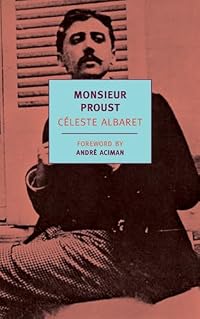
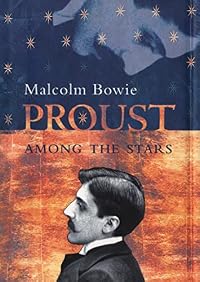









Member Reviews
Members
- Recently Added By
Author Information

867+ Works 47,811 Members
Proust is one of the seminal figures in modern literature, matched only in stature by Joyce, Woolf, Mann and Kafka. By the last decade of the 19th century, the charming and ambitious Proust, born into a wealthy bourgeois family, was already a famous Paris socialite who attended the most fashionable salons of the day. The death of his parents in show more the early years of the 20th century, coupled with his own increasingly ill health, made of Proust a recluse who confined himself to his cork-lined bedroom on the Boulevard Haussmann. There he concentrated on the composition of his great masterpiece, Remembrance of Things Past (1913-27). In recent years, it was discovered that he had already prepared a first draft of the work in the 1890s in Jean Santeuil, which was only published posthumously in 1952. Remembrance of Things Past resists summary. Seeming at turns to be fiction, autobiography, and essay, Remembrance is a vast meditation on the relationship between time, memory, and art. In it the narrator, who bears the same first name as the author, attempts to reconstruct his life from early childhood to middle age. In the process, he surveys French society at the turn of the century and describes the eventual decline of the aristocracy in the face of the rising middle class. The process of reconstruction of Marcel's past life is made possible by the psychological device of involuntary memory; according to this theory, all of our past lies hidden within us only to be rediscovered and brought to the surface by some unexpected sense perception. In the final volume of the work, the narrator, who has succeeded in recapturing his past, resolves to preserve it through the Work of Art, his novel. He died of pneumonia and a pulmonary abscess in 1922. He was buried in the Père Lachaise Cemetery in Paris. (Bowker Author Biography) show less
All Editions
Series

Common Knowledge
- Canonical title
- Selected Letters: Volume I, 1880-1903
Classifications
- Genres
- Fiction and Literature, Literature Studies and Criticism, Biography & Memoir
- DDC/MDS
- 843.912 — Literature & rhetoric French Literature French fiction 1900- 20th Century 1900-1945
- LCC
- PQ2631 .R63 .Z48 — Language and Literature French, Italian, Spanish and Portuguese literatures French literature Modern literature 1900-1960
Statistics
- Members
- 65
- Popularity
- 477,329
- Rating
- (3.40)
- Languages
- English
- Media
- Paper
- ISBNs
- 4
- ASINs
- 1


