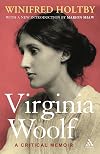
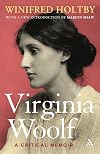
Virginia Woolf: A Critical Memoir
by Winifred Holtby
On This Page
Description
Holtby gives us Woolf the critic, the essayist and the experimental novelist in a critical memoir which is of particular interest as the work of one intelligent, though very different, novelist commenting on another. Holtby's careful reading of Woolf's work is set in the context of the debate between modernist and traditional writing in the 1920s and 1930s. Although Holtby greatly admires Woolf's art, she considers its limitations as an elite form that ignores the material conditions of show more everyday life and the consequent social responsibility expected of the novel.¿¿ Choosing to write about Woolf as 'the author whose art seemed most of all removed from anything I could ever attempt, and whose experience was most alien to my own,' Holtby has written a candid appreciation of the complex, groundbreaking work of a contemporary writer at the height of her career. Winifred Holtby was a novelist, journalist and social reformer, who campaigned for the causes of peace and sexual and racial equality. Her most famous work is the novel South Riding, published posthumously in 1936. She died in 1935. show lessTags
Recommendations



















Member Reviews
I think this is really quite an extraordinary book: generous and strenuously perceptive, while also delicately indicating some of the political risks and limits Holtby sees in Woolf's aesthetic priorities. Holtby writes with real eloquence about Woolf's experimentation and accomplishments.
Virginia Woolf: A Critical Memoir by Winifred Holtby is a study of the interconnection of Woof and her characters and her style of writing. Holtby is best known for writing South Riding while dying of Bright's disease. She was an ardent feminist, socialist and pacifist who published fourteen books before dying at thirty-seven.
This book is intriguing on several levels. First, it was written in 1932 while Woolf was still alive, and it concentrates on Woolf's work and the interconnectedness of the stories and with Woolf's own life. Although mentioned, Woolf's depression does not play a major role in this book and it does in many current books. Not being formally educated in English literature, I found the critique well done, informative, show more and not heavy handed. The examples and passages in the book illustrate Holtby thesis well.
The use of water in Woolf's life and in her books everything from The Voyage Out through The Waves (the last book written by Woolf before Holtby's book) all contain water references and themes. In Woolf's early memories of the beach at Cornwall and later tragically her death involved water. Water becomes ever present, but ever changing. It is always there; it rolls in and rolls out like the waves or life and death.
What may be more obvious to many is also brought up in Holtby's critique is Woolf’s preferences in her novels. It is not surprising that Woolf didn’t much care for plots in her writing. Not a single one of her novels had a climax. In The Voyage Out the South American jungle is nearly a copy of Sir Walter Raleigh’s Discovery of Guiana The plagiarism is Holtby explains is forgivable. The jungle setting was merely filler. In the South American town, surrounded by jungle, no wild animals are seen, in fact, nobody's even bothered by a single mosquito. The hospital is conveniently located near the hotel. The setting is simply background to Woolf.
If it isn’t plot, climax, or setting that Woolf writes about, it must be characters. Woolf spends great detail in creating characters. Holtby compares the characters to other historical novel character’s just as Jane Austen. Also interesting is that characters that reflect Woolf’s life are the best done. She struggles when she writes characters out of her station. The other thing that separates Woolf is style. Many of her writings have almost a lyrical quality to them. This is perhaps the main reason I enjoy reading Woolf.
Holtby analyzes Woolf’s writing and works. She had a particular interest in “The Mark on the Wall” and uses it often in her comparisons. Her treatment of “Kew Gardens” is quite well done. For the reader of this book a knowledge of Woolf’s writing (up until 1932) is very helpful and almost necessary. Holtby uses each work as references and comparisons and builds her case. Without knowing Mrs. Ramsey, Clarissa Dalloway, or Jacob Flanders, the reader would be lost. An excellent read for anyone familiar with, or struggling with, any of Woolf’s work. show less
This book is intriguing on several levels. First, it was written in 1932 while Woolf was still alive, and it concentrates on Woolf's work and the interconnectedness of the stories and with Woolf's own life. Although mentioned, Woolf's depression does not play a major role in this book and it does in many current books. Not being formally educated in English literature, I found the critique well done, informative, show more and not heavy handed. The examples and passages in the book illustrate Holtby thesis well.
The use of water in Woolf's life and in her books everything from The Voyage Out through The Waves (the last book written by Woolf before Holtby's book) all contain water references and themes. In Woolf's early memories of the beach at Cornwall and later tragically her death involved water. Water becomes ever present, but ever changing. It is always there; it rolls in and rolls out like the waves or life and death.
What may be more obvious to many is also brought up in Holtby's critique is Woolf’s preferences in her novels. It is not surprising that Woolf didn’t much care for plots in her writing. Not a single one of her novels had a climax. In The Voyage Out the South American jungle is nearly a copy of Sir Walter Raleigh’s Discovery of Guiana The plagiarism is Holtby explains is forgivable. The jungle setting was merely filler. In the South American town, surrounded by jungle, no wild animals are seen, in fact, nobody's even bothered by a single mosquito. The hospital is conveniently located near the hotel. The setting is simply background to Woolf.
If it isn’t plot, climax, or setting that Woolf writes about, it must be characters. Woolf spends great detail in creating characters. Holtby compares the characters to other historical novel character’s just as Jane Austen. Also interesting is that characters that reflect Woolf’s life are the best done. She struggles when she writes characters out of her station. The other thing that separates Woolf is style. Many of her writings have almost a lyrical quality to them. This is perhaps the main reason I enjoy reading Woolf.
Holtby analyzes Woolf’s writing and works. She had a particular interest in “The Mark on the Wall” and uses it often in her comparisons. Her treatment of “Kew Gardens” is quite well done. For the reader of this book a knowledge of Woolf’s writing (up until 1932) is very helpful and almost necessary. Holtby uses each work as references and comparisons and builds her case. Without knowing Mrs. Ramsey, Clarissa Dalloway, or Jacob Flanders, the reader would be lost. An excellent read for anyone familiar with, or struggling with, any of Woolf’s work. show less
Ratings
Members
- Recently Added By
Lists

Books referenced in A Very Great Profession: The Woman's Novel 1914-39
199 works; 6 members
Author Information

24+ Works 2,395 Members
Series
Belongs to Publisher Series
Common Knowledge
- Original publication date
- 1935
Classifications
Statistics
- Members
- 72
- Popularity
- 437,637
- Reviews
- 2
- Rating
- (4.10)
- Languages
- English, Spanish
- Media
- Paper, Ebook
- ISBNs
- 5
- ASINs
- 3