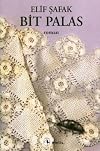
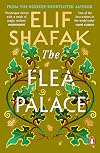
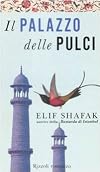
The Flea Palace
by Elif Shafak
On This Page
Description
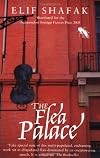
Shortlisted for the 2005 Independent Foreign Fiction Prize, Elif Shafak's The Flea Palace is a moving and highly original novel about a group of individuals who live in the same building and who together become embroiled in a mystery. By turns comic and tragic, The Flea Palace is an outstandingly original novel driven by an overriding sense of social justice. Bonbon Palace was once a stately apartment block in Istanbul. Now it is a sadly dilapidated home to ten wildly different individuals show more and their families. There's a womanizing, hard-drinking academic with a penchant for philosophy; a 'clean freak' and her lice-ridden daughter; a lapsed Jew in search of true love; and a charmingly naïve mistress whose shadowy past lurks in the building. When the rubbish at Bonbon Palace is stolen, a mysterious sequence of events unfolds that result in a soul-searching quest for truth. 'Picaresque' Guardian 'Hyperactive and hilarious' Independent show lessTags
Recommendations





















Member Reviews
I fell gradually more and more in love with this book until the very final chapter, which almost completely broke the spell. Until that point, it's an enchanting weaving of various bizarre characters' stories, and the whole edifice makes sense in the world that had been set up, yet Şafak felt the need to add an ending directly equivalent to the "then I woke up and it was all a dream" that we were all sternly told not to use in primary school. It tarnished the book so much for me that I'm tempted to just tear that chapter out of my edition.
I fell gradually more and more in love with this book until the very final chapter, which almost completely broke the spell. Until that point, it's an enchanting weaving of various bizarre characters' stories, and the whole edifice makes sense in the world that had been set up, yet Şafak felt the need to add an ending directly equivalent to the "then I woke up and it was all a dream" that we were all sternly told not to use in primary school. It tarnished the book so much for me that I'm tempted to just tear that chapter out of my edition.
[b:The Flea Palace|248733|The Flea Palace|Elif Shafak|https://i.gr-assets.com/images/S/compressed.photo.goodreads.com/books/1385167496l/248733._SY75_.jpg|241009] took a fair amount of time and effort to get into. It is concerned with the residents of a ten-apartment block in Istanbul. I generally enjoy fiction in which a physical structure (block of flats, shopping mall, etc) is the main character. However, the narrative here was much more interested in the inhabitants interactions than the building itself. This was not vividly described, although the bug infestation and terrible smells in it definitely were. I did enjoy the distinctive details of individual living spaces that were dropped in. It took quite a while for all the residents show more to be introduced and their relationships set up, but in due course they did prove to be a varied and interesting set. There are moments of great profundity and humour, however the narrative is characterised by meandering. The reader gets brief snippets of various lives, some of which seem to work better than others. On balance, I enjoyed the concept more than the execution.
The paperback edition I read features an interesting and slightly confusing afterword. Shafak is Turkish and the front page says 'translated from the Turkish by Müge Göçek', yet the afterword is Shafak's defense of writing her novels in English. She states that,
So did I read [b:The Flea Palace|248733|The Flea Palace|Elif Shafak|https://i.gr-assets.com/images/S/compressed.photo.goodreads.com/books/1385167496l/248733._SY75_.jpg|241009] in translation or not? Has it been written in English, translated into and rewritten in Turkish, then translated back into English again? This little mystery certainly added intrigue to the reading experience. show less
The paperback edition I read features an interesting and slightly confusing afterword. Shafak is Turkish and the front page says 'translated from the Turkish by Müge Göçek', yet the afterword is Shafak's defense of writing her novels in English. She states that,
I write my novels in English first. The English is translated into Turkish by professional translators (whose work I admire and respect) and I then take the new Turkish version and rewrite it with my rhythm, my energy, my vocabulary.
So did I read [b:The Flea Palace|248733|The Flea Palace|Elif Shafak|https://i.gr-assets.com/images/S/compressed.photo.goodreads.com/books/1385167496l/248733._SY75_.jpg|241009] in translation or not? Has it been written in English, translated into and rewritten in Turkish, then translated back into English again? This little mystery certainly added intrigue to the reading experience. show less
In all honesty I really liked this book and would have given it 4* rather than 3.5*, but I think it was really let down by the ending (spoiler: think Bobby Ewing in the shower).
The Flea Palace was short listed for the Independent Foreign Fiction Prize in 2006 and so I had high hopes for it. Elif Shafak has created a meandering novel filled with odd and flawed characters - all living in a run down apartment building in Istanbul. The blurb on the back of the book states: '...we have a metaphoric conduit for the cultural and spiritual decay at the heart of Istanbul.' Perhaps my boredom with this novel stems from my ignorance of the culture and religion of Turkey.
Shafak begins the novel in reverse - starting in the present, spiraling back to the past, then surging forward into the future. She presents Agripina Fyodorovna Atipova, a white Russian with a tragic background whose husband ultimately brings her to show more Istanbul and builds a magnificent apartment building atop an old cemetery. The BonBon Palace becomes the setting for the rest of the novel.
I have to give Shafak a little credit - she develops rich characters who people the story with their oddities. The problem is the story itself, which is so convoluted at times it is difficult to follow its purpose. I must admit to feeling a bit like one of the characters when he observes: 'So many details, so many introductory statements, so many stories whirling circles within circles that never get to the point...'
There is a mystery (where is the stench around BonBon Palace coming from!??!) and Shafak eventually ties up the loose ends - but ultimately the novel did not capture me and I was glad to turn the final page and move onto my next book.
Not recommended. show less
Shafak begins the novel in reverse - starting in the present, spiraling back to the past, then surging forward into the future. She presents Agripina Fyodorovna Atipova, a white Russian with a tragic background whose husband ultimately brings her to show more Istanbul and builds a magnificent apartment building atop an old cemetery. The BonBon Palace becomes the setting for the rest of the novel.
I have to give Shafak a little credit - she develops rich characters who people the story with their oddities. The problem is the story itself, which is so convoluted at times it is difficult to follow its purpose. I must admit to feeling a bit like one of the characters when he observes: 'So many details, so many introductory statements, so many stories whirling circles within circles that never get to the point...'
There is a mystery (where is the stench around BonBon Palace coming from!??!) and Shafak eventually ties up the loose ends - but ultimately the novel did not capture me and I was glad to turn the final page and move onto my next book.
Not recommended. show less
This is a fictional story about several inhabitants of a house. Although the characters and their lives are invented, they reflect Turkish society in Istanbul. There is a hairdressing salon, which is led by twin brothers and mainly serves a meeting place to gossip about everyday especially on the residents. But the twins also have a colorful past, as they were separated as children. One lived with his father in Australia while the other with his mother in Turkey remained. The caretaker family fights especially with the vagaries of the pregnant woman and her son, who does not want go to school. In the basement there lives a student with his strange dog. The student grew up in Switzerland and went for study back to Turkey. He spends his show more time prevail with drugs and alcohol. There is a family that mostly holed up in their apartment. Their daughter struggles with her weak self-confidence which is also reflected on her skin. In another apartment a grandfather lives with his grandchildren and daughter. While she is to work, the grandfather tells to the grandchildren old traditional stories, which the mother doesn't like the. In the next apartment lives a couple whose husband beat his wife so that she has to go to hospital. Furthermore, there is a mistress, which is sustained by an olive oil merchant. She has strong psychological problems and scratches regularly. In another apartment, a woman is living with her daughter. The woman has mania for cleanliness, therefore often are objects flying out of the window. The daughter is strong in puberty and tries to escape from the clutches of her mother. An elderly lady who lives in the largest apartment is a messy and collects everything, even things that are washed from the sea shore. Last but not least there is the narrator, who has a big drinking problem.
I liked the story, because it is true to life. Each figure reflects a part of society. The end was quite surprising. show less
I liked the story, because it is true to life. Each figure reflects a part of society. The end was quite surprising. show less
An interesting idea: the lives of ten completely different families sharing the same building, very independent from each other but still somehow interconnected. Unfortunately the interest in the storyline quickly wanes until the final twist in the very last pages.
Members
- Recently Added By
Author Information

37+ Works 12,488 Members
Elif Shafak is an assistant professor of Near Eastern Studies at the University of Arizona.
Awards and Honors
Awards
Common Knowledge
- Original title
- Bit Palas
- Original publication date
- 2002
- People/Characters*
- Agrippina Fjodorova Antipova; Pavel Antipov; nr 3: dameskappers Celal en Cemal; nr 1: Musa, Meryem en Muhammet (conciërge); nr 4: familie Atesmizacoglu; nr 8: de Ultramarijne Minnares (show all 12); nr 7: de ik-persoon; nr 6: Metin Cetin en Zijn Vrouw Nadya; nr 9: Tijen Spic & Span en Su; nr 2: Sidar en Gaba; nr 5: Hadji de hadji en diens schoondochter en 3 kleinkinderen; nr 10: tante Madame
- Important places
- Istanbul, Turkey
- Dedication*
- Vanzelfsprekend, hoe dan ook voor mijn moeder Shafak, de dageraad
- First words*
- La gente dice che ho una mente fantasiosa - probabilmente il modo più gentile mai inventato per dire: "Tu vaneggi!".
- Last words*
- (Click to show. Warning: May contain spoilers.)La vita è assurdità, l'assurdità ne è l'essenza stessa, e se volete sapere come la penso, la Fortuna dev'essersi stancata da un pezzo di confrontarsi con le possibili risposte all'impossibile domanda: "Che cosa accadrà a chi, e quando?".
- Original language*
- Turkish
*Some information comes from Common Knowledge in other languages. Click "Edit" for more information.
Classifications
- Genres
- General Fiction, Fiction and Literature
- DDC/MDS
- 894.3534 — Literature & rhetoric Literatures of other languages Literatures of Altaic, Uralic, Hyperborean, Dravidian languages; literatures of miscellaneous languages of south Asia Turkic languages Turkish Turkish fiction 2000–
- LCC
- PL248 .S474 .B5813 — Language and Literature Languages and literatures of Eastern Asia, Africa, Oceania Languages of Eastern Asia, Africa, Oceania Turkic languages
- BISAC
Statistics
- Members
- 525
- Popularity
- 57,017
- Reviews
- 16
- Rating
- (3.62)
- Languages
- 10 — Arabic, Bosnian, Dutch, English, French, German, Italian, Polish, Romanian, Turkish
- Media
- Paper, Ebook
- ISBNs
- 27
- ASINs
- 4