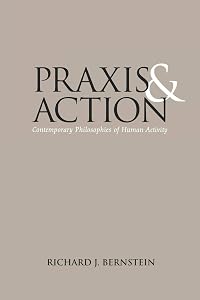
Praxis and Action: Contemporary Philosophies of Human Activity
by Richard J. Bernstein
On This Page
Description
From the Introduction:This inquiry is concerned with the themes of praxis and action in four philosophic movements: Marxism, existentialism, pragmatism, and analytic philosophy. It is rare that these four movements are considered in a single inquiry, for there are profound differences of emphasis, focus, terminology, and approach represented by these styles of thought. Many philosophers believe that similarities among these movements are superficial and that a close examination of them will show more reveal only hopelessly unbridgeable cleavages. While respecting the genuine fundamental differences of these movements, this inquiry is undertaken in the spirit of showing that there are important common themes and motifs in what first appears to be a chaotic babble of voices. I intend to show that the concern with man as an agent has been a primary focal point of each of these movements and further that each contributes something permanent and important to our understanding of the nature and context of human activity. show lessTags
Recommendations



































Member Reviews
In this book originally published in 1971, Richard Bernstein pulls together and compares four different movements in modern philosophy dealing with praxis or action: the Marxist tradition, existentialism, pragmatism and analytical philosophy. The first three (which address praxis) he puts in the context of influence by and reaction to Hegel. The fourth (which addresses action) treats Hegel as irrelevant and styles itself on modern science and linguistic philosophy. But Bernstein points out how analytical philosophy, through a dialectic of its own, begins to move unwittingly toward a recognition of Hegelian concepts. Bernstein is a lucid and disciplined writer who takes the reader from basic concepts to his own conclusions and show more observations. Thus, in the context of praxis/action, the book can serve as an introduction to the four movements as well as an insightful criticism of how each of them deal with the question of action, including criticism drawn from comparing how the movements deal with the issue in different ways. show less
Ratings
Members
- Recently Added By
Author Information

26+ Works 981 Members
Richard J. Bernstein argues that Arendt should be read today because her penetrating insights help us to think about both the darkness of our times and the sources of illumination. He explores her thinking about statelessness and refugees; the right to have rights; racism and segregation; her critique of Zionism; the meaning of the banality of show more evil; the complex relations between truth, lying, power, and violence; the tradition of the revolutionary spirit; and the urgent need for each of us to assume responsibility for our political lives. This short and very readable book will be of great interest to anyone who wants to understand the forces that are shaping our world today. Richard J. Bernstein is Vera List Professor of Philosophy at the New School for Social Research in New York show less
Common Knowledge
- Original publication date
- 1971
Classifications
Statistics
- Members
- 83
- Popularity
- 372,498
- Reviews
- 1
- Rating
- (4.10)
- Languages
- English, Spanish
- Media
- Paper, Ebook
- ISBNs
- 7
- ASINs
- 1