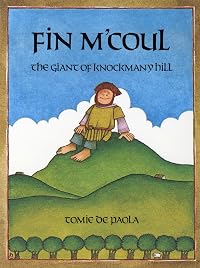
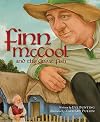
Fin M'Coul: The Giant of Knockmany Hill
by Tomie dePaola
On This Page
Description
Fin M'Coul's wife, Oonagh, helps him outwit his arch rival, Cucullin.Tags
Recommendations
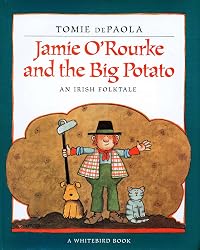
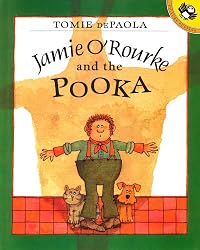
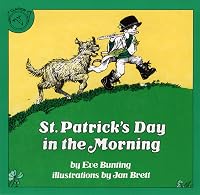
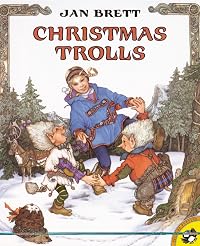
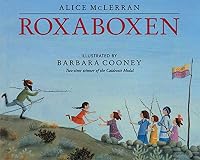
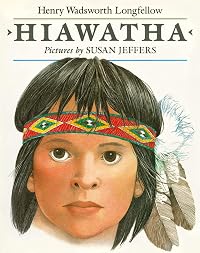
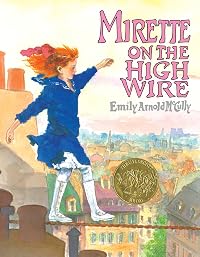
Member Recommendations
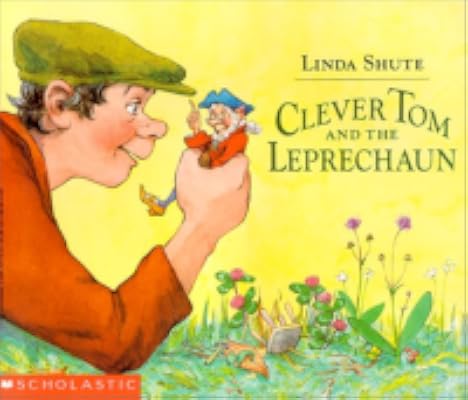
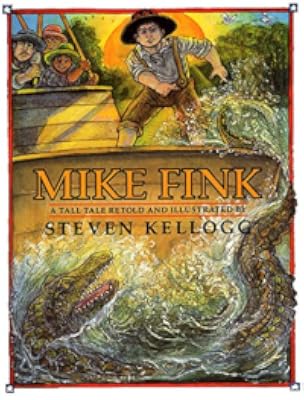
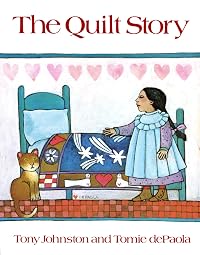
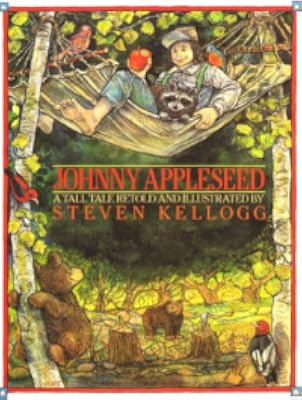
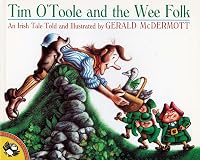
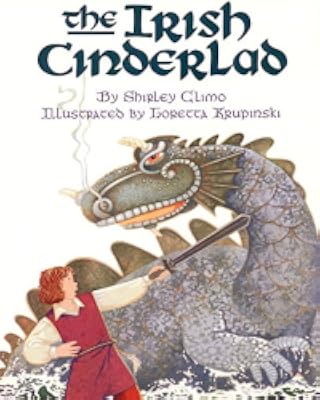
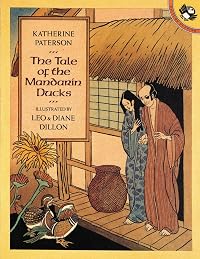
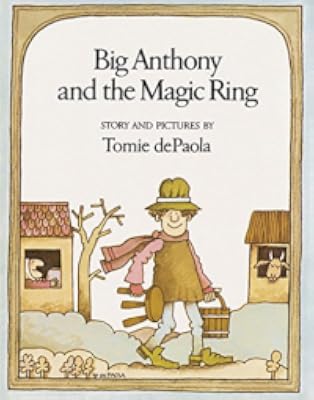
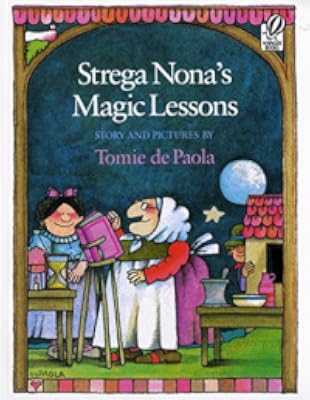
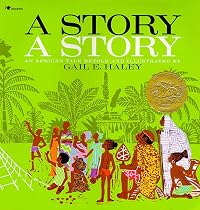
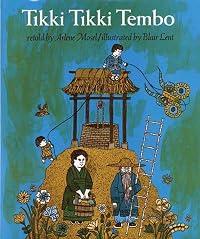
AbigailAdams26 Another picture book retelling of the same folktale.
AbigailAdams26 If you enjoyed this folktale about the giant Fin M'Coul, you might like another story about him
Member Reviews
The Irish folktales concerning the giant Fin M'Coul, and how his clever wife Oonagh saved him from fearsome fellow giant Cucullin, is retold in this picture book from celebrated American author/illustrator Tomie dePaola. Terrified that he too will be soundly beaten by Cucullin, Fin has been on the run for some time, always taking off when he hears the other giant is in the neighborhood. Finally, having had enough of this state of affairs, Oonagh convinces Fin to masquerade as his own baby son, and inviting their enemy in for some tea, puts the fear of Fin into him...
The story retold in Fin M'Coul: The Giant of Knockmany Hill is one I have seen presented in other picture books, notably in Robert Byrd's Finn MacCoul and His Fearless Wife: show more A Giant of a Tale from Ireland and in Jessica Souhami's Mrs. McCool and the Giant Cuhullin: An Irish Tale. As one can see from these various titles, the Anglicization of Irish mythological hero Fionn mac Cumhaill's name can vary, depending upon the source. The note at the rear of this telling informs us that dePaola chose the spelling favored by W.B. Yeats. Just as the spelling of the hero's name in English varies, so too does his nature, in Irish tradition. In ancient lore, he was a brave human warrior, leading the warrior-band known as the Fianna, and the Fenian Cycle of tales (an Fhiannaíocht) is devoted to his adventures. In later Irish folklore, Finn McCool is a giant, featuring in humorous rather than heroic tales, and often paired against Cucullin. He too is a giant in this later tradition, although in earlier lore the hero of the Ulster Cycle of tales (an Rúraíocht), including the great Irish epic, the Táin Bó Cúailnge (Cattle Raid of Cooley).
In any case, while I tend to prefer the heroic version of these two figures myself, their later incarnation as giants in humorous fare is quite popular, and one sees numerous tellings. This one was engaging, featuring an entertaining narrative, and dePaola's trademark illustrations. Although on the whole I think my favorite picture book version of this story is the Byrd, this is also fun, and is one I would recommend, particularly to dePaola fans. show less
The story retold in Fin M'Coul: The Giant of Knockmany Hill is one I have seen presented in other picture books, notably in Robert Byrd's Finn MacCoul and His Fearless Wife: show more A Giant of a Tale from Ireland and in Jessica Souhami's Mrs. McCool and the Giant Cuhullin: An Irish Tale. As one can see from these various titles, the Anglicization of Irish mythological hero Fionn mac Cumhaill's name can vary, depending upon the source. The note at the rear of this telling informs us that dePaola chose the spelling favored by W.B. Yeats. Just as the spelling of the hero's name in English varies, so too does his nature, in Irish tradition. In ancient lore, he was a brave human warrior, leading the warrior-band known as the Fianna, and the Fenian Cycle of tales (an Fhiannaíocht) is devoted to his adventures. In later Irish folklore, Finn McCool is a giant, featuring in humorous rather than heroic tales, and often paired against Cucullin. He too is a giant in this later tradition, although in earlier lore the hero of the Ulster Cycle of tales (an Rúraíocht), including the great Irish epic, the Táin Bó Cúailnge (Cattle Raid of Cooley).
In any case, while I tend to prefer the heroic version of these two figures myself, their later incarnation as giants in humorous fare is quite popular, and one sees numerous tellings. This one was engaging, featuring an entertaining narrative, and dePaola's trademark illustrations. Although on the whole I think my favorite picture book version of this story is the Byrd, this is also fun, and is one I would recommend, particularly to dePaola fans. show less
Fin M'Coul is the one giant left in Ireland who hasn't yet been beaten by the meanest giant, Cucullin. When word comes that Cucullin is headed his way, Fin's wife Oonagh plots to best Cucullin once and for all. Fin pretends to be their child and Cucullin is tricked into thinking Fin's baby son is stronger and meaner than Cucullin himself. Fin is able to bite off Cucullin's brass finger, the secret of his strength, and Fin and Oonagh live the rest of their lives happily.
DePaola captures the rhythm of the Irish accent so well that you almost accidentally find yourself using one. The besting of a bully through cleverness is both humorous and satisfying. DePaola's illustrations are well-suited to this larger-than-life folktale.
DePaola captures the rhythm of the Irish accent so well that you almost accidentally find yourself using one. The besting of a bully through cleverness is both humorous and satisfying. DePaola's illustrations are well-suited to this larger-than-life folktale.
Fin M'Coul is the one giant left in Ireland who hasn't yet been beaten by the meanest giant, Cucullin. When word comes that Cucullin is headed his way, Fin's wife Oonagh plots to best Cucullin once and for all. Fin pretends to be their child and Cucullin is tricked into thinking Fin's baby son is stronger and meaner than Cucullin himself. Fin is able to bite off Cucullin's brass finger, the secret of his strength, and Fin and Oonagh live the rest of their lives happily.
DePaola captures the rhythm of the Irish accent so well that you almost accidentally find yourself using one. The besting of a bully through cleverness is both humorous and satisfying. DePaola's illustrations are well-suited to this larger-than-life folktale.
DePaola captures the rhythm of the Irish accent so well that you almost accidentally find yourself using one. The besting of a bully through cleverness is both humorous and satisfying. DePaola's illustrations are well-suited to this larger-than-life folktale.
First let me note that if you want to read up more about this character of folklore you should use a more common rendition of his name such as Finn McCool or Fionn mac Cumhaill. If you believe the stories, he was singlehandedly responsible for much of the geography of Ireland and Scotland, in the same way that Paul Bunyan is responsible for the Great Lakes!
The story is hilarious, from Fin's worries to his tricky solution to his problem of not wanting to fight, and the illustrations only enhance the words.
I will note that, like most traditional stories, there is some gratuitous violence, but what can you do? That's how the story goes. Besides, most children are such bloodthirsty beasts that they're quite happy with fingers getting bitten show more off, so long as it's clearly over-the-top and unrealistic :)
However, if that's the sort of thing that concerns you then you should definitely read this book before you buy it. show less
The story is hilarious, from Fin's worries to his tricky solution to his problem of not wanting to fight, and the illustrations only enhance the words.
I will note that, like most traditional stories, there is some gratuitous violence, but what can you do? That's how the story goes. Besides, most children are such bloodthirsty beasts that they're quite happy with fingers getting bitten show more off, so long as it's clearly over-the-top and unrealistic :)
However, if that's the sort of thing that concerns you then you should definitely read this book before you buy it. show less
Fin M'Coul: The Giant of Knockmany Hill is an Irish tale about how Fin M'Coul, with the help of his wife Oonagh, outwit the strongest and most feared giant in Ireland, Cucullin. It was widely known that every giant in Ireland was beaten by Cucullin except for Fin M'Coul. One day when Fin was working on the causeway to Scotland, Fin gets word that Cucullin was finally coming for him he runs to his wife to warn her of the situation, she comes up with an ingenious plan to dress Fin as her baby and pretend that the Fin M'Coul Cucullin sought was still working on the causeway. Cucullin arrives, and Oonagh manages to fool him that "Baby" Fin was so strong that the real Fin M'Coul was not to be reckoned with.
At the end of the book, the author show more indicates that stories about Fin M'Coul have been shared for generations - he is apparently best known for building the Giant's Causeway between Ireland and Scotland, and his encounter with Cucullin is known as one of the funniest stories.
What is interesting about this book is that it portrays giants in two respects - there are the giants who look to harm others such as in Jack and the Beanstalk and the Cyclops in The Odyssey; and there are the giants who are gentle and kind heroes like Fin M'Coul or Paul Bunyan.
The plot is creative and easy to follow - a child might find this story analogous to dealing with bullies. It sends a clear message that any challenge or issue can be dealt with if you get the support you need and take the time to think about what to do.
The book can be read aloud dramatically as the dialogue and narration are full of action and rich with description, such as Cucullin giving Knockmany Hill "a little dance" as he comes closer to the M'Coul home and the illustrations are effective in following the plot and demonstrating the dynamics of each character. In addition, the dialect remains authentic to Irish culture with the use of "Lad," and "M',love," and Oonagh referring to Fin as "...a big broth of a man," upon describing him to Cucullin.
Highly recommended for show less
At the end of the book, the author show more indicates that stories about Fin M'Coul have been shared for generations - he is apparently best known for building the Giant's Causeway between Ireland and Scotland, and his encounter with Cucullin is known as one of the funniest stories.
What is interesting about this book is that it portrays giants in two respects - there are the giants who look to harm others such as in Jack and the Beanstalk and the Cyclops in The Odyssey; and there are the giants who are gentle and kind heroes like Fin M'Coul or Paul Bunyan.
The plot is creative and easy to follow - a child might find this story analogous to dealing with bullies. It sends a clear message that any challenge or issue can be dealt with if you get the support you need and take the time to think about what to do.
The book can be read aloud dramatically as the dialogue and narration are full of action and rich with description, such as Cucullin giving Knockmany Hill "a little dance" as he comes closer to the M'Coul home and the illustrations are effective in following the plot and demonstrating the dynamics of each character. In addition, the dialect remains authentic to Irish culture with the use of "Lad," and "M',love," and Oonagh referring to Fin as "...a big broth of a man," upon describing him to Cucullin.
Highly recommended for show less
I had mixed feelings about Fin M'coul by Tomie DePaola. First, I liked how the author included examples of authentic Irish vernacular. For example, Fin's wife says"Fin, m' love...you'll not get a moment's rest until you stand fast and face him." The dialogue in this book added fantastic detail to the story.
However, I found that the characters were rather bland and uninteresting. The main characters consisted of Fin, Fin's wife, and a mean giant named Cucullin. The reader never learns why Culcullin is so nasty! The story would have been more intriguing if we had gotten some background information.
Although the characters didn't particularly catch my interest, I was very intrigued by the illustrations in the book. After reading the show more book's afterward section, I learned that each text block was intentionally surrounded by border designs. The designs were inspired by early Irish jewelry and metal work. After learning this fact, I looked back at the text and found that the borders added a whole new layer of meaning to the story. For example, during the climax of the story, Fin bites off Cucullin's brass finger. The border during this part of the story shows a snake was an exaggerated tongue! Overall, the big picture of this book is that one can get out of trouble using cleverness and wit. show less
However, I found that the characters were rather bland and uninteresting. The main characters consisted of Fin, Fin's wife, and a mean giant named Cucullin. The reader never learns why Culcullin is so nasty! The story would have been more intriguing if we had gotten some background information.
Although the characters didn't particularly catch my interest, I was very intrigued by the illustrations in the book. After reading the show more book's afterward section, I learned that each text block was intentionally surrounded by border designs. The designs were inspired by early Irish jewelry and metal work. After learning this fact, I looked back at the text and found that the borders added a whole new layer of meaning to the story. For example, during the climax of the story, Fin bites off Cucullin's brass finger. The border during this part of the story shows a snake was an exaggerated tongue! Overall, the big picture of this book is that one can get out of trouble using cleverness and wit. show less
This is a story about a wife's clever thinking and a bully out-smarted. I loved the wife's quick thinking and the way she was able to convince the giant Cucullin that Fin M'Coul's baby could eat bread with iron frying pans inside and could squeeze water out of rocks.
Members
- Recently Added By
Lists

Scholastic 100 Best Read-Aloud Books
100 works; 8 members

A Child's Book Tour of Ireland
62 works; 3 members

Children's Picture Books
188 works; 1 member

Written and Illustrated By
805 works; 1 member

Read Aloud Revival
108 works; 4 members
Author Information

242+ Works 98,299 Members
Tomie dePaola was born in Meriden, Connecticut on September 15, 1934. He received a B.F.A. from Pratt Institute in 1956, a M.F.A. from California College of Arts and Crafts in 1969, and a doctoral equivalency from Lone Mountain College in 1970. He has written and/or illustrated more than 270 books including 26 Fairmount Avenue, Strega Nona, Meet show more the Barkers, Nana Upstairs and Nana Downstairs, and Oliver Button Is a Sissy. He has received numerous awards for his work including the Caldecott Honor Award, the Newbery Honor Award and the New Hampshire Governor's Arts Award of Living Treasure. His murals and paintings can be seen in many churches and monasteries throughout New England. He has designed greeting cards, magazine and record album covers, and theater sets. His work is shown in galleries and museums. Tomie dePaola died on March 30, 2020 because of complications he had from surgery after a fall. (Bowker Author Biography) show less
Awards and Honors
Common Knowledge
- Canonical title
- Fin M'Coul: The Giant of Knockmany Hill
- Original title
- Fin M'Coul: The Giant of Knockmany Hill
- Original publication date
- 1981
- People/Characters
- Fionn mac Cumhaill (Fin M'Coul)
- Important places
- Ireland
- Important events
- St. Patrick's Day
- Dedication
- For Flossie and the rest of the Wallingford Downey clan
- First words
- In olden times, when Ireland's glens and woods were still filled with fairies and leprechauns, giants, too, lived on that fair Emerald Isle.
- Quotations
- Now, as any good giant, Fin M'Coul had his work to do, so he was often away from home. Lovely Oonagh didn't seem to mind, for there was plenty to keep her own hands busy. Spinning, knitting, and even giving a pretty touch to ... (show all)their great house.
- Last words
- (Click to show. Warning: May contain spoilers.)And they lived a long happy life.
- Original language
- English
Classifications
Statistics
- Members
- 1,013
- Popularity
- 25,696
- Reviews
- 18
- Rating
- (3.82)
- Languages
- English
- Media
- Paper, Ebook
- ISBNs
- 13
- ASINs
- 4