
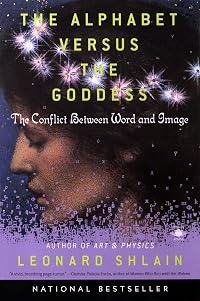
The Alphabet Versus the Goddess: The Conflict Between Word and Image
by Leonard Shlain
On This Page
Description
Who changed the sex of God? This groundbreaking book proposes that the rise of alphabetic literacy reconfigured the human brain and brought about profound changes in history, religion, and gender relations. Making remarkable connections across brain function, myth, and anthropology, Dr. Shlain shows why pre-literate cultures were principally informed by holistic, right-brain modes that venerated the Goddess, images, and feminine values. Writing drove cultures toward linear left-brain show more thinking and this shift upset the balance between men and women, initiating the decline of the feminine and ushering in patriarchal rule. Examining the cultures of the Israelites, Greeks, Christians, and Muslims, Shlain reinterprets ancient myths and parables in light of his theory. Provocative and inspiring, this book is a paradigm-shattering work that will transform your view of history and the mind. show lessTags
Recommendations




















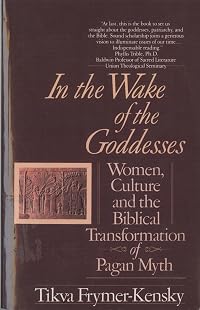





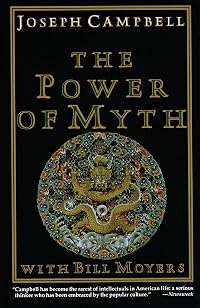




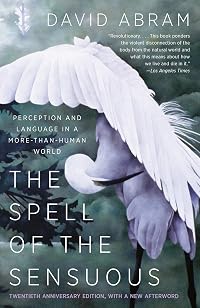


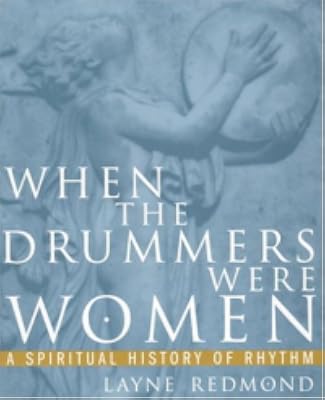







Member Recommendations

Member Reviews
Originally written June 10th, 2002:
The book's thesis is that literacy, and especially alphabetic literacy, hypertrophies the left brain's masculine hunter-killer traits and values of abstract serial linear thought at the expense of the right brain's gatherer-nurturer traits and values of concrete holistic gestalt thought. As alphabetic literacy enters a culture, the society is rocked with violence, religious intolerance, destruction of images, suppression of women, and the overthrow of concrete polytheist goddesses with abstract monotheistic gods. This is seen in the Hebrews, Greeks at the time of Aristotle, Orthodox vs. Gnostic Christianity, the Reformation, the Marxist revolutions of Russia, China, and Southeast Asia, Sunni vs. show more Shi'ite Islam, and modern Islamic fundamentalism like the Taliban. On the flip side, in the agrarian period before the appearance of writing, most cultures' central deity was a powerful Earth mother, represented by copious images, whose lesser consort/child died and was reborn every year. Men and women both worshiped goddesses, and society was fairly egalitarian (this remains the case in many hunter/gatherer cultures today). Major thinkers who spoke rather than wrote (Laozi, Buddha, Socrates, Jesus, Mohamed) tended to have fairly tolerant and pro-female attitudes. And these values as well as images tended to appear in cultures where alphabetic literacy was not widespread (including those cultures who passed from literacy to illiteracy, those near to violent literate cultures, and those who have yet to attain literacy). Furthermore, as photography and electromagnetism (with all its feminine metaphors) appeared in the forms of photography, movies, television, and computers, the West's laws, attitudes, and culture has shifted from excessive yang to a fairly balanced state. In a nutshell, a culture's communication media, perhaps more so than its content, determines the values, actions, and trends of society. For some more data, see my CWA post (about two thirds of the way down).
The book is written for the general public, so it lacks the flurry of citations found in scholarly works. It is far from New Age pseudo science, though; Shlain's bibliography spans 9 pages and ranges from Augustine and Virgil to Will Durant and Bertrand Russell. His data is the "generally accepted" story; exploration of various views of, say, ancient archaeological data is not in his scope. The events Shlain describes are large-scale and very complex, and doubtless arise from many factors and can be explained in many ways (which he acknowledges); his goal is to provide a unifying theory linking the counterpunctual rise and fall of the written word, masculine values, images, and feminine values. As a brain surgeon, Shlain's division of traits, values, and modes of thought rests on sound neurological data (and he acknowledges that the hemispheric split is more metaphorically accurate than physically accurate).
The book is excellently written, using both left hemispheric literalism and right hemispheric metaphor. Shlain doesn't claim to have proved anything, but rather to have demonstrated a correlation, from which the reader is to draw conclusions. His argument is cogent and well-documented, unlike many writers on male/female cultural interplay. He only once "falls" into "rhetorical" "damning" "quotation" marks. His language flows well and is graced by many words he has selected in the hopes that they don't fall out of the lexicon. The paradigmatic and specific ideas expressed in the book lead me to recommend it to almost everyone, from literalistic Protestants to open-minded Pagans to feminists who rail against cultural images. I can't think of many of my friends who wouldn't enjoy the book, and even fewer who would not benefit from reading it. I have found its modern perspective on yin/yang quite helpful in examining my own tendencies, beliefs, and development. (In the past, I've been big on literal interpretation, against photography and GUIs, and down on lots of right-hemispheric modes of perception. In recent years, I haven't read as much, I've watched more movies, and have adopted a more benign view of many Christians.)
Edit February 15, 2009: In the intervening years, I've become less enamored with Leonard Shlain's work. He tries a little too hard to cram the entirety of human history into some simple ideas of the brain. His books and presentations are very enjoyable and informative, but they need a heavy dose of salt. He points out a lot of connections between elements of the zeitgeist that are worth chewing on, but I think the story he tells about their unification is a little simplistic. I still think The Alphabet vs. the Goddess is a book worth reading, but readers interested in the subject should read widely; there are a lot of cognitive scientists with interesting theories who also write well "at the Scientific American level" as Prof. Paulson would say. show less
The book's thesis is that literacy, and especially alphabetic literacy, hypertrophies the left brain's masculine hunter-killer traits and values of abstract serial linear thought at the expense of the right brain's gatherer-nurturer traits and values of concrete holistic gestalt thought. As alphabetic literacy enters a culture, the society is rocked with violence, religious intolerance, destruction of images, suppression of women, and the overthrow of concrete polytheist goddesses with abstract monotheistic gods. This is seen in the Hebrews, Greeks at the time of Aristotle, Orthodox vs. Gnostic Christianity, the Reformation, the Marxist revolutions of Russia, China, and Southeast Asia, Sunni vs. show more Shi'ite Islam, and modern Islamic fundamentalism like the Taliban. On the flip side, in the agrarian period before the appearance of writing, most cultures' central deity was a powerful Earth mother, represented by copious images, whose lesser consort/child died and was reborn every year. Men and women both worshiped goddesses, and society was fairly egalitarian (this remains the case in many hunter/gatherer cultures today). Major thinkers who spoke rather than wrote (Laozi, Buddha, Socrates, Jesus, Mohamed) tended to have fairly tolerant and pro-female attitudes. And these values as well as images tended to appear in cultures where alphabetic literacy was not widespread (including those cultures who passed from literacy to illiteracy, those near to violent literate cultures, and those who have yet to attain literacy). Furthermore, as photography and electromagnetism (with all its feminine metaphors) appeared in the forms of photography, movies, television, and computers, the West's laws, attitudes, and culture has shifted from excessive yang to a fairly balanced state. In a nutshell, a culture's communication media, perhaps more so than its content, determines the values, actions, and trends of society. For some more data, see my CWA post (about two thirds of the way down).
The book is written for the general public, so it lacks the flurry of citations found in scholarly works. It is far from New Age pseudo science, though; Shlain's bibliography spans 9 pages and ranges from Augustine and Virgil to Will Durant and Bertrand Russell. His data is the "generally accepted" story; exploration of various views of, say, ancient archaeological data is not in his scope. The events Shlain describes are large-scale and very complex, and doubtless arise from many factors and can be explained in many ways (which he acknowledges); his goal is to provide a unifying theory linking the counterpunctual rise and fall of the written word, masculine values, images, and feminine values. As a brain surgeon, Shlain's division of traits, values, and modes of thought rests on sound neurological data (and he acknowledges that the hemispheric split is more metaphorically accurate than physically accurate).
The book is excellently written, using both left hemispheric literalism and right hemispheric metaphor. Shlain doesn't claim to have proved anything, but rather to have demonstrated a correlation, from which the reader is to draw conclusions. His argument is cogent and well-documented, unlike many writers on male/female cultural interplay. He only once "falls" into "rhetorical" "damning" "quotation" marks. His language flows well and is graced by many words he has selected in the hopes that they don't fall out of the lexicon. The paradigmatic and specific ideas expressed in the book lead me to recommend it to almost everyone, from literalistic Protestants to open-minded Pagans to feminists who rail against cultural images. I can't think of many of my friends who wouldn't enjoy the book, and even fewer who would not benefit from reading it. I have found its modern perspective on yin/yang quite helpful in examining my own tendencies, beliefs, and development. (In the past, I've been big on literal interpretation, against photography and GUIs, and down on lots of right-hemispheric modes of perception. In recent years, I haven't read as much, I've watched more movies, and have adopted a more benign view of many Christians.)
Edit February 15, 2009: In the intervening years, I've become less enamored with Leonard Shlain's work. He tries a little too hard to cram the entirety of human history into some simple ideas of the brain. His books and presentations are very enjoyable and informative, but they need a heavy dose of salt. He points out a lot of connections between elements of the zeitgeist that are worth chewing on, but I think the story he tells about their unification is a little simplistic. I still think The Alphabet vs. the Goddess is a book worth reading, but readers interested in the subject should read widely; there are a lot of cognitive scientists with interesting theories who also write well "at the Scientific American level" as Prof. Paulson would say. show less
Ok, for bibliophiles, this book is like being told that the parents you've admired and cherished and emulated for so long were drunken, abusive, misanthropes.
But if you tough it out, accept the possibility that this habit, this passion that keeps making life worth living, has had possible side-effects, then the pay-off is astounding.
Shlain provides copious examples for his thesis--that the invention of the abstract alphabets (western and, to some extent, eastern pictograph-alphabets) subtly altered the brain functions of all humans.
Ultimately, what one gets from this book (aside from the elasticity of Mind) is the cautionary tale of technological progress: Do the things we make, make (or remake) us in turn? Think about this next time show more you pick up our cell phone--how has that changed your life and the culture around you? show less
But if you tough it out, accept the possibility that this habit, this passion that keeps making life worth living, has had possible side-effects, then the pay-off is astounding.
Shlain provides copious examples for his thesis--that the invention of the abstract alphabets (western and, to some extent, eastern pictograph-alphabets) subtly altered the brain functions of all humans.
Ultimately, what one gets from this book (aside from the elasticity of Mind) is the cautionary tale of technological progress: Do the things we make, make (or remake) us in turn? Think about this next time show more you pick up our cell phone--how has that changed your life and the culture around you? show less
Though I found Shlain’s theory compelling and provocative, and his writing style impressively fluid considering the complexity of his subject matter, I ultimately wasn’t able to sit still with the idea that something as simple as the mechanics of how we communicate could exert such profound influence on our attitudes toward complex, all-encompassing topics such as gender and spirituality, not to mention all the other areas which Shlain implicated as effects of our linguistic tools, such as our regard of the natural world and of our bodies, etc.
Shlain's primary assertion that the brain hemispheres are somehow aligned to genders is such an obviously simplistic theory that real-life experience easily trumps it. I consider myself a very show more left-brained person, with all that that implies – I am rarely grounded in my bodily sensations and physical surroundings, I think in more abstract than concrete terms, etc. – but I by no means disdain females, nor do I regret the fact that I am myself a female. I realize that Shlain includes a disclaimer in the beginning of the book about how gender is a social construct, and how any person, regardless of sex, contains a mixture of what are culturally deemed 'female' and 'male' attributes, but he doesn't seem to include this very weighty consideration in the actual meat of his argument.
Furthermore, I found his attribution of language to the left hemisphere and images to the right hemisphere to be too clean cut to adequately describe real-world uses of words and images. Though the holistic apprehension of images and other visual input is typically the remit of the right hemisphere, images themselves can very easily work for a left-brain agenda by reflecting its fragmented, disembodied vision of the world – as a brief foray into modern and postmodern art will readily attest to. Moving on to the question of language processing: for bureaucratic and scientific purposes, language depends on a linear procession of abstract signs to convey an explicit, literal meaning, left-brain style. But for the expression of anything besides pure, cold information – in other words, the type of situation which arises most frequently in day-to-day social intercourse – language users, even those using the written form, will depend on right-brain faculties such as affect, associative meaning, descriptive imagery, irony, humor and other non-literal devices. We cannot completely disregard the intentions with which we set out to communicate, and we cannot assume that our deeply held attitudes about the world will cede so readily to the structural impositions of our communicative medium. Poets, authors, and even the best of scientists try to find creative ways to somehow transcend the inherent logical framework of language to convey more intuitive understandings, and their intentions don't count for nothing.
The intention with which we set out to communicate surely must have more impact on how we choose to employ our tools, not the other way around. It seems to me that Shlain takes McLuhan’s adage too far, by suggesting that the nature of our tools dictates our uses of them, and not only that, but that it regiments our mindsets so definitively that our thought cannot venture outside of the limitations of the tools themselves. To accept this as true would also be to accept that thought is not possible beyond the constraints of language – and this problem is far from being resolved by current neurolinguistic research. According to Shlain’s explanation, which carries with it a lot of unchecked theoretical baggage, the technical details of language – how it depends on abstract representation, and is ordered in a linear fashion, etc. – will consequently cause us to limit our thought, too, to abstractions and linearity. Such a model of human behavior is evocative of a machine which can act only upon the software with which it has been coded, or of a circuit board whose output depends on a predetermined, linear chain of cause and effect… This is a mechanistic concept of how our minds work, and perhaps it’s how our collective left brain has primed us to think of the world and ourselves. It seems to me, then, that Shlain has himself recurred to a left-brain mode of thought in the very act of trying to warn us of its pernicious effects. We are humans, not machines, and we still have the ability to feel and act however we choose beyond language's 'coding,' because there is much more that goes on in our mind that the 'software' of language cannot even access.
I prefer to think that the causes and effects of our implements of thought don’t work nearly as linearly as left-brain conceptualization would have us believe. Our systems of signs cannot ‘program’ our thoughts about the world, because the world lies beyond those systems of signs, a lot of it too infinitely complex to ever interpret into signs. The world beyond signs must surely have greater influence on how we perceive things, one of those things being signs themselves. Far from lying in a direct, linear chain of causal relationships, I’d argue that our preferential use of one or another expressive outlet, our perceptions of gender differences, our disdain or esteem of the bodily and the concrete, our tendency to think linearly and analytically or holistically and intuitively, etc., are rather interrelated in a network of associations, and all collaborate to reinforce one another. It is impossible to extract just one component from this web of mutually reinforcing elements and name it the primary cause, just as it is impossible to designate the point where a circle begins. We may refer to such groupings of phenomena metonymically, as in "culture of writing," if you will, but that does not mean that writing is the primordial cause. Despite Shlain's skillful detection of patterns and drawing of parallels between aspects of the left brain, language at the end of the day is still just that - one aspect of an inextricably linked unity of perception brought to bear on the world by the left hemisphere.
I believe that what unifies the functions of each hemisphere is a fundamental attitude towards the world that each of the brain hemispheres has. If it’s odd to think of the brain hemispheres as having separate attitudes towards the world, as if they were two different people taking up residence inside our heads, it is certainly no odder than thinking that a computing machine is encased in our skulls, and that all it takes to ‘re-wire’ our way of thinking is to change one bit of the ‘code’ a bit, say, to process images instead of words.
Though I disagree with many premises that Shlain starts out with, he serves as an important starting point for me in the study of the mind, by providing a somewhat detached vantage point on language, with the necessary distance to analyze its often invisible effects on thought. His engaging style and captivating combination of psychology, communication studies, and anthropology has sparked a lifelong interest for me in that particular concoction of disciplines - actually, I'm doing research for my honors thesis right now on a similar concoction. So, after all the intellectual grappling I've done with it, my dog-eared, profusely highlighted and marked copy of The Alphabet Versus the Goddess will always have a special place on my bookshelf. show less
Shlain's primary assertion that the brain hemispheres are somehow aligned to genders is such an obviously simplistic theory that real-life experience easily trumps it. I consider myself a very show more left-brained person, with all that that implies – I am rarely grounded in my bodily sensations and physical surroundings, I think in more abstract than concrete terms, etc. – but I by no means disdain females, nor do I regret the fact that I am myself a female. I realize that Shlain includes a disclaimer in the beginning of the book about how gender is a social construct, and how any person, regardless of sex, contains a mixture of what are culturally deemed 'female' and 'male' attributes, but he doesn't seem to include this very weighty consideration in the actual meat of his argument.
Furthermore, I found his attribution of language to the left hemisphere and images to the right hemisphere to be too clean cut to adequately describe real-world uses of words and images. Though the holistic apprehension of images and other visual input is typically the remit of the right hemisphere, images themselves can very easily work for a left-brain agenda by reflecting its fragmented, disembodied vision of the world – as a brief foray into modern and postmodern art will readily attest to. Moving on to the question of language processing: for bureaucratic and scientific purposes, language depends on a linear procession of abstract signs to convey an explicit, literal meaning, left-brain style. But for the expression of anything besides pure, cold information – in other words, the type of situation which arises most frequently in day-to-day social intercourse – language users, even those using the written form, will depend on right-brain faculties such as affect, associative meaning, descriptive imagery, irony, humor and other non-literal devices. We cannot completely disregard the intentions with which we set out to communicate, and we cannot assume that our deeply held attitudes about the world will cede so readily to the structural impositions of our communicative medium. Poets, authors, and even the best of scientists try to find creative ways to somehow transcend the inherent logical framework of language to convey more intuitive understandings, and their intentions don't count for nothing.
The intention with which we set out to communicate surely must have more impact on how we choose to employ our tools, not the other way around. It seems to me that Shlain takes McLuhan’s adage too far, by suggesting that the nature of our tools dictates our uses of them, and not only that, but that it regiments our mindsets so definitively that our thought cannot venture outside of the limitations of the tools themselves. To accept this as true would also be to accept that thought is not possible beyond the constraints of language – and this problem is far from being resolved by current neurolinguistic research. According to Shlain’s explanation, which carries with it a lot of unchecked theoretical baggage, the technical details of language – how it depends on abstract representation, and is ordered in a linear fashion, etc. – will consequently cause us to limit our thought, too, to abstractions and linearity. Such a model of human behavior is evocative of a machine which can act only upon the software with which it has been coded, or of a circuit board whose output depends on a predetermined, linear chain of cause and effect… This is a mechanistic concept of how our minds work, and perhaps it’s how our collective left brain has primed us to think of the world and ourselves. It seems to me, then, that Shlain has himself recurred to a left-brain mode of thought in the very act of trying to warn us of its pernicious effects. We are humans, not machines, and we still have the ability to feel and act however we choose beyond language's 'coding,' because there is much more that goes on in our mind that the 'software' of language cannot even access.
I prefer to think that the causes and effects of our implements of thought don’t work nearly as linearly as left-brain conceptualization would have us believe. Our systems of signs cannot ‘program’ our thoughts about the world, because the world lies beyond those systems of signs, a lot of it too infinitely complex to ever interpret into signs. The world beyond signs must surely have greater influence on how we perceive things, one of those things being signs themselves. Far from lying in a direct, linear chain of causal relationships, I’d argue that our preferential use of one or another expressive outlet, our perceptions of gender differences, our disdain or esteem of the bodily and the concrete, our tendency to think linearly and analytically or holistically and intuitively, etc., are rather interrelated in a network of associations, and all collaborate to reinforce one another. It is impossible to extract just one component from this web of mutually reinforcing elements and name it the primary cause, just as it is impossible to designate the point where a circle begins. We may refer to such groupings of phenomena metonymically, as in "culture of writing," if you will, but that does not mean that writing is the primordial cause. Despite Shlain's skillful detection of patterns and drawing of parallels between aspects of the left brain, language at the end of the day is still just that - one aspect of an inextricably linked unity of perception brought to bear on the world by the left hemisphere.
I believe that what unifies the functions of each hemisphere is a fundamental attitude towards the world that each of the brain hemispheres has. If it’s odd to think of the brain hemispheres as having separate attitudes towards the world, as if they were two different people taking up residence inside our heads, it is certainly no odder than thinking that a computing machine is encased in our skulls, and that all it takes to ‘re-wire’ our way of thinking is to change one bit of the ‘code’ a bit, say, to process images instead of words.
Though I disagree with many premises that Shlain starts out with, he serves as an important starting point for me in the study of the mind, by providing a somewhat detached vantage point on language, with the necessary distance to analyze its often invisible effects on thought. His engaging style and captivating combination of psychology, communication studies, and anthropology has sparked a lifelong interest for me in that particular concoction of disciplines - actually, I'm doing research for my honors thesis right now on a similar concoction. So, after all the intellectual grappling I've done with it, my dog-eared, profusely highlighted and marked copy of The Alphabet Versus the Goddess will always have a special place on my bookshelf. show less
I enjoyed the weaving of the history of the written language with the treatment of women. Great storytelling.
On the other hand, his theory that use of writing caused maltreatment of women is a weak theory. He writes about his theory as if it were true.
From the evidence he gives, it seems to me that the opposite is true; that written language was, and still is, a tool used by a patriarchal culture to control the lower classes, including women. The evidence shows how there is an ongoing war against women's freedom.
On the other hand, his theory that use of writing caused maltreatment of women is a weak theory. He writes about his theory as if it were true.
From the evidence he gives, it seems to me that the opposite is true; that written language was, and still is, a tool used by a patriarchal culture to control the lower classes, including women. The evidence shows how there is an ongoing war against women's freedom.
At times compelling, at times ridiculous, and always an amusing read. The basic thesis is that the growth of literacy and the prevalence of the written word has over the last n-thousand years, upset the balance between the right and left brain. This, in turn, has promoted linear masculine values or holistic feminine values. While I think the idea is interesting to play with, Shlain tries to take it farther than it was ever meant to go. He ends up trying to explain everything and then some in terms of his thesis. That said, I still think that the idea that there is an imbalance between word and image, with image coming out the loser, is interesting.
Dr. Leonard Shlain has an idee fixe (or in more colloquial – and colourful – terms, a “bee in his bonnet”). It is this: alphabet literacy is the cause of misogyny among humanity. He spends 400 pages of the current book, The Alphabet vs. the Goddess , trying to convince us of this path-breaking, explosive idea.
Does he succeed? Sadly, no.
Dr. Shlain starts out well enough:
In first three chapters, the author traces the development of human beings from “hunted vegetarian to scared scavenger to tentative hunter to accomplished killer in a mere million years”. This remarkable development was achieved by three accidents of natural selection: forelimbs with opposable thumbs, spectacularly powerful eyes and a huge brain. Bigger brains meant more difficult childbirth and extended childhoods – which required the female of the species to specialize in child-bearing and –rearing, leaving the male to hunt for food. It also meant there had to be a strong pair bonding between couples, so that the child can have a stable family to grow up in. This was achieved through perpetual estrus of the female, so that sexual attraction became a permanent bond. Lo! The modern family unit was born.
Even though the above anthropological analysis of evolution may be debated, we can more or less take it as true (though some contentions of Dr.Shlain, that females initially traded sex for food, may be questionable). However, from here the author takes off into uncharted waters. He argues (quite convincingly) that the hunter male needed much more of tunnel vision, so that the cone cells of the central part of the retina developed at the expense of the rod cells, which aid in peripheral vision; also, the analytical left brain developed at the expense of the contemplative right brain. In the females, whose role was nurture rather than killing, it happened exactly the opposite way. So … males=death, females=life.
(…All right, all right! I know you cannot reduce humanity to such a simple equation, but let’s accompany Dr. Shlain a little further on this unusual logical journey.)
The nurturing role of the female in mythology is, of course, well known. Before the patriarchal religions took over, there was the Great Goddess in many forms across the globe: this matriarchal divinity was all-encompassing and nurturing in almost all the cultures. In contrast, the male divinity is aggressive, acquisitive and predatory. As time went by, this male god subjugated the goddess, to extent of removing her totally from existence in the three Levantine religions (Judaism, Christianity and Islam) and reigning supreme as the only true God. In Dr. Shlain’s opinion, this happened because human beings became alphabet literate.
The first form of abstract writing we have is the cuneiform script of Mesopotamia. It is a commonly accepted fact that the original forms of writing were pictorial – in Dr. Shlain’s words, “before there was writing, there were pictures.” In his opinion, in creating an abstract script, human beings moved firmly into the camp of the left brain and the holistic right brain was marginalised. With this, the fall of the Goddess began.
Dr. Shlain cites the myth of the god Marduk, who killed the mother goddess Tiamat and dismembered her corpse to create the universe, as the first male-centric myth, “shocking for its misogynist virulence”. He sees it as the creation of Akkadian priests, who conquered the Sumerians; significantly, they also converted the image-inspired ideograms of the Sumerian cuneiform into phonograms, symbols representing the sounds of words. This is a paradigm shift into the abstract arena of the left brain, where the Goddess and her humanistic and holistic values have no existence.
Starting from this, the author moves through the history of the ancient, classical, medieval and modern civilisation (mostly Western), arguing with examples of how the world slowly adopted patriarchy as they got more literate; to reach its pinnacle in the Abrahamic religions, where images are total anathema, God is a faceless, male entity (even though sexless, God is always He), and the word of God and the Holy Book are the only sacred things.
Here is where the things get a bit woolly. Dr. Shlain does a good job of analysing the growth of misogyny over the years, along with the growth and spread of the Abrahamic religions: however, he does not succeed in proving that literacy itself is the cause. Alphabet literacy grew along with the patriarchal religions, true. But, as the author himself admits, correlation does not immediately prove causation.
There are one or two areas where Dr. Shlain posits a far-fetched theory and later on, builds his arguments on this dubious foundation. Take his analysis of the Cadmus myth, for example. In one of the versions, the Greek hero Cadmus came to Thebes from Phoenicia, slew a terrible serpent which had been terrorising the populace, extracted its fangs, and sowed them in a nearby field. From each tooth sprang a fierce warrior. The grateful Thebans made him king. Dr. Shlain sees the serpent as a feminine symbol (throughout the book: this itself is dubious, as most mythologists and psychologists see the snake as a phallic symbol) – and the teeth as the symbol for the alphabet. So in killing the serpent and sowing the teeth, the myth is talking about the Phoenicians’ feat of bringing the art of writing to Greece, for which there is historical evidence. Ergo: the advent of alphabet literacy killed the Goddess in Greece! I would call this dubious reasoning at best.
Dr. Shlain also makes mistakes while analysing history. For example, even though he says that Israelites’ captivity in Egypt is unproven and the majority of the historians do not subscribe to it: however, one of his chapters is based on the Exodus as a historical event, and he brings in a lot of questionable claims to support his theory, even quoting discredited authors like Immanuel Vellikovsky to support his arguments. Also, his chapter on India is full of erroneous statements. He considers the Aryan invaders to India (an invasion theory which has been largely disproved) to have been alphabet-literate, hence misogynist and aggressive: whereas the Harappan civilisation which existed before that to have been illiterate and hence Goddess-oriented. He also puts in such patently silly statements such as “the Harappans spoke a form of early Sanskrit”, “The Rig Veda is India’s oldest epic poem [it is not an epic poem at all!] and contains glimpses of the culture as it existed before the arrival of the Aryan warriors and alphabet literacy. [the Vedas were written by Aryans – according to some sources, before they reached India-see The Vedic People by Rajesh Kochhar]”
(I could go on quoting, but I think the above examples are sufficient to show why Dr. Shlain’s credibility took a severe beating once I passed this chapter.)
The author makes a lot of definitive statements on things which could only be conjecture. He seems to be hell-bent on splitting things into twos, one part dealing with literacy, the left brain, misogyny and intolerance: and the other dealing with the right brain, image-centric Goddess worship and tolerance.
The book analyses almost all of the religious and cultural history of mankind through this dualistic glass: be it the cult of Dionysus, Buddhism, the Tao or the teachings of Confucius.
As he moves past the medieval age into the history modern religion (especially in the West), however, Dr. Shlain proves to be an entertaining narrator. He has meticulously traced the transformation of Christianity from the unorganised and tolerant religion preached by Jesus into the intolerant and murderous behemoth it became after the Renaissance: also, the story of the metamorphosis of Islam from the frugal desert religion based on surrender to God to an empire spanning half the globe is also enchantingly told. One can only cringe at the excesses of the inquisition and the cruelties of the witch hunts. One fails to understand how such hatred towards believers of another faith, and general intolerance towards women could reach such paranoid heights – but apparently they did. The only caveat I have is that Dr. Shlain relates intolerance and bigotry everywhere to literacy, based on very tenuous evidence.
More of the same arguments follow as the development of the “modern” world, as we know it, is analysed – it would be tedious to give a line-by-line account. Suffice it to say that the monster of alphabet literacy is identified to be behind all modern evils such as the Holocaust and the Stalinist purges: and the re-awakening of the right brain in the twentieth century is seen as the source of positive movements like feminism –although it is never made clear exactly how the connection is made. By now, the book starts reading like a polemic against the alphabet!
However, the last chapter, where Leonard Shlain identifies television as the antidote to the misogyny engendered by the written word takes the cake. His argument that the return of the image on the TV screen to replace the word on the printed page has again started engendering right brain values in human beings is extremely questionable. Does the production of a generation of couch potatoes, addicted to reality shows and mindless soaps, imbibing the lies dished out by the corporate news networks along with chunks of lurid advertisements, help the Goddess come back into our lives?
To be fair to Dr. Shlain, he writes in the epilogue:
I have to say that you are right on that count, Dr. Shlain. For someone who has been taught that
it is very difficult to differentiate art and literature – and to see either of them as not emanating from the Goddess.
Edit to add: Even though I do not agree with Dr. Shlain's premise, the growth of misogyny along with dogmatic religious views merit serious consideration. There is ample reason to believe that the left brain took over from the right brain somewhere along our march to civilisation: even though it helped us in material ways, our spiritual side atrophied. And I personally believe this spiritual side has a lot to do with the Goddess. Hence my two stars. show less
Does he succeed? Sadly, no.
Dr. Shlain starts out well enough:
Of all sacred cows allowed to roam unimpeded in our culture, few are as revered as literacy. Its benefits have been so incontestable that in the five millennia since the advent of the written word numerous poets and writers have extolled its virtues. Few paused to consider its costs. Sophocles once warned, “Nothing vast enters the life of mortals without ashow more
curse.” The invention of writing was vast; this book will investigate the curse.
In first three chapters, the author traces the development of human beings from “hunted vegetarian to scared scavenger to tentative hunter to accomplished killer in a mere million years”. This remarkable development was achieved by three accidents of natural selection: forelimbs with opposable thumbs, spectacularly powerful eyes and a huge brain. Bigger brains meant more difficult childbirth and extended childhoods – which required the female of the species to specialize in child-bearing and –rearing, leaving the male to hunt for food. It also meant there had to be a strong pair bonding between couples, so that the child can have a stable family to grow up in. This was achieved through perpetual estrus of the female, so that sexual attraction became a permanent bond. Lo! The modern family unit was born.
Even though the above anthropological analysis of evolution may be debated, we can more or less take it as true (though some contentions of Dr.Shlain, that females initially traded sex for food, may be questionable). However, from here the author takes off into uncharted waters. He argues (quite convincingly) that the hunter male needed much more of tunnel vision, so that the cone cells of the central part of the retina developed at the expense of the rod cells, which aid in peripheral vision; also, the analytical left brain developed at the expense of the contemplative right brain. In the females, whose role was nurture rather than killing, it happened exactly the opposite way. So … males=death, females=life.
(…All right, all right! I know you cannot reduce humanity to such a simple equation, but let’s accompany Dr. Shlain a little further on this unusual logical journey.)
The nurturing role of the female in mythology is, of course, well known. Before the patriarchal religions took over, there was the Great Goddess in many forms across the globe: this matriarchal divinity was all-encompassing and nurturing in almost all the cultures. In contrast, the male divinity is aggressive, acquisitive and predatory. As time went by, this male god subjugated the goddess, to extent of removing her totally from existence in the three Levantine religions (Judaism, Christianity and Islam) and reigning supreme as the only true God. In Dr. Shlain’s opinion, this happened because human beings became alphabet literate.
The first form of abstract writing we have is the cuneiform script of Mesopotamia. It is a commonly accepted fact that the original forms of writing were pictorial – in Dr. Shlain’s words, “before there was writing, there were pictures.” In his opinion, in creating an abstract script, human beings moved firmly into the camp of the left brain and the holistic right brain was marginalised. With this, the fall of the Goddess began.
Dr. Shlain cites the myth of the god Marduk, who killed the mother goddess Tiamat and dismembered her corpse to create the universe, as the first male-centric myth, “shocking for its misogynist virulence”. He sees it as the creation of Akkadian priests, who conquered the Sumerians; significantly, they also converted the image-inspired ideograms of the Sumerian cuneiform into phonograms, symbols representing the sounds of words. This is a paradigm shift into the abstract arena of the left brain, where the Goddess and her humanistic and holistic values have no existence.
Starting from this, the author moves through the history of the ancient, classical, medieval and modern civilisation (mostly Western), arguing with examples of how the world slowly adopted patriarchy as they got more literate; to reach its pinnacle in the Abrahamic religions, where images are total anathema, God is a faceless, male entity (even though sexless, God is always He), and the word of God and the Holy Book are the only sacred things.
Here is where the things get a bit woolly. Dr. Shlain does a good job of analysing the growth of misogyny over the years, along with the growth and spread of the Abrahamic religions: however, he does not succeed in proving that literacy itself is the cause. Alphabet literacy grew along with the patriarchal religions, true. But, as the author himself admits, correlation does not immediately prove causation.
There are one or two areas where Dr. Shlain posits a far-fetched theory and later on, builds his arguments on this dubious foundation. Take his analysis of the Cadmus myth, for example. In one of the versions, the Greek hero Cadmus came to Thebes from Phoenicia, slew a terrible serpent which had been terrorising the populace, extracted its fangs, and sowed them in a nearby field. From each tooth sprang a fierce warrior. The grateful Thebans made him king. Dr. Shlain sees the serpent as a feminine symbol (throughout the book: this itself is dubious, as most mythologists and psychologists see the snake as a phallic symbol) – and the teeth as the symbol for the alphabet. So in killing the serpent and sowing the teeth, the myth is talking about the Phoenicians’ feat of bringing the art of writing to Greece, for which there is historical evidence. Ergo: the advent of alphabet literacy killed the Goddess in Greece! I would call this dubious reasoning at best.
Dr. Shlain also makes mistakes while analysing history. For example, even though he says that Israelites’ captivity in Egypt is unproven and the majority of the historians do not subscribe to it: however, one of his chapters is based on the Exodus as a historical event, and he brings in a lot of questionable claims to support his theory, even quoting discredited authors like Immanuel Vellikovsky to support his arguments. Also, his chapter on India is full of erroneous statements. He considers the Aryan invaders to India (an invasion theory which has been largely disproved) to have been alphabet-literate, hence misogynist and aggressive: whereas the Harappan civilisation which existed before that to have been illiterate and hence Goddess-oriented. He also puts in such patently silly statements such as “the Harappans spoke a form of early Sanskrit”, “The Rig Veda is India’s oldest epic poem [it is not an epic poem at all!] and contains glimpses of the culture as it existed before the arrival of the Aryan warriors and alphabet literacy. [the Vedas were written by Aryans – according to some sources, before they reached India-see The Vedic People by Rajesh Kochhar]”
(I could go on quoting, but I think the above examples are sufficient to show why Dr. Shlain’s credibility took a severe beating once I passed this chapter.)
The author makes a lot of definitive statements on things which could only be conjecture. He seems to be hell-bent on splitting things into twos, one part dealing with literacy, the left brain, misogyny and intolerance: and the other dealing with the right brain, image-centric Goddess worship and tolerance.
The book analyses almost all of the religious and cultural history of mankind through this dualistic glass: be it the cult of Dionysus, Buddhism, the Tao or the teachings of Confucius.
As he moves past the medieval age into the history modern religion (especially in the West), however, Dr. Shlain proves to be an entertaining narrator. He has meticulously traced the transformation of Christianity from the unorganised and tolerant religion preached by Jesus into the intolerant and murderous behemoth it became after the Renaissance: also, the story of the metamorphosis of Islam from the frugal desert religion based on surrender to God to an empire spanning half the globe is also enchantingly told. One can only cringe at the excesses of the inquisition and the cruelties of the witch hunts. One fails to understand how such hatred towards believers of another faith, and general intolerance towards women could reach such paranoid heights – but apparently they did. The only caveat I have is that Dr. Shlain relates intolerance and bigotry everywhere to literacy, based on very tenuous evidence.
More of the same arguments follow as the development of the “modern” world, as we know it, is analysed – it would be tedious to give a line-by-line account. Suffice it to say that the monster of alphabet literacy is identified to be behind all modern evils such as the Holocaust and the Stalinist purges: and the re-awakening of the right brain in the twentieth century is seen as the source of positive movements like feminism –although it is never made clear exactly how the connection is made. By now, the book starts reading like a polemic against the alphabet!
However, the last chapter, where Leonard Shlain identifies television as the antidote to the misogyny engendered by the written word takes the cake. His argument that the return of the image on the TV screen to replace the word on the printed page has again started engendering right brain values in human beings is extremely questionable. Does the production of a generation of couch potatoes, addicted to reality shows and mindless soaps, imbibing the lies dished out by the corporate news networks along with chunks of lurid advertisements, help the Goddess come back into our lives?
To be fair to Dr. Shlain, he writes in the epilogue:
I began my inquiry intent on answering the question Who killed the Great Goddess? My conclusion – the thug who mugged the Goddess was alphabet literacy – may seem repugnant to some and counterintuitive to others. I cannot prove that I am right.
I have to say that you are right on that count, Dr. Shlain. For someone who has been taught that
Music and literature and are the twin breasts of Goddess Saraswathi:
One (music) pure sweetness from top to bottom; the other (literature), ambrosia to the mind.
it is very difficult to differentiate art and literature – and to see either of them as not emanating from the Goddess.
Edit to add: Even though I do not agree with Dr. Shlain's premise, the growth of misogyny along with dogmatic religious views merit serious consideration. There is ample reason to believe that the left brain took over from the right brain somewhere along our march to civilisation: even though it helped us in material ways, our spiritual side atrophied. And I personally believe this spiritual side has a lot to do with the Goddess. Hence my two stars. show less
A real challenge to the idea that human history has been a continuous march upward. Posits that the arrival of language and its linear sensibility served to diminish the role and value of women. Some factual errors, but overall a fascinating theory that you don't need to accept to appreciate. Paired with the new assessments of how agriculture impacted human health (see The Third Chimpanzee for a quick summary,) and you may have a whole new way of thinking about history.
Members
- Recently Added By
Author Information

11 Works 2,598 Members
Leonard Shlain was a best-selling author and San Francisco surgeon. Admired among artists, scientists, philosophers, anthropologists, and educators, Shlain authored three best-selling books: Art Physics, Alphabet vs. The Goddess, and Sex, Time, and Power. He delivered multimedia presentations based upon his books in venues around the world show more including Harvard, the New York Museum of Modern Art, CERN, Los Alamos, the Florence Academy of Art, and the European Council of Ministers. His fans include Al Gore, Norman Lear, and singer Bjrk. Dr. Shlain was a surgeon for thirty-eight years at California Pacific Medical Center where he headed the Laparoscopic Surgery Department and was an Associate Clinical Professor of Medicine at UCSF. He died in May 2009 at the age of seventy-one after a battle with brain cancer. show less
Some Editions
Common Knowledge
- Canonical title
- The Alphabet Versus the Goddess: The Conflict Between Word and Image
- Original publication date
- 1998-09-01
- Dedication
- To my mother, Frances Shlain
- First words
- The thesis of this book occurred to me while I was on a tour of Mediterranean archaeological sites in 1991.
- Last words
- (Click to show. Warning: May contain spoilers.)My hope is that this book will initiate a conversation about the issues I have raised and inspire others to examine the thesis further.
- Blurbers
- Estés, Clarissa Pinkola; Murphy, Michael; Selzer, Richard; Bolen, Jean Shinoda; Dossey, Larry
- Canonical DDC/MDS
- 302.2
Classifications
- Genres
- Anthropology, Nonfiction, General Nonfiction, History, Religion & Spirituality, Sexuality and Gender Studies, Philosophy
- DDC/MDS
- 302.2 — Society, government, & culture Social sciences, sociology & anthropology Mass Communication & Media Communication
- LCC
- P211.7 .S57 — Language and Literature Philology. Linguistics Language. Linguistic theory. Comparative grammar Comparative grammar
- BISAC
Statistics
- Members
- 1,187
- Popularity
- 20,956
- Reviews
- 22
- Rating
- (3.96)
- Languages
- English, German
- Media
- Paper, Audiobook, Ebook
- ISBNs
- 11
- ASINs
- 6