On This Page
Description
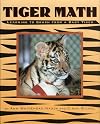
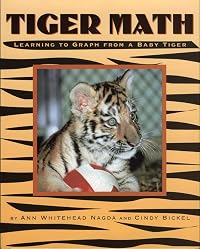
Describes the growth of an orphan Siberian tiger cub, by means of words and graphs.Tags
Recommendations


Member Reviews
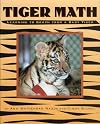
Tiger math is a book about the orphan Siberian tiger cub named T.J. He was born at the Denver zoo in Colorado and became an orphan at the young age of 10 weeks because his mother died of cancer. This was a really touching story that has the ability to teach many kids about math and science. I love how the author separated the math from the story putting the entirety of the math problems on the left side of the book and T.J.’s story on the right side of the book. This story’s math data and graphing look really fun. I love how all the graphs are taught in the book, why they are important, and how we can use them. Personally, I would teach children how to graph data for math lesson while incorporating science! I can ask for information show more regarding the tigers while working on the graphs and data. I would highly recommend this book for grades k-3. show less
Who isn't a sucker for a cute little baby animal? My kids certainly are and this book was filled with adorable "ohhh" inspiring pictures that really actually made them interested in the graphs. Fun with graphs (and math, shhh) ensued.
Tiger Math explains the concept of graphs to young students by telling the story of T.J. the Siberian tiger. On the left side, the book shows one of four styles of graphs, picture, bar, circle, and line, and on the right side, T.J. the Tiger reaches a new milestone. I think this book will definitely capture the attention of any reader because the pictures of the tiger are very cute and the story is fairly interesting. However, with readers just starting to understand graphs, the material is too advanced.
Combining the story of a baby Siberian tiger growing up after the loss of his mother and graphs to represent his growth, Ann Whitehead Nagda Cindy Bickel's 'Tiger Math' implements math in a meaningful picture book. A teacher can read this tiger (T.J.)'s story to engage their students in a math lesson by seeing how the Denver zoo staff works hard to help treat the cub, who stops eating after his mother unexpectedly dies. While they are listening to T.J.s growth they can see it, as well, since the book uses photos taken for his story and also line, circle (pie charts), and bar graphs to show his weight gain over periods of time. Nagda and Bickel even introduces being able to compare data by showing T.J.'s gains against his dad's as he show more becomes a full grown Siberian tiger. This picture book is a great way to get kids involved in learning math with a purpose behind doing so. show less
I enjoyed reading this story. I like how they incorporated the graphs in while telling the story of the baby tiger. I think it would be a fun library book to read because most kids are interested in wildlife. I would not read this story aloud just because the math concept of teaching graphs is not very strong. It's just briefly apart of the story.
For my reading journal I looked at two different math books, both of which were great. This one uses the story of a baby Tiger named TJ to explain six different types of graphs. For example, to explain it uses a pie chart to show the percentages of different Tiger species that there are. For a line graph, it charts the growing amount of food which this baby tiger is eating as it gets bigger. It was more than a math book, it also teaches about Tigers and their life in captivity. It was a great book which I think children would really like, and not really realize they are also learning math concepts from.
This is agood book to use to introduce graphs to young children. The story is engaging. For the levels pk-3 the concepts of a tiger or block representing a certain number might be a little difficult in the early range. The story is engaging enough that I would recommend reading this to the lower range anyway.
I gave this a 2.5 star rating because this book would not be useful for my purposes (secondary math teaching). These concepts of graphing are usually well mastered by the low end of my range, so this book would not offer any assistance.
I gave this a 2.5 star rating because this book would not be useful for my purposes (secondary math teaching). These concepts of graphing are usually well mastered by the low end of my range, so this book would not offer any assistance.
Members
- Recently Added By
Author Information

19 Works 1,702 Members
Awards and Honors
Series

Classifications
Statistics
- Members
- 435
- Popularity
- 70,624
- Reviews
- 13
- Rating
- (3.85)
- Languages
- English
- Media
- Paper, Ebook
- ISBNs
- 9
- ASINs
- 3