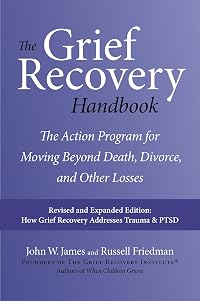
The Grief Recovery Handbook
by John W. James, Frank Cherry, Russell Friedman
On This Page
Description
Updated to commemorate its 20th anniversary, this classic resource further explores the effects of grief and sheds new light on how to begin to take effective actions to complete the grieving process' and work towards recovery and happiness. Incomplete recovery from grief can have a lifelong negative effect on the capacity for happiness. Drawing from their own histories as well as from others', the authors illustrate how it is possible to recover from grief and regain energy and spontaneity. show more Based on a proven program, The Grief Recovery Handbook offers grievers the specific actions needed to move beyond loss. New material in this edition includes guidance for dealing with: - Loss of faith - Loss of career and financial issues - Loss of health - Growing up in an alcoholic or dysfunctional home. show lessTags
Recommendations














Member Reviews
Review of The Grief Recovery Handbook by John W. James and Russell Friedman
⭐⭐⭐⭐☆ (4 out of 5 stars)
I began The Grief Recovery Handbook in June 2024, not long after starting therapy as a survivor of the University of Michigan’s Anderson case. But between my first and second visit with my therapist, Christine, my mother passed away. That moment changed the way I approached both therapy and grief. Christine loaned me the book. I started reading. Slowly.
Grief doesn’t move on a schedule, and neither did I. But this book met me where I was.
What I appreciated most was its gentle insistence that grief is normal. In a world that urges us to “be strong” or “hold it together,” this book invites us to be human. Let the tears show more come. Let the sorrow sit. Let the memories breathe.
The authors remind us that grieving people don’t need fixing — they need to be heard. That truth landed deeply. It helped me accept my own timing, my own rhythm. And when they say that recovery from grief comes through action, not time, it gave me something even more powerful: permission to move through my pain — not past it.
Two ideas especially struck home.
The first: “No matter how fast you run, you can't go around your broken heart.”
The second: “You can’t go over, under, or around it. You must go through it.”
Those lines hit with uncanny precision. In my own healing work, I’ve spoken of the invisible boulder — the immovable obstacle of trauma and shame I faced for decades. This book mirrored what I was just beginning to realize: the only way to healing is through.
Though I didn’t complete the formal program with a partner, I finished the book and still hope to work through the exercises with someone close. It’s designed that way — grief needs witnesses. Companions. Co-travelers.
This was my first foray into grief literature. I’m a newcomer. But I’m grateful this book was my entry point. To the authors, I’d simply say: thank you for treating grief not as a wound to be hidden, but a passage to be honored. show less
⭐⭐⭐⭐☆ (4 out of 5 stars)
I began The Grief Recovery Handbook in June 2024, not long after starting therapy as a survivor of the University of Michigan’s Anderson case. But between my first and second visit with my therapist, Christine, my mother passed away. That moment changed the way I approached both therapy and grief. Christine loaned me the book. I started reading. Slowly.
Grief doesn’t move on a schedule, and neither did I. But this book met me where I was.
What I appreciated most was its gentle insistence that grief is normal. In a world that urges us to “be strong” or “hold it together,” this book invites us to be human. Let the tears show more come. Let the sorrow sit. Let the memories breathe.
The authors remind us that grieving people don’t need fixing — they need to be heard. That truth landed deeply. It helped me accept my own timing, my own rhythm. And when they say that recovery from grief comes through action, not time, it gave me something even more powerful: permission to move through my pain — not past it.
Two ideas especially struck home.
The first: “No matter how fast you run, you can't go around your broken heart.”
The second: “You can’t go over, under, or around it. You must go through it.”
Those lines hit with uncanny precision. In my own healing work, I’ve spoken of the invisible boulder — the immovable obstacle of trauma and shame I faced for decades. This book mirrored what I was just beginning to realize: the only way to healing is through.
Though I didn’t complete the formal program with a partner, I finished the book and still hope to work through the exercises with someone close. It’s designed that way — grief needs witnesses. Companions. Co-travelers.
This was my first foray into grief literature. I’m a newcomer. But I’m grateful this book was my entry point. To the authors, I’d simply say: thank you for treating grief not as a wound to be hidden, but a passage to be honored. show less
The bible on grief recovery. They bust down the myths even other therapists follow. They validate your feelings. They give you tools to help you deal with even the oldest of losses. It is never too late to heal those old wounds. I just wish I had found this book years ago.
“Depression” - if someone feels sad, one frequently throws the word.
A Commonly used phrase, "I felt depressed."
Chuck the internet, spews out misinformation, seek qualified sources in the field.
For Mental Health, always, always seek out professional, who is trained in the field.
I repeat, Always, Always seek out professional, get yourself educated.
So, Why read this work?
Someone shared with me a story.
This person shared, how they were trying to become a doctor.
The narrative of Tamil Nadu, become a doctor or engineer -- if not, you're a failure.
This person said, I fell into depression - really? They had become a Teacher.
Was it Depression or Grief?
But is it true, Depression? Misinformation, false labels create false show more beliefs.
Maybe it was Grief i.e loss of a dream? Do their parents know about this, nope! Wrong!
Another Story, A Tamil Girl goes through relationship break up, her friends say, “Move On”, “Time heals.”
This is all wrong stuff to say to the person according to Professionals.
Ouch, if you are a Man — painful truth, maybe want to be accurate with your oneself i.e self-awareness.
Most Men would not accept that they want to grow or have an area that they need to work on in their life - Why? Pride, Lack of growth mindset.
Emotional isolation is a major problem for grievers.
To Men:
1) Can you label your own emotions?
2) Can you express how you feel?
3) Can you feel about your own feelings?
4) If your loved ones are crying, can you sit with them, feel their feelings, instead of trying to fix it?
Many Women want to be felt heard, felt loved, felt appreciated, not fix stuff for them.
Maybe you’d say, “Oh, she went emotional.” Maybe, not.
Perhaps, time to work on this area of your life.
If you do, you'd enjoy higher-quality relationships in your life.
What is Grief?
“Grief, normal and natural reaction to loss of any kind.”
Grief is by definition emotional.
“Grief is the conflicting feelings caused by the end of or change in a familiar pattern of behavior.“
What is happening in the midst of Grief?
You may have experienced a loss of trust in a parent, a loss of trust in God, or a loss of trust in any other relationship.
There are two very distinct probabilities following a loss:
(1) your religious or spiritual faith may be shattered or shaken
(2) regardless of the nature of the loss, your faith is undamaged.
A LOSS OF ALIVENESS
So, What does one do with Grief?
Two words not to use for Grief:
-guilt
-survivor
Many people use this as a narrative.
Recovery means claiming your circumstances instead of your circumstances claiming you and your happiness.
Recovery is finding new meaning for living, without the fear of being hurt again.
What are the misinformations about Grief?
Misinformations:
1. Don’t feel bad.
2. Replace the loss.
3. Grieve alone.
4. Just give it time.
5. Be strong for others.
6. Keep busy.
“grief just takes time,” the next most difficult hurdle for grievers to overcome is the incorrect belief that other people or events are responsible for their feelings.”
“Get a hold of yourself.”
“You can’t fall apart.”
“Keep a stiff upper lip.”
“Pull yourself up by your bootstraps.”
“We understand how you feel.”
“Be thankful you have other children.”
“The living must go on.”
“He’s in a better place.”
“All things must pass.”
“She led a full life.”
“God will never give you more than you can handle.”
“You shouldn’t be angry with God.”
“I can forgive, but I can’t forget.”
“I can forgive, but I can’t forget” is that, since I cannot forget, I will not forgive.
But ask yourself: Who stays in jail?
Who continues to resent and shut down his or her own mind, body, and heart?
Whose life is limited by the lack of forgiveness?
So, How does one go back to meaningful life?
One can do with a partner or alone.
1. Create Loss history Graph
2. Create Relationship History Graph
Three things involved:
- Be Totally Honesty
-Be Absolute Confidentiality
-Bring Uniqueness and Individuality
Avoid Pitfalls:
Avoid monologue, consider rather discussing.
Avoid becoming analytical, critical, or judgmental.
Go through them, Be Honest.
Expressing incomplete Grief:
Apologies
Forgiveness
Significant Emotional Statements
Write a Letter with this, Do not send to the living person. Send to a trusted Friend.
P.S: I’m not a Professional. Always reach out to Professionals, self-educate about yourself, your family story.
I'd reiterate, read basic works, get yourself educated, meet Professionals in the field.
I'd recommend this work, the core of this book is the process of Grief.
Deus Vult,
Gottfried show less
A Commonly used phrase, "I felt depressed."
Chuck the internet, spews out misinformation, seek qualified sources in the field.
For Mental Health, always, always seek out professional, who is trained in the field.
I repeat, Always, Always seek out professional, get yourself educated.
So, Why read this work?
Someone shared with me a story.
This person shared, how they were trying to become a doctor.
The narrative of Tamil Nadu, become a doctor or engineer -- if not, you're a failure.
This person said, I fell into depression - really? They had become a Teacher.
Was it Depression or Grief?
But is it true, Depression? Misinformation, false labels create false show more beliefs.
Maybe it was Grief i.e loss of a dream? Do their parents know about this, nope! Wrong!
Another Story, A Tamil Girl goes through relationship break up, her friends say, “Move On”, “Time heals.”
This is all wrong stuff to say to the person according to Professionals.
Ouch, if you are a Man — painful truth, maybe want to be accurate with your oneself i.e self-awareness.
Most Men would not accept that they want to grow or have an area that they need to work on in their life - Why? Pride, Lack of growth mindset.
Emotional isolation is a major problem for grievers.
To Men:
1) Can you label your own emotions?
2) Can you express how you feel?
3) Can you feel about your own feelings?
4) If your loved ones are crying, can you sit with them, feel their feelings, instead of trying to fix it?
Many Women want to be felt heard, felt loved, felt appreciated, not fix stuff for them.
Maybe you’d say, “Oh, she went emotional.” Maybe, not.
Perhaps, time to work on this area of your life.
If you do, you'd enjoy higher-quality relationships in your life.
What is Grief?
“Grief, normal and natural reaction to loss of any kind.”
Grief is by definition emotional.
“Grief is the conflicting feelings caused by the end of or change in a familiar pattern of behavior.“
What is happening in the midst of Grief?
You may have experienced a loss of trust in a parent, a loss of trust in God, or a loss of trust in any other relationship.
There are two very distinct probabilities following a loss:
(1) your religious or spiritual faith may be shattered or shaken
(2) regardless of the nature of the loss, your faith is undamaged.
A LOSS OF ALIVENESS
So, What does one do with Grief?
Two words not to use for Grief:
-guilt
-survivor
Many people use this as a narrative.
Recovery means claiming your circumstances instead of your circumstances claiming you and your happiness.
Recovery is finding new meaning for living, without the fear of being hurt again.
What are the misinformations about Grief?
Misinformations:
1. Don’t feel bad.
2. Replace the loss.
3. Grieve alone.
4. Just give it time.
5. Be strong for others.
6. Keep busy.
“grief just takes time,” the next most difficult hurdle for grievers to overcome is the incorrect belief that other people or events are responsible for their feelings.”
“Get a hold of yourself.”
“You can’t fall apart.”
“Keep a stiff upper lip.”
“Pull yourself up by your bootstraps.”
“We understand how you feel.”
“Be thankful you have other children.”
“The living must go on.”
“He’s in a better place.”
“All things must pass.”
“She led a full life.”
“God will never give you more than you can handle.”
“You shouldn’t be angry with God.”
“I can forgive, but I can’t forget.”
“I can forgive, but I can’t forget” is that, since I cannot forget, I will not forgive.
But ask yourself: Who stays in jail?
Who continues to resent and shut down his or her own mind, body, and heart?
Whose life is limited by the lack of forgiveness?
So, How does one go back to meaningful life?
One can do with a partner or alone.
1. Create Loss history Graph
2. Create Relationship History Graph
Three things involved:
- Be Totally Honesty
-Be Absolute Confidentiality
-Bring Uniqueness and Individuality
Avoid Pitfalls:
Avoid monologue, consider rather discussing.
Avoid becoming analytical, critical, or judgmental.
Go through them, Be Honest.
Expressing incomplete Grief:
Apologies
Forgiveness
Significant Emotional Statements
Write a Letter with this, Do not send to the living person. Send to a trusted Friend.
P.S: I’m not a Professional. Always reach out to Professionals, self-educate about yourself, your family story.
I'd reiterate, read basic works, get yourself educated, meet Professionals in the field.
I'd recommend this work, the core of this book is the process of Grief.
Deus Vult,
Gottfried show less
I wish I could give this book ten stars....I definitely need this on my book shelf. We all go through griefs but we live in a society that doesn't allow us to grieve, and most people never learn this. This book can help so many people. Everyone should read this. Grief is something we will all experience in our lifetimes.
A very helpful tool.
The Grief Recovery Handbook : The Action Program for Moving Beyond Death Divorce, and Other Losses by John W. James (1998)
Ratings
Members
- Recently Added By
Lists

Psychology: Abuse, Grief, Self-Help
189 works; 1 member
Author Information
3 Works 946 Members
John W. James was born in Danville, Illinois. He was thrust unwillingly into the arena of grief and recovery when his three-day-old son died in 1977. John lives in Los Angeles with his Emmy Award-winning wife, Jess Walton -- the evil "Jill Abbott" on The Young and the Restless -- and spends most of his free time with daughter Allison and son Cole show more Russell P. Friedman was born in Port Chester, New York. He arrived at the Grief Recovery Institute in 1986, following a second divorce and a major financial disaster. He started as a volunteer, and stayed and stayed and stayed. Russell lives in Sherman Oaks with Alice Borden and their dog, Max Dr. Leslie Landon Matthews was born in Los Angeles. She attended a Grief Recovery Personal Workshop after the much-publicized death of her father, Michael Landon. She earned her doctorate in the field of psychology with a focus on children and grief. She lives in Southern California with her husband, Brian, and their three glorious children show less
1 Work 818 Members

7 Works 890 Members
Series
Belongs to Publisher Series
Common Knowledge
- Canonical title
- The Grief Recovery Handbook
- Original title
- The grief recovery handbook
- Original publication date
- 1988
- Dedication
- To our families and to all of you who are moving beyond loss
- First words
- Introduction
It seems as if we have been doing work with grievers for as long as we can remember. - Last words
- (Click to show. Warning: May contain spoilers.)We are forever grateful for your participation.
Classifications
- Genres
- Nonfiction, General Nonfiction
- DDC/MDS
- 155.93 — Philosophy & psychology Psychology Differential and developmental psychology Environmental psychology Influences of Traumatic Experiences and Bereavement
- LCC
- BF575 .G7 .J36 — Philosophy, Psychology and Religion Psychology Psychology Affection. Feeling. Emotion
- BISAC
Statistics
- Members
- 820
- Popularity
- 33,714
- Reviews
- 6
- Rating
- (3.96)
- Languages
- English, Finnish, Swedish
- Media
- Paper, Audiobook, Ebook
- ISBNs
- 19
- UPCs
- 1
- ASINs
- 8