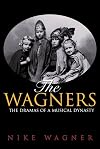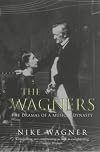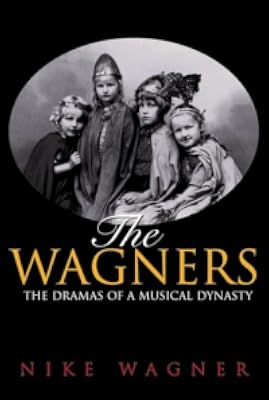
The Wagners: The Dramas of a Musical Dynasty
by Nike Wagner
On This Page
Description
By the great grand-daughter of the composer, this is a highly intelligent history of the controversial Wagner family, Wagner's works and his legacy.Tags
Recommendations






























Member Reviews
In this virtuoso piece of cultural history, the great-granddaughter of Richard Wagner narrates the Wagner family's turbulent history. In the process, she shares her considerable insights into the operas and gives an inside account of the internecine struggles that have surrounded the Wagner family jewel: the Bayreuth Festival.
Nike Wagner draws on history, biography, and psychoanalysis to interpret both her family's history and her great-grandfather's operas. She focuses on Bayreuth, revealing how this showcse for Wagner's sublime art so readily served the Third Reich. With clear, often ironic eyes, she examines her family's extraordinary role in German culture-and its connections to right-wing ideology.
Particularly fascinating is the show more tug-of-war between Nike's visionary but enigmatic father, Wieland, and her astute but aesthetically stodgy uncle, Wolfgang. It was Wieland Wagner who inaugurated a daring new style of Wagner production-characterized by absence of scenery, spare acting, and dramatic lighting-that led to a wider revolution in how operas are produced. But Wolfgang Wagner, now entering his eighties, has controlled the Festival and quarreled with family members since Wieland's premature death in 1966. The author concludes with a look at the current contenders for this family throne, herself among them, and presents her vision for the Festival's future.
Wagnerites will need this book on their shelves. As an example of cultural journalism at its finest, it will also appeal to readers interested in German cultural history or those simply drawn to the melodrama that is the Wagner family story.
FROM THE CRITICS
Publishers Weekly
This book by one of the composer's granddaughters is an odd hybrid: part psychologically intense investigation of Wagner's greatest operas in light of his somewhat tortured family history, part a prolonged look at that family history by one who knows it intimately, but takes pains to distance herself from it. Although Nike, the daughter of Wieland Wagner, who helped transform Bayreuth in the de-Nazified wake of WWII, is herself one of the heirs apparent of the dynasty, she does not disclose this until the final pages. It's also the first time she refers to herself in other than the third person a rather remarkable strategy for one with such inside knowledge. The first part of the book a rather laborious attempt to link The Ring, Lohengrin, Tristan and Parsifal with the psychology of their creator and his times is not helped by Nike's dense prose, which even a fluent translation cannot render mellifluous. The second part is much fresher, particularly its portrait of the matriarch, Winifred, an English orphan who married into the family and became a deep embarrassment to it by her flaunted friendship with Hitler and her refusal to reject Nazi views. Nike's account of the recurrent patterns of strong women and vacillating men in the family, and the odd ways in which Bayreuth has been both cherished and rejected by modern Germany, is fascinating. But many readers will still feel that a book written from such a privileged perspective could have offered much more. Illus. not seen by PW. (Apr.) Copyright 2001 Cahners Business Information.
Library Journal
Originally published in Germany, this fascinating insider's view by Wagner's great-granddaughter, a music critic and cultural commentator based in Berlin, offers insight into Wagner's operas, including a detailed literary analysis of characters, plots, and symbolism. It is also a history of the Wagner family's productions in Bayreuth, Germany, at the Festspielhaus the factory-like opera house that Wagner designed and the involvement of various family members in shaping and reshaping those productions. Of course, by its very nature, it exalts the works and the heirs (e.g., Nike's father, Wieland Wagner, who initiated an era of stark style), but at the same time it is somewhat critical of certain productions and especially of recent trends. show less
Nike Wagner draws on history, biography, and psychoanalysis to interpret both her family's history and her great-grandfather's operas. She focuses on Bayreuth, revealing how this showcse for Wagner's sublime art so readily served the Third Reich. With clear, often ironic eyes, she examines her family's extraordinary role in German culture-and its connections to right-wing ideology.
Particularly fascinating is the show more tug-of-war between Nike's visionary but enigmatic father, Wieland, and her astute but aesthetically stodgy uncle, Wolfgang. It was Wieland Wagner who inaugurated a daring new style of Wagner production-characterized by absence of scenery, spare acting, and dramatic lighting-that led to a wider revolution in how operas are produced. But Wolfgang Wagner, now entering his eighties, has controlled the Festival and quarreled with family members since Wieland's premature death in 1966. The author concludes with a look at the current contenders for this family throne, herself among them, and presents her vision for the Festival's future.
Wagnerites will need this book on their shelves. As an example of cultural journalism at its finest, it will also appeal to readers interested in German cultural history or those simply drawn to the melodrama that is the Wagner family story.
FROM THE CRITICS
Publishers Weekly
This book by one of the composer's granddaughters is an odd hybrid: part psychologically intense investigation of Wagner's greatest operas in light of his somewhat tortured family history, part a prolonged look at that family history by one who knows it intimately, but takes pains to distance herself from it. Although Nike, the daughter of Wieland Wagner, who helped transform Bayreuth in the de-Nazified wake of WWII, is herself one of the heirs apparent of the dynasty, she does not disclose this until the final pages. It's also the first time she refers to herself in other than the third person a rather remarkable strategy for one with such inside knowledge. The first part of the book a rather laborious attempt to link The Ring, Lohengrin, Tristan and Parsifal with the psychology of their creator and his times is not helped by Nike's dense prose, which even a fluent translation cannot render mellifluous. The second part is much fresher, particularly its portrait of the matriarch, Winifred, an English orphan who married into the family and became a deep embarrassment to it by her flaunted friendship with Hitler and her refusal to reject Nazi views. Nike's account of the recurrent patterns of strong women and vacillating men in the family, and the odd ways in which Bayreuth has been both cherished and rejected by modern Germany, is fascinating. But many readers will still feel that a book written from such a privileged perspective could have offered much more. Illus. not seen by PW. (Apr.) Copyright 2001 Cahners Business Information.
Library Journal
Originally published in Germany, this fascinating insider's view by Wagner's great-granddaughter, a music critic and cultural commentator based in Berlin, offers insight into Wagner's operas, including a detailed literary analysis of characters, plots, and symbolism. It is also a history of the Wagner family's productions in Bayreuth, Germany, at the Festspielhaus the factory-like opera house that Wagner designed and the involvement of various family members in shaping and reshaping those productions. Of course, by its very nature, it exalts the works and the heirs (e.g., Nike's father, Wieland Wagner, who initiated an era of stark style), but at the same time it is somewhat critical of certain productions and especially of recent trends. show less
Boring!
Nov 11, 2006Italian
Ratings
Members
- Recently Added By
Author Information
12+ Works 77 Members
Common Knowledge
- People/Characters
- Richard Wagner
- Important places
- Bayreuth, Bavaria, Germany
Classifications
Statistics
- Members
- 41
- Popularity
- 717,759
- Reviews
- 2
- Rating
- (2.83)
- Languages
- English, French, Italian
- Media
- Paper
- ISBNs
- 5