Sohrab and Rustum
by Matthew Arnold
43 Members (4.00)
On This Page
Description
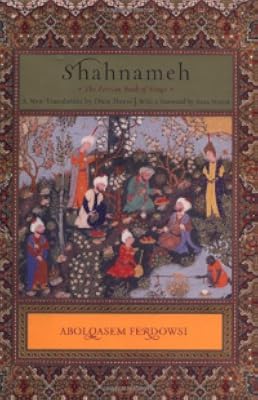
Matthew Arnold's poetry was written largely during his early manhood, most of his prose after he was forty years old. His life as a man of letters is consequently divided into two nearly distinct parts. Arnold's prose was devoted to specific criticism and to definite ideas, the results of a carefully considered view of life. His poetry came earlier, before he had reached fixed conclusions, and presents not settled theories and principles but rather his struggle toward belief and his effort show more to find right principles of living. Consequently, it reflects varying and unsettled moods, and is in part a record of unrest and questioning. Like other poets of the Victorian era, he was facing a new age.Sohrab and Rustum was written and published in 1853. Rustum, who is supposed to have lived some time before Cyrus the Great, is a famous Persian hero, and the story of his encounter with his son is the best known episode in the Shah-Namah, or Book of Kings, the national epic of Persia, written by the poet Firdusi about 1000 A.D. In choosing the story for his poem, Arnold's first care was to separate this particular episode from the other events of the national epic. The interest of the story is thus entirely centered in the emotions of father and son. The story thus condensed and integrated, is a simple though a moving one. It offers a chance for good characterization and dramatic dialogue. show lessTags
Recommendations




















Member Reviews
Members
- Recently Added By
Lists

Merrill's English Texts
59 works; 2 members
Author Information

223+ Works 3,793 Members
Matthew Arnold, a noted poet, critic, and philosopher, was born in England on December 24, 1822 and educated at Oxford University. In 1851, he was appointed inspector of schools, a position he held until 1880. Arnold also served as a professor of poetry at Oxford, during which time he delivered many lectures that ultimately became essays. Arnold show more is considered a quintessential proponent of Victorian ideals. He argued for higher standards in literature and education and extolled classic virtues of manners, impersonality and unanimity. After writing several works of poetry, Arnold turned to criticism, authoring such works as On Translating Homer, Culture and Anarchy, and Essays in Criticism. In these and other works, he criticized the populace, especially the middle class, whom he branded as "philistines" for their degrading values. He greatly influenced both British and American criticism. In later life, he turned to religion. In works such as Literature and Dogma and God and the Bible, he explains his conservative philosophy and attempts to interpret the Bible as literature. Arnold died from heart failure on April 15, 1888 in Liverpool, England. (Bowker Author Biography) show less
Series
Belongs to Publisher Series
Work Relationships
Is contained in
Common Knowledge
Classifications
Statistics
- Members
- 43
- Popularity
- 690,053
- Rating
- (4.00)
- Languages
- English
- Media
- Paper, Ebook
- ISBNs
- 8
- ASINs
- 7