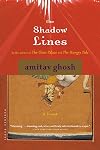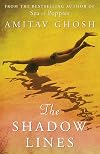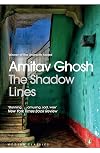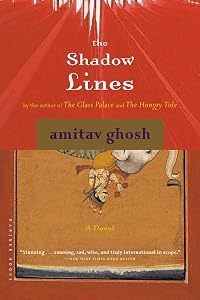
The Shadow Lines
by Amitav Ghosh
On This Page
Description
Opening in Calcutta in the 1960s, Amitav Ghosh's radiant second novel follows an English family and a Bengali family as their lives intertwine across the generations in both tragic and comic ways. The narrator, Indian born and English educated, traces events back and forth in time, from the outbreak of World War II to the late twentieth century, through years of Bengali partition and violence-observing the ways in which political events invade private lives.Tags
Recommendations









Member Reviews
This is my sixth Ghosh, the others being the Ibis trilogy, The Glass Palace and The Hungry Tide. While I didn't enjoy it as much as my favourites, The Hungry Tide and Sea of Poppies, as his second novel it certainly portends his excellent writing to come. The Shadow Lines has as its historical backdrop the Bengali partition and associated violence, but in a way the focus is more on familial relationships, individual personalities, the interaction between British and Indian families linked by their patriarchs. The backdrop really is a backdrop: you won't be learning much history, nor is it necessary to have an interest in this period to appreciate the story. The characters are real, and there are emotional points peppered throughout. The show more ending, one which marries the political scene with the principal characters, is memorable à la The Hungry Tide.
A favourable review of this novel will praise the lyrical nature of Ghosh's writing, talk about the way in which he elegantly "collapses time and space," and perhaps mention the unobtrusive yet evocative way in which a difficult period of history is addressed. While I agree to an extent, I have a couple of qualms. First, apart from cuisine little distinction is made between the Indian and British families from a cultural perspective. Second, I found the constant time warps and convoluted sentence structures distracting. Here, I give Ghosh the benefit of the doubt ("it's me, not him").
As an example, it took me around six readings to comprehend this sentence:-
"She knew that Robi was quite happy to risk expulsion occasionally by smuggling bottles of rum into his room and drinking the night away with his friends, and because she could not see that he would do those things in college precisely because there was a certain innocence about those exploits in those circumstances, the kind of monasticism that honours the rules of the order in their breach, she could not understand why Robi would feel himself defiled, drinking in a nightclub, surrounded by paunchy men with dark-pouched eyes." show less
A favourable review of this novel will praise the lyrical nature of Ghosh's writing, talk about the way in which he elegantly "collapses time and space," and perhaps mention the unobtrusive yet evocative way in which a difficult period of history is addressed. While I agree to an extent, I have a couple of qualms. First, apart from cuisine little distinction is made between the Indian and British families from a cultural perspective. Second, I found the constant time warps and convoluted sentence structures distracting. Here, I give Ghosh the benefit of the doubt ("it's me, not him").
As an example, it took me around six readings to comprehend this sentence:-
"She knew that Robi was quite happy to risk expulsion occasionally by smuggling bottles of rum into his room and drinking the night away with his friends, and because she could not see that he would do those things in college precisely because there was a certain innocence about those exploits in those circumstances, the kind of monasticism that honours the rules of the order in their breach, she could not understand why Robi would feel himself defiled, drinking in a nightclub, surrounded by paunchy men with dark-pouched eyes." show less
I have a tendency to enjoy literature from the Indian subcontinent and this was no exception. Set predominantly in Calcutta in the 1950s and 1960s and partly in England a bit later, and a bit earlier, this novel chronicles the lives of an Indian and an English family. The narrator is very much influenced by his cousin Tridib and his stories as well as the stories of his grandmother and how she grew up in Dhaka (at the time the novel is set, still East Pakistan) and the novel goes backwards and forwards through time relating some of these. In his own life, he tries to be true to the stories that have shaped him but there is always a darker more mysterious past that underlies everything. Essentially this is a book about the long-lasting show more effects of partition and how the arbitrary border lines changed thousands of peoples lives forever. But I was invested in the characters, I felt sympathy for them and wanted everything to turn out OK for them. There isn't a huge amount of plot, or rather there is, but it goes almost unnoticed until right at the very end so this is mostly a novel in which the language and characters play important roles. I loved it. show less
The narrator tells us his family history, of life in India as well as their links with England. The unnamed narrator dearly enjoys the stories of his uncle Tiridib, tales of his time in England which are so vivid that when he finally goes there himself, the narrator is able to find his way around a city he's never even visited before. The book reaches a climax when we find out the tragedy suffered by the family.
Another major influence in his life is his grandmother, a strong woman deeply affected by partition. There is also love on the cards, his first is his cousin, Illa, the second is for May Price, though maybe he is more in love with the memory of her as passed on by his uncle. The Price family is influential as a whole, a show more long-standing connection stemming from the Raj and continuing through WW2 and Partition.
This book is a blend of real life (well, of the characters) and the fiction as life stories are told, retold, remembered differently and even embellished. This blend also shows us how interconnected we all are, how an event in one area can cause riots to break out in another. There are memories in every family's story that cast long shadows on those involved as well as on the next generations. Both the narrator and Illa are deeply affected, with the narrator dreaming of his uncle's life and Illa seemingly left without roots, fated to wander the earth.
As ever with Ghosh's work, The Shadow Lines had me hooked from page one, not only because of the story, but also because of the sumptuous writing style. show less
Another major influence in his life is his grandmother, a strong woman deeply affected by partition. There is also love on the cards, his first is his cousin, Illa, the second is for May Price, though maybe he is more in love with the memory of her as passed on by his uncle. The Price family is influential as a whole, a show more long-standing connection stemming from the Raj and continuing through WW2 and Partition.
This book is a blend of real life (well, of the characters) and the fiction as life stories are told, retold, remembered differently and even embellished. This blend also shows us how interconnected we all are, how an event in one area can cause riots to break out in another. There are memories in every family's story that cast long shadows on those involved as well as on the next generations. Both the narrator and Illa are deeply affected, with the narrator dreaming of his uncle's life and Illa seemingly left without roots, fated to wander the earth.
As ever with Ghosh's work, The Shadow Lines had me hooked from page one, not only because of the story, but also because of the sumptuous writing style. show less
The Shadow Lines weaves together personal lives and public events with an artthat I think is rare. The book is ambitious, funny, poignant. Amitav evokes things Indian, with an inwardness that is lit and darkened by an intimacy with Elsewhere - AK Ramanujan
The best book I've ever read. The views on nationality are so clearly explicated. What he meant was the division of nations should be done on the division of notions and culture and lifestyle, not based on the interests and understanding of just a few political bindings. When a few days ago, the people who loved each other and fought against the common foe of colonialism and imperialism in the form o British forces, just because some handful of leaders drew lines, those very people started killing each other in the name of country and religion. The legacy of partition and grief and backwardness and world's most horrid mass emigration was awarded to Indians by Britishers, but it was nationality and specks of Religious insensibility that show more transferred it into the human hearts. Finally, the people in general who believed in the constraints of Religion, Nationality and Cultural superiority were to be blamed for the 1947 massacre and all further religious riots in India. show less
Last night I was watching an episode of Lost, and as usual with this TV series, I was confused about what was going on. Is this the past? the future? reality or a flashback? And all of a sudden I realized that I have the same muddled confusion over this book. The story is about a Bengali boy and follows his life from a child in Calcutta, through a college education in England and returning home to India. It is definitely set in a turbulent time period, from post World War II, through the India/Pakistan partition, to the late 20th century. I enjoyed many of the issues covered in this book - people getting displaced by Partition, living as a foreigner in another country and racial and religious bigotry. But the style of writing made show more reading this book feel like work instead of pleasure. The story is told as a young man's reminisence of his past, so some of the jumping around makes sense. But I found Ghosh's sentence structure incredibly difficult to read. Here is a single sentence:
That wasn't surprising, for my grandmother's contempt for the Sheheb had nothing to do with drink at all, as my father thought: it was founded on the same iron fairness which prompted her, when she became headmistress, to dismiss one of her closest friends - a good-natured but chronically lazy woman - from her job in the school: at bottom she thought the Shaheb was not fit for his job, that he was weak, essentially weak, backbone-less; it was impossible to think of him being firm under threat, of reacting to a difficult or dangerous situation with that controlled, accurate violence which was the quality she prized above all others in men who had to deal with matters of state. pg. 144 OK - that's 9 commas, 2 colons, 1 semi-colon, and 2 dashes. I'm glad I never had to diagram that sentence! show less
That wasn't surprising, for my grandmother's contempt for the Sheheb had nothing to do with drink at all, as my father thought: it was founded on the same iron fairness which prompted her, when she became headmistress, to dismiss one of her closest friends - a good-natured but chronically lazy woman - from her job in the school: at bottom she thought the Shaheb was not fit for his job, that he was weak, essentially weak, backbone-less; it was impossible to think of him being firm under threat, of reacting to a difficult or dangerous situation with that controlled, accurate violence which was the quality she prized above all others in men who had to deal with matters of state. pg. 144 OK - that's 9 commas, 2 colons, 1 semi-colon, and 2 dashes. I'm glad I never had to diagram that sentence! show less
Not sure what to make of this book. It is rated very highly by some but guess I am not literary enough to appreciate it. The story moves back and forth between the present and the past, and across boundaries. It can be quite disorientating because the first part of the book doesn't quite give you a sense of the period that the story takes place. It is only in the second part that things become clearer and you find out what happened, especially to Tridib.
Members
- Recently Added By
Lists

1001 Books You Must Read Before You Die
1,448 works; 1,136 members

Books Read in 2016
4,666 works; 199 members

My TBR
371 works; 3 members

BBC World Book Club
267 works; 5 members

World Book Club (BBC World Service)
212 works; 1 member
Author Information

44+ Works 15,904 Members
Born in Calcutta, and spent his childhood in Bangladesh, Sri Lanka, and Northern India. He studied in Delhi, Oxford, and Egypt and taught at various Indian and American universities. Author of a travel book and three acclaimed novels. Ghosh has also written for GRANTA, THE NEW YORKER, THE NEW YORK TIMES, and THE OBSERVER. He lives in New York City show more with his wife and two children. (Publisher Provided) Amitav Ghosh was born in Calcutta, India on July 11, 1956. He studied in Delhi, Oxford and Alexandria. His first book, The Circle of Reason, won France's Prix Médicis. He has won several other awards including the Sahitya Akademi Award and the Ananda Puraskar for The Shadow Lines, the Arthur C. Clarke award for The Calcutta Chromosome, and the Crossword Book Prize for The Hungry Tide and Sea of Poppies. His other works include In an Antique Land, Dancing in Cambodia, The Glass Palace, and River of Smoke. In 2007, he was awarded the Padma Shri, one of India's highest honors, by the President of India. He made the New Zealand Best Seller List in 2015 with his title Flood of Fire. (Bowker Author Biography) show less
Some Editions
Awards and Honors
Awards
Series
Belongs to Publisher Series
Common Knowledge
- Canonical title
- The Shadow Lines
- Original title
- The Shadow Lines
- Original publication date
- 1988
- Important places
- Calcutta, India; Bengal, India; Bangladesh
- Dedication
- For
Radhika and Harisen - First words
- In 1939, thirteen years before I was born, my father's aunt, Mayadebi, went to England with her husband and her son, Tridib.
- Last words
- (Click to show. Warning: May contain spoilers.)I stayed, and when we lay in each other's arms quietly, in the night, I could tell that she was glad, and I was glad too, and grateful, for the glimpse she had given me of a final redemptive mystery.
Classifications
Statistics
- Members
- 932
- Popularity
- 28,747
- Reviews
- 19
- Rating
- (3.69)
- Languages
- 8 — Dutch, English, French, German, Italian, Japanese, Slovenian, Spanish
- Media
- Paper, Audiobook, Ebook
- ISBNs
- 39
- UPCs
- 1
- ASINs
- 7